
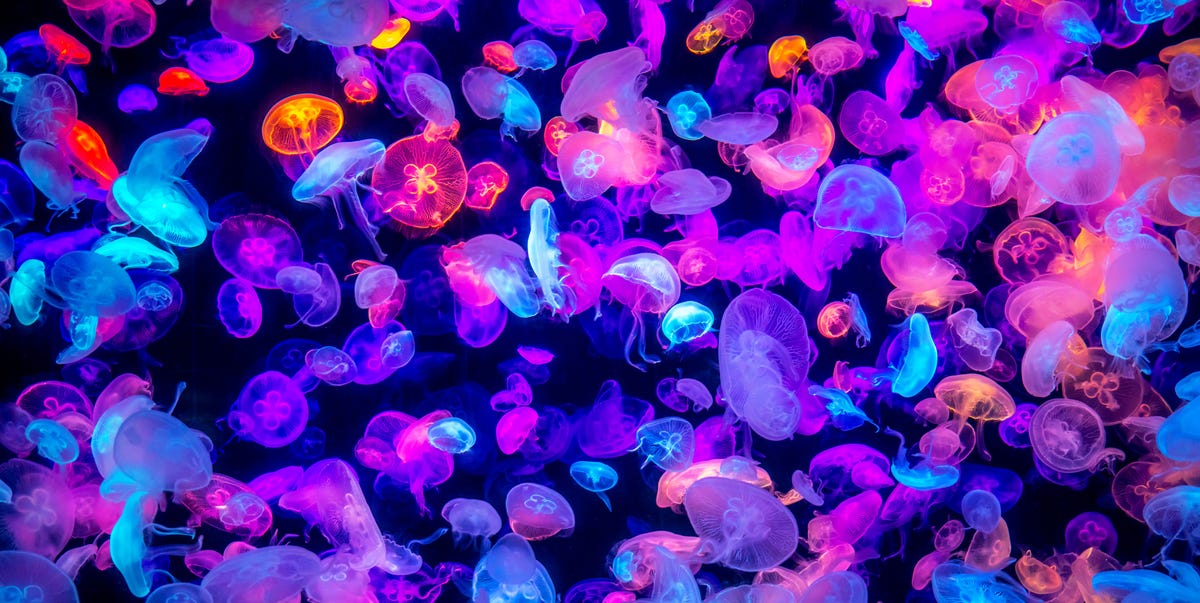
Imagine reaching adulthood, encountering a crisis, and responding by turning yourself back into a child. No expensive skin serum, mysterious mountain spring, or suspiciously enthusiastic wellness influencer required. One tiny marine animal can perform a biological version of this remarkable reset, which has earned it the irresistible nickname “the immortal jellyfish.”
That nickname contains a large drop of truth floating in a bucket of exaggeration. Most jellyfish are not immortal, and even the famous species Turritopsis dohrnii can be killed. Its extraordinary talent is not invulnerability but life-cycle reversal: under certain conditions, an adult can transform into an earlier developmental stage and begin growing again.
So, are jellyfish immortal? The scientifically responsible answer is: nearly all are mortal, while one particularly unusual species may be biologically immortal in theory. Understanding that distinction requires a quick swim through jellyfish anatomy, reproduction, cellular reprogramming, and the inconvenient fact that an animal can avoid aging yet still become somebody else’s lunch.
Are All Jellyfish Immortal?
No. The oceans contain thousands of gelatinous animal species commonly called jellyfish or jellies, and the vast majority follow an ordinary pattern of birth, development, reproduction, and death. Depending on the species and environmental conditions, the recognizable swimming stage may live for days, months, or occasionally several years.
The creature responsible for the immortality headlines is Turritopsis dohrnii, a tiny hydrozoan related to corals and sea anemones. Although it is routinely called a jellyfish, it belongs to Hydrozoa rather than the group containing many of the large “true jellyfish” seen in public aquariums.
An adult T. dohrnii is only about 4.5 millimeters acrosssmaller than a pinky fingernail. Its translucent bell reveals a reddish stomach, while a ring of delicate tentacles surrounds the edge. It does not look like an ancient ruler of time. It looks like a decorative speck that escaped from a snow globe.
Biologically Immortal Does Not Mean Indestructible
In biology, immortality does not necessarily mean that an organism can survive every possible threat. “Biological immortality” generally describes an organism that does not appear to face an unavoidable increase in mortality simply because it grows older. In the case of the immortal jellyfish, the animal may escape age-related decline by resetting its life cycle.
It can still die from disease, extreme environmental conditions, physical destruction, or predation. Fish, sea turtles, other jellies, and numerous planktonic predators do not pause before eating it to ask whether their snack possesses unusual cellular machinery.
No scientist has tracked a single immortal jellyfish living forever. The claim is theoretical: if it repeatedly completed its rejuvenation process and avoided every external cause of death, it might continue cycling indefinitely.
The Ordinary Jellyfish Life Cycle
To appreciate what makes Turritopsis dohrnii unusual, it helps to understand the standard jellyfish life cycle. Jellyfish development is less like a straight road and more like a complicated transit map designed by someone who enjoyed confusing biology students.
Step 1: Fertilized Egg and Planula
Adult jellyfish, called medusae, reproduce sexually by releasing eggs and sperm. A fertilized egg develops into a planula, a tiny, free-swimming larva covered with hairlike cilia. The planula drifts until it finds a suitable hard surface, such as a rock, shell, dock, or piece of submerged equipment.
Step 2: The Polyp Stage
After attaching, the planula develops into a polyp. A jellyfish polyp resembles a miniature sea anemone: it has a stalk, a mouth, and small tentacles used to capture food. Polyps can reproduce asexually, producing genetically identical copies of themselves and forming colonies.
Step 3: Young Medusae
The polyp eventually produces young swimming jellies. The precise process varies among jellyfish groups. In many hydrozoans, tiny medusae bud directly from the polyp colony. These medusae detach, swim into the water column, feed, mature, and reproduce sexually.
For most species, the developmental traffic travels one way: larva to polyp, polyp to medusa, medusa to the end of the line. The immortal jellyfish has discovered the biological equivalent of driving backward through the tollbooth.
How the Immortal Jellyfish Reverses Its Life Cycle
When an adult Turritopsis dohrnii experiences injury, starvation, unfavorable temperature, changing salinity, or other serious stress, it can abandon the usual adult trajectory. Rather than continuing toward death, the medusa begins dismantling its mature body.
Its tentacles retract, its bell shrinks, and its ability to swim disappears. The animal settles onto a surface and becomes a small cyst-like mass. Stolons then grow from this structure, eventually producing a new colony of polyps. Those polyps can generate new medusae that are genetically connected to the original adult.
A common analogy is a butterfly transforming back into a caterpillar, then growing into another butterfly. The comparison is not perfect, but it communicates the astonishing direction of travel. The jellyfish does not merely heal a damaged tentacle. It reorganizes much of its body and returns to a juvenile stage.
What Is Transdifferentiation?
The transformation involves cellular reprogramming, including a process known as transdifferentiation. In simple terms, specialized cells can change their identity and take on different functions. A cell committed to one job may be reprogrammed for another role during the jellyfish’s return to the polyp stage.
Human cells are normally less flexible. A mature muscle cell does not casually decide on Tuesday that it would rather become a nerve cell. Researchers therefore study T. dohrnii to understand how its cells alter developmental programs without producing biological chaos.
The entire transition may occur relatively quickly under laboratory conditions. However, observing it in the wild is difficult. The animal is tiny, transparent, easily eaten, and not courteous enough to perform its transformation while a marine biologist has a camera focused on it.
What Its Genes Reveal About Rejuvenation
Modern genetic research has begun identifying biological systems that may support the immortal jellyfish’s unusual abilities. Scientists have compared Turritopsis dohrnii with related species that cannot repeatedly reverse their adult life cycles.
The findings do not reveal a single “immortality gene.” Biology rarely provides a button labeled “LIVE FOREVER.” Instead, the jellyfish appears to rely on a coordinated network of mechanisms associated with DNA replication and repair, protection from cellular stress, maintenance of chromosome ends, stem-cell activity, and the regulation of developmental genes.
DNA Repair and Cellular Protection
Every organism accumulates molecular damage. DNA can be harmed by normal metabolism, radiation, toxins, and errors made when cells divide. Efficient repair systems help maintain genetic stability. Comparative studies suggest that the immortal jellyfish has distinctive features in genes involved in copying and repairing DNA.
Researchers have also examined genes associated with oxidative stress. Highly reactive molecules produced during metabolism can damage proteins, membranes, and DNA. Better control of this damage may help cells survive the intense remodeling required during rejuvenation.
Telomeres and Chromosome Maintenance
Telomeres are protective structures at the ends of chromosomes. In many human cells, they become shorter as cells repeatedly divide, eventually contributing to cellular aging or senescence. The jellyfish’s genome contains intriguing differences related to telomere maintenance, although scientists have not reduced its rejuvenation ability to telomeres alone.
The important point is that the animal seems to manage several aging-related systems at once. Its trick is less like replacing one worn battery and more like restoring an entire operating system while the computer is still running.
Developmental Genes Turn Back the Clock
During life-cycle reversal, genes associated with the adult medusa program are reduced while genes needed for the polyp stage become active. This sequence allows tissues to lose adult characteristics and adopt a younger developmental identity.
The research is still developing. Turritopsis dohrnii is a difficult laboratory subject, and scientists have far more genetic tools for studying mice, fruit flies, and roundworms. Maintaining tiny jellyfish colonies also requires precise conditions, careful observation, and food small enough for animals barely larger than a grain of coarse sand.
Could Immortal Jellyfish Help Humans Live Forever?
The immortal jellyfish may contribute to aging and regenerative-medicine research, but it is not a blueprint for turning people into permanently youthful beachgoers. Humans and jellyfish separated along the evolutionary tree hundreds of millions of years ago. Our organs, immune systems, nervous systems, and developmental pathways are vastly more complex.
A jellyfish can survive becoming a cyst-like structure attached to a surface. A human attempting the equivalent would face several practical objections, including employment, housing, and the inability to reach the refrigerator.
Still, the animal offers valuable scientific questions. How can mature cells safely change identity? How does an organism coordinate large-scale tissue remodeling? How does it protect DNA during repeated regeneration? Could individual molecular pathways inspire treatments for damaged tissue, degenerative disease, or age-related decline?
Those possibilities are realistic areas of research. Literal human immortality is not. Discoveries in unusual animals often produce useful biological insights, but translating them into medicine can require decades of workand frequently reveals more complications than miracle cures.
Where Do Immortal Jellyfish Live?
Turritopsis dohrnii was originally described from the Mediterranean region and is now recorded in temperate and tropical waters around the world. Researchers suspect that global shipping helped spread it between oceans.
Jellyfish polyps can attach to hard surfaces, while larvae or medusae may travel in ballast water taken aboard ships for stability. When that water is released in another port, small marine organisms can be introduced to a new coastline. A creature able to retreat into a hardy polyp stage during stress may be an especially effective accidental passenger.
The species is difficult to monitor because it is minute and easily confused with related hydrozoans. Its worldwide distribution does not mean every transparent jelly near a beach is immortal. The large moon jellies, sea nettles, and box jellyfish most swimmers recognize belong to other species and cannot perform the same repeated adult-to-polyp reset.
Does the Same Jellyfish Return, or Is It a Copy?
The life-cycle reversal raises a surprisingly philosophical question: when an adult medusa becomes a polyp colony and later produces new medusae, has the same individual survived?
Genetically, the resulting colony and its asexually produced medusae belong to the same lineage. Yet the adult body has been dramatically reorganized, and the polyp colony may produce multiple medusae. Instead of one clearly defined individual continuing through time, the process can create a branching set of genetically identical organisms.
This is one reason “immortal” should be treated as a useful nickname rather than a perfectly precise description. The jellyfish defeats ordinary aging by changing what counts as its body. It does not sit in a tiny underwater chair for 5,000 years remembering the Roman Empire.
Nature regularly challenges human ideas about individuality. Coral colonies, fungi, clonal plants, and colonial hydrozoans do not fit neatly into the one-body, one-individual model familiar from mammals. The immortal jellyfish makes the puzzle more dramatic by moving between solitary and colonial forms.
Other Animals With Unusual Aging Abilities
Turritopsis dohrnii is not the only animal that has forced scientists to rethink aging. Hydra, another small cnidarian, can continually renew its tissues and shows little evidence of ordinary age-related decline under favorable laboratory conditions. Some flatworms regenerate complete bodies from fragments, while lobsters maintain considerable regenerative capacity throughout life.
More recently, researchers have documented reverse development in certain comb jellies under severe stress. That finding does not make the immortal jellyfish ordinary. Its repeatable conversion from a sexually mature medusa to a polyp colony remains one of the most dramatic examples of rejuvenation known in animals.
These species demonstrate that aging does not follow one universal script. Evolution has produced many ways to maintain, replace, recycle, or completely reorganize living tissue.
Why Jellyfish Immortality Matters
The immortal jellyfish matters because it expands the range of processes scientists know animal cells can perform. It proves that reaching sexual maturity does not make developmental direction permanently irreversible in every animal.
Its biology also encourages researchers to examine aging as a coordinated system rather than a single broken component. DNA damage, cellular identity, metabolism, stem-cell behavior, inflammation, and tissue organization interact with one another. Turritopsis dohrnii appears capable of resetting several of these systems during a carefully controlled transformation.
There is also a lesson in scientific language. A spectacular nickname attracts attention, but understanding comes from asking what the words actually mean. “Immortal jellyfish” does not describe an indestructible ocean superhero. It describes a tiny animal with a repeatable escape route from its adult developmental stage.
An Aquarium-Lens Experience: Meeting an “Immortal” Animal
Imagine entering a public aquarium and walking into the jellyfish gallery. The room is dim, the tanks glow softly, and dozens of jellies pulse through the water like living lampshades. Moon jellies drift in a circular current. Sea nettles trail ribbons of tentacles. Children press their hands against the glass while adults quietly attempt to photograph transparent animals using smartphones that insist on focusing on their own reflections.
Then you begin looking for the immortal jellyfish. You expect something grandperhaps a luminous creature surrounded by thunder, ancient symbols, and dramatic choir music. Instead, an educator points toward a speck smaller than your fingernail. You lean closer. The speck drifts out of view. Immortality, apparently, is not obligated to be photogenic.
The experience changes when you learn what the animal can do. Its small size becomes part of the wonder. Inside a body only a few millimeters wide, cells can abandon adult roles, reorganize into a cyst-like stage, construct a polyp colony, and restart the swimming phase. There is no brain directing the operation, no heart pumping blood through the body, and no central project manager scheduling the transformation.
Watching other jellies pulse nearby also helps correct a common misconception. The immortal jellyfish does not represent all jellyfish. The dinner-plate-sized moon jelly in the next tank will not reverse itself into infancy whenever conditions become unpleasant. Neither will a sea nettle or a box jellyfish. The celebrity species is an unusual member of a vast and varied group.
Suppose you later join a behind-the-scenes aquarium program. A staff member explains that maintaining delicate jellies requires carefully controlled water flow. Strong filtration can damage them, while stagnant water may leave them without enough oxygen or food. Tiny species create even greater challenges because keepers must monitor animals that can disappear against bubbles, debris, or tank walls.
That practical reality makes laboratory research on Turritopsis dohrnii feel more impressive. A scientist studying repeated rejuvenation cannot simply place several animals in a bowl and return next month. The colony must be fed, water conditions maintained, developmental stages recorded, and microscopic changes observed. The glamorous search for the secret of immortality includes a surprising amount of cleaning equipment and preparing extremely small meals.
The most memorable part of the encounter is the shift in perspective. Human stories usually portray immortality as one body surviving unchanged forever. The jellyfish offers a stranger version: survival through surrendering the adult form. It persists by becoming something younger, simpler, and partly colonial.
Leaving the aquarium, you may not feel that science has solved death. It has done something more interesting. It has shown that life can follow rules we would never have invented. A nearly invisible animal can dismantle adulthood, rebuild its developmental starting point, and continue the cycleassuming, of course, that nothing eats it first.
Conclusion: So, Are Jellyfish Really Immortal?
Jellyfish as a group are not immortal. Most live finite lives and die from aging, environmental stress, disease, injury, or predation. The famous exception, Turritopsis dohrnii, possesses a rare ability to reverse from an adult medusa into a juvenile polyp stage.
Because this reset can theoretically occur repeatedly, the species is described as biologically immortal. However, biological immortality is not invincibility. Individual jellies can still be killed, and no specimen has been demonstrated to live forever.
The real story is more compelling than the myth. The immortal jellyfish reveals that mature animal cells can be reprogrammed, that development can sometimes run backward, and that aging is not identical across all forms of life. It may not hand humanity eternal youth, but it gives researchers an extraordinary natural experimentand gives the rest of us another reason to suspect that the ocean has been hiding the weirdest material all along.












