
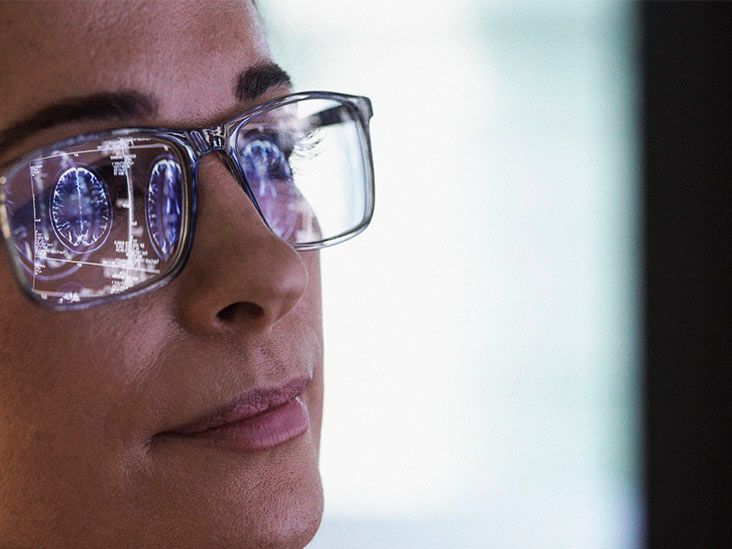
Alzheimer’s disease has a terrible habit of showing up late to the party and then acting like it owns the place. By the time memory problems become obvious, the biology behind the disease may have been brewing quietly for years. That is exactly why researchers are so excited about machine learning. Instead of waiting for symptoms to wave a red flag, machine learning can sift through mountains of health records, blood markers, brain scans, genetics, and cognitive data to spot patterns much earlier.
That does not mean a computer can gaze into the future like a neurologic fortune teller. But it does mean researchers are getting better at estimating who may be at higher risk, who may need closer follow-up, and which biological clues deserve more attention. In other words, the goal is not to replace doctors. It is to hand them a much smarter flashlight.
In this article, we will look at how Alzheimer’s develops, why early prediction matters, how machine learning models work, what they are already doing well, where they still fall flat on their very sophisticated faces, and what all of this could mean for patients, families, and clinicians.
Why predicting Alzheimer’s risk matters so much
Alzheimer’s is the most common cause of dementia, and its impact in the United States is enormous. Millions of older adults are living with the disease, and the number is expected to rise sharply as the population ages. The burden is not just medical. It affects independence, family life, finances, long-term care, and mental health for everyone in the orbit of the diagnosis.
The hard truth is that Alzheimer’s does not begin on the day someone forgets a name or gets lost driving home. Changes in the brain may start a decade or more before daily symptoms become obvious. Amyloid plaques, tau tangles, inflammation, blood vessel injury, and subtle structural brain changes can build quietly in the background. By the time clear cognitive decline appears, some damage may already be well established.
That is why earlier risk prediction matters. If clinicians can identify people with a higher likelihood of future Alzheimer’s disease, they may be able to monitor them more closely, confirm findings with additional testing, encourage risk-reducing lifestyle changes, and guide them toward earlier treatment discussions when appropriate. Early detection is also crucial for research. Clinical trials work better when investigators can find the right people at the right disease stage instead of casting a giant net and hoping for the best.
What machine learning actually means here
Machine learning is a branch of artificial intelligence that trains algorithms to recognize patterns in data. In Alzheimer’s research, those data can include electronic health records, lab values, medications, imaging results, speech samples, sleep data, blood biomarkers, genetic profiles, and neuropsychological testing.
Instead of asking one narrow question like, “Does high blood pressure raise risk?” a machine learning model can analyze thousands of variables at once and ask something much more useful: “What combination of factors tends to show up years before Alzheimer’s is diagnosed?”
That combination matters. A single factor such as high cholesterol or hypertension may not be enough to tell a meaningful story on its own. But when several risk signals cluster together, patterns begin to emerge. A model can learn from those clusters and assign a probability that a person belongs to a higher-risk group.
Common data sources used in prediction models
Electronic health records: These include diagnoses, prescriptions, abnormal lab results, and patterns of healthcare use. They are messy but powerful because they reflect real life rather than neat textbook cases.
Blood-based biomarkers: These tests measure proteins linked to Alzheimer’s biology, such as amyloid-related markers, phosphorylated tau, glial fibrillary acidic protein, and neurofilament light chain.
Brain imaging: MRI and PET scans can reveal atrophy, amyloid buildup, tau pathology, and vascular changes.
Genetics and multi-omics data: Some models incorporate APOE status and broader molecular signatures to improve risk estimates.
Cognitive and functional testing: Subtle shifts in memory, language, attention, or daily functioning may help refine prediction.
What recent research suggests
One of the most attention-grabbing findings came from researchers at UC San Francisco, who used machine learning to analyze patient records and identify patterns linked to Alzheimer’s disease years before symptoms were recognized. Their work suggested the disease could be predicted up to seven years before onset with meaningful predictive power. The model highlighted combinations of conditions rather than one magic clue, with high cholesterol appearing as an important predictor and osteoporosis emerging as a particularly notable signal in women.
That is a useful reminder that Alzheimer’s risk is not just about the brain floating mysteriously in isolation. It is tied to whole-body health. Vascular risk, metabolism, inflammation, and even sex-specific biology can all shape the story. Another major research thread has used artificial intelligence to map different brain-aging patterns. Instead of treating all older brains as if they age on the same path, newer models identify subgroups with more accelerated aging, higher vascular burden, more white matter injury, and greater dementia risk.
Researchers are also developing machine learning models that combine blood-based biomarkers with digital or spectral analysis. That line of work is especially exciting because blood tests are less invasive and more scalable than spinal taps or PET scans. If reliable blood-based models keep improving, screening and triage could become faster, cheaper, and more widely available.
On top of that, biomarker science is moving quickly. In 2025, the FDA cleared the first blood test to aid in diagnosing Alzheimer’s disease in cognitively impaired adults in specialized care settings. That test is not a screening tool for the general public, and it is not meant to stand alone. Still, the clearance was a big milestone because it showed how blood-based assessment is moving from research buzzword territory into clinical reality.
Stanford researchers have also reported promising work on a “resilience signature” in spinal fluid that may help forecast who develops dementia and how quickly symptoms may progress. That is important because amyloid and tau alone do not fully explain why one person declines rapidly while another remains stable for longer. In practical terms, prediction is evolving from a simple yes-or-no question into something more nuanced: not just will Alzheimer’s occur, but when, how fast, and for whom.
What machine learning can reveal about risk factors
The best machine learning studies do more than produce a number. They help uncover which factors repeatedly travel together before Alzheimer’s disease appears. Some of the most common signals overlap with what clinicians already suspect: high blood pressure, diabetes, physical inactivity, tobacco use, hearing loss, unhealthy cholesterol levels, and other vascular or metabolic problems.
That overlap is actually reassuring. If an algorithm claimed that Alzheimer’s risk was mainly driven by owning three beige cardigans and misplacing your TV remote on Tuesdays, scientists would have a problem. Instead, many findings point back to known biology. What is good for the heart often turns out to be good for the brain.
Machine learning may also help expose less obvious patterns. For example, sex-specific predictors may hint that women and men do not always travel the same path toward cognitive decline. Social and environmental factors matter too. Education, access to care, social isolation, and other nonmedical conditions can shape dementia risk, and future models may become better at incorporating those factors without oversimplifying them.
Where machine learning could help in real clinical life
1. Earlier triage
A primary care clinic may eventually use an algorithm to flag patients whose combinations of symptoms, lab trends, and medical history suggest elevated risk. That would not equal a diagnosis. It would simply suggest who may benefit from deeper evaluation.
2. Smarter use of biomarkers
Not everyone needs the same workup. Machine learning may help decide who should move on to blood biomarkers, MRI, PET imaging, or specialist referral, which could reduce cost and unnecessary testing.
3. Better clinical trial enrollment
Drug trials often struggle because participants are enrolled too late or have mixed underlying disease. Prediction tools could help identify people earlier and sort them into more biologically precise groups.
4. More personalized prevention strategies
If a model suggests that vascular risk factors are doing most of the heavy lifting for a particular person, the prevention conversation can focus aggressively on blood pressure, diabetes, exercise, sleep, cholesterol, and smoking cessation.
Important limits nobody should ignore
This is where we put away the confetti cannon for a moment. Machine learning is promising, but it is not magic, and there are real limitations.
Prediction is not certainty. A risk score is not destiny. Some people with “high risk” may never develop Alzheimer’s. Others with low-risk profiles still may.
Data quality matters. Electronic health records are imperfect. Diagnoses can be delayed, miscoded, incomplete, or influenced by who gets access to care.
Bias is a serious issue. If a model is trained mostly on one population, it may perform worse in groups that were underrepresented. That can widen inequities rather than reduce them.
Interpretability remains tricky. Some deep learning systems can be powerful but opaque. Clinicians may hesitate to trust a tool that says “high risk” without explaining why.
No single test should act alone. Even blood-based biomarkers and sophisticated algorithms need context. Clinical history, cognitive testing, imaging, and physician judgment still matter.
Screening raises emotional and ethical questions. Earlier risk information can help people plan, but it can also cause anxiety, stigma, insurance concerns, or confusion if the meaning of a prediction is not explained carefully.
Can machine learning replace doctors?
Not even close, and that is not an insult to machine learning. It is simply a reminder that medicine is more than pattern recognition. A person with memory complaints may have Alzheimer’s disease, vascular cognitive impairment, depression, sleep apnea, medication effects, thyroid problems, alcohol-related issues, or a complicated mix of several conditions at once.
A good clinician does something algorithms still struggle to do: combine hard data with nuance, context, conversation, values, and human judgment. The most realistic future is one in which machine learning acts like a very alert assistant. It points out patterns, estimates probabilities, and helps prioritize next steps. The physician still interprets the whole picture.
What people can do right now while the science advances
You do not need a neural network in your living room to take brain health seriously. Many steps associated with lower dementia risk are refreshingly low-tech. Move your body regularly. Manage blood pressure. Control diabetes. Address hearing loss. Stop smoking. Aim for healthy sleep. Eat a heart-friendly diet rich in fruits, vegetables, and healthy fats. Stay socially engaged. Challenge your mind. Keep up with routine care rather than treating annual checkups like optional sequels nobody asked for.
For people with concerning memory changes, the best move is still a medical evaluation. Early assessment may uncover treatable issues, support planning, and open access to specialists or newer diagnostic tools. Machine learning may sharpen the process, but showing up matters first.
The future of Alzheimer’s prediction
The future will likely be multimodal. Instead of relying on one biomarker or one scan, researchers are moving toward models that combine blood markers, imaging, genetics, cognitive measures, and everyday clinical data. That broader approach makes sense because Alzheimer’s is not a one-note disease. It is a messy biological orchestra with too many instruments playing at once.
As models improve, the biggest breakthrough may not be one dramatic “AI solves Alzheimer’s” headline. It may be something quieter and more useful: earlier referrals, smarter testing, better-targeted prevention, more accurate prognosis, and clinical trials that stop wasting precious time. That kind of progress may not make Hollywood fireworks, but it could make a real difference for millions of families.
So yes, machine learning may help predict Alzheimer’s risk. The key word is may. The science is advancing fast, but the smartest view is hopeful and cautious at the same time. We are not at the point where an algorithm can issue a perfect forecast. We are at the point where data science is finally becoming good enough to notice the whispers before the disease starts shouting.
Experiences related to Alzheimer’s disease and early risk prediction
The most powerful part of this topic is not the algorithm. It is the people standing behind the data. Consider the adult daughter who starts noticing that her father repeats the same story at dinner, misses a bill payment, and laughs it off as “just getting older.” In many families, that stage is a confusing gray zone. Nothing feels dramatic enough for a crisis, but nothing feels normal either. If a clinician had better tools to estimate risk earlier, that family might get answers sooner instead of spending two years arguing with the calendar, the car keys, and their own denial.
There is also the experience of the patient who feels fine but has a stack of risk factors quietly piling up: high blood pressure, high LDL cholesterol, poor sleep, diabetes, little exercise, and a family history that looms in the background like an unwelcome relative who never leaves. For that person, machine learning could eventually become a wake-up call framed not as doom, but as opportunity. A higher-risk profile might lead to earlier counseling, closer follow-up, or biomarker testing that helps guide next steps while there is still time to act.
Clinicians, meanwhile, often face a frustrating reality. Primary care visits are short, memory complaints are subtle, and symptoms can be explained away by stress, grief, depression, medication side effects, or plain exhaustion. A well-designed risk model could help them see what is easy to miss in a rushed visit. It could say, in effect, “This patient’s pattern deserves a second look.” That is not glamorous. It is simply useful.
Researchers experience this field differently. For them, every blood sample, brain scan, and medical record is part of a larger puzzle. Machine learning offers a way to connect pieces that humans might never see clearly on their own. But even in research, there is a sense of caution. No serious scientist wants to overpromise. Families affected by Alzheimer’s have heard enough miracle headlines to last several lifetimes. What they want now is something sturdier: tools that are accurate, fair, understandable, and available beyond elite medical centers.
Caregivers may feel the emotional side of prediction most sharply. Some want to know risk as early as possible so they can plan finances, legal documents, housing, and support systems. Others fear that a prediction without a definitive answer could create years of anxiety. Both reactions are understandable. Information can be empowering, but it can also be heavy. The way clinicians communicate risk will matter almost as much as the risk score itself.
Then there is the quieter experience shared by many older adults: the fear that every forgotten word is a warning sign. That fear can distort daily life. Better prediction tools may eventually help separate ordinary aging from meaningful concern. Forgetting where you left your reading glasses once is human. Forgetting what glasses are, why they exist, and accusing the toaster of stealing them is a different kind of plot twist.
In the end, the human experience of Alzheimer’s prediction comes down to one hope: more time. More time to understand what is happening. More time to make choices. More time to treat what can be treated, support what cannot be reversed, and preserve dignity along the way. If machine learning helps create that extra time, even imperfectly, it could become one of the most practical advances in modern dementia care.













