
Note: This article is written in original wording and synthesizes real information from computing-history archives, manufacturer documentation, technical references, and modern maker coverage. No source links are embedded per request.
When a Cassette Tape Decides It Wants to Be a Race Car
Most people hear the words “cassette tape” and immediately imagine mixtapes, pencil rewinding, and that tiny moment of panic when the tape gets chewed like spaghetti. But in the world of retro computing, the humble cassette is not just a nostalgic music format. It is a storage device, a timing puzzle, a mechanical headache, and, in the right hands, a surprisingly ambitious engineering challenge.
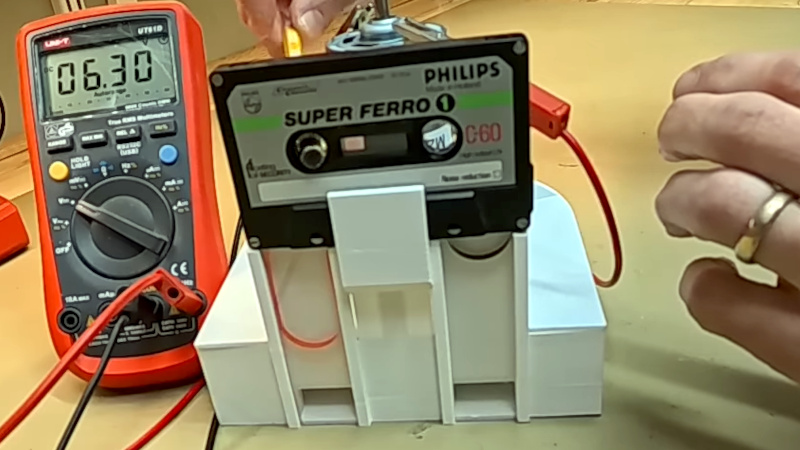
The idea behind a steady vacuum for the fastest cassette tape drive ever sounds almost absurd at first. Why would anyone add vacuum columns, centrifugal fans, pressure measurements, and 3D-printed hardware to a cassette drive? The answer is simple: speed. Old home computers used cassette tapes because they were cheap and available, but they were also painfully slow. Loading a program could take minutes. Loading a larger game could feel like waiting for bread to evolve into toast by natural selection.
A modern maker-style experiment has revived a big-computer idea from the 1950s and 1960s: use vacuum-assisted tape loops to buffer the tape, reduce stress, and make rapid motion near the read/write head easier to control. In other words, the project asks a deliciously nerdy question: what if the compact cassette borrowed tricks from refrigerator-sized mainframe tape drives?
Why Cassette Tape Was Used for Computer Storage
Before floppy disks became common and before solid-state storage turned everything into silent magic, cassette tapes gave early personal computers an affordable way to save and load programs. The Compact Cassette, introduced by Philips in the 1960s, was originally designed for audio. Yet its magnetic tape could also store digital information encoded as sound-like signals.
That made cassettes attractive to hobbyists and early computer owners. A cassette recorder was cheaper than a disk drive, the tapes were easy to buy, and the format was already familiar. Machines such as the Commodore PET, VIC-20, Commodore 64, TRS-80, BBC Micro, ZX Spectrum, and many S-100 systems all used tape storage in one form or another.
The problem was not whether data could be stored on cassette. It could. The problem was that audio cassette mechanisms were not built for aggressive computer-style data access. They were designed to play music at a steady pace, not to sprint, stop, reverse, and hit precise timing marks like a caffeinated robot librarian.
The Speed Problem: Cassettes Were Reliable Enough, But Slow
Classic cassette-based systems used different encoding schemes. The Kansas City Standard, developed in the mid-1970s for microcomputer data storage, used audio frequency-shift keying and typically ran at 300 baud. Later variations and computer-specific systems reached 1200 baud, 1500 baud, 2400 baud, or more. Turbo loaders pushed some home-computer tapes faster, but reliability became a constant battle.
Commodore’s Datasette was famously dependable for its ecosystem because it used a dedicated digital interface rather than a generic audio recorder. Still, standard loading speeds were slow enough that users became experts at patience. The ZX Spectrum’s cassette routines were faster than many earlier standards, while the TRS-80 Model III offered cassette speeds such as 500 and 1500 baud. The BBC Micro supported 300 and 1200 baud cassette operation.
Against that historical background, the target of loading roughly 64 kilobytes in about ten seconds is wildly ambitious for cassette tape. That is around 6.4 KB per second, before accounting for overhead, synchronization, error correction, and real-world ugliness. For a cassette, that is not casual jogging. That is sprinting in dress shoes across a waxed floor.
Enter the Vacuum Column: A Mainframe Trick in Miniature
To understand the project, it helps to look back at large magnetic tape drives used with early IBM systems and other mainframes. Those machines often used open reels of half-inch magnetic tape. The tape moved past read/write heads at high speed, and the system had to start and stop quickly between blocks of data.
The challenge was inertia. A full reel of tape is heavy compared with the short section of tape near the head. If the drive tried to yank the entire reel instantly, the tape could stretch, slip, or break. Engineers solved this by creating slack loops held inside vacuum columns. These columns gently pulled sections of tape into U-shaped loops. The drive could accelerate the small tape section near the head quickly while the larger reels caught up more gradually.
IBM’s early magnetic tape systems helped make this idea famous. The vacuum column became an industry-standard solution for high-speed tape handling because it buffered motion, protected the tape, and allowed rapid start-stop operation. It looked dramatic, too: reels spinning, tape loops rising and falling, and machines behaving like they were thinking very hard in a 1960s movie.
How a Vacuum Helps a Cassette Tape Drive Go Faster
A cassette is physically different from a reel-to-reel mainframe tape unit. It is small, enclosed, and designed for gentle audio playback. But the principle still applies: if you can isolate the tape section near the head from the inertia and friction of the cassette reels, you can potentially move that section faster and with better control.
In a vacuum-assisted cassette drive concept, the tape is pulled down into small loops on either side of the head path. Those loops act as buffers. A capstan and motor system can control the tape near the head, while the cassette reels supply and take up tape without needing to respond instantly to every speed change.
This matters because data recovery from tape depends on timing. The system must read transitions accurately. If tape motion wobbles, stretches, slips, or flutters, the encoded data can become difficult or impossible to decode. A steady vacuum is not about theatrics. It is about giving the tape a controlled environment so high-speed reading has a fighting chance.
The Fan Is Not Just a Fan: Why Vacuum Design Matters
Creating useful vacuum pressure in a compact 3D-printed cassette mechanism is harder than simply attaching a random fan and hoping physics feels generous. The vacuum must be strong enough to pull tape into clean loops but not so aggressive that it damages the tape, creates unstable motion, or turns the mechanism into a tiny plastic leaf blower with ambitions.
Modern maker experiments around this idea have focused heavily on centrifugal fan design. A centrifugal fan can create pressure by spinning air outward through an impeller. The details matter: impeller shape, motor speed, housing clearance, leakage, duct geometry, and whether the impeller is open or closed all affect performance.
One practical discovery from this type of experimentation is that raw rotational speed can matter more than exotic blade geometry. A closed impeller may deliver better pressure for the application because it reduces losses and channels airflow more effectively. Measuring the pressure with a homemade manometer is exactly the kind of garage-lab move that makes retro hardware projects wonderful. It is simple, visual, and brutally honest: the water column does not care about your design confidence.
Why 64 KB in Ten Seconds Is Such a Big Deal
For modern readers, 64 KB sounds tiny. A single smartphone photo can be dozens of times larger. But in 8-bit computing terms, 64 KB is a whole kingdom. Many classic machines had address spaces around that size. Loading 64 KB in ten seconds from a compact cassette would feel shockingly fast compared with traditional cassette loading.
To reach that speed, the system needs more than a faster motor. It needs a complete data path: stable tape motion, high-quality head alignment, suitable magnetic media, efficient encoding, robust synchronization, and error detection or correction. The tape drive must also handle acceleration and deceleration without smearing the timing of the signal.
That is why the vacuum loop is so interesting. It does not solve the entire problem, but it attacks one of the biggest mechanical obstacles. It says, “Let the reels be lazy; let the tape at the head be precise.” That is a very old mainframe idea wearing a cassette-sized jacket.
Mechanical Challenges Behind the Fastest Cassette Tape Drive
Tape Tension
Tape tension must stay within a safe range. Too little tension and the tape can wander, wrinkle, or lose proper contact with the head. Too much tension and it can stretch, wear, or snap. A vacuum loop gives the system a way to absorb tension changes without letting the tape path become chaotic.
Head Contact
Magnetic tape must pass the read/write head consistently. Poor contact reduces signal strength and increases errors. At higher speeds, even tiny alignment problems become louder. A fast cassette drive needs careful pressure pads, head positioning, and tape path control.
Wow, Flutter, and Timing Jitter
Audio listeners know wow and flutter as pitch instability. Data systems know the same problem as timing trouble. If the tape speed varies, the encoded pulses arrive early or late. At low data rates, the decoder may forgive this. At high data rates, forgiveness leaves the building.
Reel Inertia
The cassette reels were never designed for violent changes in direction or speed. Vacuum buffering helps separate reel behavior from head-area motion, which is precisely why old high-performance tape drives used the concept.
Data Encoding: The Other Half of the Battle
Even with perfect tape motion, the data encoding must suit the medium. Early cassette systems often used tones because an audio recorder naturally handled audio frequencies. A “0” and a “1” could be represented by different wave patterns, similar in spirit to modem communication.
For a high-speed cassette drive, designers can consider more advanced encoding strategies. They may use self-clocking codes, improved pulse detection, multiple tracks, stronger checksums, block-level error correction, or signal processing techniques borrowed from digital communications. The goal is to squeeze more reliable bits through a narrow magnetic and mechanical channel.
However, every improvement has trade-offs. Denser encoding may increase speed but reduce tolerance for noise. Stronger error correction may improve reliability but add overhead. Faster tape speed may improve throughput but raise mechanical stress. Engineering is mostly the art of moving the problem somewhere else and then pretending that was the plan all along.
What Makes This Project More Than Retro Nostalgia
At first glance, building an ultra-fast cassette tape drive may seem like a novelty. After all, modern flash storage is cheap, tiny, and absurdly fast. But the project is valuable because it teaches real engineering lessons in a visible way.
Unlike solid-state storage, tape is physical. You can see it move. You can watch loops form. You can measure vacuum pressure. You can hear motors complain when your design is rude to them. This makes the project educational for mechanics, fluid dynamics, signal processing, electronics, and computing history.
It also reminds us that old technology was not primitive. Mainframe tape drives were sophisticated machines. Their vacuum columns, capstans, servo systems, and read/write electronics solved difficult problems with the tools available at the time. Shrinking that idea into a cassette project is not just retro cosplay. It is a respectful remix.
Magnetic Tape Is Still Alive
One of the funniest twists in storage history is that tape never truly died. It stopped being fashionable for consumers, but in enterprise archiving, research, media preservation, and cloud-scale storage, magnetic tape remains highly relevant. Modern LTO tape cartridges can store enormous amounts of data, and future roadmaps continue to push capacity higher.
Tape survives because it has strengths that disks and flash do not always match: low long-term storage cost, offline security, strong archival value, and energy efficiency when data is not constantly accessed. The same basic idea behind a cassette and a mainframe reelmagnetized material moving past a headstill matters in data centers.
So, a vacuum-assisted cassette speed project is not merely a museum trick. It connects the living present of tape storage with the playful past of home computing. It is a reminder that some technologies age less like milk and more like cast iron cookware: old, heavy, occasionally fussy, but still very capable when handled properly.
Could This Become the Fastest Cassette Tape Drive Ever?
The phrase fastest cassette tape drive ever should be handled carefully. “Fastest” depends on definitions. Are we talking about a standard compact cassette shell? A modified cassette mechanism? Audio tape only? Multiple tracks? Raw bit rate or verified data throughput? One-way streaming speed or practical load time?
Still, the ambition is real. Loading 64 KB in ten seconds would outperform many classic consumer cassette data systems by a wide margin. Achieving it reliably would require not only a vacuum loop but also excellent electronics, careful calibration, and a format designed for speed rather than compatibility with old machines.
That is what makes the project exciting. It is not merely trying to preserve an old method. It is asking how far the old method can be pushed when modern tools3D printing, affordable microcontrollers, better motors, digital signal processing, and rapid prototypingjoin the party.
Practical Lessons for Builders and Retro Hardware Fans
Anyone interested in building or studying a high-speed cassette tape drive should focus on the whole system, not just one heroic part. A stronger motor cannot fix bad tape guidance. A clever encoding format cannot fix unstable speed. A beautiful 3D-printed housing cannot fix leaks if the vacuum path is poorly sealed.
The best approach is experimental and incremental. First, create a stable tape path. Then measure vacuum pressure. Then test loop formation. Then verify speed stability. Then capture real signals from tape and analyze them. Only after that should the data format become aggressive.
This is also where old-school measuring tools shine. A simple manometer can show whether a fan produces useful pressure. An oscilloscope can reveal signal quality. A logic analyzer can inspect decoded timing. Test tapes can expose alignment problems. The cassette may be vintage, but the lab can be wonderfully modern.
Experiences and Reflections: What Working With Fast Cassette Tape Teaches You
Spending time with cassette-based storage changes how you think about data. On a modern computer, saving a file feels abstract. You click, blink, and it is done. With tape, data becomes physical theater. A file is no longer just bytes. It is motion, friction, magnetism, tension, dust, alignment, and a motor trying its best not to sound embarrassed.
The first experience many people have with cassette data is waiting. You press play, listen to a stream of chirps and screeches, and hope the machine reaches the end without throwing an error. That waiting teaches humility. It also teaches why early programmers cared so much about compact code. When every kilobyte costs time, waste feels personal.
A vacuum-assisted fast cassette project adds a different kind of experience: the joy of seeing invisible forces become useful. Vacuum pressure is not visible, but the tape loop reveals it. When the fan spins and the tape drops smoothly into the column, the design suddenly feels alive. It is like watching a tiny mainframe take a breath.
There is also a strong lesson in balance. More vacuum is not automatically better. More speed is not automatically better. More complicated encoding is not automatically better. A good system is tuned. It gives the tape enough support without bullying it. It moves fast without becoming reckless. It reads data aggressively while still allowing for error recovery. That balance is what separates an impressive prototype from a machine you would trust with real data.
Working with cassette mechanisms also makes you appreciate mechanical tolerances. A slightly worn belt can change speed. A dirty head can reduce signal strength. A warped shell can affect tape travel. A pressure pad that looks fine may behave badly at higher speed. In modern electronics, problems often hide inside chips. With tape, many problems are right there in front of you, wearing plastic wheels and smelling faintly of the 1980s.
Another memorable experience is the sound. A standard cassette loader has a familiar digital squeal. A vacuum-assisted experimental drive would add fan noise, motor pitch, and the soft movement of tape loops. It would not be silent or elegant in the smartphone sense. It would be mechanical, expressive, and slightly ridiculousin the best possible way.
For retro computing fans, the emotional reward is huge. The project turns a format remembered for slow loading into a platform for serious experimentation. It takes something ordinary and asks an extraordinary question. That is the heart of hardware hacking: not “Is this practical?” but “What can this teach us if we push it further than anyone reasonably should?”
And yes, a USB flash drive will win every practical contest. It will be faster, smaller, cheaper, and less dramatic. But it will never show you tape loops dancing in vacuum columns. It will never make you think about capstan inertia over breakfast. It will never turn 64 KB into a mechanical adventure. The fastest cassette tape drive ever is not trying to beat modern storage at its own game. It is creating a better game: one where history, physics, and curiosity share the same workbench.
Conclusion
A steady vacuum for the fastest cassette tape drive ever is more than a quirky retro project. It is a bridge between mainframe engineering and home-computer nostalgia, between magnetic tape history and modern maker creativity. By borrowing the vacuum-column concept from classic high-speed tape drives, an experimental cassette system can reduce mechanical stress, stabilize tape motion, and chase data rates that once would have sounded outrageous for a compact cassette.
The project also proves that old storage media still have stories to tell. Cassette tape may be obsolete for everyday computing, but as an engineering playground, it remains wonderfully alive. It offers moving parts, measurable problems, and satisfying breakthroughs. In a world where most storage is sealed, silent, and invisible, a vacuum-assisted cassette drive gives us something rare: data we can watch.













