
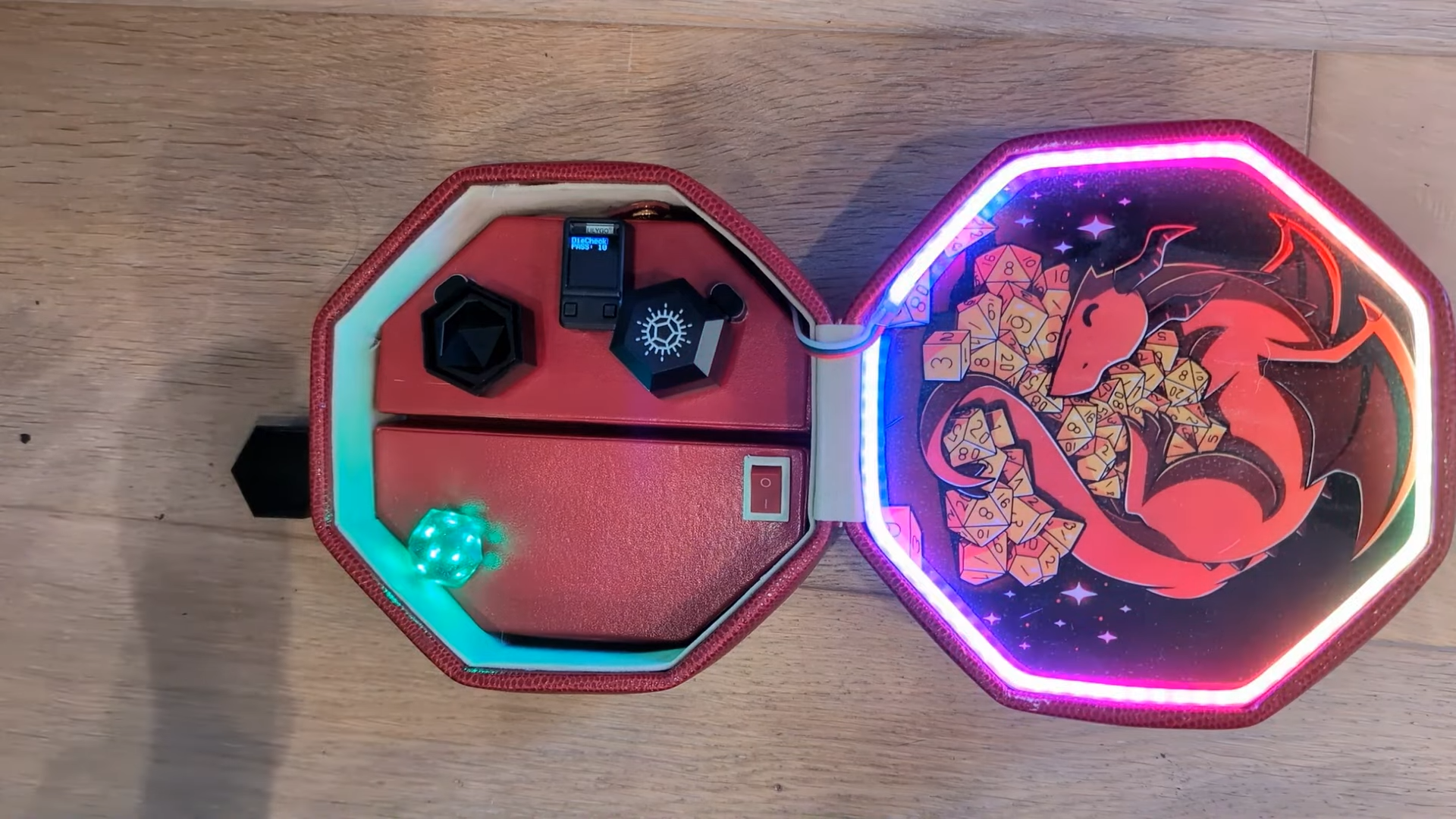
Dice have always been tiny engines of suspense. One moment they are harmless little cubes or polyhedrons sitting in your palm; the next, they are deciding whether your wizard vaporizes a dragon or accidentally invents the world’s most embarrassing campfire. Now imagine giving those dice Bluetooth, internal LEDs, roll detection, wireless charging, and a glowing box that reacts to every natural 20 like it just won a game show. That is the delightful promise of a smart LED dice box powered by the Internet of Things.
A smart LED dice box is more than a fancy container for tabletop gaming accessories. It is a compact IoT project that blends connected dice, programmable RGB lighting, a microcontroller, battery power, display feedback, and sometimes smart-home integration. In practical terms, it can store dice, charge dice, detect rolls, log statistics, trigger lighting scenes, and turn game night into a small theatrical production. In emotional terms, it is what happens when a dice goblin learns JavaScript and gets a soldering iron.
The idea has gained attention among makers because it sits at a perfect intersection: tabletop role-playing games, open-source LED software, Bluetooth-enabled gadgets, and the maker community’s irresistible urge to make ordinary objects glow. Whether you play Dungeons & Dragons, Pathfinder, board games, or homebrew campaigns where the real villain is everyone forgetting initiative order, a connected dice box adds both function and flair.
What Is a Smart LED Dice Box?
A smart LED dice box is an illuminated, connected storage and interaction hub for electronic dice. Traditional dice boxes protect and organize dice. A smart version adds sensors, programmable lighting, wireless communication, and software logic. The box can respond when a die rolls, display roll results, assign different dice to different lighting zones, and even record dice behavior over time.
The most interesting modern examples use smart dice such as Pixels Dice, which include internal LEDs, motion sensing, Bluetooth connectivity, rechargeable batteries, and wireless charging coils. These dice can detect which face lands upward and transmit the result to a companion device. When paired with an LED dice box, the roll does not simply happen; it becomes data, animation, and drama.
That data can be used in several ways. The box can flash green when a skill check succeeds, pulse red when the rogue fails stealth, or sparkle triumphantly when someone rolls a critical hit. For players who enjoy statistics, the system can log rolls and help answer the ancient tabletop question: “Is this die cursed, or am I just emotionally attached to bad math?”
How the Internet of Things Makes Dice More Interesting
The Internet of Things, or IoT, describes everyday objects that can communicate with other devices, networks, or software systems. In this case, the “thing” is not a thermostat or refrigerator. It is a dice box, which is objectively more fun and less likely to judge your grocery habits.
IoT functionality matters because it changes the dice box from a passive object into an active participant. The dice can report results wirelessly. The box can interpret those results. LED software can convert them into effects. A display can show information. A web interface or mobile app can change modes. A home automation platform can potentially connect the dice box to other lights in the room.
This is where the project becomes more than decoration. A regular LED strip can glow. A smart LED dice box can react. It can know which die rolled, which number appeared, which player triggered an event, and which animation should follow. That feedback loop is the heart of IoT: sensing, communicating, processing, and responding.
The Core Components Behind the Build
1. Smart Dice with Bluetooth and Sensors
The dice themselves are the stars of the show. Smart dice typically combine an accelerometer or inertial sensor, a rechargeable battery, embedded LEDs, Bluetooth Low Energy, and internal firmware. The sensor helps determine movement and orientation. Bluetooth sends the roll result to another device. The LEDs provide visual feedback directly inside the die.
This is a major leap from older electronic dice projects, which often used seven LEDs and a button to simulate a six-sided die. Those projects are still excellent for learning the basics of digital output, random number generation, and button debouncing. But smart dice add physical roll detection, wireless data, app integration, and rechargeable hardware in a tiny enclosure. In other words, the dice went to engineering school and came back wearing RGB.
2. An ESP32 or Similar Microcontroller
The microcontroller is the brain of the dice box. Many makers choose boards from the ESP32 family because they combine Wi-Fi, Bluetooth capability, strong community support, and enough processing power for LED effects and web-based configuration. Depending on the software stack, an ESP32-S3 or similar board may be especially useful for handling display output, network features, and LED control.
The controller receives or coordinates dice data, manages lighting zones, powers a small display, stores settings, and communicates with external services. For a polished project, the microcontroller also needs to boot reliably, handle reconnection gracefully, and avoid turning the gaming table into a debugging convention.
3. Addressable RGB LEDs
Addressable RGB LEDs are what give the smart dice box its visual personality. Unlike simple LEDs that all turn on together, addressable LEDs allow individual control over color and brightness. Strips based on chipsets such as WS2812B or SK6812 are popular because a microcontroller can drive long chains of lights with relatively simple wiring.
For a dice box, addressable LEDs can be installed around the inner rim, under a translucent diffuser, beneath compartments, or along separate zones. Each segment can correspond to a specific die, player, game state, or effect. One section might glow blue for a d20, another orange for damage dice, and another purple because the warlock insisted everything be “ominous but tasteful.”
4. WLED for Lighting Control
WLED is a major reason projects like this feel achievable instead of absurdly complicated. It is open-source firmware commonly used to control addressable LEDs from an ESP8266 or ESP32. It includes a web interface, presets, palettes, effects, segments, brightness controls, and integration options. For a dice box, WLED can handle the heavy lifting of LED animation while custom code or user modifications connect roll events to lighting behavior.
Segments are especially useful. A single LED strip can be divided into multiple virtual sections, allowing one die to control one part of the box while another die controls a different part. That means a roll can trigger a localized effect instead of making the whole box erupt like a haunted arcade cabinet.
5. Display, Battery, and Charging Hardware
A polished smart dice box often includes a small TFT display or OLED screen for status information. The screen can show connection status, selected mode, battery level, die identity, roll totals, or simple menus. This makes the box usable without constantly checking a phone or computer.
Battery power is another key design choice. A tabletop accessory should not drag a cable across the battle map like a technological tripwire. A hidden rechargeable battery keeps the build portable. Wireless charging coils or built-in charging contacts can recharge the dice themselves, turning the box into both a command center and a charging dock.
Why Tabletop Gamers Actually Care
It is easy to dismiss a smart LED dice box as overkill. After all, dice have worked perfectly well for thousands of years without needing firmware updates. But tabletop gaming is not only about efficiency. It is about mood, ritual, suspense, and shared moments. A connected dice box enhances those moments without replacing the tactile joy of rolling real dice.
For game masters, the box can reinforce storytelling. A trap check might trigger a red warning glow. A healing spell might ripple soft green light. A boss fight could load a preset that makes the table feel like everyone has entered a lava-filled cathedral of poor decisions.
For players, the box adds personalization. Different dice can use different color themes. A player’s favorite d20 can flash in their character’s colors. Critical hits can get special animations. Failed death saves can dim the box like the dice are politely preparing a sympathy card.
For data-minded gamers, roll logging is the secret sauce. A smart dice box can help track results across a session, campaign, or specific die. While tabletop superstition will never die, data can at least give it a chair and a spreadsheet. Players can review whether a die is rolling evenly, whether a character is unusually lucky, or whether everyone simply remembers failures more vividly than successes.
Design Ideas for a Better Smart LED Dice Box
Use Zones Instead of One Big Glow
The most impressive LED effects are not always the brightest. A box with separate lighting zones feels more intelligent because it responds with precision. Assign one segment to each die slot, one to the rolling area, and one to ambient table lighting. When a d20 rolls, only the d20 zone reacts. When multiple dice roll, multiple zones can animate together.
Add Modes for Different Games
A good dice box should support more than one style of play. A Dungeons & Dragons mode might highlight d20 rolls and skill checks. A board game mode could focus on six-sided dice totals. A statistics mode could keep lighting subtle while logging results. A party mode could ignore all strategic value and simply make the box look like it swallowed a tiny nightclub.
Make the Interface Simple
The best maker projects feel magical because they hide complexity. A smart dice box may involve Bluetooth services, LED protocols, JSON messages, firmware branches, battery management, and display drivers. The user should not need to think about any of that during a game. A simple menu, a few presets, and reliable automatic reconnection are more valuable than twenty features nobody can find.
Plan for Power Early
LEDs can draw significant current at high brightness, especially if many pixels are set to white. A beautiful dice box also needs to be electrically sensible. Builders should estimate current draw, choose an appropriate battery, include safe charging circuitry, use correct wire gauge, and avoid pushing tiny boards beyond their comfort zone. Nothing ruins immersion faster than a “critical hit” animation followed by the smell of warm plastic.
Security and Privacy: Yes, Even for Dice
Any IoT project should treat security as part of the design, not as a decorative sticker applied after panic sets in. A smart LED dice box may seem low-risk, but it can still connect to phones, local networks, web interfaces, or home automation platforms. Good habits matter.
Keep the device on a trusted local network. Use strong passwords for web interfaces when available. Update firmware from reputable sources. Avoid exposing hobby devices directly to the public internet. If MQTT or a home automation platform is used, authenticate clients and protect communication where practical. A dice box does not need to become the weakest link in a smart home just because someone wanted their d20 to glow like a radioactive gumdrop.
Privacy is also worth considering. Roll logs are usually harmless, but they are still data. If the box records player names, campaign history, timestamps, or game behavior, decide where that information is stored and who can access it. For most hobby builds, local storage is enough. The dice do not need a cloud account to shame your barbarian for missing three attacks in a row.
What Makes This Project So Appealing to Makers?
The smart LED dice box is satisfying because it combines many maker skills in one compact build. It involves woodworking or enclosure design, 3D printing or modification, embedded electronics, battery safety, LED diffusion, wireless communication, software configuration, and user experience design. It is a small object with a surprisingly large curriculum hidden inside.
It also rewards polish. A breadboard prototype can prove the concept, but a finished dice box feels like a prop from a fantasy tavern that secretly has a Wi-Fi password. A thrifted wooden box can become a high-tech artifact. A small display can make the project feel like a commercial device. A diffuser can transform harsh LED dots into a smooth magical glow. The difference between “pile of parts” and “enchanted game accessory” is often patience, sanding, cable management, and the willingness to redo the lid because the first version looked like a raccoon installed it.
Experience Section: Lessons From Building and Using a Smart LED Dice Box
The first lesson from working with a smart LED dice box concept is that the enclosure matters as much as the electronics. It is tempting to start with code because code feels flexible. But the physical box determines everything: LED placement, battery size, charging access, cable routing, screen visibility, dice storage, and whether the lid closes without making a noise like a tiny robot breaking its ankle. A wooden octagonal box, a 3D-printed case, or a modified craft box can all work, but each one demands careful measuring before components are permanently mounted.
The second lesson is that light diffusion can make or break the final look. Bare RGB LEDs are bright, useful, and visually aggressive. Without diffusion, they can create sharp dots that feel less like magic and more like a festive motherboard. A thin acrylic diffuser, frosted plastic, parchment-like inserts, or translucent resin panels can soften the glow. Even reducing brightness in software can improve the experience. Game night lighting should support the table, not interrogate everyone like a casino security lamp.
The third lesson is that reliability beats novelty. A smart dice box can have dozens of animations, but if it fails to reconnect when the session starts, players will quickly return to ordinary dice and snacks. The best experience comes from a simple default mode that always works. Fancy modes can exist, but the core behavior should be immediate: power on, connect, recognize dice, show status, react to rolls. The more invisible the technology becomes, the more magical it feels.
The fourth lesson is that roll feedback should be meaningful, not constant. If every roll triggers a ten-second rainbow explosion, the table will enjoy it for five minutes and then quietly start wishing the goblins would win. Short animations work best. A quick pulse for ordinary rolls, a special effect for critical results, and subtle ambient lighting between turns create rhythm without stealing attention from the story.
The fifth lesson is that smart dice can change player behavior. Once rolls are logged, players become more curious about probability. Someone will ask whether a die is fair. Someone else will insist the blue die has “betrayal energy.” The game master may use roll history to settle jokes, spot patterns, or simply enjoy post-session statistics. The data should not replace fun, but it can add another layer of conversation.
The final lesson is that this project is best approached as a playful experiment rather than a mandatory upgrade. Nobody needs a smart LED dice box to enjoy tabletop games. That is exactly why it is charming. It exists because making things glow, connect, react, and tell tiny stories is fun. It turns a humble dice container into a conversation piece, a learning platform, and a theatrical assistant for heroic victories and mathematically devastating failures.
Conclusion
A smart LED dice box thanks to the Internet of Things is a perfect example of modern maker culture: practical enough to use, ridiculous enough to love, and technically rich enough to teach real skills. It combines smart dice, Bluetooth communication, addressable LEDs, WLED effects, microcontroller control, battery power, and tabletop imagination into one compact accessory.
For gamers, it adds atmosphere and memorable feedback. For makers, it offers a rewarding challenge across hardware, software, design, and user experience. For dice collectors, it provides a glowing shrine to the small plastic or resin objects that control everyone’s destiny. And for anyone who has ever blamed a die for a bad roll, it offers the dangerous possibility of evidence.
The best version of this project is not the one with the most effects or the brightest LEDs. It is the one that disappears into the rhythm of play, supports the story, and makes the table smile when the dice land. That is the real magic of a connected dice box: not that it puts the Internet of Things into tabletop gaming, but that it makes technology feel like part of the adventure.
Note: This article is written for web publication and synthesizes publicly available information about smart dice, IoT hardware, addressable LEDs, WLED, ESP32-class controllers, Bluetooth connectivity, MQTT concepts, and practical maker project design. No source links or citation artifacts are embedded in the article body.












