
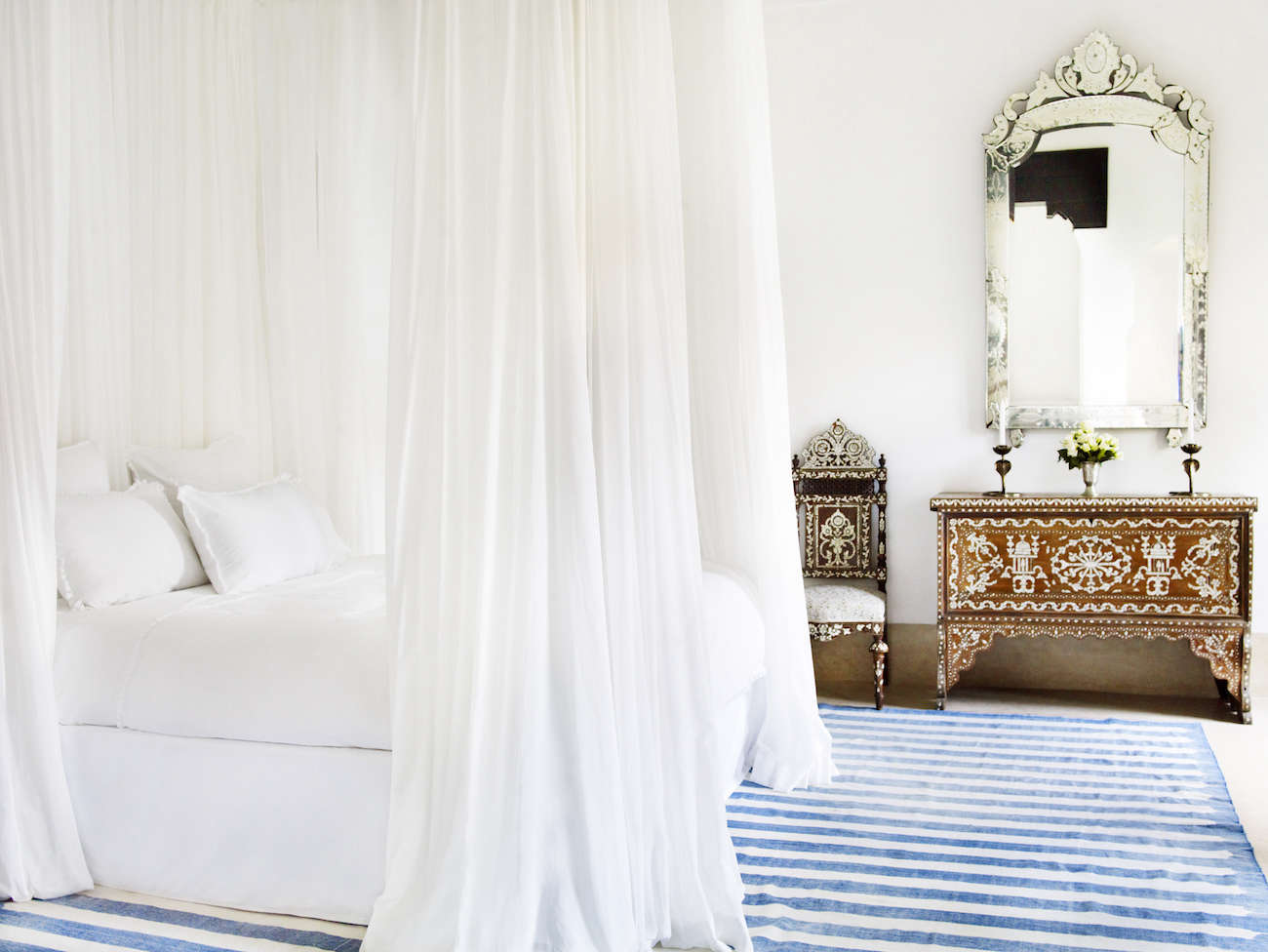
If some hotels shout for attention, Jasper Conran’s riad in Marrakech does the exact opposite. It lowers its voice, straightens the linen, lights a lantern, and somehow becomes even more irresistible. Tucked inside the city’s medina, this restored riad feels less like a trendy design project and more like a beautifully guarded secretone with whitewashed walls, fluttering voile, scented gardens, hand-finished plaster, and the sort of quiet glamour that makes you sit up a little straighter without knowing why.
That is the magic of L’Hôtel Marrakech, Jasper Conran’s intimate Moroccan retreat. It has the bones of a historic riad, the craftsmanship of a serious restoration, and the personality of a collector’s home. The result is not flashy luxury. It is something harder to pull off: a mood. A point of view. A place that feels cinematic without becoming theatrical, romantic without becoming syrupy, and polished without losing its pulse.
For design lovers, travelers, and anyone who enjoys the idea of old-world beauty with modern comfort, this romantic riad offers a lesson in restraint. It proves that elegance does not require excess, and that the most memorable interiors are often the ones that know when to stop talking.
The Backstory: A Historic Riad Reimagined with Intention
Part of the appeal begins with the building itself. Jasper Conran’s hotel occupies a restored 19th-century riad in Marrakech’s medina, a structure that was once part of a larger palace complex. Instead of turning it into a glossy fantasy version of Morocco, the project leaned into authenticity. Local craftspeople restored the property using traditional materials and time-honored techniques, which helps explain why the place feels rooted rather than staged.
That distinction matters. In a destination where design can sometimes slide into caricaturemore tassels, more patterns, more “look at me” dramaConran chose a different route. He kept the spirit of the riad intact and filled it with beautifully judged layers: antique furniture, Moroccan textiles, soft colors, art, lighting, and objects from his own collection. It reads as deeply personal, but not in a messy “someone went antiquing with no supervision” sort of way. More in the sense that every room feels edited by a person with a sharp eye and a calm hand.
This is what gives the riad its emotional pull. It is not simply decorated. It is curated, composed, and lived-in enough to feel believable. That balance is rare, and it is the reason the hotel still stands out in conversations about the best design-led stays in Marrakech.
Why This Romantic Riad Feels So Different
It feels like a home first, hotel second
Many boutique properties say they want to feel “like a home.” Most of them mean there are two books on a table and maybe a ceramic bowl full of lemons. Conran’s riad actually earns the comparison. The atmosphere is intimate, and the scale helps. With only a small number of suites arranged around a central courtyard, the property avoids the anonymous feeling of a larger luxury hotel. Guests are not processed through the place. They settle into it.
That intimacy is central to the romance of the riad. Not romance in the rose-petals-everywhere sense, but romance in the older, more atmospheric sense: privacy, shadow, candlelight, soft music, quiet corners, lingering breakfasts, and rooms that seem designed for long conversations and afternoon reading. It is less “honeymoon package” and more “why is my real life not this elegant?”
It uses Moroccan craft without turning it into costume
One of the smartest things about this riad is how naturally Moroccan details are integrated. You see zellige tilework, polished tadelakt plaster, painted ceilings, carved details, and traditional layouts, but the effect is never overwhelming. Conran avoids the trap of throwing every beautiful local motif into the same room like a design buffet. Instead, he lets individual materials breathe.
The whitewashed walls and soft palette are especially important. They create visual stillness, which gives the textures room to do their work. A painted ceiling becomes more dramatic because the room around it is quiet. A tadelakt bathroom feels richer because it is not fighting ten other decorative statements. The overall impression is luxurious, but also restfula word many hotels forget to prioritize.
The Design Language: White Voile, Tadelakt, and Unfussy Glamour
Conran’s design language in Marrakech is remarkably disciplined. The suites are spacious and airy, with high ceilings, fine linens, antique pieces, and soft colors that seem to cool the eye. Four-poster beds draped in flowing white voile appear throughout the property, and they do more than add drama. They soften the architecture, filter the light, and create that dreamy, slightly cinematic mood for which the hotel is known.
Bathrooms finished in traditional tadelakt give the interiors a velvety depth. Unlike standard glossy tile-and-marble luxury, tadelakt has warmth. It catches light in a subtle way and makes wet spaces feel almost sculptural. Meanwhile, zellige around fountains, baths, and architectural accents brings that unmistakable Moroccan shimmerhandmade, irregular, and alive.
The effect of all this is best described as restrained romance. There is beauty in every direction, but nothing screams. The rooms do not need to prove they are special; they simply are. That confidence is a huge part of their charm.
A Courtyard Garden That Does Half the Seducing
At the center of the riad is one of its most memorable features: a broad courtyard garden with a pool, fountain, and layers of planting that soften the architecture and perfume the air. Banana, orange, lemon, fig, and olive trees mingle with jasmine, bougainvillea, honeysuckle, geraniums, and roses. Birds gather in the greenery. Lanterns glow at dusk. The mood shifts through the day from bright and botanical to hushed and almost theatrical by evening.
This garden is not just a decorative flourish. It is the emotional core of the property. Traditional riads are built around courtyards for a reason: they create privacy, shade, calm, and a rhythm of indoor-outdoor life that feels both ancient and incredibly current. In Conran’s hands, the garden becomes more than a courtyard. It becomes the hotel’s main character.
That is why the place feels so romantic. The garden buffers the noise of the medina, filters the light, cools the air, and makes every room feel connected to something alive. It turns breakfast into an event and late afternoon into a temptation. It is very difficult to sit beneath those trees and not suddenly believe that your emails can, in fact, wait.
Suites That Feel Like Collected Stories
The suites at Jasper Conran’s riad are individually designed, and each one carries its own personality while still fitting the larger mood of the hotel. Some overlook the courtyard garden and pool; others open onto private terraces or courtyards. Several have fireplaces. One of the larger suites includes a private courtyard with a green-tiled fountain. Another pairs bright windows with a sitting room and open fire. Others feature painted ceilings, antique furnishings, private terraces, or lounge alcoves that make them feel more like apartments than hotel rooms.
What makes these suites memorable is not simply their size or layout. It is the sense that each one has been assembled rather than manufactured. Antique tables, paintings, textiles, lighting, and decorative objects are placed with care, but never to the point of fussiness. You notice craftsmanship first, then atmosphere, then comfortand in a well-designed hotel, that is exactly the correct order.
And yes, the beds matter. Deep, linen-dressed, and framed by flowing voile, they look like they belong in a black-and-white film where everyone is more glamorous than the rest of us and somehow never spills coffee on anything.
Food, Hospitality, and the Pleasure of Not Trying Too Hard
A great romantic hotel can be ruined by one terrible meal or a staff culture that confuses stiffness with service. Thankfully, Jasper Conran’s riad appears to understand the assignment. Dining leans into traditional Moroccan cooking with salads, vegetables, slow-cooked tagines, couscous, grilled dishes, mint tea, and seasonal fruit drinks, all served in settings that amplify the experience: a cool dining room, a firelit salon, the courtyard garden, or the rooftop terrace beneath a pergola.
That rooftop terrace deserves a moment of applause. With views toward the Atlas Mountains and plantings of citrus, jasmine, geranium, bougainvillea, and vines, it extends the hotel’s mood upward. Breakfast there sounds like the kind of civilized habit one could acquire very quickly. Lunch there sounds dangerous, because it may remove all desire to do anything energetic for the rest of the afternoon.
The hospitality style is also part of the property’s appeal. Reviews and descriptions repeatedly emphasize attentiveness without fuss. That matters because romance dies quickly in the presence of performative luxury. The best service is often the kind that feels seamless, warm, and precise, and that seems to be exactly what this riad aims for.
Why the Jasper Conran Riad Works as a Design Statement
It favors editing over excess
This hotel is a reminder that restraint can be more seductive than abundance. Every modern design lover could learn something from this. You do not need twenty-five “statement” pieces in one room. Sometimes one exceptional ceiling, one beautiful plaster wall, one perfect textile, and one very good lamp are enough.
It respects place
The best travel design does not bulldoze local identity in favor of a globally interchangeable luxury aesthetic. Conran’s riad works because it remains visibly, materially, and emotionally tied to Marrakech. The craft traditions are not decorative add-ons. They are the foundation.
It understands mood as a real design tool
What people often remember from a great interior is not a sofa brand or the exact color of the walls. It is the feeling. This riad understands that mood comes from scale, shade, sound, scent, materials, and rhythm. The water in the courtyard. The filtered light. The perfume of orange blossom and jasmine. The calm of the pool. The softness of linen. Those details build memory.
What Homeowners and Designers Can Learn from This Romantic Riad
Even if you are not planning to restore a 19th-century riad in Marrakech anytime soon, the lessons here are surprisingly portable. Use natural materials that age gracefully. Let handmade finishes show their irregularities. Give rooms breathing space. Build around a focal point, whether that is a courtyard, a fireplace, or a view. Choose fewer objects, but better ones. Mix antiques with simple upholstery. Let gardens be part of the interior story. Most of all, resist the urge to over-explain your style. A room should not feel like it is defending a thesis.
That is why Jasper Conran’s hotel feels so persuasive. It is beautiful, yes, but it is also coherent. Nothing is there by accident, and nothing is there merely to impress. The riad is romantic because it is deliberate.
Extended Experience: What Staying at Jasper Conran’s Riad Feels Like
To understand the appeal of this romantic riad, it helps to imagine the rhythm of a day there. You arrive from the medina, where Marrakech is doing what Marrakech does best: calling, bargaining, clattering, glowing, buzzing, fragrant, glorious, and just a little bit overwhelming in the most charming way possible. Then a door closes behind you, and the energy changes. Not disappearschanges. The city becomes a distant soundtrack. Water replaces traffic. Leaves replace signage. Your shoulders, traitors that they are, immediately reveal how tense they have been.
Morning in the riad would likely begin with filtered light and the hush that only courtyard houses seem to manage so well. Maybe breakfast is served on a terrace or beneath the pergola on the roof: coffee, fruit, warm bread, mint tea, and the kind of unhurried start that makes “just one more night” feel like a highly reasonable financial strategy. Around you are white curtains moving in the breeze, potted citrus and jasmine, and architecture that never demands attention yet somehow earns all of it.
Later, after a walk through the souks or a visit to one of Marrakech’s historic sites, returning to the riad would feel like returning to a private world. That is one of the strongest qualities in Conran’s approach. The hotel does not compete with the city. It complements it. Marrakech gives you sensory intensity; the riad gives you recovery. The medina sharpens your appetite for color and sound, then the riad turns down the volume and lets you absorb it all.
Afternoons here seem made for suspension rather than scheduling. A swim in the courtyard pool. A book in the shade. A slow lunch of Moroccan salads and a tagine cooked the traditional way. Maybe time in a cool suite where the plaster walls, linen drapery, and antique furnishings create that rare hotel-room feeling: you do not want to go out again immediately, because being in the room is already part of the experience.
Then comes evening, which is where a place like this earns the word “romantic.” The lanterns come on. The courtyard darkens into layers of shadow and scent. The birds settle. The white walls hold the last of the light. Somewhere, dinner is being laid out with calm precision, and the whole riad takes on the atmosphere of a beautifully hosted private house. Not ostentatious. Not overly staged. Just deeply, confidently lovely.
This is also why Jasper Conran’s riad appeals to more than couples. Yes, it is romantic. But it is also restorative, inspiring, and deeply attractive to anyone who loves design that feels collected rather than commercial. Friends traveling together, solo travelers with a serious weakness for beautiful hotels, and design obsessives who can spot good plaster from across a courtyard could all find something to adore here.
In the end, the experience of this riad is not about spectacle. It is about atmosphere, proportion, craft, and ease. It is about the luxury of being somewhere that has been thought through from the paving underfoot to the scent in the evening air. Jasper Conran’s Marrakech retreat succeeds because it understands a truth many hotels miss: people rarely fall in love with square footage or amenities alone. They fall in love with a feeling. And this place, quietly and very stylishly, knows exactly how to create one.
Conclusion
A Romantic Riad from UK Designer Jasper Conran is not memorable because it is loud, new, or eager to trend. It is memorable because it is composed. It blends the intimacy of a private house, the craftsmanship of a serious Moroccan restoration, and the taste level of a designer who understands that real luxury lives in mood, texture, and proportion. In a city full of visual splendor, this riad manages to stand out by being selective, serene, and beautifully sure of itself.
For travelers searching for a boutique hotel in Marrakech with soul, or for readers simply looking for design inspiration with staying power, Jasper Conran’s riad offers more than pretty pictures. It offers a masterclass in how to make a place feel timeless.
Note: This HTML includes only the body content and is cleaned for direct web publishing.












