
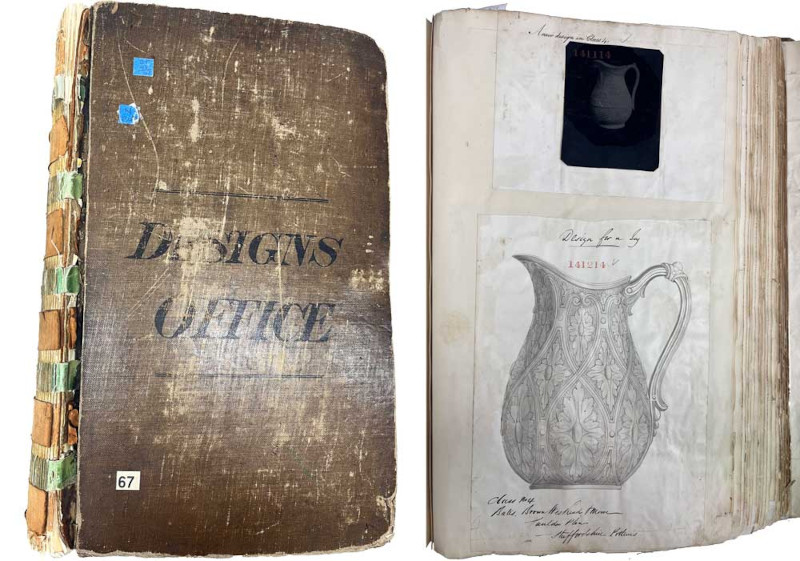
Before smartphones made every lunch, sunset, and suspiciously photogenic cup of coffee immortal, photography was a far stranger business. Early photographers did not simply “take a picture.” They mixed chemistry, wrestled with glass plates, raced against drying emulsions, and occasionally carried a portable darkroom like a magician hauling around a very nervous wardrobe. In that wild laboratory of 19th-century image-making, one nearly forgotten photographic process still manages to feel unusual even by antique standards: the pannotype.
The pannotype is not as famous as the daguerreotype, not as common as the tintype, and not as beloved by collectors as the ambrotype. It is the quiet cousin at the family reunion of early photography: fascinating, fragile, and too rare to get invited to many museum labels. Yet recent scientific analysis has brought this overlooked process back into the conversation, showing how much can be learned when conservation science meets historical curiosity.
At its simplest, a pannotype is a collodion image placed on a flexible support such as cloth, black waxed fabric, oilcloth, leather, or similar material. That may sound modest, but it represented a bold experiment at a time when most photographic images relied on metal, glass, or paper. The idea was practical: create a photograph that looked like a direct positive image but was less breakable than glass. The result was visually intriguing and technically clever, though not exactly built for immortality. Time, humidity, cracking, and tacky image layers have made surviving examples scarce.
What Is a Pannotype?
The word “pannotype” comes from the Latin root associated with cloth, and the name fits the process beautifully. Unlike an ambrotype, which uses a collodion image on glass backed by a dark surface, a pannotype places the image layer onto a dark flexible backing. The photograph appears positive because pale silver particles catch light while the dark backing supplies the shadows. In other words, the image is partly chemistry, partly optics, and partly theatrical lighting. Early photography loved a good trick.
Pannotypes belong to the broader family of wet-collodion photography. Wet collodion, introduced in the 1850s, allowed photographers to make sharp images with shorter exposure times than many earlier methods. It was a major breakthrough, but it came with one dramatic condition: the plate had to be coated, sensitized, exposed, and developed while still wet. That meant photographers worked quickly, often near a darkroom, and sometimes under pressure that would make a modern wedding photographer feel oddly understood.
In a pannotype, the image was typically associated with a collodion layer, but instead of remaining on glass, it was transferred or attached to a dark flexible surface. Some descriptions connect pannotype production with underexposed collodion negatives that were made to appear positive against a black background. Because the process was not standardized in the way more commercially successful processes were, surviving examples can vary. That lack of standardization is part of what makes pannotypes so difficultand so interestingto study today.
Why Was This Photographic Process Forgotten?
The pannotype had one excellent sales pitch: it was less breakable than glass. That mattered in an age when photographs were often carried, mailed, displayed in cases, or handled as precious objects. A portrait on a flexible backing could seem like a brilliant answer to the fragility of glass ambrotypes. But being “less breakable” did not automatically mean “more durable.” A rubber duck is less breakable than a teacup, but that does not make it a museum-grade storage solution.
The very qualities that made pannotypes appealing also created preservation problems. Flexible supports bend. Cloth and leather respond to humidity. Coatings can dry, shrink, crack, or become sticky. Emulsion layers may lose adhesion. A pannotype that survived being dropped in 1858 might still spend the next century slowly peeling, wrinkling, or fusing to the paper beside it. That is the kind of plot twist conservators do not enjoy.
Another reason pannotype faded from memory is that it was overtaken by more practical processes. Tintypes, for example, offered durable direct-positive images on thin iron sheets. Albumen prints and later gelatin processes supported mass reproduction and more predictable results. Photography has always rewarded convenience. Once easier and more reliable methods arrived, the pannotype slipped into the category of “interesting, but please do not build a business around it.”
How Scientists Characterised the Pannotype
The modern characterization of pannotypes is a reminder that photographs are not just images; they are layered physical objects. A photograph contains a support, a binder, image-forming particles, coatings, colorants, adhesives, and evidence of handling. Looking at the picture is only the beginning. To understand a rare process, conservators often need to ask the object what it is made ofand because historical objects are not chatty, science has to do the talking.
XRF: Reading the Elements Without Taking the Photograph Apart
X-ray fluorescence, often shortened to XRF, is a non-destructive analytical technique used to identify elements in an object. In the case of pannotypes, XRF can help detect elements associated with the photographic image, such as silver. That matters because silver is a key image-forming material in many 19th-century photographic processes. If an image contains silver in the expected areas, researchers gain evidence that they are looking at a true photographic image layer rather than a drawing, print, or later surface treatment.
XRF can also reveal elements linked to the support or preparation materials. For example, the detection of lead in some pannotype supports may point toward the manufacturing of the cloth or coating beneath the image. This does not mean every pannotype is identical. It means the object carries clues, and those clues can help conservators build a more accurate picture of how it was made.
FTIR: Identifying Binders, Resins, and Coatings
Fourier Transform Infrared Spectroscopy, better known as FTIR, helps identify organic materials by reading how they absorb infrared light. In photograph conservation, FTIR can be especially useful for distinguishing binders and coatings. With pannotypes, FTIR analysis may help identify collodion, natural resins, or other materials present in the image layer.
This is important because deterioration often depends on material composition. A degraded resin layer behaves differently from a stable collodion layer. A tacky surface that has grabbed onto a nearby sheet of paper creates a conservation challenge very different from a dry, stable surface. FTIR gives conservators more than a label; it gives them a treatment roadmap.
Multispectral Imaging: Seeing What the Eye Cannot
Multispectral imaging is another powerful tool in the study of damaged photographs. It captures information across different wavelengths of light, sometimes revealing details hidden beneath stains, discoloration, paper residue, or surface damage. For pannotypes with stuck paper or degraded layers, multispectral imaging can make faint designs or images more legible without physically disturbing the object.
That last point is crucial. When a photograph is fragile, every touch matters. The best conservation strategy is often to gather as much information as possible before deciding whether any physical intervention is safe. Multispectral imaging lets researchers look more deeply while keeping their hands politely to themselves.
Pannotype vs. Daguerreotype, Ambrotype, and Tintype
To understand the pannotype, it helps to compare it with better-known early photographic processes. The daguerreotype, introduced in 1839, produced a unique image on a silver-coated copper plate. It could be breathtakingly detailed, but it was not reproducible in the easy modern sense. It also required careful viewing because the image could shift between positive and negative depending on light and angle.
The ambrotype, popular in the 1850s and 1860s, used a wet-collodion image on glass. When placed against a dark background, the underexposed negative appeared positive. Ambrotypes were cheaper and faster than daguerreotypes, which helped them become popular for portraiture. They were often placed in decorative cases, with brass mats and protective glass.
The tintype, also based on collodion, placed the photographic emulsion onto a dark lacquered iron plate. Tintypes were durable, relatively inexpensive, and widely used. They could be made quickly, which made them popular at fairs, studios, and traveling photography setups. Compared with these processes, the pannotype was more experimental. It shared the direct-positive illusion of the ambrotype and tintype but used flexible supports that introduced unique preservation problems.
Think of the pannotype as photography’s attempt to become portable, flexible, and a little rebellious. Unfortunately, chemistry and time were not fully on board with the plan.
Why Characterization Matters for Conservation
Characterizing a forgotten photographic process is not just an academic exercise. It directly affects preservation. If conservators do not know whether an image layer contains collodion, resin, silver, lead-containing support materials, varnish, or later repairs, they cannot responsibly decide how to store, clean, digitize, or stabilize it.
For example, a tacky surface may bond to paper or protective enclosures. A cracked image layer may flake if the support is flexed. A leather or cloth backing may respond badly to humidity changes. Even well-intentioned handling can cause damage. This is why museums, archives, and libraries treat early photographic objects as material puzzles. The visible picture is only one piece.
Proper storage also depends on material knowledge. Many early photographs are composite objects: metal, glass, cloth, leather, paper, adhesives, coatings, and image particles may all exist in one small artifact. Each material reacts differently to temperature, humidity, light, and pollutants. Conservation is the art of preventing those materials from arguing with each other too loudly.
The Human Side of a Rare Photograph
It is easy to get lost in the technical details of pannotype characterization, but these objects were not created merely to entertain future spectroscopists. They were made because people wanted images. They wanted portraits, records of designs, keepsakes, proofs, and visual evidence. A pannotype may show a face, a product design, a ceramic pattern, or a fragment of commercial creativity. Its rarity today can make it feel like a museum specimen, but it began as a practical object made for human use.
That is part of the charm. A pannotype sits at the intersection of invention and inconvenience. It shows how early photographers were willing to try almost anything: glass, metal, paper, cloth, leather, chemistry, varnish, darkness, sunlight, and hope. Some experiments became industries. Others became footnotes. A few, like the pannotype, became mysteries waiting for modern tools to decode them.
What Modern Photographers Can Learn from the Pannotype
In an age of instant digital images, the pannotype teaches patience. It reminds us that photography is not only about composition and exposure but also about material presence. A digital photograph can travel the world in seconds, but it has no weight, no cracked surface, no edge wear, no backing cloth, no smell of old leather, and no tiny physical clues about how it was made. A pannotype is not just an image; it is an event preserved in layers.
Modern alternative-process photographers often return to historical methods because they want that sense of touch. Wet-plate collodion, cyanotype, salt printing, platinum printing, and other handmade processes make the photographer slow down. The result is not always perfect, but imperfection is part of the appeal. A streak, a swirl, or a slightly uneven coating can become visual evidence of the maker’s hand.
The pannotype also teaches that innovation is not always linear. Some inventions disappear not because they were foolish, but because they solved one problem while creating another. The pannotype solved the problem of breakable glass, but it introduced the problem of unstable flexible supports. That trade-off is familiar even today. Every new technology arrives with a bright promise and a little suitcase full of future complications.
Experiences Related to “A Forgotten Photographic Process Characterised”
Anyone who has spent time around historic photographs knows that they do not behave like ordinary pictures. A modern print can often be handled, framed, scanned, and moved with reasonable confidence. A 19th-century photograph, however, asks you to slow down. It almost trains your hands to become more careful. When viewing an object like a pannotype, the first experience is usually surprise. It does not fit the familiar categories. It is not quite a print, not quite a plate, not quite textile art, and not quite the glossy antique portrait many people expect.
The second experience is curiosity. Why is the image on cloth or leather? Why does the surface look uneven? Why are some areas silver-gray while others sink into darkness? Why does it seem both tough and fragile at the same time? These questions are exactly why characterization matters. A rare photograph becomes more meaningful when we understand its structure. The object stops being merely “old” and becomes evidence of technical experimentation.
Collectors and archivists often describe early photographs as objects with personalities. A daguerreotype can feel jewel-like, almost secretive, because it changes with the angle of light. An ambrotype can feel intimate, protected behind glass and casework. A tintype can feel rugged and democratic, the people’s portrait on metal. A pannotype feels different again: quieter, stranger, more vulnerable. Its flexible backing suggests portability, but its deterioration warns us that flexibility came at a price.
For photography students, studying a pannotype can be a useful antidote to the speed of digital culture. It shows that every photograph has a body. Even a digital file depends on sensors, screens, storage devices, and formats that may become obsolete. The pannotype’s survival problem is physical; our survival problem may be digital. Either way, images need care. The medium changes, but the preservation question remains: how do we keep a picture alive long enough for the next generation to understand it?
There is also a creative lesson here. The pannotype invites modern makers to experiment thoughtfully. It says, in its cracked and mysterious way, that photography has never been one fixed thing. It has always been chemistry, light, surface, risk, and imagination. That does not mean everyone should rush into hazardous historical processes at home. It does mean artists can learn from the spirit of early photography: test materials, observe results, document failures, and respect the science behind the beauty.
The most memorable experience related to a forgotten process is the moment it becomes visible again. When analysis reveals silver particles, identifies collodion, separates resin from image layer, or uses imaging to recover hidden details, the object gains a voice. Not a loud voice, of course. More like a whisper from a drawer that has not been opened in a century. But for historians, conservators, photographers, and curious readers, that whisper is enough. It tells us that even a failed or forgotten process can still teach us how inventive the past really was.
Conclusion
The pannotype may never become the celebrity of early photography, and that is part of its appeal. It is rare, awkward, inventive, and full of conservation dramathe photographic equivalent of a brilliant gadget that arrived before the world knew quite what to do with it. By characterising pannotypes with tools such as XRF, FTIR, and multispectral imaging, researchers are not simply identifying old materials. They are recovering a lost chapter in the history of photographic experimentation.
A forgotten photographic process characterised is more than a technical case study. It is a reminder that images are physical history. They crack, fade, stick, shine, deceive, and survive. The pannotype’s story shows that even the obscure corners of photography can reveal big truths about innovation, preservation, and the stubborn human desire to fix a moment in time.
Note: This article is written as original web-publishing content based on established photographic history, conservation science, and documented research into rare pannotype photographs.











