
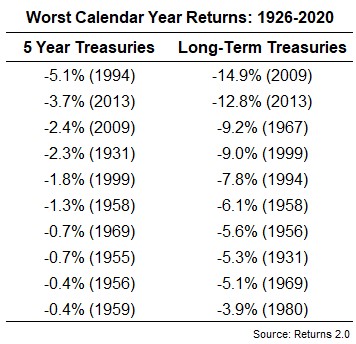
Long-term government bonds used to be the calm adult in the investment room. Stocks would throw a tantrum, commodities would run around with scissors, crypto would light a couch on fire, and long-term Treasuries would quietly pour tea and say, “Everything will be fine.” For decades, that reputation was mostly deserved. U.S. government bonds were seen as safe, liquid, dependable, and boring in the best possible way.
But the future for long-term government bonds now looks far less cozy. The 10-year and 30-year Treasury markets are facing a combination of stubborn inflation, heavy federal borrowing, rising interest costs, uncertain Federal Reserve policy, and investors who are no longer willing to buy long-duration debt just because it wears a patriotic necktie. In plain English: the bond market is asking Washington for a better deal.
This does not mean U.S. Treasury bonds are suddenly “unsafe” in the default-risk sense. The U.S. government still has enormous taxing power, deep capital markets, and the world’s reserve currency. But price risk is a different animal. Long-term government bonds can lose value sharply when yields rise, and the past few years have reminded investors that “safe” and “stable” are not synonyms. A 30-year bond may pay like a gentleman, but when rates move against it, it can fall down the stairs like a refrigerator.
What Are Long-Term Government Bonds?
Long-term government bonds are debt securities issued by a government with maturities typically longer than 10 years. In the United States, the most important examples are the 10-year Treasury note, the 20-year Treasury bond, and the 30-year Treasury bond. Investors buy them for income, diversification, capital preservation, and sometimes as a hedge against recessions or stock-market declines.
The key feature is duration. Duration measures how sensitive a bond’s price is to changes in interest rates. The longer the maturity, the higher the duration, and the more painful the price move when yields rise. A short-term Treasury bill might shrug at a rate increase. A 30-year Treasury bond may react like someone just stepped on its foot at a wedding.
That duration risk is the center of today’s problem. Investors are not only asking, “Will the U.S. government repay me?” They are asking, “Will I be paid enough to lock up money for decades while inflation, deficits, and policy uncertainty do interpretive dance on my portfolio?”
Why the Outlook Looks Bleak
1. Federal Deficits Are Not Exactly Going on a Diet
The biggest cloud over long-term government bonds is the U.S. fiscal outlook. The Congressional Budget Office projects large deficits over the coming decade, with the federal deficit around $1.9 trillion in fiscal year 2026 and rising toward $3.1 trillion by 2036. Debt held by the public is projected to rise from roughly 101% of GDP in 2026 to about 120% of GDP in 2036, well above the post-World War II record.
That matters for bonds because deficits must be financed. When the government spends more than it collects, it issues more debt. More debt means more Treasury supply. And when supply grows faster than natural demand, investors usually ask for higher yields. The bond market is not a charity gala. It does not smile politely and absorb trillions in issuance without checking the menu.
Long-term government bonds are especially exposed because they require investors to commit capital far into the future. If investors believe the government will continue borrowing heavily, they may demand a higher term premium, which is the extra yield required to hold longer-maturity bonds instead of rolling over short-term debt.
2. Interest Costs Are Becoming Their Own Problem
Rising interest costs create a feedback loop. Higher debt leads to higher interest payments. Higher interest payments widen deficits. Wider deficits require more borrowing. More borrowing can push yields higher. At some point, the government’s interest bill starts to look less like a line item and more like a roommate who keeps eating everyone’s groceries.
This does not mean a U.S. debt crisis is guaranteed. The Treasury market remains the deepest and most liquid government bond market in the world. But investors do not need an outright crisis to lose money. They only need yields to move higher than expected. For long-duration bonds, even modest increases in yields can produce ugly mark-to-market losses.
3. Inflation Is Still the Villain With a Sequel
Inflation is poison for long-term fixed-income investments. When inflation rises, the purchasing power of future coupon payments falls. A bond paying a fixed rate for 30 years becomes less attractive if investors believe prices will keep climbing faster than expected.
Recent inflation data has kept the pressure on. The Consumer Price Index rose 4.2% over the 12 months ending in May 2026, while core CPI, excluding food and energy, rose 2.9%. Energy prices were especially volatile, showing how geopolitical shocks can quickly complicate the inflation picture. For bond investors, this is the annoying part: even if inflation eventually cools, the path can be bumpy enough to keep long-term yields elevated.
The Federal Reserve’s 2% inflation goal remains central to the story. If inflation stays above target, the Fed has less room to cut rates aggressively. That reduces one of the classic reasons to own long-term bonds: the potential for price gains when interest rates fall.
4. The Federal Reserve Is Not Offering a Soft Pillow
The Federal Reserve maintained the federal funds target range at 3.50% to 3.75% in June 2026 and stated that inflation remained elevated relative to its 2% goal. That policy backdrop matters because long-term bond yields are shaped by expectations for short-term rates, inflation, growth, and risk premiums.
If investors believe the Fed will keep policy restrictive for longer, long-term yields may stay higher. If investors believe the Fed may need to raise rates again, long-term bonds face even more pressure. And if investors are simply unsure what the Fed will do, volatility itself can lift the premium demanded for holding longer maturities.
The old bond-market playbook was simple: economic slowdown equals Fed cuts; Fed cuts equal bond rally. That playbook still exists, but the pages are now smudged with inflation risk, fiscal pressure, and global uncertainty. It is still readable, just not something you want to bet the entire retirement account on without your glasses.
The Supply Problem: Too Many Bonds Looking for Buyers
Another reason the future looks difficult for long-term government bonds is sheer issuance. Treasury securities outstanding have continued to climb, and the market must absorb a massive amount of new and refinancing supply. SIFMA data shows U.S. Treasury securities outstanding above $30 trillion as of May 2026, with year-to-date issuance through May running higher than the previous year.
The U.S. Treasury has tried to manage issuance carefully. In May 2026, Treasury kept note and bond auction sizes steady for the near term while relying more on shorter-term bills to meet financing needs. That approach can reduce pressure on the long end temporarily. But it does not erase the underlying borrowing requirement. Eventually, if deficits remain large, the market may need to absorb more coupon-bearing debt.
Investors understand this. They can read a calendar. They can also read a deficit chart, although nobody should do that right before bedtime. If the Treasury must sell more long-term debt, buyers may demand more yield. That means lower bond prices for existing holders.
Demand Is Changing, Too
The demand side of the Treasury market has also changed. During periods of quantitative easing, the Federal Reserve was a major buyer of Treasuries. That helped suppress yields and support bond prices. But as the Fed reduced its balance sheet and stepped back from large-scale Treasury purchases, more supply had to be absorbed by private investors, banks, pension funds, mutual funds, ETFs, foreign buyers, and money market participants.
Private investors are price-sensitive. They compare long-term Treasuries with corporate bonds, municipal bonds, money market funds, CDs, dividend stocks, real assets, and even cash. If a short-term Treasury bill or money market fund offers attractive yield with much less duration risk, investors may ask why they should buy a 30-year bond unless the yield is truly compelling.
This is a major shift. For years, investors stretched into long-term bonds because yields were low everywhere. Today, cash and short-term fixed income can compete. That makes the long end of the Treasury market less automatically attractive.
Why Long-Term Bonds Can Still Rally
A bleak outlook does not mean long-term government bonds will fall in a straight line. Markets enjoy embarrassing confident predictions. Long-term Treasuries can still rally if the economy weakens sharply, inflation falls faster than expected, or investors rush toward safety during a crisis.
In a recession, long-term bonds may regain their defensive magic. If unemployment rises and inflation cools, the Fed could cut rates. Lower rates would likely support bond prices, especially for longer maturities. That is why many diversified portfolios still hold long-term government bonds. They are not useless. They are just no longer the no-drama friend they used to be.
The problem is asymmetry. If inflation remains sticky and fiscal deficits stay large, long-term yields may remain elevated or rise further. If the economy weakens but inflation does not cooperate, long bonds may not provide the same protection investors expect. That is the nightmare scenario for traditional bond allocation: weak growth, high inflation, and lots of issuance. In other words, a party where every guest brought bad news and no one brought chips.
What This Means for Investors
Shorter Duration Looks More Appealing
Many investors are favoring short- and intermediate-term bonds instead of long-term government bonds. Shorter maturities offer income with less sensitivity to rate increases. They also allow investors to reinvest sooner if yields move higher. This does not eliminate risk, but it reduces the chance that one bad rate move turns a bond portfolio into a sad trombone solo.
Intermediate-term bonds can still provide diversification while avoiding the extreme duration exposure of 20- and 30-year Treasuries. For investors who want Treasury exposure, a laddered approach may make more sense than making a giant bet on the long end.
TIPS Deserve a Closer Look
Treasury Inflation-Protected Securities, or TIPS, may appeal to investors worried about inflation. TIPS adjust principal based on changes in the Consumer Price Index, offering a built-in inflation hedge. They are not perfect, and they can still lose value when real yields rise. But for investors concerned about purchasing power, TIPS may be more attractive than nominal long-term government bonds.
Diversification Is More Important Than Ever
The classic 60/40 portfolio struggled when stocks and bonds fell together during periods of inflation stress. That does not mean diversification is dead. It means investors may need broader diversification across maturities, inflation-linked bonds, cash, high-quality credit, international exposure, and real assets.
Long-term government bonds can still play a role, but they should be sized carefully. Owning them as a hedge is different from relying on them as the entire defense system. A portfolio made only of long-duration bonds is not a fortress; it is a very expensive weather vane.
Specific Example: Why Duration Hurts
Imagine an investor buys a long-term Treasury bond with a duration of about 15 years. If yields rise by 1 percentage point, the bond’s price could fall by roughly 15%, all else equal. That is not a tiny paper cut. That is a financial raccoon loose in the pantry.
Now compare that with a short-term Treasury fund with a duration of two years. A 1 percentage point rise in yields might cause a price decline of roughly 2%, before considering income. The short-term investor still feels the move, but the long-term investor feels it in surround sound.
This is why long-term government bonds require caution. Their income may look attractive compared with the near-zero-rate era, but their price sensitivity remains high. Yield is not a force field.
The Global Angle: Foreign Buyers Are Watching
Foreign governments, central banks, and global institutions have historically been major buyers of U.S. Treasuries. The dollar’s reserve-currency role gives the U.S. an enormous advantage. But foreign demand is not infinite. Currency hedging costs, geopolitical tensions, reserve diversification, and relative yields in other markets can all affect appetite for long-term Treasuries.
If foreign buyers become more selective, domestic investors must absorb more supply. That could require higher yields. Again, this is not a prediction of abandonment. The Treasury market is too important for that kind of cartoonish ending. But even a gradual shift in demand can matter when issuance is measured in trillions.
Why “Bleak” Does Not Mean “Hopeless”
The word bleak sounds dramatic, like a weather forecast delivered by a haunted lighthouse keeper. But in market terms, bleak simply means the risk-reward balance has changed. Long-term government bonds are not dead. They are repriced, questioned, and no longer treated as automatic winners.
For patient investors, higher yields may eventually create opportunity. A 30-year Treasury yielding around 5% is very different from one yielding 1.5%. Income matters. Starting yield is one of the strongest predictors of long-term bond returns. If yields rise enough, long-term bonds can become attractive again.
But investors should not confuse “better yield than before” with “no risk.” The long bond can still be a useful instrument, but it demands respect. It is less like a savings account and more like a powerful kitchen appliance: helpful when used correctly, dangerous when you stick your hand in it.
Experience-Based Perspective: Living Through the Long-Bond Mood Swing
Anyone who has watched the bond market over the past several years has learned a humbling lesson: long-term government bonds can behave more like volatile assets than sleepy safe havens. Many investors entered the 2020s believing Treasuries would always cushion equity declines. That belief was built on decades of falling interest rates, low inflation, and a Federal Reserve that could usually cut rates when growth stumbled.
Then inflation returned, and the old relationship cracked. Investors who owned long-duration bond funds saw losses that felt shockingly stock-like. The experience was especially uncomfortable because bonds had been marketed for years as the responsible side of the portfolio. Losing money in speculative technology stocks is one thing. Losing money in long-term government bonds feels like getting food poisoning from oatmeal.
The practical lesson is that labels can mislead. “Government bond” sounds safe, but maturity matters. A three-month Treasury bill and a 30-year Treasury bond are both backed by the U.S. government, yet they behave very differently. The bill is mainly about reinvestment risk. The long bond is about interest-rate risk, inflation expectations, and term premium. Putting them in the same mental bucket is like saying a house cat and a mountain lion are basically the same because both enjoy naps.
In real portfolio management, this experience has pushed investors to ask better questions. Instead of asking, “Do I own bonds?” they ask, “What kind of bonds do I own, how much duration do I have, and what economic scenario am I actually hedging?” That is a healthier conversation. It moves beyond the lazy assumption that bonds automatically reduce risk.
Another experience from recent markets is that income can soften volatility but not erase it. Higher yields are helpful. They give investors more coupon income and more cushion against price declines. But if yields rise quickly, price losses can still overwhelm income in the short run. This is why investors buying long-term bonds for yield should be honest about their time horizon. If they need to sell next year, duration risk matters a lot. If they can hold to maturity, the experience may be less painful, though inflation can still erode real returns.
The emotional side matters too. Long-term government bonds test investor patience because their price movements can seem unfair. Stocks fall when earnings disappoint; that feels understandable. Bonds can fall because inflation expectations tick higher, Treasury supply increases, or the Fed sounds slightly more hawkish than expected. To normal humans, this can feel like the market is punishing them for reading the wrong paragraph in a central bank statement.
That is why long-term bonds should be owned with a clear job description. Are they there for income? Recession protection? Deflation insurance? Liability matching? Speculation on falling rates? Each purpose suggests a different allocation size and maturity choice. A retiree seeking stable cash flow may not need the same exposure as a trader betting on a yield decline.
The experience of the modern bond market also argues for humility. Nobody knows exactly where long-term yields will be in two years. Deficits may worsen, inflation may cool, the Fed may cut, growth may slow, or global demand may surprise everyone. The future is a committee meeting with no agenda. But investors can still prepare by avoiding overconcentration, matching bond duration to real needs, and remembering that safety is not a sticker you slap on an asset. It is a relationship between price, time, risk, and purpose.
Conclusion: The Long Bond Has Lost Its Halo
A bleak future for long-term government bonds does not mean investors should panic, dump every Treasury, and start storing gold bars under the mattress next to the holiday decorations. It means the long end of the bond market faces serious headwinds: large deficits, growing debt, sticky inflation, uncertain Fed policy, heavy issuance, and more selective buyers.
Long-term government bonds may still rally during recessions or market shocks. They may still provide useful income and diversification. But they no longer deserve blind faith. Investors should treat them as powerful but risky tools, not as automatic portfolio comfort blankets.
The smartest approach is not fear. It is precision. Know your duration. Understand your inflation exposure. Compare long-term bonds with short-term Treasuries, TIPS, high-quality credit, and other income options. Above all, remember that in today’s market, the word “government” may reduce credit risk, but it does not magically delete interest-rate risk.
Note: This article is for educational and informational purposes only. It is not personal investment, tax, or financial planning advice.













