
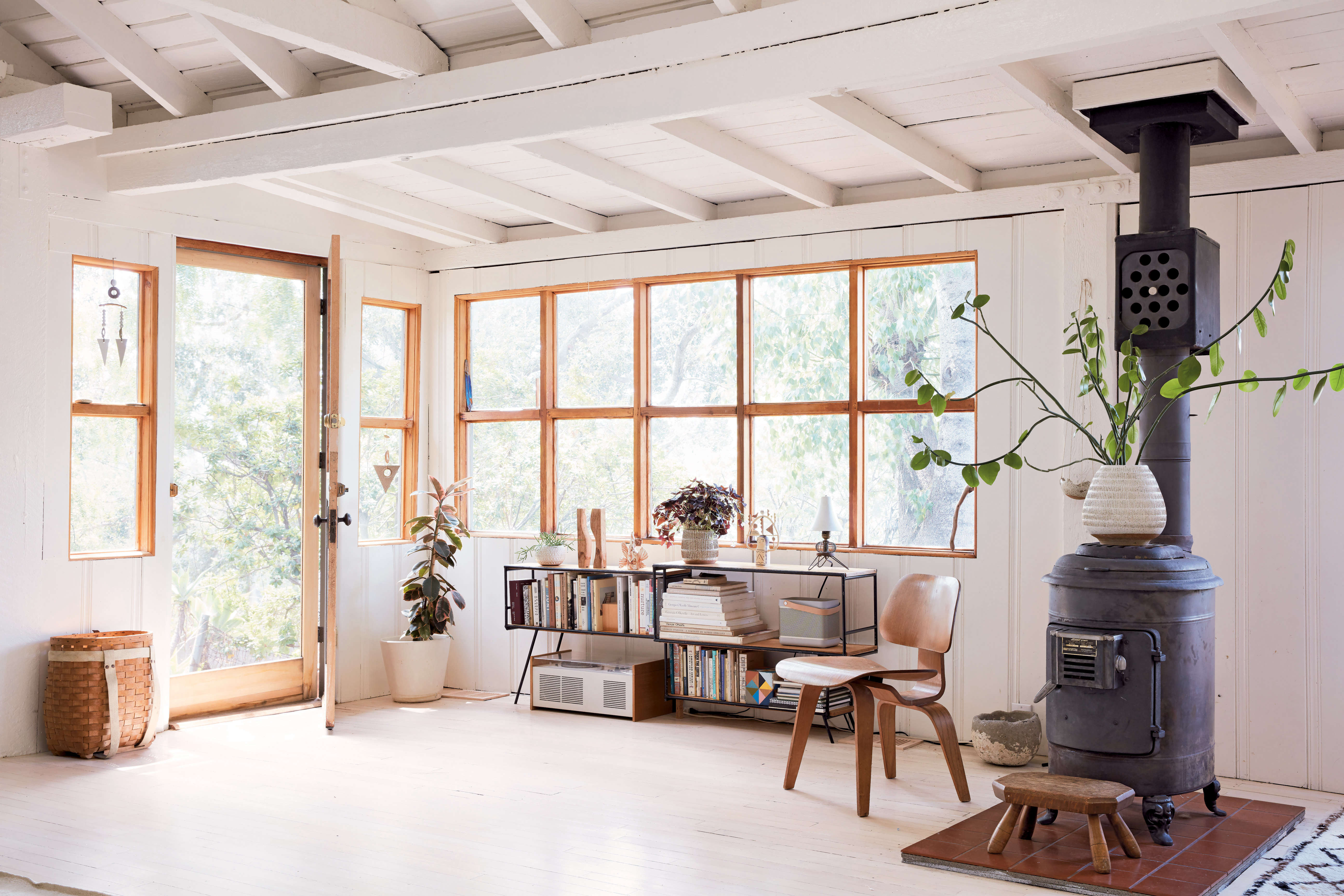
What happens when California minimalism stops posing for the camera and starts helping you live better? Serena Mitnik-Miller and Mason St. Peter have an answerand thankfully, it does not involve throwing away every object you own.
Plenty of interior design books promise serenity. They arrive with immaculate rooms, mysteriously empty kitchen counters, and sofas that appear never to have encountered a snack. Abode: Thoughtful Living with Less offers something more convincing. The book presents a home as an evolving relationship among architecture, natural light, practical routines, personal objects, and the people who actually live there.
Written by artist Serena Mitnik-Miller and designer Mason St. Peter, the creative couple behind General Store, Abode translates their recognizable California style into an approachable design philosophy. Published by Abrams on April 16, 2019, the 256-page book contains approximately 200 color photographs alongside practical guidance for editing, remodeling, furnishing, and inhabiting a space.
This is not minimalism as competitive deprivation. Nobody wins a medal for owning the fewest spoons. Instead, the authors ask readers to understand their homes, remove what interferes with daily life, and choose materials and objects with intention. The result is warm minimalism: calm but not sterile, refined but not precious, and relaxed enough to survive a wet towel on the bathroom floor.
What Is Abode: Thoughtful Living with Less About?
At its core, Abode is a guide to uncovering the essential character of a home. Mitnik-Miller and St. Peter encourage readers to look beyond decorative trends and examine the deeper qualities of a space: its proportions, structural history, movement patterns, materials, light, and connection to the outdoors.
The book moves through three broad stagesVision, Deconstructing, and Nesting. Vision involves deciding how a home should feel and function before purchasing furniture or opening a can of paint. Deconstructing explores what can be removed, exposed, repaired, or simplified. Nesting focuses on furniture, textiles, artwork, storage, and the useful objects that transform an architectural shell into a personal home. Practical subjects range from removing trim and changing light fixtures to selecting rugs, installing skylights, finding white paint, and sourcing vintage furniture.
That progression is one of the book’s greatest strengths. It prevents a common decorating mistake: buying attractive objects before understanding the room they are supposed to occupy. A beautiful chair does not automatically fix a poor layout. Sometimes the room needs fewer obstacles, better lighting, or a dining table rotated ninety degrees. The chair can wait patiently in the store.
How General Store Shaped the Book’s California Style
General Store began in San Francisco’s Outer Sunset neighborhood in 2009 and expanded to Los Angeles in 2012. From the beginning, the shop combined vintage clothing, contemporary fashion, art, jewelry, home goods, books, and work by independent makers. Its identity grew from the surrounding community and from an appreciation for practical design, craftsmanship, and objects that become more appealing through use.
The store’s original San Francisco setting mattered. The Outer Sunset is a coastal neighborhood shaped by fog, salt air, surfing, compact houses, neighborhood businesses, and an appealing sense of being slightly removed from the city’s downtown intensity. Early profiles of General Store described locally made planters, wooden kitchen tools, textiles, vintage clothing, ceramics, jewelry, and a plant-filled outdoor garden. The merchandise felt selected rather than merely stocked.
Abode applies the same curatorial intelligence to residential design. Rooms are treated like living collections, but the collection is restrained. A flea-market stool can sit beside an iconic modern table. A rough ceramic vessel can soften a clean white shelf. Woven materials, unfinished wood, linen, stone, artwork, plants, and vintage furniture introduce texture without producing visual chaos.
The connection between the two authors’ disciplines is equally important. Mitnik-Miller approaches interiors with an artist’s sensitivity to composition, pattern, color, and emotional atmosphere. St. Peter brings architectural training and an interest in circulation, structure, function, and light; he earned a Bachelor of Architecture from California College of the Arts in 2004 before designing residential projects and General Store spaces.
The Central Design Lessons in Abode
Start With the Bones of the Building
The authors repeatedly return to the idea that a structure already has a voice. Instead of burying it beneath fashionable additions, they recommend identifying the building’s strongest qualities and eliminating details that compete with them.
In practice, this may mean exposing original beams, refinishing old flooring, simplifying heavy trim, repairing a neglected window, or allowing an imperfect wall to remain imperfect. It may also mean doing almost nothing. The ability to recognize when a room is already working is a valuable design skilland considerably cheaper than developing an emotional attachment to demolition.
This approach makes Abode especially useful for older houses and modest apartments. A limited budget becomes a reason to observe more carefully rather than an excuse to buy cheaper decorative clutter. Existing tile, awkward niches, simple lumber, and inherited cabinetry can sometimes be adapted rather than removed.
Treat Natural Light as a Building Material
Light is not an accessory in these interiors. It is part of the architecture. St. Peter’s work frequently begins by identifying where sunlight enters, where it disappears, and how walls, doors, windows, finishes, and furnishings affect its movement. His coastal projects often pair generous openings with natural woods and restrained surfaces to strengthen the relationship between indoors and outdoors.
Readers do not need to install a wall of glass to follow the principle. They can move tall furniture away from windows, replace heavy curtains, clean neglected glass, use mirrors selectively, or choose finishes that reflect rather than swallow daylight. Even trimming an overgrown plant outside a window may improve a room more than another floor lamp.
Create Flow Before Adding Decoration
Abode advocates openness, but not merely because open plans look impressive in photographs. Better flow can make daily routines easier and encourage connection among people. The authors suggest questioning unnecessary thresholds and obstacles, including doors that remain permanently open yet consume valuable floor space.
One of the book’s most discussed practical ideas is removing an unnecessary interior door by lifting its hinge pins. It is a small, potentially reversible adjustment that can improve sightlines and movement in a compact home. Renters can store the door safely and reinstall it later, while homeowners may consider a more permanent alteration after confirming that privacy, sound control, fire safety, and building requirements are not being compromised.
The larger lesson is not that everyone should immediately attack a door with a screwdriver. It is that every boundary deserves a reason. A door should provide privacy, safety, temperature control, or acoustic separationnot simply exist because nobody has questioned it since 1974.
Use Fewer Materials, but Let Them Say More
The homes in Abode favor a controlled material palette: wood, plaster, ceramic, metal, stone, woven fibers, cotton, linen, leather, glass, and abundant plant life. These materials age visibly. Wood develops marks. Metal gains patina. Linen wrinkles with theatrical commitment. Instead of treating those changes as damage, the design philosophy accepts them as evidence of use.
Natural materials also prevent a neutral palette from becoming flat. A room may contain several shades of white, cream, tan, and brown, yet remain visually rich because the surfaces respond differently to light. Smooth plaster contrasts with rough pottery. Woven cane sits beside solid timber. A soft wool rug balances a hard floor.
Choose Objects That Carry Meaning
Serena Mitnik-Miller’s interiors are not empty. They contain artwork, records, books, textiles, plants, ceramics, vintage finds, and objects connected to travel or creative work. Her curation has long drawn from nature, surfing, hiking, handmade goods, found materials, and the work of local artists.
The difference between this approach and ordinary clutter is intention. A meaningful object earns room to breathe. Ten unrelated decorative purchases lined up across a shelf create noise; one unusual vessel, a small painting, and a stack of frequently read books create a composition.
This is where Abode departs from severe minimalism. It does not demand emotional detachment from possessions. It asks readers to keep the things that support their lives and represent their histories while releasing objects that have become anonymous background material.
Why Abode Feels Different From Typical Minimalist Design Books
Many books about minimalism begin with subtraction: discard, organize, conceal, repeat. Abode begins with attention. What is the room trying to do? Where does morning light fall? Which doorway creates congestion? Which table is used every day? Which cabinet contains six appliances that have apparently entered witness protection?
This makes the book more architectural than a standard decluttering manual and more personal than a conventional renovation guide. Its rooms are attractive because their elements have relationships. The furniture fits the proportions. The finishes support the light. Handmade objects soften modern lines. Old pieces prevent new construction from feeling soulless.
The photographs by Mariko Reed are essential to the book’s appeal. They show finished spaces, but they also communicate texture, atmosphere, and the quiet interplay between ordinary objects. The images make the design philosophy understandable without turning every room into an unreachable showroom.
Practical Ways to Apply the Abode Philosophy
Observe the Room for a Full Day
Before rearranging anything, watch how the space changes from morning through evening. Note where sunlight enters, where artificial lighting is weak, which paths people naturally use, and which pieces of furniture interrupt those paths.
Edit Before You Shop
Remove unused accessories, broken furniture, duplicate tools, and objects kept only because they once cost money. Live with the edited room for several days. What initially feels empty may soon feel calm.
Rearrange the Largest Pieces First
Move the sofa, bed, dining table, or storage cabinet before adjusting small decorations. Large pieces establish circulation and visual balance. Tiny objects cannot rescue a badly positioned sectional, although they may gather around it for moral support.
Expose Windows and Improve Sightlines
Relocate tall shelving that blocks daylight. Raise curtain rods when appropriate. Remove window treatments that are never used. Stand at the entrance to the room and identify the first thing your eye encounters. It should ideally be a pleasing view rather than the back of a television and three mysterious cables.
Mix Eras Instead of Buying a Matching Set
A room becomes more personal when objects appear to have arrived over time. Combine a contemporary sofa with a vintage side table, a handmade lamp, and inherited artwork. Matching furniture suites can be convenient, but they sometimes make a home resemble a catalog page waiting for its residents to arrive.
Let Useful Objects Remain Visible
Thoughtful living with less does not require hiding everything. Attractive objects used frequentlywooden spoons, ceramic bowls, books, woven baskets, or gardening toolscan contribute to the room. The important distinction is whether they are accessible and purposeful or merely stranded on the counter.
Where the Book Is Strongestand Where Readers May Need More
Abode is strongest as a visual and philosophical guide. It teaches readers how to evaluate a home, prioritize light and function, and develop a more patient relationship with furniture and materials. It is particularly persuasive when showing how simple adjustments can make modest spaces feel generous.
Readers seeking highly technical remodeling instructions, detailed construction drawings, exact budgets, or comprehensive building-code guidance will need additional resources. Removing walls, adding skylights, altering electrical systems, and changing structural components require qualified professionals and local approvals. A beautiful photograph is inspiring, but it is not a permit.
The book’s signature aesthetic may also tempt readers to copy its surface ingredients: white walls, pale wood, pottery, rattan, linen, and one extremely confident cactus. That would miss the point. The real lesson is not to reproduce someone else’s California interior. It is to discover the clearest, most functional version of your own home.
Who Should Read Abode?
This book is well suited to homeowners planning a sensitive renovation, renters searching for reversible improvements, design enthusiasts interested in warm minimalism, and anyone tired of buying organizers for possessions they do not particularly like.
It will also appeal to readers who value vintage furniture, independent makers, natural materials, California interiors, and homes that feel edited without looking staged. Even those who never remove a door or install a skylight can benefit from the book’s most important habit: pause, observe, and understand before adding more.
An Abode-Inspired Weekend: What the Experience Can Feel Like
Applying the ideas in Abode does not need to begin with a renovation. A useful first experiment can take place over a single weekend in one frequently used room.
Imagine starting on Saturday morning in the living room. Instead of immediately purchasing baskets, shelves, or an exciting new lamp discovered at 1:00 a.m., you remove every small decorative object. Books, candles, bowls, framed photographs, remote controls, and the plant that has been negotiating with death since February all leave temporarily.
The room looks unsettlingly bare for about ten minutes. Then its architecture becomes visible. You notice that the sofa blocks part of the window. A side chair narrows the path to the hallway. The coffee table is too large for the way people actually move through the room. None of these problems was obvious when dozens of small objects were competing for attention.
You rotate the sofa and move the chair to the opposite corner. The coffee table shifts several inches. No money has been spent, yet daylight reaches farther across the floor and the entrance feels less congested. This is the first practical pleasure of the Abode approach: improvement can come from subtraction and placement rather than consumption.
Next, you sort the objects that were removed. Some are useful. Some carry memories. Others appear to have been purchased during a brief period when you believed every horizontal surface required a decorative sphere. Those items go into a donation box.
The remaining objects return slowly. A ceramic bowl holds keys near the entrance. A favorite photograph moves to a wall where it can be seen. Frequently read books stay beside the chair. Several less meaningful decorations remain packed away for a week. The room begins to feel personal again, but it no longer feels crowded.
On Saturday afternoon, attention turns to materials and lighting. A synthetic throw that is rarely used is replaced with a wool blanket already stored in another room. Heavy curtains are opened fully, and a tall plant moves away from the glass. A lamp with a harsh bulb receives a warmer replacement. The changes are modest, but the room’s surfaces now respond more gently to evening light.
Sunday becomes a test of function. You sit in each chair, walk the usual routes, read near the window, and observe where drinks, books, chargers, and shoes naturally land. Instead of fighting those habits, you support them. A small tray appears where loose items accumulate. A basket moves beside the chair where blankets are actually used. Charging cables are routed to an accessible outlet instead of being hidden so effectively that nobody can find them.
The experience reveals that thoughtful minimalism is not about maintaining a perfect room. It is about reducing friction. The best arrangement makes ordinary actions easier: opening a window, carrying laundry through a doorway, finding a book, reaching a light switch, or sitting down without relocating a mountain of cushions.
By Sunday evening, the room may not look exactly like a photograph from Abode. It should not. It still contains your furniture, habits, memories, and architectural limitations. Yet it feels lighter because every visible element has a clearer purpose. The room has not been stripped of personality; its personality has become easier to recognize.
That may be the most lasting experience the book offers. Once you learn to examine one room in this way, you begin noticing the rest of the house differently. You question unused furniture, blocked windows, crowded counters, and storage systems that require advanced engineering to operate. More importantly, you become less interested in filling space and more interested in helping it work.
Conclusion: A Home That Is Simple, Useful, and True
Abode: Thoughtful Living with Less deserves a place on the shelf because it connects visual beauty with everyday usefulness. Serena Mitnik-Miller and Mason St. Peter do not present minimalism as a rigid formula. They show how openness, natural light, honest materials, vintage furniture, handmade objects, and careful editing can create homes that feel calm without becoming impersonal.
The book’s most valuable message is refreshingly practical: begin with what the home already offers. Preserve its strengths. Remove what interrupts its purpose. Add slowly. Choose objects that age well and mean something. In other words, create a home for livingnot a showroom where everyone is afraid to set down a coffee cup.
Editorial note: This article synthesizes information from the book’s publisher, General Store, design publications, architectural profiles, author interviews, and reporting on the couple’s San Francisco and California projects.











