
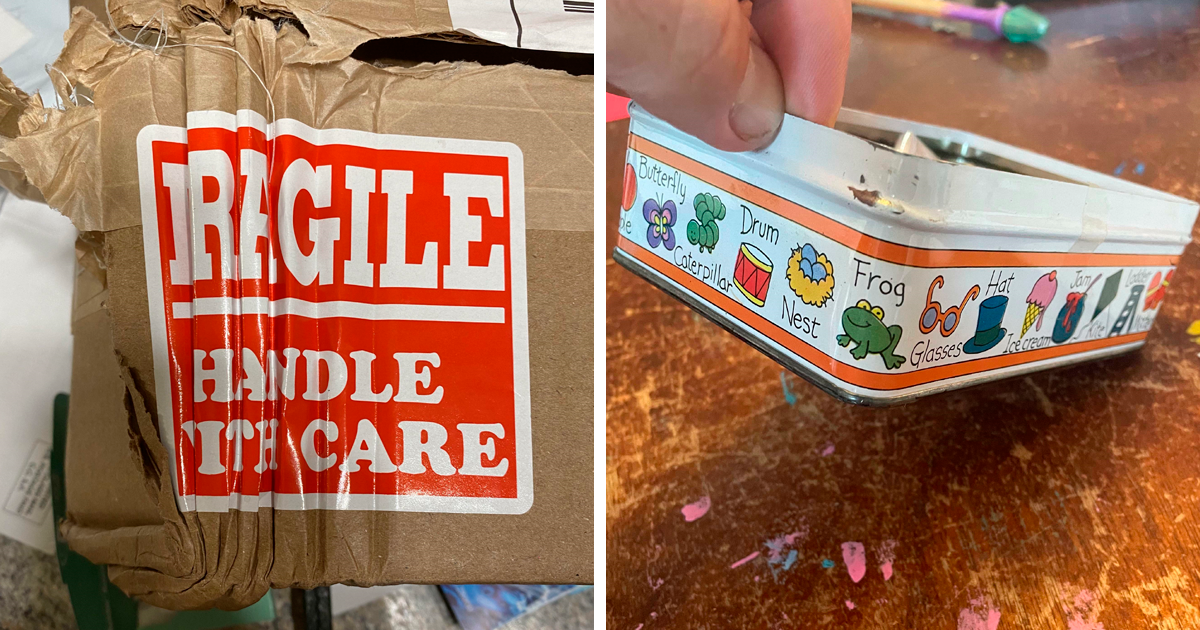
There are mistakes, and then there are “how did this make it past an adult with eyes?” mistakes. A crooked label, a backward road sign, a staircase that leads directly into a wall, a cake that says “Happy Birthday Day,” or a package design so confusing it looks like it was approved during a power outagethese are the glorious disasters that fuel the internet’s favorite roast: “You had one job.”
The phrase has become shorthand for a simple task done spectacularly wrong. It is not usually about complicated engineering, advanced math, or decoding the mysteries of the universe. It is about a person, team, printer, designer, installer, baker, builder, or sign-maker being handed one very clear mission and somehow returning with chaos wearing a name tag.
That is why collections of funny fails, design fails, construction mistakes, typo disasters, and everyday workplace blunders are so endlessly entertaining. They remind us that perfection is fragile, common sense is apparently not a standard feature, and sometimes the funniest comedy comes from a sandwich label placed on a bottle of shampoo.
Why “You Had One Job” Fails Are So Funny
The humor works because the expectation is simple. A sign should point in the right direction. A clock should have its numbers in order. A crosswalk should connect one sidewalk to another. A children’s toy should not accidentally look like nightmare fuel from aisle seven. When the result breaks that expectation, the brain does a little double-take, then laughs because the mistake is obvious, harmless, and weirdly confident.
Most viral You Had One Job fails fall into one of three categories: visual mistakes, wording mistakes, and logic mistakes. Visual mistakes include upside-down logos, mismatched tiles, misplaced handles, backward labels, and objects installed with the energy of “close enough, my lunch break starts now.” Wording mistakes include misspelled signs, unfortunate line breaks, confusing translations, and cakes decorated exactly as the customer’s note was written. Logic mistakes are the true masterpieces: ramps with stairs, doors that open into railings, “push” signs on pull doors, or parking lines painted around a parked car like it was a sacred monument.
The best part is that these fails often look official. They are not doodles in a notebook. They appear on public signs, product packaging, municipal projects, store displays, restaurants, schools, bathrooms, sidewalks, elevators, and advertisements. That official look makes the failure even funnier because it suggests several people may have seen it, approved it, printed it, installed it, and then walked away proudly as if civilization had just been improved.
The Internet Turned Everyday Mistakes Into a Comedy Museum
Before social media, a hilarious sign fail might have entertained one neighborhood for a week. Now, one person can spot a backward banner, snap a photo, upload it, and accidentally preserve a tiny historical document of human confusion. Platforms like Reddit, Instagram, Facebook, TikTok, humor blogs, and meme databases have turned everyday fails into a global archive of “wait, what?” moments.
Communities devoted to funny mistakes, bad design, mildly infuriating moments, and workplace fails thrive because they are easy to understand instantly. You do not need a backstory, a five-minute setup, or a PhD in internet culture. The image usually explains itself. A bench facing a brick wall? A sign that says “Do not not enter”? A banana display labeled “fresh fish”? Congratulations, comedy has arrived with no assembly required.
The phrase “You had one job” also works because it is playful rather than overly cruel. It teases the situation more than the person. The joke says, “Come on, buddy, this was the easy part.” That balance makes the meme flexible. It can apply to retail errors, design fails, construction fails, food fails, school mistakes, packaging disasters, and tiny public infrastructure choices that make taxpayers stare into the middle distance.
50 Classic Types of “You Had One Job” Fails People Love to Document
Not every fail needs to be dangerous or dramatic. In fact, the funniest ones are often small, specific, and completely unnecessary. Here are 50 types of stupid fails people love to document because they capture the spirit of the meme perfectly.
1. Misspelled public signs
Nothing says “official announcement” like a sign warning people to “proceeed with cauiton.” Typos happen, but when they are printed six feet tall and mounted on a wall, they become public art.
2. Upside-down labels
A bottle, box, sticker, or logo installed upside down is a tiny masterpiece of avoidable failure. It is especially funny when the label includes an arrow that now points confidently toward nonsense.
3. Backward road markings
Road paint is supposed to guide drivers, cyclists, and pedestrians. When it says “POTS” instead of “STOP,” it guides everyone directly into confusion.
4. Cakes that follow instructions too literally
The customer writes, “Please put ‘Happy Birthday, Emily’ in blue,” and the cake arrives saying, “Please put Happy Birthday Emily in blue.” Technically accurate. Spiritually devastating.
5. Doors blocked by railings
A door that cannot open because someone installed a railing, pole, or wall in front of it is a perfect “You Had One Job” fail. The job was door. The result was decorative rectangle.
6. Stairs leading nowhere
A staircase that ends at a wall, fence, or empty space looks like architecture designed by a confused video game level editor.
7. Bathroom signs gone wrong
Restroom icons are meant to be universal. When the symbols are misplaced, merged, stretched, or accidentally suggest a medical emergency, people will absolutely document it.
8. Product packaging with terrible timing
Food packaging that makes bread look moldy, soap look drinkable, or a family snack look like a warning label proves that packaging design needs more than enthusiasm and a font menu.
9. Price tags that contradict themselves
“Was $4.99, now $5.49” is not a sale. It is a math confession. Shoppers notice, take photos, and let the internet do the laughing.
10. Crosswalks that connect to bushes
A crosswalk should help people cross safely. When it ends in a hedge, ditch, fence, or wall, it becomes an obstacle course with municipal branding.
11. Clock numbers in the wrong order
A clock has one ancient mission: arrange numbers in a circle. When 7 and 8 switch places, time itself files a complaint.
12. “Push” and “pull” confusion
A push sign on a pull door is not just a fail; it is a daily prank on every person trying to enter with dignity.
13. Misaligned tiles
One tile rotated the wrong way in a perfect pattern is the visual equivalent of hearing one wrong note in a song. The eye cannot forgive it.
14. Badly placed stickers
A sale sticker covering the product name, instructions, barcode, or expiration date turns a simple label into a scavenger hunt.
15. Signs with missing letters
When a restaurant sign loses one letter and becomes unintentionally inappropriate, the internet arrives faster than the repair crew.
16. Warning labels that create new danger
A caution sign placed directly in the walkway, where people trip over it, is comedy with a workers’ compensation subplot.
17. Mannequins dressed incorrectly
Retail displays are supposed to inspire shoppers. Sometimes they inspire questions like, “Has this mannequin ever seen pants before?”
18. Confusing arrows
An arrow pointing left beside text saying “go right” creates instant decision fatigue. Bonus points if there are three arrows and none agree.
19. Food labels on the wrong items
A shelf of oranges labeled “potatoes” is not a produce section. It is a test of public trust.
20. Elevator buttons arranged randomly
Elevator buttons should not feel like solving a puzzle under social pressure. Floor 3 should not be hiding between B and 12 like a fugitive.
21. Bad translations
Translation fails are common when businesses rely on literal wording without context. The result can be charming, confusing, or accidentally poetic in the worst way.
22. Assembly instructions with impossible diagrams
If step one requires three hands, a silent partner, and emotional resilience, the instructions have failed.
23. Paint jobs that ignore obvious obstacles
Painting road lines around leaves, trash, potholes, or parked cars suggests commitment, but not necessarily judgment.
24. Crooked installations
A crooked shelf, sign, outlet, mirror, or handrail makes everyone wonder whether the installer owned a level or simply believed in vibes.
25. Public benches facing walls
Benches are for rest, views, and people-watching. A bench facing a blank wall offers the premium experience of sitting in mild punishment.
26. Playground equipment placed badly
A slide ending in dirt, a swing too close to a fence, or a climbing frame with no clear entry point is a fail children will discover at high speed.
27. Menu design disasters
Bad spacing can turn “grilled chicken sandwich” into something that sounds illegal in three states. Menus need proofreading more than they need decorative flourishes.
28. Sports field markings gone rogue
Lines that curve, overlap, or forget the rules of the sport can make a basketball court look like a conspiracy map.
29. Holiday decorations with missing context
Festive displays can become accidental horror scenes when lights, inflatable characters, or window decals are arranged in unfortunate ways.
30. Name tags with placeholder text
Seeing “Employee Name Here” on an actual name tag is funny because somewhere, a template escaped into the wild.
31. Packaging that hides the product
If a transparent window shows the only ugly part of the item, the design has betrayed the marketing team.
32. Signs installed behind objects
A safety sign hidden behind a plant, pole, vending machine, or another sign is technically present and practically useless.
33. QR codes that lead nowhere
A QR code that opens a broken page, expired campaign, or unrelated website is the digital version of a locked front door.
34. Maps that mislabel locations
A mall map that puts “You Are Here” in the wrong place is not a map. It is a confidence test.
35. Badly cropped photos
Marketing posters with heads cut off, products cropped out, or awkward background details prove that cropping is not just trimming; it is judgment.
36. Public notices with private embarrassment
A notice board that accidentally includes internal comments, file names, or editing notes gives readers a backstage pass nobody requested.
37. Store displays that defeat themselves
A “clearance” sign blocking the clearance items or a “try me” toy with dead batteries is retail comedy in its natural habitat.
38. Seating with no legroom
Some chairs are installed so close to tables, walls, or other chairs that sitting down requires planning permission.
39. Bad logo placement
A logo printed across a zipper, seam, fold, or handle can transform a respectable brand name into accidental gibberish.
40. School worksheets with wrong answers
When the answer key is wrong, every child becomes a fact-checker and every parent becomes suspicious of the printer.
41. Event banners with old dates
Nothing promotes excitement for an upcoming event like a banner from three years ago still hanging proudly in public.
42. Machines with labels that contradict buttons
If the button says “start” but the label says “stop,” users are not operating a machine; they are gambling.
43. Restaurant plating gone wrong
Presentation matters. A dish arranged without thinking can look less like dinner and more like a crime scene from a very hungry detective show.
44. Security cameras pointed at walls
A camera aimed directly at a blank wall is either useless or deeply committed to monitoring paint.
45. Fences with gaps beside them
A fence that blocks a path except for the wide-open space next to it is security theater with fresh air.
46. Labels that cover instructions
When a sticker covers the one paragraph telling customers how not to break the product, the fail has moved from funny to expensive.
47. Parking signs that disagree
“Parking allowed” beside “No parking any time” gives drivers the thrilling legal experience of flipping a coin.
48. Website buttons that do nothing
A “submit” button that refuses to submit is modern life’s way of reminding us that digital fails count too.
49. Public art installed backward
Art is subjective. Mounting it backward is not usually part of the interpretation.
50. Anything labeled “finished” that clearly is not
The purest “You Had One Job” fail is a job that looks abandoned halfway through while someone, somewhere, has already sent the invoice.
What These Funny Fails Reveal About Real Life
Behind the laughter, these mistakes reveal something useful: most failures are not caused by one grand disaster. They are caused by tiny missed checks. Someone did not proofread. Someone rushed. Someone assumed another person had already checked. Someone followed instructions without understanding the goal. Someone saw the error but decided it was not their problem. The result becomes a photo on the internet with thousands of strangers typing, “No way.”
This is why designers, builders, writers, managers, and business owners can learn from funny fail pictures. A typo on a sign may be harmless, but a confusing label on medicine, a blocked emergency exit, or a misleading road marker is not. The same habits that prevent silly mistakes also help prevent serious ones: clear communication, checklists, testing, review, accountability, and the courage to say, “Hold on, that looks wrong.”
Good design is often invisible. Nobody applauds a restroom sign that points to the correct restroom. Nobody starts a viral thread because a crosswalk connects two sidewalks properly. Competence rarely gets photographed because it quietly works. Failure gets documented because it interrupts the normal flow of life and turns ordinary objects into jokes.
Why People Feel Compelled to Document Stupid Fails
People document fails because they are satisfying to share. A good fail photo gives the viewer an instant reward: surprise, recognition, and a tiny burst of superiority. We laugh because we have all made mistakes, but at least today we did not install the toilet paper holder inside the shower. That emotional distance makes the joke safe.
There is also a community element. Sharing a “You Had One Job” fail says, “Please look at this absurd thing with me.” The internet responds like a crowd gathering around a badly parked car. Everyone has a theory. Everyone has a joke. Someone always says, “I know a guy who would do this.” The comments become part of the entertainment.
Another reason these posts spread is that they are visual proof. A written complaint can sound exaggerated, but a photo of a bike lane ending in a tree is difficult to argue with. The image does the work. It captures a real-world mistake in one frame, and the caption only needs to nudge the audience: “You had one job.”
How to Avoid Becoming the Next “You Had One Job” Meme
The first rule is simple: slow down before final approval. Many embarrassing fails happen at the last step, when everyone is tired, rushed, or too familiar with the project to see obvious mistakes. Fresh eyes help. A second person should review signs, labels, directions, public notices, packaging, menus, and installation plans before they go live.
The second rule is to test things as the user will experience them. Open the door. Walk the path. Scan the QR code. Read the sign from a distance. Sit on the bench. Push the button. Try the assembly instructions without insider knowledge. If the design fails in real use, it is better to discover that before the internet does.
The third rule is to create a culture where people can point out problems without being treated like nuisances. Many fails survive because someone noticed but did not feel comfortable speaking up. A workplace that rewards quality control will produce fewer public mistakes than one that treats feedback as an inconvenience.
Finally, remember that “done” and “correct” are not always the same thing. A sign can be printed, installed, and paid for while still being wrong. A website can launch while the contact form is broken. A package can look beautiful while confusing customers. The finish line is not when the task is completed; it is when the task works.
Personal Experiences and Everyday Lessons From “You Had One Job” Fails
Almost everyone has a personal “You Had One Job” story. Maybe it happened at work, at school, while shopping, or during a home project that began with confidence and ended with someone whispering, “Let’s just cover it with a plant.” These experiences are funny because they are relatable. We recognize the exact moment when a simple task turns into a tiny disaster.
One common experience is the printed mistake. You check a document on screen, feel proud, send it to print, and only after 200 copies come out do you notice the headline says “Pubic Meeting” instead of “Public Meeting.” The printer suddenly becomes a very expensive truth machine. Digital screens make mistakes feel temporary, but paper makes them official. That is why proofreading aloud, printing one test copy, and asking someone else to review the text can save both money and dignity.
Another familiar experience is the home improvement fail. A person buys shelves, measures the wall, watches a tutorial, and begins the project with the confidence of a professional carpenter in a sponsored video. Two hours later, the shelf leans like it has strong opinions about gravity. The lesson is not that people should never try DIY projects. The lesson is that simple jobs often contain invisible steps: checking studs, using the right anchors, measuring twice, leveling carefully, and not trusting “eyeballing it” unless your eyeballs have been professionally calibrated.
Workplaces also create plenty of “one job” moments. Someone schedules a meeting about improving communication and forgets to invite half the team. A manager sends a file named “final_final_REALLYFINAL_v7” and it is still not the final version. A restaurant prints a special menu but forgets to list the price. A store hangs a banner upside down and leaves it there all weekend because, apparently, gravity was not in the budget. These little mistakes are not always signs of laziness. Often, they are signs of overloaded systems, rushed deadlines, unclear ownership, or too many people assuming someone else checked the details.
The most useful lesson from these experiences is humility. We laugh at stupid fails, but we are all one distracted afternoon away from creating one. The person who misspelled the sign may have been tired. The person who installed the handle backward may have been under pressure. The person who approved the weird packaging may have stared at it for so long that the mistake became invisible. That does not make the fail less funny, but it does make it more human.
In a strange way, “You Had One Job” photos make people better observers. They train us to notice details, question assumptions, and appreciate work that is done well. The next time a sign is clear, a package opens easily, a website button works, or a public space makes sense, remember: somebody did have one job, and they actually nailed it. No viral fame, no internet roasting, no sarcastic captionjust quiet competence. Honestly, beautiful.
Conclusion: The Joy of Laughing at Human Error
“You Had One Job” fails are more than silly internet filler. They are small reminders that details matter, quality control matters, and common sense occasionally goes out for coffee without telling anyone. Whether the fail is a misspelled sign, a backward label, a door to nowhere, or a design choice that makes everyone squint in disbelief, these moments turn ordinary errors into shared comedy.
The reason people keep documenting them is simple: they are funny, fast, relatable, and oddly comforting. They prove that nobody is perfect, every system has weak spots, and the world is still full of surprises hiding in grocery aisles, parking lots, office printers, restaurant menus, and public sidewalks. So the next time you see a sign pointing both left and right, take a picture. History deserves evidence.
Note: This article is an original, fully rewritten synthesis based on real online humor trends, meme culture, design-fail discussions, user-generated content communities, and practical quality-control principles. It is written for web publication in standard American English.











