
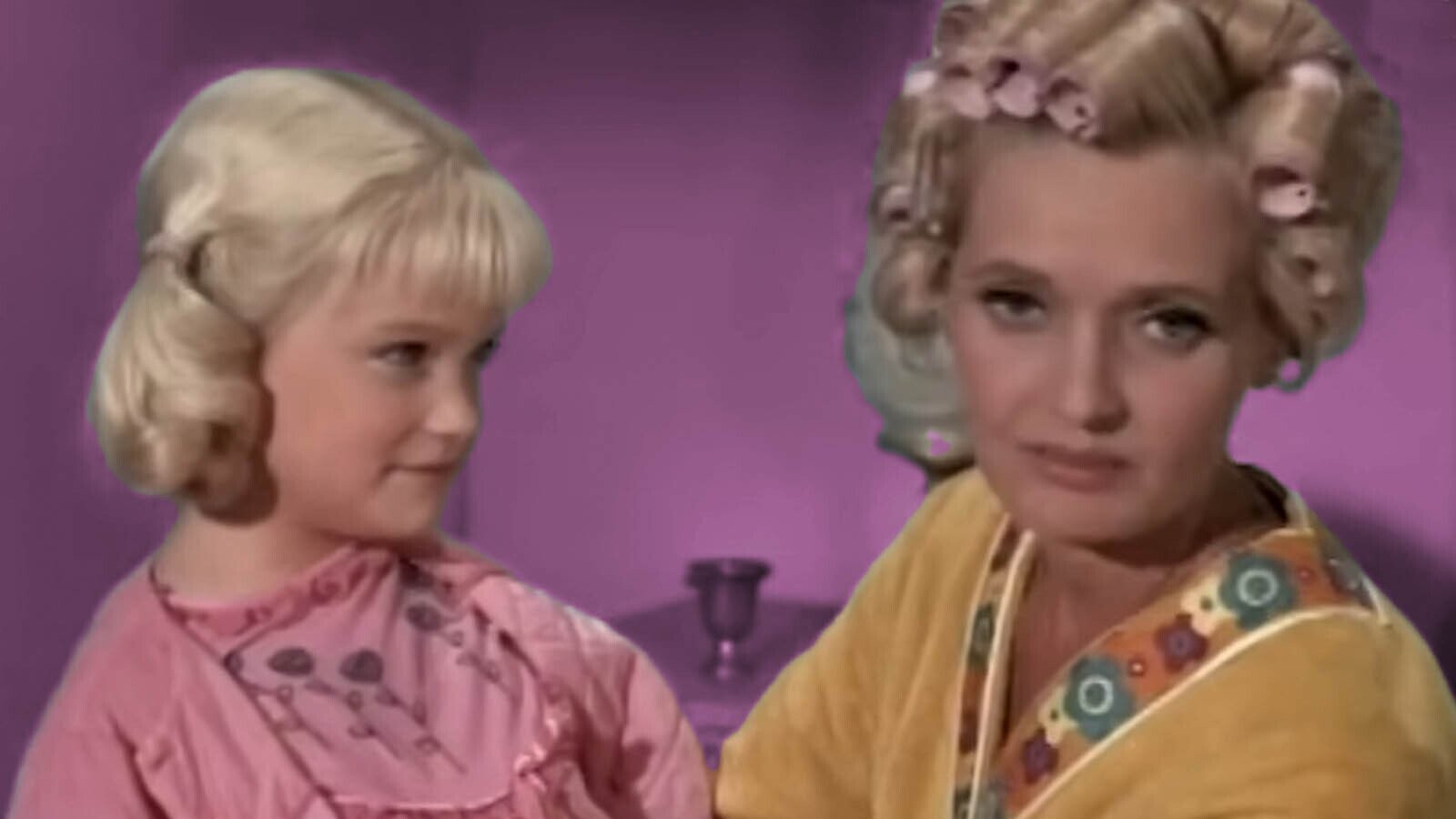
For decades, The Brady Bunch has lived in the American imagination as the gold standard of sunny sitcom innocence: six polite kids, one ultra-patient housekeeper, and a family theme song so catchy it could probably survive a nuclear winter. That is why one of the most startling behind-the-scenes stories to emerge from the show in recent years feels so jarring. According to Susan Olsen, the actress who played Cindy Brady, she was badly injured while filming the very first episode of the series and “almost died.”
That revelation changes the way fans see the pilot, “The Honeymoon,” and it also gives the show’s polished, wholesome image a startling shadow. What looked like a soft-focus close-up of the youngest Brady girl was, in Olsen’s telling, production trying to work around a child actor’s bruised and swollen face after a freak accident on set. Suddenly, a sitcom that has long been remembered for its chirpy optimism comes with a reminder that old-school television sets were not always as safe, careful, or child-centered as modern viewers might assume.
This is not just a piece of retro TV trivia. It is a story about how quickly a serious injury can be minimized when the cameras are rolling, how a child performer can be expected to “be brave” when she should probably be resting, and how a beloved cultural artifact can still hold secrets more than half a century later. In other words, the Brady staircase may have been spotless, but behind the scenes, things were apparently far messier.
The Story Behind the Headline
The phrase “nearly died” is not tabloid embroidery here. It comes from Olsen herself, who shared the memory while revisiting the pilot on The Real Brady Bros podcast with her former castmates Barry Williams, Christopher Knight, and Mike Lookinland. The timing matters. This was not a rumor dredged up from a gossip column or a story passed around by fans on message boards. It was Olsen, as an adult, looking back on her experience filming one of the most famous family sitcoms in TV history and revealing that the first day was far more traumatic than viewers ever knew.
That alone makes the story newsworthy. But what makes it stick is the contrast between the show’s image and the event she described. The Brady Bunch built its reputation on family comfort food: gentle conflicts, clean resolutions, and a suburban world where even sibling arguments felt tidy enough for syndication. So when the actress behind Cindy Brady says the pilot involved a serious on-set accident that left her with two black eyes, a swollen nose, and a swollen face, it feels like someone quietly replaced the sitcom soundtrack with a record scratch.
Even more surprising, Olsen said some of her fellow cast members did not know the full story until she mentioned it decades later. That detail says a lot about how production functioned in that era. Children could go through something frightening, finish the work, and still have the event fade into the background of television history while the final product played on as if nothing happened. Viewers got the wedding, the honeymoon chaos, and the smiling blended family. Olsen got an injury that lingered in the footage if you knew where to look.
What Happened on the Set of the Pilot?
A Freak Accident From Above
Olsen recalled that she was getting body makeup on her legs while standing on a makeup chair during filming on the set used for the girls’ bedroom. Then something fell from the catwalk overhead, first striking the makeup man, then the body makeup woman, and then hitting Olsen in the face. It was not a minor bump or a funny sitcom mishap. By her account, it hurt badly enough that she wanted to cry hard, not in a cute television-child way, but in the very human way that follows real pain and fear.
That description gives the story its chilling force. A child actor, perched on a chair, working under adult supervision, is struck in the face by falling equipment from above. On any modern set, that sentence alone would trigger a whole series of alarms, forms, safety reviews, and likely a long pause in production. In Olsen’s memory, what followed was more complicated: disbelief, minimization, and a quick push to keep moving.
She said only her mother and Florence Henderson, who played Carol Brady, seemed to fully acknowledge how serious the hit had been. Henderson reportedly insisted that people look at Olsen’s injuries rather than brush them off. That detail matters because it turns Henderson into more than just TV mom in this story. She becomes the adult on set who recognized the difference between a child being stoic and a child actually being okay. Those are not the same thing, and productions have gotten into trouble for confusing them for generations.
The Camera Didn’t Miss It Completely
One reason this story has fascinated fans is that Olsen says the evidence was there all along. In the wedding sequence, if viewers zoom in closely enough, her face appears noticeably swollen. Some early publicity photos also reportedly show that something was off. What many people once read as a soft-focus or technically imperfect close-up now looks more like a visual workaround. The blur was not just stylistic haze. It may have been damage control.
There is something eerie about that. For years, audiences watched the pilot without realizing that a child in the frame had already been badly hurt. It is the kind of behind-the-scenes revelation that rewires how fans watch old TV. The image stays the same, but the meaning changes. That is one reason this story has had such staying power online. People are not just reacting to the accident itself. They are reacting to the strange feeling of discovering that a cheerful, familiar episode was quietly carrying the trace of a real-life emergency.
Olsen also recalled that the production brought in noted makeup artist Hal King to help cover the injuries. In one sense, that sounds glamorous in the bizarre way only classic Hollywood can. In another, it is sobering. A child was injured badly enough that special makeup work became part of the solution. The pilot still got made. The episode still aired. The machine kept humming.
Why the Story Lands So Hard Today
The Child-Star Angle Changes Everything
If Susan Olsen had been an adult actor, the story would still be troubling. But the fact that she was around 8 years old when the accident happened makes the account much more unsettling. Old television has a way of flattening time. We watch a rerun and forget that the actors were real children, with small bodies, limited power, and a strong instinct to please adults. That last part is especially important. Children on set often learn quickly that professionalism gets rewarded. Smiling through pain gets praised. Being “brave” becomes its own trap.
That is why the story about director John Rich reportedly calling Olsen “such a brave little girl” hits with a double edge. On the surface, it sounds kind and reassuring. In practice, it may have helped seal the emotional deal: don’t cry, don’t stop, keep going. Many adults can remember moments from childhood when a compliment cornered them into endurance. That memory becomes sharper when the child involved is working on a hit television production where every delay costs money and every scene needs to get done.
Today, the story also lands differently because modern audiences know much more about child performers and the risks they face. Current protections for minors in entertainment are more visible, more formalized, and more openly discussed than they were in the late 1960s. California requires permits for minors in entertainment work, and SAG-AFTRA’s guidance emphasizes on-set safety and the parent’s responsibility to focus on the child’s well-being. Olsen’s account is not just a weird old TV anecdote. It is also a reminder of why those protections matter.
Wholesome Television, Unwholesome Reality
Part of what makes The Brady Bunch endure is that it offers a highly organized version of family life. Problems appear, lessons are learned, and nobody stays angry for long. Even the furniture seems emotionally regulated. So when a grim real-world event peeks out from behind that carefully pressed curtain, the contrast feels dramatic. A smiling sitcom can still be built on a workday that was chaotic, painful, and frightening.
This is also why stories like Olsen’s resonate more now than they might have twenty years ago. Audiences today are fascinated by the gap between image and reality. We have become much more interested in production histories, labor conditions, and the untold experiences of the people who made the entertainment we grew up with. Fans no longer want only the polished nostalgia package. They also want the truth tucked behind it, even when that truth makes the familiar feel stranger.
Why The Brady Bunch Was Already Important Before This Story
A “Safe” Sitcom With a More Radical Origin
There is another layer that makes this story worth discussing. The Brady Bunch now looks like the gentlest show imaginable, but its concept was more daring in its time than people remember. A blended family at the center of a network sitcom was not automatically viewed as standard, uncomplicated material in the late 1960s. The series eventually became a pop-culture institution, especially through reruns, but its early identity was shaped by a premise that felt more modern than its reputation now suggests.
That context matters because it explains how the pilot carried so much weight. The first episode was not just another day at the studio. It was the launch of a concept that had to sell America on a newly assembled family unit, six children, and a very particular tone of warmth and acceptance. The pressure to make things work was enormous. If Olsen’s account is any indication, that pressure did not always leave enough room for a child’s injury to be treated with the seriousness it deserved.
Ironically, the show’s long life in reruns may be one reason the story hits harder today. The Brady Bunch was not merely a network-era sitcom that came and went. It became a cultural loop. New generations kept meeting the Bradys after school, on cable, on home video, and through reunion projects. That extended shelf life gave the pilot a kind of permanent innocence. Olsen’s story punctures that innocence without destroying it. The episode still exists. The family still sings. But the mythology is no longer seamless.
Florence Henderson’s Role in the Memory
One of the most affecting parts of Olsen’s account is the role Henderson played. In a story full of confusion and minimization, Henderson emerges as the adult who insisted the injury be acknowledged. It is a small but meaningful reminder that on chaotic sets, a single person’s response can change the emotional reality for a child. Henderson was acting as television mother on camera, but in Olsen’s memory, she also stepped into a protective role off camera.
That does not turn the event into a feel-good story. A serious injury still happened, and the child still kept working. But it does help explain why Olsen remembers Henderson with such gratitude in this context. When people revisit childhood workplace experiences decades later, they often remember not just the event itself, but who believed them, who minimized them, and who made them feel visible. Henderson appears to have landed firmly in the first category.
What This Revelation Really Changes
The biggest impact of Olsen’s story is not that it makes The Brady Bunch darker. It is that it makes it more human. Nostalgia often sands down the rough edges of production history. We remember theme songs and haircuts, not catwalk accidents and swelling. But the people inside those square opening credits were workers, parents, and children navigating a fast-moving entertainment machine.
For fans, the revelation adds emotional depth to a show that has often been dismissed as too sweet to take seriously. There is now a new way to watch the pilot: not just as the beginning of an iconic sitcom, but as the beginning of a long career for a child actor who endured something frightening on day one and kept going. That does not make the series less beloved. If anything, it makes its survival as a cultural touchstone even stranger and more compelling.
And maybe that is the final irony. The Brady Bunch has always been remembered as a show where every problem could be solved in under half an hour, usually with a talk in the den. But one of its earliest real-life crises did not get that neat resolution. It got covered with makeup, softened by camera technique, and folded into television history until Olsen finally told the story plainly. Sometimes the most revealing thing about old TV is not what it showed us. It is what it hid in plain sight.
Experiences Related to This Story: Why It Feels So Personal for So Many People
Stories like this land hard because they tap into a very familiar human experience: being hurt, scared, or overwhelmed while the world around you keeps moving as if nothing major happened. You do not have to be a child star from a classic sitcom to recognize that feeling. Plenty of people remember childhood moments when adults around them underestimated an injury, brushed off their fear, or praised them for toughness when what they really needed was rest, care, and someone saying, “Nope, everything stops now.”
That is one reason Susan Olsen’s memory feels bigger than old TV gossip. It touches a nerve about how children are often expected to perform composure for adults. A kid falls, gets hit, or has a genuinely frightening moment, and within seconds the room can split into two camps: the people who say, “They’re okay,” and the people who say, “Hold on, let’s make sure.” Most adults remember which kind of response they got when they were young, and those memories tend to stick around longer than anyone expects.
There is also the strange experience of revisiting something beloved and discovering it had a hidden cost. Fans often go back to the entertainment they loved as children expecting comfort. Then a behind-the-scenes story changes the texture of everything. A sitcom theme song suddenly has a ghost note in it. A familiar scene now includes a detail you cannot unsee. That does not ruin the art, but it complicates your relationship to it. And honestly, that is part of growing up too: realizing that the things that looked effortless were often held together by people doing hard, imperfect work.
Another experience connected to this story is the way memory works over time. Many people do not fully process a difficult event until years later, when they finally tell it out loud and hear others react with surprise. That seems to be part of what makes Olsen’s account so striking. Her castmates were stunned. Viewers were stunned. And that reaction can be oddly validating. Sometimes a person carries a painful memory for decades because everyone around them acted like it was no big deal. The first shocked response can feel like the first honest one.
Finally, this story resonates because it reminds people that “professionalism” can be a beautiful trait and a terrible burden. Being dependable is great. Being resilient is admirable. But there is a line where resilience becomes a polite mask for distress. Many adults have spent years unlearning the lesson that being good means pushing through anything. That is why this old Hollywood story feels modern. Beneath the vintage hair, studio lights, and sitcom charm is a lesson that still matters: when someone gets hurt, the right response is not always applause for bravery. Sometimes the right response is to stop the show, look closely, and take the pain seriously.











