
Outdoor living sounds peaceful until July arrives, the patio turns into a toaster oven, and your lemonade sweats more than you do. That is where the best outdoor ceiling fans earn their keep. A good outdoor fan does not actually lower the air temperature, but it moves air across your skin, cuts through sticky humidity, discourages lingering bugs, and makes a porch, pergola, gazebo, or screened room feel like a place you actually want to sit.
Bob Vila’s tested outdoor ceiling fan guide puts real-world performance front and center: airflow, installation, outdoor rating, controls, lighting, style, and whether the fan behaves like a refined home upgrade or a helicopter auditioning above your patio table. The standout pick in that testing was the Honeywell Belmar 52-inch Outdoor Ceiling Fan, praised for its easy setup, strong airflow, quiet operation, classic styling, and budget-friendly value.
But the “best” outdoor ceiling fan is not one-size-fits-all. A covered porch in Ohio, a salty coastal deck in Florida, and a tiny apartment balcony with one heroic fern all need different fans. This guide breaks down what matters, which types of fans make sense, and how to choose an outdoor ceiling fan that keeps its cool even when the weather is being dramatic.
What Makes an Outdoor Ceiling Fan Different?
An outdoor ceiling fan looks similar to an indoor ceiling fan, but the materials and ratings are different. Outdoor models are built to handle moisture, humidity, temperature swings, and in some cases direct rain. That matters because an indoor fan installed outside can warp, rust, wobble, short out, or retire early with all the dignity of a soggy cardboard box.
The first thing to check is the outdoor rating. A damp-rated ceiling fan is made for covered outdoor areas such as porches, screened patios, breezeways, sunrooms, and garages. It can handle humidity and moisture in the air, but it should not be directly rained on. A wet-rated ceiling fan is tougher. It is designed for exposed locations where rain, snow, and wind-driven moisture may reach the fan.
In simple terms: covered porch, damp rating is often fine. Open pergola, uncovered gazebo, or coastal exposure, choose wet-rated. When in doubt, go tougher. Fans do not get offended when you overprotect them.
Best Overall: Honeywell Belmar 52-Inch Outdoor Ceiling Fan
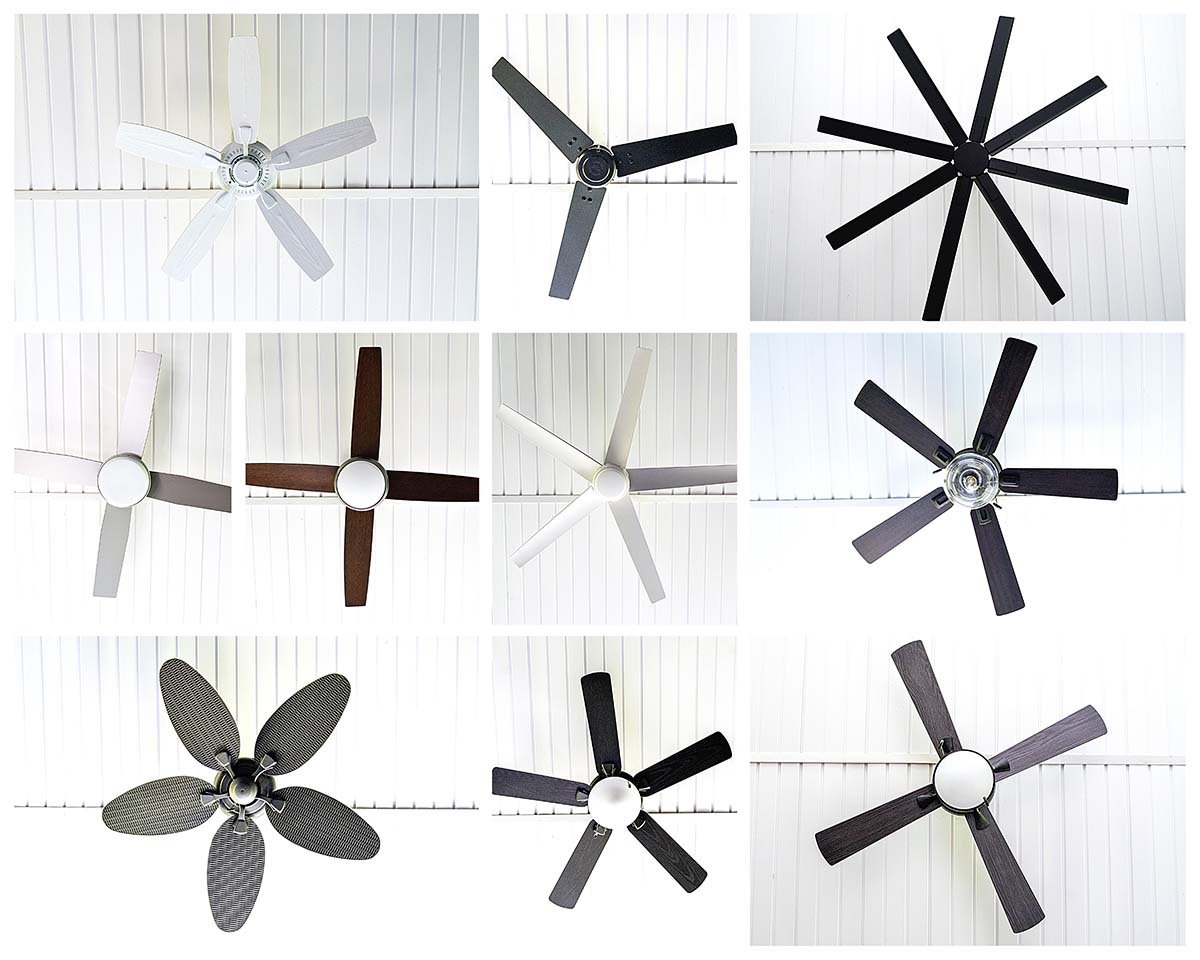
The Honeywell Belmar 52-inch fan is a strong all-around choice because it checks the boxes most homeowners actually care about: it moves a lot of air, does not make a racket, looks classic rather than weirdly futuristic, and can work in many outdoor settings. In Bob Vila’s testing, the Belmar stood out for being easy to install and well prepared for outdoor conditions.
The Belmar uses five blades and a reversible three-speed motor controlled by pull chains. It is available in finishes such as white and bronze, which makes it easy to pair with traditional, transitional, farmhouse, or casual patio decor. Some versions include an LED light kit, which is useful if your porch is also your evening dinner spot, reading nook, or “I just need five minutes away from everyone” zone.
One practical advantage is its outdoor-friendly blade construction. Plastic or ABS-style blades are often preferred outdoors because they resist humidity-related warping better than many wood or composite blades. That means less sagging, less wobbling, and fewer moments where your fan starts looking like it lost an argument with a rain cloud.
Best Value: Prominence Home Auletta 52-Inch Outdoor Ceiling Fan
The Prominence Home Auletta is a smart pick for shoppers who want a stylish outdoor ceiling fan without sending their wallet into witness protection. It offers a clean, modern four-blade design, an integrated LED light, and a 52-inch span suitable for many patios and decks.
Bob Vila’s testing found that the Auletta performed well in hot, humid conditions, especially at medium and high speeds. It is damp-rated, so it belongs in covered outdoor spaces rather than fully exposed locations. The design is simple enough to blend with different styles, and the light makes it practical for outdoor entertaining after sunset.
The tradeoff is that it may not move quite as much air as some five-blade models, and it is not the best option for direct weather exposure. But for a covered patio where the main goal is comfort, lighting, and value, it makes a very sensible case for itself.
Best for Coastal Areas: Hunter Oceana 52-Inch Outdoor Ceiling Fan
Coastal homes need extra-tough outdoor fans because salt air is basically nature’s tiny rust machine. The Hunter Oceana is built for harsher conditions, with a corrosion-resistant finish, wet-rated construction, weatherproof blades, an integrated LED light, and wall control. That makes it a better fit for exposed outdoor installations and beach-area homes than a basic damp-rated model.
For homeowners near the ocean, a corrosion-resistant wet-rated fan is worth the extra attention. Salt air, moisture, and wind can punish cheaper fans quickly. Choosing the right model from the start helps avoid peeling finishes, noisy operation, and the sad little wobble of regret.
Best Modern Design: Hunter Cassius 52-Inch Outdoor Ceiling Fan
The Hunter Cassius is for people who like clean lines, simple shapes, and outdoor decor that says “modern patio” rather than “pirate tavern.” This damp-rated fan is designed for covered outdoor spaces and features a three-blade industrial style that works especially well with modern farmhouse, minimalist, and contemporary settings.
It does not include a light kit, which can be a plus or minus depending on your setup. If your covered porch already has sconces, recessed lights, or string lights, a no-light fan keeps the ceiling looking uncluttered. The Cassius also uses pull-chain controls and a reversible motor, keeping the operation simple and familiar.
The key limitation is exposure. Because it is damp-rated rather than wet-rated, it should be installed where rain and snow cannot directly reach it. Think covered patio, not open-air pergola.
Best Rustic Style: Prominence Home Abner 52-Inch Outdoor Ceiling Fan
The Prominence Home Abner brings vintage character to an outdoor space with a rustic look and an Edison-style LED light. It is a good match for farmhouse porches, cabins, covered patios, and outdoor dining spaces where the fan needs to contribute to the atmosphere instead of merely spinning politely in the background.
This model is damp-rated for covered outdoor areas and offers multiple mounting options, including standard, angled, and closemount installation. Pull chains control the fan and light, which keeps things straightforward. It is a particularly appealing choice for homeowners who want an outdoor ceiling fan with light that feels decorative, not purely mechanical.
Best Tropical Style: Honeywell Duval 52-Inch Outdoor Ceiling Fan
If your outdoor space leans resort-inspired, tropical, or “vacation mode even though I still have emails,” the Honeywell Duval fits the mood. It uses palm-style blades and a wet-rated design, making it more capable for exposed outdoor installations than many decorative fans.
The Duval is a strong example of why blade material matters. Outdoor tropical fans often use plastic or weather-resistant blades because natural-looking wide blades can suffer outdoors if they are not properly built. The Duval delivers the relaxed island look without requiring you to live in fear of every thunderstorm.
Best for Easy Installation: Hampton Bay Mena 54-Inch Indoor/Outdoor Ceiling Fan
The Hampton Bay Mena is a practical favorite for people who want the upgrade but do not want installation to become a full-family emotional event. Bob Vila’s testing highlighted its quick-install ABS blades, low-profile structure, remote control, and color-changing LED light.
At 54 inches, the Mena works well for many covered outdoor spaces. The remote lets users control fan speed, direction, and lighting modes without pulling chains over the patio table like they are ringing a tiny ceiling bell. Its clean design also makes it versatile enough for modern, transitional, and casual outdoor rooms.
Best for Large Patios: Minka-Aire Xtreme H2O 65-Inch Outdoor Ceiling Fan
Large patios need more than a cute little breeze. The Minka-Aire Xtreme H2O 65-inch outdoor ceiling fan is designed for bigger spaces, with eight blades and a wide sweep that distributes airflow across large covered patios and screened porches. In testing, it moved air smoothly and quietly, with a diffused breeze rather than a narrow blast.
This is the kind of fan to consider when one standard 52-inch model would leave half the patio feeling ignored. It also includes remote control convenience and offers optional upgrades such as light kits and smart controls, depending on the configuration. For large entertaining areas, one properly sized big fan can be better than two smaller fans fighting for attention.
Best for Small Porches: Hampton Bay Gazebo II 42-Inch Indoor/Outdoor Ceiling Fan
Small porches, compact balconies, and cozy outdoor nooks do not need a giant fan swinging overhead like a ceiling-mounted windmill. The Hampton Bay Gazebo II 42-inch fan is a better match for smaller spaces. It is wet-rated, compact, and designed to move air effectively in areas up to about 100 square feet.
Bob Vila’s testing noted that it performed best when evaluated in a smaller marked-out area, which is exactly the point: match the fan to the space. A too-small fan in a large patio feels disappointing. A too-large fan on a tiny porch feels like you accidentally installed weather.
How to Choose the Best Outdoor Ceiling Fan
1. Match the Rating to the Location
Outdoor rating is the first decision. Damp-rated fans are for covered spaces where humidity is present but direct water exposure is not. Wet-rated fans are for locations where rain, snow, or wind-blown moisture may hit the fan. For coastal areas, look for corrosion-resistant finishes and weather-resistant hardware.
2. Choose the Right Size
Fan size should match the square footage of the space. As a general guide, small areas up to 75 square feet can use 29- to 36-inch fans. Spaces from 76 to 144 square feet often work well with 36- to 42-inch fans. Medium areas from 144 to 225 square feet may need around 44 inches, while larger spaces from 225 to 400 square feet usually call for 50- to 54-inch models. Very large patios may need a 60-inch-plus fan or multiple fans.
3. Pay Attention to CFM
CFM stands for cubic feet per minute, and it measures how much air a fan moves. Higher CFM generally means stronger airflow, but comfort also depends on blade pitch, motor quality, ceiling height, and layout. Do not judge a fan by blade count alone. Three excellent blades can outperform five lazy ones. As in group projects, contribution matters more than attendance.
4. Think About Controls
Pull chains are simple and reliable. Wall controls feel more built-in. Remotes are convenient, especially for fans mounted over furniture or dining areas. Smart controls can connect to apps or voice assistants, which is useful if you like telling your patio what to do.
5. Decide Whether You Need a Light
An outdoor ceiling fan with light can reduce clutter and make evening use easier. However, if your patio already has good lighting, a fan without a light may look cleaner. For dining spaces, warm LED lighting usually feels more inviting than harsh bright-white light.
6. Check Ceiling Height and Mounting Type
Low ceilings may require a hugger or closemount fan. Sloped porch ceilings need angled-mount compatibility. Standard downrods work for many 8- to 9-foot ceilings, while tall ceilings may require longer downrods to bring airflow closer to people. The goal is not just to spin air near the rafters where only spiders benefit.
Outdoor Ceiling Fan Maintenance Tips
Even the best outdoor ceiling fan needs occasional care. Dust the blades regularly, especially during pollen season. Check screws and blade brackets every few months, because vibration and outdoor temperature changes can loosen hardware over time. Clean the motor housing gently with a dry or slightly damp cloth, and avoid spraying the fan directly with a hose unless the manufacturer specifically allows it.
In coastal areas, wipe down exposed metal parts more often to reduce salt buildup. If your fan has a light kit, check that the cover is secure and that outdoor-rated bulbs are used when required. Before storm season, inspect the mounting bracket and downrod. A ceiling fan should provide a breeze, not suspense.
Common Mistakes to Avoid
The biggest mistake is installing an indoor fan outdoors. The second biggest is putting a damp-rated fan where rain can reach it. Another common problem is choosing a fan based only on looks. Style matters, but airflow, rating, and size matter more. A gorgeous fan that barely moves air is basically ceiling jewelry with a motor.
Also avoid assuming bigger is always better. Oversized fans can overwhelm small spaces, while undersized fans fail to cool large patios. Finally, do not ignore noise. A quiet motor is especially important outdoors because patios are social spaces. Nobody wants to shout over a fan while explaining why the burgers are “artistically charred.”
Practical Experience Notes: What Outdoor Fan Ownership Really Feels Like
In real outdoor living spaces, the best ceiling fan is usually the one you stop thinking about. It turns on, moves air, stays quiet, and makes the porch feel comfortable enough for coffee, dinner, reading, or pretending you are “working outside” while mostly admiring the breeze. That kind of everyday usefulness is what separates a good outdoor ceiling fan from a decorative mistake with blades.
One of the first things homeowners notice after installing an outdoor fan is that airflow changes how the whole patio behaves. Still air makes heat feel heavier, especially in humid climates. Add a steady overhead breeze and suddenly the same porch feels fresher, less sticky, and more usable. The air movement also helps reduce the number of flying insects hovering around people, drinks, and food. It is not a magical mosquito force field, but it does make the area less inviting to weak flyers. Consider it a polite eviction notice.
Installation experience varies widely by model. Fans with clearly labeled hardware, preinstalled remote receivers, quick-connect blades, and helpful mounting brackets feel dramatically easier. Fans with tiny screws, awkward blade access points, and vague diagrams can turn a Saturday morning project into a character-building exercise. Before buying, it is worth checking whether the fan supports your ceiling type, whether the box is fan-rated, and whether a downrod or angled mount is needed. For many homeowners, hiring an electrician is the safest and least stressful route, especially when outdoor wiring or new junction boxes are involved.
Lighting also becomes more important than expected. A fan with an integrated LED light can make a covered porch feel finished, especially over a table or seating area. However, brightness and color temperature matter. Warm light feels cozy for evening meals, while very cool light can make the patio look like a small outdoor dentist office. Dimmable or color-selectable LEDs are genuinely useful because outdoor spaces shift from task areas to relaxation zones after sunset.
Over time, blade material proves its worth. Plastic and ABS blades tend to handle humidity better than many wood-based materials. In damp climates, poor blade material can sag, warp, or create wobble. A fan that starts smooth but becomes unbalanced after one wet season is not a bargain; it is a delayed complaint. Wet-rated fans with all-weather blades are especially valuable for exposed or semi-exposed spaces.
Noise is another ownership detail that matters more after installation than it does on a product page. A faint motor hum may not sound like much in a store, but above a quiet porch conversation it can become annoying. Quiet motors, stable mounting, and balanced blades make outdoor living feel calmer. The best models create airflow without calling attention to themselves.
The biggest experience-based lesson is simple: buy for the exact outdoor space, not the fantasy patio in your head. Measure the area. Look at ceiling height. Check whether rain can reach the fan. Decide if you need a light, remote, wall control, or smart features. Then choose a fan that fits those conditions. When the match is right, an outdoor ceiling fan becomes one of those upgrades that feels obvious afterward. You sit outside longer, complain about the heat less, and wonder why you waited so long to give your porch its own personal weather system.
Final Verdict
The best outdoor ceiling fans combine weather-ready construction, strong airflow, quiet operation, and a style that fits the space. Bob Vila’s tested favorite, the Honeywell Belmar 52-inch Outdoor Ceiling Fan, is a dependable overall choice for many porches and patios because it balances performance, price, and classic design. For coastal exposure, the Hunter Oceana is a smarter heavy-duty option. For large patios, the Minka-Aire Xtreme H2O brings serious coverage. For small porches, the Hampton Bay Gazebo II makes more sense than oversized models.
The most important buying rule is simple: match the fan to the location. Damp-rated for covered spaces. Wet-rated for exposed spaces. Choose the right size, check CFM, consider controls and lighting, and do not let style distract you from durability. A beautiful fan is nice. A beautiful fan that survives summer storms and actually moves air is better.
Note: This article is based on current publicly available product testing, outdoor ceiling fan buying guidance, manufacturer specifications, and U.S. home-improvement information. Product availability, pricing, and specifications may change over time.











