
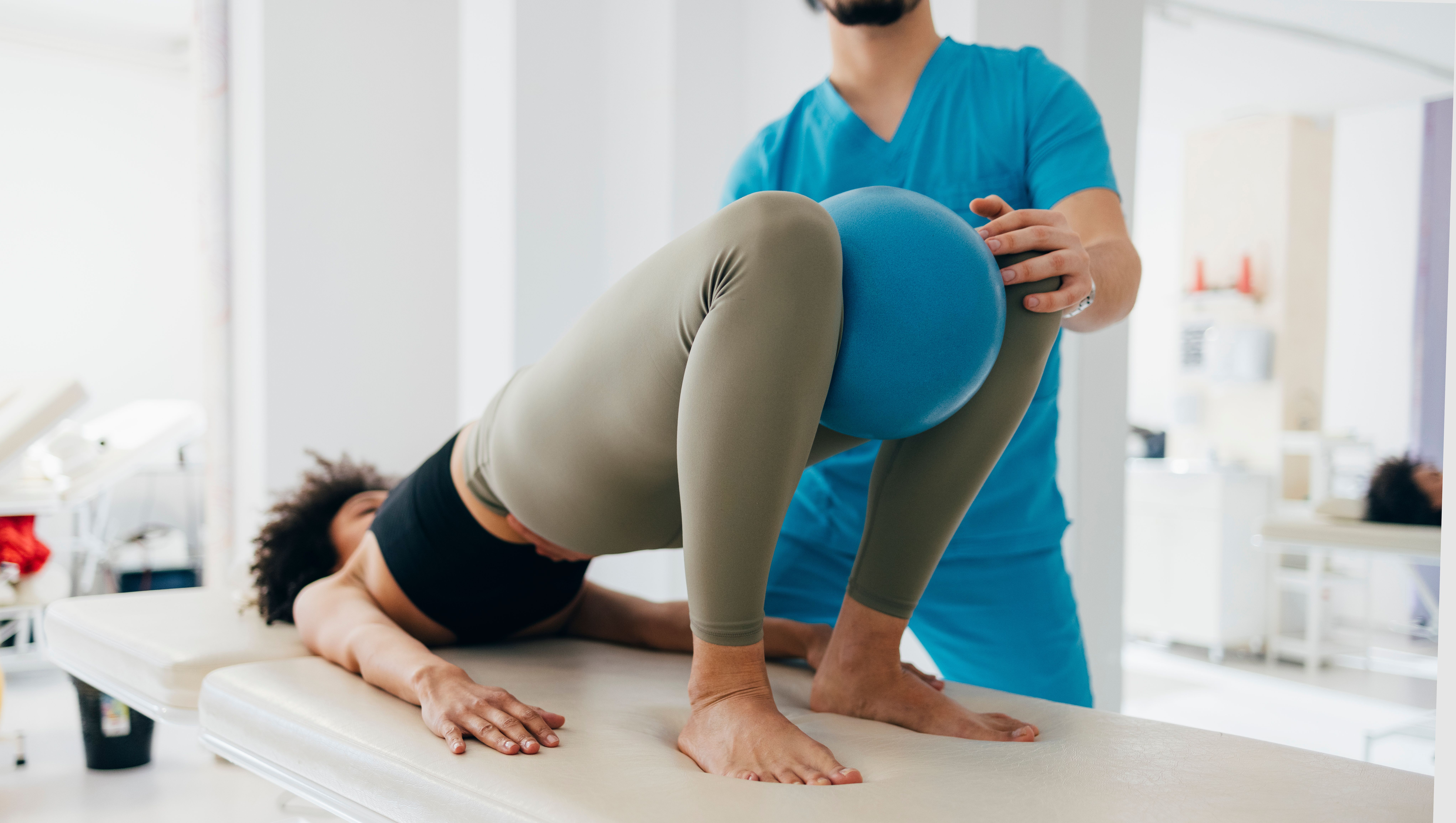
Knee pain can make ordinary activitiesclimbing stairs, getting out of a chair, walking the dogfeel like suspiciously ambitious athletic evenical note: This article provides general educational information, not an individualized diagnosis or treatment plan. Consult a physician or licensed physical therapist before exercising after surgery, a major injury, or unexplained knee pain. Seek prompt medical care for severe swelling, deformity, fever, inability to bear weight, joint locking, or repeated episodes of the knee giving way.
Why Exercise Can Help Relieve Knee Pain
The knee may be the location of your discomfort, but it rarely works alone. Your quadriceps, hamstrings, glutes, calves, hips, ankles, and core all influence how force travels through the joint. Weakness or poor control in any of these areas can make the knee absorb more stress than it would prefer.
“`
That is why physical therapy exercises for knee pain usually address the entire lower-body system. Stronger thigh muscles help support and stabilize the knee. Better hip strength can improve leg alignment during walking, squatting, and stair climbing. Flexible calves and hamstrings may allow the knee to move without unnecessary compensation.
Exercise also helps maintain range of motion and gradually rebuilds the knee’s tolerance for daily activity. The objective is not to punish the joint into submission. Your knee is not impressed by motivational speeches. It responds better to appropriate movement, manageable resistance, good technique, and steady progression.
“`
How to Exercise Safely When Your Knee Hurts
Not every person with knee pain should perform the same program. Osteoarthritis, patellofemoral pain, tendon irritation, meniscus injuries, ligament problems, and post-surgical conditions can require different modifications.
“`
As a general starting point, perform strengthening exercises two or three nonconsecutive days per week. Begin with one set and progress toward two or three sets as your tolerance improves. Move slowly enough to maintain control rather than racing through repetitions like the exercise mat is about to close.
- Warm up with five to ten minutes of easy walking or stationary cycling.
- Keep movements within a comfortable range of motion.
- Use a wall, countertop, or sturdy chair for balance when necessary.
- Stop if you feel sharp, catching, or rapidly increasing pain.
- Reduce the resistance or number of repetitions if symptoms remain noticeably worse the following day.
Mild muscular effort is expected. Sudden joint pain is not a fitness milestone.
“`
Gentle Knee Mobility Exercises
“`
1. Heel Slides
Why they help: Heel slides gently practice knee bending and straightening, making them useful when stiffness limits your range of motion.
How to do them: Lie on your back with both legs extended. Slowly slide one heel toward your buttocks, allowing the knee to bend. Stop before the movement becomes painful. Hold briefly, then slide the heel forward until the leg is straight again.
Starting dose: Perform 8 to 12 repetitions on each side.
2. Quadriceps Sets
Why they help: A quad set activates the front thigh without requiring much knee movement. It is often a useful entry-level exercise when bending the knee is uncomfortable.
How to do them: Sit or lie with one leg straight. Tighten the thigh muscle and gently press the back of the knee toward the floor or bed. Keep breathing and avoid lifting your heel.
Starting dose: Hold for 5 to 10 seconds and repeat 8 to 10 times per leg.
“`
Quadriceps and Hamstring Strengthening Exercises
“`
3. Straight-Leg Raises
Why they help: Straight-leg raises strengthen the quadriceps while keeping the knee relatively still.
How to do them: Lie on your back with one knee bent and the other leg straight. Tighten the thigh of the straight leg, lift it approximately 8 to 12 inches, pause, and slowly lower it. Keep your lower back relaxed and your kneecap pointing toward the ceiling.
Starting dose: Complete 2 sets of 8 to 12 repetitions.
4. Seated Knee Extensions
Why they help: This movement strengthens the quadriceps through an accessible range of motion and can be performed almost anywhere.
How to do them: Sit tall in a sturdy chair with both feet on the floor. Slowly straighten one knee until the leg is nearly parallel with the floor. Pause without forcefully locking the joint, then lower the foot with control.
Starting dose: Perform 2 sets of 8 to 12 repetitions per leg.
5. Standing Hamstring Curls
Why they help: Hamstring curls strengthen the muscles behind the thigh, which support knee control during walking and other daily movements.
How to do them: Hold a chair or countertop. Bend one knee and bring the heel toward your buttocks without allowing the thigh to drift forward. Lower slowly. Keep your torso upright and avoid arching your back.
Starting dose: Perform 2 sets of 8 to 12 repetitions per side.
6. Terminal Knee Extensions With a Resistance Band
Why they help: This exercise trains the final portion of knee straightening, which is important for stable standing and walking.
How to do them: Anchor a resistance band behind you and loop it around the back of one knee. Begin with the knee slightly bent. Tighten your quadriceps and straighten the knee against the band. Pause, then return slowly.
Starting dose: Complete 2 sets of 10 to 15 repetitions per leg.
“`
Hip and Glute Exercises That Support the Knees
“`
7. Glute Bridges
Why they help: Bridges strengthen the glutes and hamstrings, helping your hips share the workload during standing, walking, and climbing stairs.
How to do them: Lie on your back with your knees bent and feet hip-width apart. Tighten your abdomen and squeeze your glutes as you lift your hips. Stop when your shoulders, hips, and knees form a comfortable line. Lower slowly.
Starting dose: Perform 2 sets of 8 to 12 repetitions.
8. Clamshells
Why they help: Clamshells strengthen the muscles on the side of the hip that help control the position of the thigh and knee.
How to do them: Lie on your side with your hips and knees bent. Keep your feet together while lifting the top knee. Do not roll your pelvis backward. Lower the knee slowly.
Starting dose: Complete 2 sets of 10 to 15 repetitions per side.
9. Side-Lying Leg Raises
Why they help: This exercise strengthens the hip abductors, which contribute to balance and leg alignment.
How to do them: Lie on one side with the bottom knee bent and the top leg straight. Lift the top leg approximately 12 inches while keeping your toes pointed forward. Avoid rotating the leg toward the ceiling. Lower with control.
Starting dose: Perform 2 sets of 8 to 12 repetitions per side.
“`
Functional Knee-Strengthening Exercises
“`
10. Sit-to-Stand
Why it helps: Sit-to-stand training strengthens the quadriceps and glutes while directly improving an activity you perform throughout the day.
How to do it: Sit near the front of a sturdy chair with your feet under your knees. Lean forward slightly from the hips, press through your feet, and stand. Slowly push your hips backward and lower yourself into the chair.
Starting dose: Perform 2 sets of 6 to 10 repetitions. Use your hands for assistance if necessary, then gradually rely on them less.
11. Mini Squats
Why they help: Mini squats strengthen several lower-body muscles without requiring the deep knee angle of a full squat.
How to do them: Stand with your feet about shoulder-width apart and hold a stable surface. Push your hips backward and bend your knees slightly, as though beginning to sit. Keep your knees aligned with your second and third toes. Return to standing.
Starting dose: Complete 2 sets of 8 to 12 repetitions.
12. Low Step-Ups
Why they help: Step-ups train the muscles and movement pattern needed for stairs, curbs, and uneven surfaces.
How to do them: Place one foot on a low step. Lean forward slightly and press through the entire foot to lift your body onto the step. Keep your knee from collapsing inward. Step down slowly rather than dropping onto the floor.
Starting dose: Perform 2 sets of 6 to 10 repetitions per side.
If a standard stair is uncomfortable, begin with a platform only two to four inches high.
13. Standing Calf Raises
Why they help: Strong calves assist with walking, balance, and shock absorption through the lower leg.
How to do them: Stand behind a chair with your feet hip-width apart. Rise onto the balls of your feet, pause, and slowly lower your heels. Keep your weight evenly distributed rather than rolling toward the outer edges of your feet.
Starting dose: Complete 2 sets of 10 to 15 repetitions.
14. Single-Leg Balance
Why it helps: Balance training improves coordination between the hip, knee, ankle, and nervous system.
How to do it: Stand near a countertop and lift one foot a few inches from the floor. Keep the standing knee softly bent and your hips level. Touch the counter whenever necessary.
Starting dose: Hold for 20 to 30 seconds and repeat 2 or 3 times per side.
To progress, use less hand support or turn your head slowly. Do not close your eyes unless a professional has determined that it is safe.
“`
Stretches and Low-Impact Movement for Knee Pain
“`
15. Standing Calf Stretch
Why it helps: Limited ankle and calf flexibility can change how the knee moves during walking and squatting.
How to do it: Face a wall and place one foot behind you. Keep the back heel down and the back knee straight. Bend the front knee and lean toward the wall until you feel a stretch in the rear calf.
Starting dose: Hold for 20 to 30 seconds and repeat twice per side.
16. Hamstring Stretch
Why it helps: Flexible hamstrings may make it easier to straighten the knee and move comfortably through the hips.
How to do it: Sit near the edge of a chair. Extend one leg with the heel on the floor and toes pointing upward. Keep your back neutral and hinge forward from the hips until you feel a gentle stretch behind the thigh.
Starting dose: Hold for 20 to 30 seconds and repeat twice per leg.
17. Standing Quadriceps Stretch
Why it helps: This stretch targets the muscles at the front of the thigh, which may become tight after prolonged sitting or repetitive activity.
How to do it: Hold a chair with one hand. Bend one knee and bring the heel toward your buttocks. Hold your ankle or use a strap around it. Keep your knees close together and your pelvis facing forward.
Starting dose: Hold for 20 to 30 seconds and repeat twice per side.
Skip this stretch if deep knee bending causes pain. A physical therapist can provide an alternative.
18. Stationary Cycling
Why it helps: Cycling provides repetitive knee movement and aerobic exercise with less impact than running or jumping.
How to do it: Adjust the seat so your knee remains slightly bent when the pedal reaches its lowest point. Begin with little or no resistance and pedal at an easy pace. If bending is limited, rock the pedals forward and backward through a partial circle before attempting full revolutions.
Starting dose: Begin with 5 to 10 minutes and gradually work toward 20 to 30 minutes as tolerated.
“`
A Simple Weekly Knee Exercise Plan
You do not need to perform all 18 exercises in one session. A better approach is to choose movements that address your primary limitations and can be completed consistently.
“`
Sample 20-Minute Routine
- Stationary cycling or comfortable walking for 5 minutes.
- Heel slides for 10 repetitions per leg.
- Quadriceps sets for 8 repetitions per leg.
- Sit-to-stands for 2 sets of 8 repetitions.
- Glute bridges for 2 sets of 10 repetitions.
- Low step-ups for 2 sets of 6 repetitions per side.
- Calf and hamstring stretches for 20 to 30 seconds per side.
On another day, substitute clamshells, knee extensions, calf raises, or balance training. Variety distributes the workload and keeps the routine from feeling like a very repetitive meeting with your quadriceps.
Progress only one variable at a time. For example, add two repetitions, use a slightly stronger resistance band, increase the step height, or extend your cycling session by several minutes. Increasing everything simultaneously makes it difficult to identify which change irritated the knee.
“`
When Knee Exercises Are Not Enough
Exercise can be highly useful for many forms of knee pain, but it cannot diagnose every problem. Contact a healthcare professional if symptoms are worsening, frequently interrupt sleep, or have not improved after several weeks of appropriate activity modification.
“`
You should also be evaluated after a significant fall, collision, twisting injury, or audible popespecially if the knee becomes unstable or rapidly swollen. A physical therapist can assess strength, range of motion, walking mechanics, hip control, and the activities that trigger your symptoms. That information is far more useful than selecting random exercises because someone on social media performed them beside a suspiciously decorative houseplant.
“`
Conclusion
The best exercises for knee pain are the movements that match the cause of your symptoms, build useful strength, and can be progressed without provoking a major flare. Heel slides and quad sets can restore basic control, while bridges, clamshells, squats, step-ups, and calf raises prepare the lower body for everyday demands.
“`
Consistency matters more than intensity. A modest routine performed several times each week will usually be more useful than one heroic workout followed by five days of negotiating with an ice pack. Begin with comfortable movements, track how the knee responds, and seek professional guidance when symptoms are severe, unusual, or persistent.
“`
Experience-Based Lessons: What Knee Rehabilitation Often Feels Like
The following observations reflect common experiences during knee rehabilitation rather than one specific patient’s story. Understanding these patterns can make the process less frustrating and help you set realistic expectations.
“`
The First Exercises May Feel Almost Too Easy
People often expect physical therapy to begin with dramatic squats, heavy machines, and a soundtrack suitable for an action movie. Instead, an early session may involve tightening the quadriceps, sliding the heel, or lifting the leg a few inches. These movements can seem underwhelming, but they reveal whether you can activate the correct muscles without compensating through the hip, ankle, or lower back.
A quad set that looks simple on paper can be surprisingly difficult after pain, swelling, surgery, or a period of inactivity. The goal is not to entertain the knee. It is to rebuild control before adding load.
Stairs Often Improve Later Than Level Walking
One of the most common rehabilitation experiences is being able to walk comfortably before stairs feel normal. Going upstairs requires substantial quadriceps and glute strength. Going downstairs can be even harder because the muscles must slowly control your body weight while the knee bends.
This is why low step-ups, sit-to-stands, and mini squats are so useful. They allow you to practice portions of the stair-climbing movement at a manageable intensity. A two-inch step may not look impressive, but controlled repetitions on that step can be more productive than struggling through a full staircase with poor alignment.
Progress Is Rarely Perfectly Linear
Knee rehabilitation often includes good days, stiff mornings, occasional flare-ups, and mysterious afternoons when the joint appears to have developed its own opinions. A temporary increase in soreness does not always mean you have caused new damage. It may mean the activity dose was slightly higher than your current capacity.
The useful question is not simply, “Did it hurt?” Instead, consider how much it hurt, whether the pain changed your movement, how quickly it settled, and how the knee felt the following day. If symptoms remain elevated, reduce the number of repetitions, shorten the range of motion, or choose an easier variation.
Hip Strength Can Create a Noticeable Difference
Many people are surprised when a therapist prescribes clamshells or side leg raises for a painful knee. The connection becomes clearer during squats and step-downs. If the hip muscles cannot control the thigh, the knee may drift inward, changing how load is distributed through the joint.
After several weeks of hip and glute training, people often report that their knees feel steadier during stairs, walking, or getting out of a car. The knee itself has not been ignored; it has been given a more cooperative support team.
Doing More Is Not Always Progressing Better
A common mistake is increasing repetitions, resistance, depth, and workout frequency at the same time. This can produce a flare-up that makes it seem as though exercise is harmful. In reality, the problem may be the size of the jump rather than the exercise itself.
Successful progression is usually less exciting. You might complete two additional repetitions, lower the chair slightly, move to a stronger resistance band, or cycle for three more minutes. Small changes allow the muscles, tendons, and joint to adapt without turning each session into an experiment in regret.
The Most Effective Routine Is the One You Can Repeat
People frequently search for the single best knee exercise, but lasting improvement usually comes from a combination of mobility, strength, balance, and aerobic activity. More importantly, the routine must fit your schedule and current ability.
A 15-minute program performed consistently can be more valuable than an elaborate 60-minute routine that survives for exactly three enthusiastic days. Keep the equipment simple, place the resistance band where you can see it, and attach the routine to an existing habit. For example, perform heel slides after waking, sit-to-stands before lunch, or calf stretches after an evening walk.
Knee rehabilitation is rarely glamorous, but it can be remarkably practical. The payoff appears when you climb stairs without bracing yourself, stand from a chair without hesitation, or finish a walk without spending the final block thinking exclusively about your kneecap. Those ordinary improvements are the real milestones.
“`











