
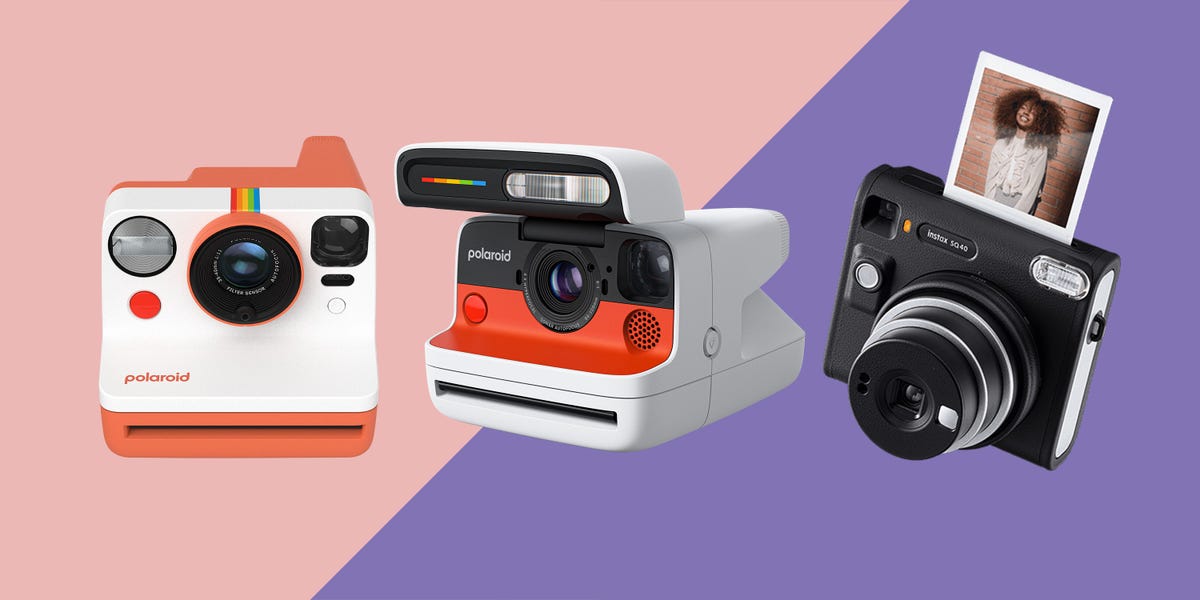
Note: This article is based on current publicly available product information and recent expert recommendations. Camera availability, colors, bundles, and prices may change faster than a toddler can slap a sticker on your fridge.
There is something wonderfully rebellious about an instant camera. In a world where most photos vanish into a phone gallery with 37,000 nearly identical brunch shots, instant cameras hand you proof that a moment actually happened. A tiny print slides out, develops in front of your eyes, and suddenly the photo is not just an imageit is a keepsake, a bookmark, a party favor, a love note, or evidence that your dog did, in fact, wear sunglasses for three seconds.
The best instant cameras today are not all the same. Some are pure analog cameras that print every shot, beautiful mistakes included. Others are hybrid instant cameras that let you preview, edit, save, and print only the photos worth giving precious film to. Some use classic Polaroid film with dreamy, unpredictable character. Others use Fujifilm Instax film, known for sharper colors, quicker development, and lower cost per print. Then there are ZINK and dye-sublimation camera-printers, which are less romantic in a film-purist sense but incredibly practical for stickers, scrapbooks, parties, and kids.
Below are 11 of the best instant cameras for real photos you can hold and treasure, chosen for print quality, ease of use, creative features, film format, value, and everyday joy. Because yes, joy matters. If a camera makes people smile before the photo even develops, it is already doing its job.
How to Choose the Best Instant Camera
Think About Film Size First
Instant film size affects everything: how dramatic the print feels, how much detail you can see, how expensive each shot becomes, and whether the camera fits in your bag. Instax Mini prints are small and wallet-friendly, making them ideal for parties, journals, and beginners. Instax Square gives a classic social-media-like shape. Instax Wide is better for groups, travel scenes, and photos you actually want to frame. Polaroid i-Type and 600 film create that iconic square look with big nostalgic energy, though the film usually costs more and needs more patience while developing.
Decide Between Analog and Hybrid
An analog instant camera prints every photo you take. This is charming, spontaneous, and occasionally humbling. A hybrid instant camera captures digital images first, then lets you choose what to print. Hybrids are excellent if you hate wasting film, want creative effects, or plan to print smartphone photos. Purists may prefer the suspense of analog. Practical people may prefer a screen. Both camps are correct, which is rare and should be celebrated.
Consider Who Will Use It
For kids, parties, weddings, and casual family moments, simplicity beats fancy controls. For artists, hobbyists, and photography lovers, manual controls, double exposure, color effects, and lens accessories can turn a basic snapshot into a tiny experiment. For travelers, size and battery type matter. For gift-givers, film availability may matter more than anything else. A beautiful instant camera is less useful if finding film requires a side quest and emotional resilience.
The 11 Best Instant Cameras
1. Fujifilm Instax Mini 12: Best Overall Instant Camera for Beginners
The Fujifilm Instax Mini 12 is the instant camera you recommend when someone says, “I just want it to work.” It is cute, lightweight, affordable, and wonderfully simple. Turn it on, point, shoot, and wait for the little print to appear. The camera uses Instax Mini film, which is widely available and generally more budget-friendly than larger formats.
Its automatic exposure helps balance indoor and outdoor shots, while the close-up mode and selfie mirror make it easy to photograph friends, food, pets, and your own face when the lighting is kind. The Mini 12 is not built for advanced control, and the prints are small, but that is part of the appeal. It is the instant camera equivalent of a friendly golden retriever: approachable, reliable, and welcome at every party.
Best for: beginners, kids, wedding guest books, dorm rooms, family gatherings, and anyone who wants affordable instant fun without reading a manual.
2. Fujifilm Instax Mini Evo: Best Hybrid Instant Camera
The Fujifilm Instax Mini Evo is one of the most versatile instant cameras because it combines digital convenience with instant-print charm. You can take a photo, preview it on the screen, apply creative effects, save it, and print only the images you love. That alone can save plenty of film, especially if your friends blink with Olympic-level timing.
The Mini Evo offers multiple lens and film effects, creating a wide range of looks from soft and vintage to bold and dramatic. It also works as a smartphone printer, so you can print photos from your phone onto Instax Mini film. The retro design gives it a camera-lover personality, while the hybrid workflow makes it practical for modern users. It is not the cheapest option, but it is one of the smartest choices for people who want creativity without waste.
Best for: creators, travelers, scrapbookers, social events, and anyone who wants to preview before printing.
3. Fujifilm Instax Mini 99: Best Creative Analog Instax Camera
The Fujifilm Instax Mini 99 is for people who like the Mini format but want more creative control than a basic point-and-shoot can offer. It uses analog Instax Mini film, but adds tools such as color effects, exposure control, different shooting modes, and a manual vignette option. In plain English: it lets you make tiny photos that look more intentional and less “oops, the flash attacked everyone.”
The Mini 99 feels more serious than the playful Mini 12. Its design is sleek, its controls invite experimentation, and its color effects can give portraits, street scenes, and party photos a stylized look straight out of a shoebox from another decade. The trade-off is price and complexity. It is not difficult, but it rewards users who want to play, learn, and occasionally sacrifice a frame to the photography gods.
Best for: creative hobbyists, style-conscious users, analog fans, and anyone who wants more control in a compact Instax camera.
4. Fujifilm Instax Wide 400: Best Instant Camera for Groups and Big Prints
The Fujifilm Instax Wide 400 is built for people who look at Instax Mini prints and think, “Adorable, but where is the rest of the photo?” Instax Wide film is much larger than Instax Mini, making it better for group photos, landscapes, table scenes, travel memories, and family gatherings where everyone wants to actually see their face.
The Wide 400 keeps things mostly simple. It has automatic exposure, a self-timer, landscape and close-up options, and an included angle-adjustment accessory for group shots. It is not pocket-sized, and it is not trying to be. This is a bigger camera for bigger memories. The prints feel more substantial, and they are much easier to display on a wall, corkboard, or refrigerator gallery curated by magnets shaped like fruit.
Best for: weddings, parties, family reunions, travel scenes, and anyone who values print size over portability.
5. Fujifilm Instax Wide Evo: Best Wide-Format Hybrid Instant Camera
The Fujifilm Instax Wide Evo takes the hybrid concept and stretches it into a larger format. It uses Instax Wide film, includes a screen for previewing images, offers creative effects, and can also function as a smartphone printer. For people who love the idea of larger instant prints but hate wasting film on half-closed eyes and mysterious ceiling shots, this is a very persuasive camera.
Its wide-angle mode is useful for group photos and travel scenes, while the digital controls make it feel more flexible than a purely analog instant camera. The Wide Evo is more expensive and less compact than Mini models, but its larger prints deliver more emotional impact. A good Instax Wide print feels less like a novelty and more like something you might actually frame.
Best for: serious memory-makers, event hosts, families, travel lovers, and hybrid-camera fans who want bigger prints.
6. Polaroid Flip: Best Modern Polaroid for Point-and-Shoot Fun
The Polaroid Flip brings classic Polaroid personality into a more modern point-and-shoot design. Its folding body nods to vintage Polaroid cameras, but inside it offers features meant to improve the success rate of real-world instant photos. A sonar autofocus system, multiple focusing lenses, a strong flash, and exposure warnings help reduce the heartbreak of spending money on a print only to discover the subject is a glowing blur.
The Flip uses Polaroid i-Type and 600 film, so the prints have that large, iconic square look. Polaroid photos tend to be moodier and less predictable than Instax prints, but that unpredictability is part of their magic. The Flip is a great middle ground: easier than a pro camera, more capable than basic Polaroid models, and charming enough to make people ask, “Wait, is that new or from 1987?”
Best for: Polaroid fans, families, nostalgic photographers, parties, and users who want classic prints with better modern reliability.
7. Polaroid Now+ Generation 3: Best Polaroid for App-Based Creativity
The Polaroid Now+ Generation 3 is for people who want the classic Polaroid experience with extra creative controls hiding in the app. On its own, it works as a straightforward instant camera with autofocus, self-timer, flash, and double exposure. Connect it to the Polaroid app, and you can access tools such as aperture priority, remote control, manual settings, and light-painting options.
This makes the Now+ Gen 3 more flexible than a basic instant camera, especially for people who like experimenting with portraits, nighttime scenes, or artistic compositions. It still uses Polaroid film, so results can be dreamy, soft, and occasionally temperamental. But when it works, it delivers that unmistakable square print that feels like a small artifact from a better-dressed timeline.
Best for: creative Polaroid users, couples, hobbyists, and anyone who likes app-connected controls but still wants analog prints.
8. Polaroid Go Generation 2: Best Pocket-Sized Polaroid
The Polaroid Go Generation 2 is tiny, playful, and surprisingly capable for its size. It uses smaller Polaroid Go film, making it more portable than full-size Polaroid cameras. It includes a selfie mirror, self-timer, double exposure mode, rechargeable USB-C battery, and a compact body that is easy to toss into a bag for trips, festivals, picnics, and spontaneous “this needs to be a tiny print” moments.
The smaller film means less detail and less drama than full-size Polaroid prints, and low-light performance can still be challenging. But the Go Gen 2 wins on charm and portability. It is the camera you bring when you might not bring a camera at all, which means it often captures the moments that bigger cameras miss.
Best for: travel, casual outings, teens, gift-giving, and anyone who wants Polaroid style in a smaller package.
9. Kodak Mini Shot 3 Retro: Best Instant Camera-Printer for 3×3 Prints
The Kodak Mini Shot 3 Retro is not a traditional instant-film camera. Instead, it is a digital instant camera and printer that produces square 3×3-inch prints using Kodak’s 4PASS dye-sublimation technology. That means you can take a photo and print it, or connect your phone via Bluetooth and print images from your gallery.
This makes the Mini Shot 3 Retro especially useful for parties, scrapbooks, travel journals, and family albums. The prints have a more polished, photo-printer look rather than the unpredictable chemistry of Instax or Polaroid film. Some instant-film romantics may miss the analog suspense, but practical users will appreciate the ability to print from a phone and create neat, shareable square photos.
Best for: scrapbookers, phone photographers, party hosts, families, and people who want a camera-printer combo with square prints.
10. Canon IVY CLIQ+2: Best Instant Camera for Sticker Prints
The Canon IVY CLIQ+2 is another camera-printer hybrid, but its personality is all about fun, portability, and peel-and-stick 2×3-inch prints. It uses ZINK paper, so there are no ink cartridges to replace. The prints are smudge-resistant, water-resistant, tear-resistant, and have adhesive backs, making them great for journals, lockers, cards, place settings, and kids who believe every flat surface is an art opportunity.
The CLIQ+2 includes an 8-megapixel camera, a large selfie mirror, ring light, Bluetooth connection, and app-based features. Image quality will not rival a dedicated camera, and ZINK prints have a different look from real film. Still, for social sharing, crafts, and everyday fun, it is one of the easiest ways to turn moments into stickers.
Best for: journaling, crafts, kids, party favors, sticker lovers, and people who want practical instant prints without buying film packs.
11. Leica Sofort 2: Best Premium Instant Camera for Design Lovers
The Leica Sofort 2 is the stylish overachiever of the instant-camera world. It is a hybrid instant camera that uses Instax Mini film, lets you save digital images, choose which shots to print, apply creative effects, and connect with the Leica FOTOS app. It can also print images from your smartphone or compatible Leica gallery, making it both a camera and a beautiful little instant printer.
In practical terms, the Sofort 2 overlaps with the Fujifilm Instax Mini Evo in many ways. The difference is design, brand experience, and finish. The Leica feels like a premium lifestyle object as much as a camera. Is it necessary? Not exactly. Is it desirable? Absolutely. If you love beautiful tools and want an instant camera that looks as good on a coffee table as it does in your hand, the Sofort 2 earns its place.
Best for: design lovers, Leica fans, gift buyers, hybrid-camera users, and anyone who wants a premium instant camera with minimalist style.
Quick Comparison: Which Instant Camera Should You Buy?
| Camera | Best Use | Print Type | Why It Stands Out |
|---|---|---|---|
| Fujifilm Instax Mini 12 | Beginners | Instax Mini | Affordable, simple, reliable |
| Fujifilm Instax Mini Evo | Hybrid creativity | Instax Mini | Preview, effects, phone printing |
| Fujifilm Instax Mini 99 | Creative analog shooting | Instax Mini | Color effects and exposure control |
| Fujifilm Instax Wide 400 | Groups and big prints | Instax Wide | Larger frame and easy operation |
| Fujifilm Instax Wide Evo | Large hybrid prints | Instax Wide | Wide prints with preview control |
| Polaroid Flip | Modern Polaroid fans | i-Type / 600 | Autofocus, strong flash, classic look |
| Polaroid Now+ Gen 3 | App creativity | i-Type | Manual tools and creative modes |
| Polaroid Go Gen 2 | Travel | Polaroid Go | Tiny body, tiny prints, big charm |
| Kodak Mini Shot 3 Retro | 3×3 camera-printer | 4PASS dye-sub | Prints from camera or phone |
| Canon IVY CLIQ+2 | Sticker prints | ZINK 2×3 | Peel-and-stick paper |
| Leica Sofort 2 | Premium design | Instax Mini | Hybrid features with Leica style |
Buying Advice: Instax vs. Polaroid vs. ZINK
If you want the best mix of price, reliability, and color, Fujifilm Instax is the safest choice. Instax Mini is great for beginners, Instax Wide is best for impact, and hybrid Instax cameras are excellent if you want to preview before printing. Instax film also develops relatively quickly and tends to be more consistent.
If you want nostalgia, mood, and the iconic square frame, Polaroid is the emotional pick. Polaroid film is more expensive and more sensitive to light and temperature, but it has a look people instantly recognize. A Polaroid print feels less polished and more poetic. It is not always perfect, but neither are the best memories.
If you want practical prints for crafts, stickers, or phone photos, ZINK and dye-sublimation camera-printers make sense. The Canon IVY CLIQ+2 and Kodak Mini Shot 3 Retro are less about analog magic and more about convenient physical photos. That makes them excellent for families, parties, journaling, and school projects.
Real-World Experiences With Instant Cameras
Using an instant camera changes the mood of a room in a way a smartphone rarely does. Pull out a phone, and people brace themselves for another photo that may or may not be posted. Pull out an instant camera, and people lean in. They ask how many shots are left. They pose with a little more intention. Someone inevitably says, “Wait, I want one too,” and suddenly the camera becomes part of the event instead of just a device recording it.
At parties, instant cameras work best when they are placed somewhere visible with a fresh pack of film and a simple sign. People start shy, then become directors. One person takes a portrait. Another arranges a group shot. Someone else tries a dramatic double exposure and declares themselves an artist after exactly two attempts. The prints become social currency. Guests trade them, stick them in guest books, slide them into phone cases, or take them home like tiny souvenirs from the evening.
For family use, instant cameras are especially powerful because children understand the magic immediately. A child can watch the blank image slowly appear and feel like science, art, and wizardry have agreed to carpool. The downside is that kids will burn through film with enthusiasm, photographing elbows, shoes, cereal bowls, and possibly the inside of their own nostril. The upside is that those imperfect photos often become the funniest ones years later.
Travel is another area where instant cameras shine, but with a few lessons learned the practical way. First, bring more film than you think you need. You will always use “just one more.” Second, protect film from heat, direct sun, and airport X-ray machines when possible. Third, do not expect instant cameras to replace your phone or mirrorless camera. They are not built for zooming in on distant architecture or capturing every detail of a sunset. They are built for atmosphere: the coffee shop table, the person sitting across from you, the street corner where everyone laughed, the hotel mirror selfie that somehow becomes the trip’s official portrait.
Instant photography also teaches restraint. With a phone, you can take twenty versions of the same moment. With instant film, every frame has a cost. That cost makes you pause. You look at the light. You move closer. You ask your subject to stand near a window. You notice the background before pressing the shutter. Ironically, instant cameras can make people better photographers because they slow the whole process down.
The biggest frustration is waste. Bad exposures happen. Someone blinks. The flash reflects off glass. The dog exits the frame at the exact second you shoot, leaving behind a $1 photo of beige carpet. Hybrid cameras help by letting you preview images, but analog cameras preserve the thrill of risk. The trick is to treat mistakes as part of the medium. Instant photos are not supposed to be flawless. Their fingerprints, odd colors, soft focus, and little surprises are exactly why they feel alive.
For gifts, instant cameras are unusually personal. They work for teens, parents, couples, travelers, artists, and nostalgic grandparents. Add a few packs of film, a small album, or a pack of magnetic frames, and the gift becomes an experience instead of another gadget. The recipient does not just open a box; they start making memories within minutes. That is the real beauty of instant cameras: they turn ordinary moments into objects. And objects are harder to forget than files buried under cloud storage warnings.
Conclusion
The best instant camera is not always the most advanced one. It is the one you will actually carry, use, and share. For most beginners, the Fujifilm Instax Mini 12 is the easiest recommendation. For hybrid flexibility, the Instax Mini Evo and Instax Wide Evo are excellent choices. For bigger prints, the Instax Wide 400 is a crowd-pleaser. For classic analog character, the Polaroid Flip and Now+ Gen 3 deliver that unmistakable Polaroid feeling. For portable fun, the Polaroid Go Gen 2 is hard not to love. And for sticker projects, phone printing, or premium design, Canon, Kodak, and Leica each offer something distinct.
Instant cameras matter because they make photography physical again. They give memories edges, borders, texture, and a place to live outside a screen. Whether you are building a wedding guest book, decorating a dorm wall, documenting a road trip, or handing a friend a photo before the night ends, these cameras prove that the best pictures are not always the sharpest. Sometimes they are the ones you can hold.











