
For a lot of SaaS founders, last year felt like an extended dental appointment. Funding was slower, diligence was meaner, growth targets suddenly looked suspiciously like fantasy novels, and every board deck seemed to include the phrase “path to durable efficiency” in at least three fonts. Private software startups spent much of the year learning a hard lesson: investors still love software, but they no longer love excuses.
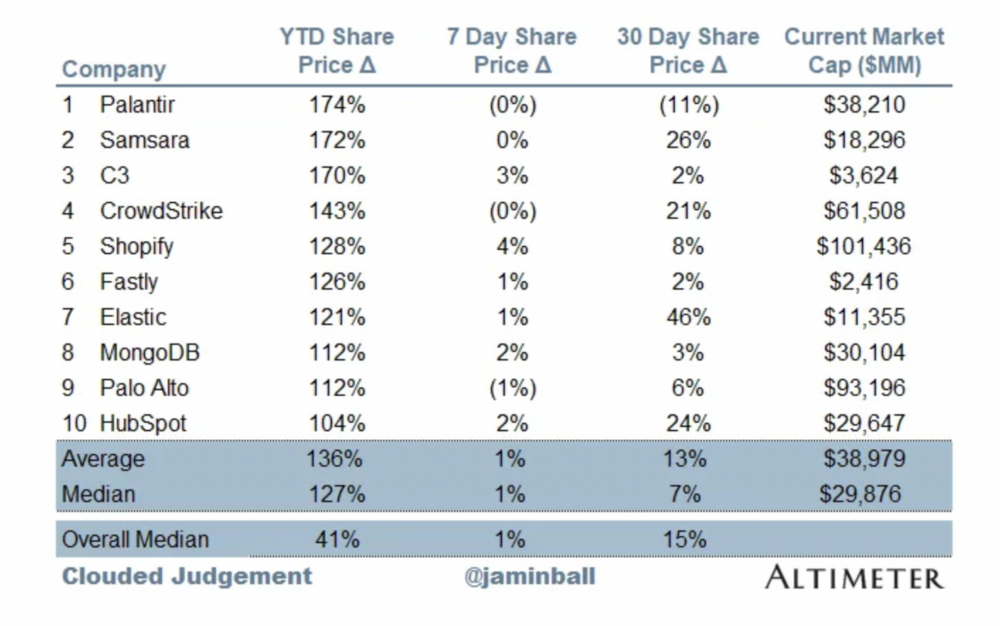
And yet, if you looked across the public SaaS landscape, the picture was a lot less gloomy. Not perfect. Not euphoric. But definitely not the funeral march some people were humming on tech Twitter. Many public SaaS companies kept growing, improved margins, generated real cash, and even helped pry open the IPO window a crack. In other words, the public market message was not “SaaS is dead.” It was more like: “Please stop showing me a burn chart and calling it a strategy.”
That contrast matters. It tells us the issue was not software as a business model. The issue was which kind of software company the market still wanted to fund, own, and believe in. Once you separate startup pain from public-company performance, the year starts to make a lot more sense.
The Private SaaS Mood: Cold Coffee, Colder Term Sheets
Private SaaS had a rough year, but the roughness was uneven. That is an important distinction. It was not a universal collapse. It was a sorting machine.
At the early stage, capital got picky. Seed and Series A investors still wrote checks, but they wanted sharper narratives, tighter go-to-market plans, and a believable answer to the question, “Why do you deserve to exist in a world where every company now claims to have AI?” The old trick of stapling “platform” to a point solution and hoping the valuation doubled stopped working. Tragic for slide designers everywhere.
Meanwhile, the later stages were not exactly easy, but they were more active than the vibes suggested. That sounds contradictory until you remember what actually happened: investors concentrated capital into fewer, stronger companies. So yes, there was still money in the market. It just preferred companies with scale, traction, and a lower probability of turning into a LinkedIn post about resilience.
Deal volume said “be careful” even when headlines said “AI”
One of the easiest ways to get fooled in SaaS is to let a few giant rounds rewrite the whole story. AI-adjacent software deals inflated totals and kept the headline numbers from looking completely miserable. But beneath those splashy financings, ordinary SaaS startups were dealing with slower sales cycles, higher buyer scrutiny, and financing markets that suddenly cared about boring words like “payback,” “retention,” and “cash.”
That created a strange year in which software funding could look better in aggregate and worse in practice. If you were one of the small number of companies riding an AI tailwind, congratulations: the market thought you were the future. If you were a solid but non-meme-y B2B SaaS company selling workflow software into a cautious buyer environment, the market’s message was more like, “We like you, but please come back with more proof, less poetry, and maybe 15% fewer headcount assumptions.”
Exits stayed scarce, which kept pressure on everyone
The other drag on startup sentiment was exits. When companies are not getting acquired at attractive prices and the IPO market is mostly a rumor with a few cameos, private investors become cautious fast. That pressure flows downhill. Founders feel it in valuation discussions, employees feel it in slower refresh grants, and boards feel it in every conversation about runway, timing, and whether “optional” hiring is secretly “not happening.”
So yes, private SaaS had a hard year. But it was not because software suddenly became a bad business. It was because the market stopped rewarding potential as generously as it used to and started demanding evidence at every stage. That hurts when you are a startup. It looks much less scary when you are already public, scaled, and printing cash.
Public SaaS Had a Different Story to Tell
Now for the part that makes the title true: public SaaS companies, taken as a group, were not doing nearly as badly as the startup mood implied. In fact, many of them were doing something investors love almost as much as growth: growing up.
Public market investors spent the last couple of years retraining software companies. The lesson plan was simple: slow down the spending, keep the revenue machine running, improve margins, and prove that SaaS can be both scalable and disciplined. Plenty of companies listened.
That is why the public market story looked so much better than the startup story. These businesses already had distribution, brand, customer data, multi-product expansion paths, and finance teams that know exactly how many layers of management can be removed before everyone starts crying in Slack. Scale changes the game.
Efficiency stopped being a defensive move and became a feature
Take Salesforce. It did not put up hypergrowth numbers, but it still delivered massive revenue, better margins, and serious cash flow. That is not weakness. That is adulthood in a very expensive suit. ServiceNow also continued to show that large-scale enterprise software can still grow at an enviable pace while staying highly profitable. CrowdStrike kept proving that the market will still pay up for software companies that combine strong growth with meaningful operating leverage. Datadog and HubSpot showed similar resilience in their own lanes, balancing growth with improving financial discipline.
In plain English: public SaaS did not need to look magical. It needed to look dependable. Investors were happy to reward companies that could show recurring revenue, real customer value, and a believable path from growth to cash generation. That is not as flashy as 2021. It is also a lot healthier.
Durable growth still matters more than thrift-store heroics
Here is the subtle but crucial point. Public investors did not suddenly become obsessed with frugality for its own sake. They still cared about growth. A lot. What changed was the type of growth they were willing to pay for. Growth paired with retention, margin, and scale still commanded attention. Growth paired with a flamethrower budget and a fog machine, less so.
That helps explain why public software multiples did not collapse into the earth’s core. The market was not rejecting SaaS. It was repricing sloppy SaaS and favoring disciplined SaaS. That is a very different thesis.
Research from public software watchers made this even clearer. Companies were trading some speed for efficiency, yes, but the market still valued growth highly, especially when it came with positive free cash flow or at least a credible route to it. The best public names were not just surviving the reset. They were using it to separate themselves from weaker peers.
Installed bases became hidden superpowers in the AI era
Another reason public SaaS looked sturdier is that the AI wave favored companies with existing customer relationships. Startups had the excitement. Public incumbents had the distribution. And distribution pays the bills.
A large software company can add AI into an existing workflow, upsell it into a known account base, and spread R&D across a huge revenue base. A startup has to build the product, explain the category, close the logo, survive procurement, and avoid running out of money before the market catches up. That difference is not theoretical. It is the difference between launching a feature and launching a prayer.
That does not mean startups cannot win. They absolutely can. But public SaaS companies started the AI arms race with something priceless: customers who were already paying them. In software, that is what economists call “a very nice head start.”
Why Public SaaS Looked Better Than Private SaaS
The gap between public and private SaaS was not just about investor mood. It was structural.
1. Public companies had proof, not just promise
Startups sell possibility. Public companies sell evidence. When the market gets nervous, evidence wins. Public SaaS companies could point to subscription revenue, retention metrics, product breadth, and operating history. Startups often had to sell a future state in a market that had become deeply allergic to “trust me.”
2. Scale made efficiency easier
Cutting costs at a $10 billion revenue company is a different exercise than cutting costs at a $10 million ARR startup. Public companies have more room to optimize pricing, hiring, infrastructure, procurement, and go-to-market spending. They can protect margins without looking like they are dismantling the company in public.
3. Buyers trust established vendors when budgets tighten
When customers become cautious, they do not stop spending entirely. They become choosier. That often benefits bigger names. If a CIO needs to defend a purchase internally, buying from an established public vendor is usually a safer political move than betting on a tiny startup with a cool logo and a slightly terrifying balance sheet.
4. Multi-product platforms age better than single-feature stories
Public SaaS winners increasingly looked like platforms, not one-hit wonders. They could cross-sell, bundle, expand wallet share, and pitch ROI across multiple departments. In a tougher market, that matters. A point solution can be postponed. A platform that touches revenue, security, compliance, service, and data is much harder to ignore.
The IPO Window Did Not Fully Reopen, But It Did Creak
If the market had truly given up on software, you would not have seen meaningful public debuts in the space. But you did. Rubrik’s 2024 IPO was one of the clearest signals that investor appetite for quality software stories had not disappeared. OneStream also stepped into the public conversation, and ServiceTitan’s IPO pricing late in the year added another sign that the pipeline was not dead, just selective.
That is the key word: selective. The IPO market was not back in a champagne-spray, bankers-on-speed-dial kind of way. But it was alive enough to reward scaled software businesses with real narratives, improving economics, and category credibility. That matters because IPOs are not just financing events. They are confidence signals.
When a few software companies can successfully make the jump, it changes how late-stage private boards think. It changes how crossover investors model opportunity. It changes how founders view timing. And perhaps most importantly, it reminds the market that there is still a path from private SaaS to public SaaS. It is just narrower, steeper, and much less forgiving than it used to be.
What Founders Should Learn From the Disconnect
The biggest takeaway from last year is not that startups are doomed and public software is invincible. It is that the market has become more specific about what it values.
If you are building a SaaS startup, the lesson is not “become boring.” It is “become credible.” Show why your product matters now, not someday. Prove customers buy it without heroic discounting. Demonstrate retention. Control burn. Make your AI story concrete. And above all, understand that a growth narrative without operating discipline now lands with roughly the same elegance as a wedding toast delivered by someone visibly drunk.
For operators, the public market playbook is also useful. The best public SaaS companies did not win by hiding from growth. They won by pairing growth with focus. They trimmed waste, improved margins, and doubled down on the products customers truly wanted. That is not a public-company trick. It is just good management.
In other words, the market is not asking founders to dream smaller. It is asking them to execute better.
Operator Experiences From a Year Like This
Anyone who spent time around SaaS startups last year could feel the shift before they could fully explain it. The mood in board meetings changed. The mood in all-hands meetings changed. Even the way people described wins changed. A year earlier, the loudest applause might have gone to a big hiring plan or a shiny fundraise. Last year, teams quietly celebrated things like improving gross retention, shortening implementation time, or getting sales efficiency from “uh-oh” to “respectable.” It was not glamorous, but it was real.
For founders, one of the hardest experiences was realizing that the old benchmark set was gone. A company could be growing decently and still feel behind because the market no longer rewarded “pretty good” with premium valuations. Many leadership teams had to relearn how to operate without assuming capital would always be there on acceptable terms. That meant harder prioritization, slower expansion, more scrutiny on headcount, and more honest conversations about what the business actually was versus what the pitch deck said it might become one day.
Sales teams felt the pressure too. Enterprise buyers did not disappear, but they became more deliberate. More stakeholders joined calls. Pilots stretched longer. Legal seemed to discover a new hobby called “taking forever.” The result was a year in which go-to-market leaders had to work harder for the same revenue and become much sharper about qualification. A lot of teams learned that pipeline theater is still theater. Forecast discipline, on the other hand, pays rent.
Product teams had their own whiplash. The AI wave created genuine opportunity, but also a lot of nonsense. Every roadmap discussion risked getting hijacked by panic: “Should we bolt on AI now?” “Should we rebuild the product around AI?” “Should we say ‘agentic’ in public and hope no one asks follow-up questions?” The teams that handled this best were usually the ones that stayed close to customer pain instead of trend-chasing. They used AI to improve real workflows, not just marketing copy.
Meanwhile, public SaaS operators were living through a very different experience. Their world was not easy, but it was steadier. They had data. They had installed bases. They had finance functions that could model scenarios with precision. Instead of asking whether the business model worked, they were asking how to optimize it. That is a much better problem to have. It turns chaos into strategy.
The emotional difference mattered. Startups often spent the year trying to regain leverage. Public companies spent more of it deciding how to use leverage they already had. That is why the same macro environment could feel brutal in one corner of SaaS and surprisingly manageable in another.
So the lived experience of the year was not simply “software got worse.” It was “the market got stricter.” Startups felt the pain first because they always do. Public companies, especially the better-run ones, showed that once a SaaS business reaches scale, builds trust, and generates cash, the model still has plenty of life left in it. Quite a lot, actually.
Conclusion
Last year was rough for many SaaS startups because the market stopped paying top dollar for possibility alone. Capital got choosier, exits stayed tight, and AI hype distorted the funding picture. But that same year also showed that public SaaS was far from broken. Many public software companies kept growing, strengthened margins, generated real cash, and reminded investors that the SaaS model still works beautifully when paired with scale, discipline, and customer value.
So no, the sky did not fall on software. It just fell on weak narratives. Public SaaS companies proved that once the business is real enough, resilient enough, and useful enough, the market is still willing to believe. Just maybe with fewer buzzwords and better spreadsheets.











