
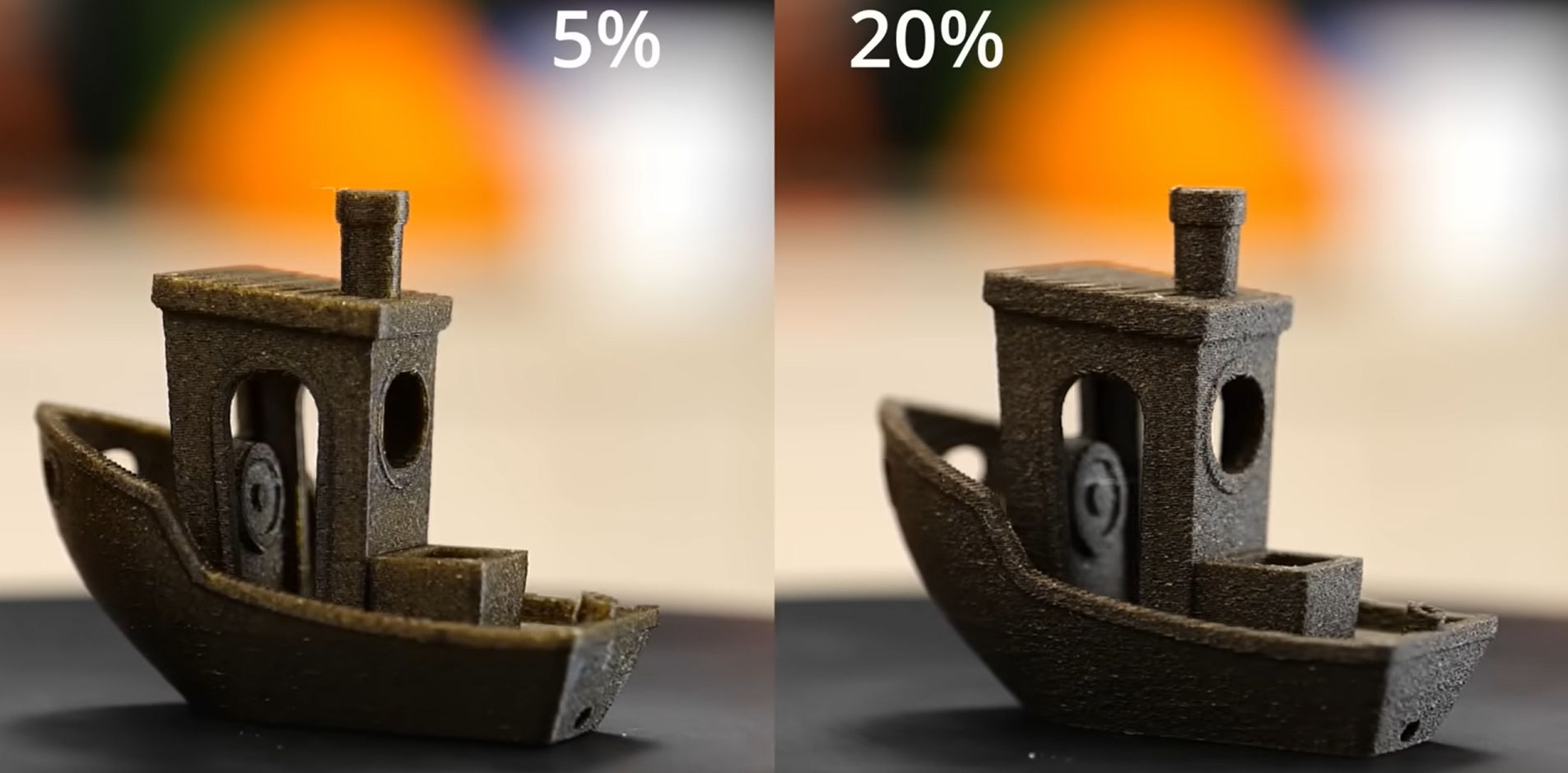
PooLA filament sounds like the kind of 3D printing material invented after someone lost a bet at a makerspace. Yet behind the eyebrow-raising name is a surprisingly serious idea: what happens when PLA, the most familiar beginner-friendly 3D printing plastic, is reinforced with grass fiber from an extremely natural source?
The short answer: you get a biodegradable-filler experiment that is funny, fascinating, imperfect, and oddly logical. PooLA filament is not a commercial miracle spool ready to replace your everyday PLA overnight. It is better understood as a proof-of-concept for grass fiber-reinforced PLA, a material experiment that asks whether agricultural waste and plant-based fillers can make fused filament fabrication more sustainable, more textural, and maybe a little more interesting than another plain gray calibration cube.
At its core, PooLA combines PLA with dried, processed grass-rich organic matter. In the most talked-about version, the filler came from dried cow dung, which is less shocking once you remember what cows mostly eat. Cow dung from pasture animals contains partially digested grass fibers, including cellulose and lignin. In other words, the cow did the pre-shredding. Nature’s preprocessing department is efficient, though admittedly not ISO-certified.
This article introduces PooLA filament, explains how grass fiber-reinforced PLA works, explores its advantages and limitations, and looks at what this strange little material experiment can teach us about the future of sustainable 3D printing.
What Is PooLA Filament?
PooLA filament is an experimental PLA-based 3D printing filament reinforced with grass-derived fiber. PLA, short for polylactic acid, is a plant-based thermoplastic commonly used in desktop FDM and FFF 3D printers. It prints at relatively low temperatures, warps less than ABS, works well for prototypes and display models, and has become the default “first spool” for many hobbyists.
The twist is the filler. Instead of reinforcing PLA with carbon fiber, glass fiber, wood dust, hemp, bamboo, or mineral particles, PooLA uses fine organic grass fiber powder. In the famous maker experiment that inspired the name, the filler was sourced from fully dried cow patties collected from grazing fields. Once dried, crushed, and blended into PLA, the material became a grass fiber-reinforced PLA composite.
That may sound ridiculous at first, but the underlying materials science is not ridiculous at all. Natural fibers are already widely studied as reinforcements in biocomposites. Cellulose-rich fibers from hemp, jute, flax, kenaf, bamboo, wood, and agricultural residues can change the stiffness, texture, appearance, density, and sustainability profile of polymer materials. PooLA simply takes that idea into more comedic territory, wearing muddy boots and a suspicious grin.
Why Reinforce PLA With Grass Fiber?
PLA is popular because it is easy to print, but it is not perfect. It can be brittle, has limited heat resistance, and does not always perform well in functional parts exposed to stress, sunlight, heat, or impact. Reinforcing PLA with fibers is one way to modify its behavior.
Carbon fiber-reinforced PLA, for example, is known for improved stiffness, lower weight, and a premium matte finish. Wood-filled PLA offers a natural look and can be sanded or stained more easily than standard plastic. Hemp, bamboo, and other biomass-filled filaments appeal to makers who want texture, reduced plastic content, and a more organic feel.
Grass fiber-reinforced PLA belongs to the same family of ideas. The goal is not necessarily to create the strongest filament in the universe. Instead, it explores whether an abundant biological material can become a usable filler in 3D printing. Grass grows quickly, agricultural systems generate large amounts of fibrous waste, and the fibers contain structural compounds that can interact with a polymer matrix.
In theory, grass fiber can reduce the amount of virgin PLA required per spool, add natural coloration, create a matte surface, and increase stiffness. In practice, the results depend heavily on how the fibers are dried, cleaned, ground, blended, extruded, and printed. That is where the fun beginsand where the headaches sneak in wearing safety goggles.
How PooLA Filament Is Made
Making PooLA filament is not as simple as tossing pasture confetti into a filament extruder and yelling “science!” A usable composite filament needs careful preparation. Moisture, particle size, contamination, fiber distribution, extrusion temperature, and filament diameter consistency all matter.
Step 1: Drying the Organic Filler
The grass-rich filler must be completely dry. Natural fibers absorb moisture easily, and moisture is the sworn enemy of clean filament extrusion. Wet filler can cause bubbling, popping, weak layers, inconsistent flow, and surface defects. With organic materials, drying is even more important because trapped moisture and biological residue can affect odor, print quality, and storage stability.
Step 2: Grinding the Fiber Into Powder
For FDM printing, particles must be small enough to pass through a nozzle without clogging. A standard 0.4 mm nozzle leaves little room for chunky material. Fine powder improves blending and lowers the risk of jams, although too much fine dust can change melt flow and make extrusion harder to control.
Step 3: Blending With PLA
The dried powder is blended with PLA pellets or PLA powder. Experimental PooLA blends have explored filler levels in the range of 5% to 20%. Lower filler percentages tend to be easier to process, while higher percentages create stronger visual effects but increase the risk of brittleness, inconsistent extrusion, and filament breakage.
Step 4: Extruding Filament
The blend is heated and pushed through a filament extruder to create 1.75 mm or 2.85 mm filament. This step is tricky because natural fibers can alter viscosity, reduce melt uniformity, and make the filament diameter less consistent. If the filament is too oval, too brittle, or too uneven, it may not feed reliably in a desktop printer.
Step 5: Printing and Testing
Once spooled, the material can be printed like a specialty PLA composite. However, settings may need adjustment. Users may need a slightly higher nozzle temperature, slower speed, stronger cooling control, and possibly a larger or hardened nozzle depending on filler content and particle behavior.
Does PooLA Filament Smell Bad?
This is the question everyone asks first, because human curiosity is both beautiful and deeply predictable. Surprisingly, properly dried grass-derived PooLA does not necessarily smell like a barnyard disaster. Reports from the original experiment describe the printing smell as closer to dried grass or hay than anything unpleasant.
That makes sense. Fully dried cow dung from grass-fed animals is largely fibrous plant matter after digestion. It is not the same as fresh manure, and it does not behave the same way when dried, ground, and mixed into a hot polymer. Still, anyone experimenting with similar materials should take hygiene seriously. Drying, heat treatment, safe handling, gloves, dust control, and good ventilation are not optional. “It printed fine” is not a substitute for “it was processed safely.”
How Strong Is Grass Fiber-Reinforced PLA?
This is where the story gets more complicated. The word “reinforced” can be misleading. Many people hear “fiber-reinforced” and immediately imagine superhero-grade parts ready to hold up a motorcycle. In reality, filler does not automatically improve every mechanical property.
With PooLA-style grass fiber PLA, early tests suggest that the material may become stiffer but less flexible. Parts can break sooner than pure PLA under certain loading conditions, especially when fiber content increases. The grass fiber may interrupt the continuous PLA matrix, create stress concentration points, or reduce layer bonding if it is not well bonded to the polymer.
This behavior is common in many filled filaments. Wood-filled PLA often looks gorgeous but may be weaker than standard PLA. Carbon fiber PLA can be very stiff but more brittle than unfilled PLA. Natural fiber composites can improve modulus while reducing elongation at break. In plain English: a part may feel more rigid, but it may also snap with less warning. It becomes less gummy bear, more fancy cracker.
For PooLA, the likely sweet spot is not high-load functional engineering. Instead, it may be better suited for decorative prints, design prototypes, earthy-textured objects, educational demonstrations, and sustainability-focused material experiments.
Printability: What Makers Should Expect
If PooLA filament becomes more widely tested, users should approach it like a specialty composite rather than ordinary PLA. That means printing carefully, watching for clogging, and expecting some tuning.
Nozzle Size
A 0.4 mm nozzle may work if the filler is extremely fine, but a 0.6 mm nozzle could offer more reliability. Natural filler particles can clump, char, or obstruct flow, especially if the material was not ground consistently.
Nozzle Material
Grass fiber is not as abrasive as carbon fiber or glass fiber, but composite filaments can still wear brass nozzles faster than plain PLA. For frequent testing, a hardened steel or other wear-resistant nozzle is a sensible upgrade.
Temperature
PLA commonly prints around 190°C to 220°C, depending on brand and printer. Fiber-filled PLA may need tuning within a similar range. Too cool, and extrusion may become inconsistent. Too hot, and organic filler may darken, degrade, or create more odor.
Speed
Slower print speeds can help maintain consistent flow. Specialty composites often prefer patience. If your printer is trying to sprint like it has a deadline and three espressos, slow it down.
Dry Storage
Natural fiber-filled filaments should be stored dry. Desiccant, sealed bags, and filament dryers are useful because fibers can absorb moisture from the air. Moisture can cause stringing, popping, weak parts, and rough surfaces.
Advantages of PooLA Filament
PooLA filament is not perfect, but it has several interesting advantages that make it worth discussing.
1. It Uses a Renewable Filler
Grass fiber is plant-based and renewable. If sourced from agricultural residue, it could give low-value biomass a second life. That does not make the final filament automatically zero-waste, but it does reduce the share of pure plastic in the blend.
2. It Creates a Natural Look
Grass-derived filler can add a warm, earthy color and a slightly organic surface finish. For planters, garden labels, decorative objects, architectural models, terrain pieces, and eco-themed product mockups, that natural appearance may be a selling point.
3. It Encourages Local Material Thinking
One of the most exciting parts of PooLA is not the exact recipe. It is the mindset. Instead of assuming every filament must come from a large factory using standardized additives, PooLA invites makers to think about local waste streams: grass clippings, husks, sawdust, coffee grounds, crop residue, and other fibrous materials.
4. It Makes Sustainability Tangible
Sustainable materials can sound abstract. PooLA makes the concept impossible to ignore. It turns “biocomposite filament” into something people laugh about, remember, and discuss. That matters. Sometimes innovation enters the room wearing a lab coat. Sometimes it enters wearing rubber boots.
Limitations and Challenges
The honest review: PooLA is clever, but it is not ready to dethrone standard PLA. Several issues must be solved before grass fiber-reinforced PLA can become practical at scale.
Brittleness
Adding grass fiber may increase stiffness while reducing flexibility and impact resistance. For clips, hinges, brackets, and snap-fit parts, that can be a problem.
Filament Consistency
Desktop printers depend on consistent filament diameter and smooth feeding. Natural fillers can make extrusion unpredictable, especially at higher loading levels.
Moisture Sensitivity
Natural fibers absorb water. If the filler is not dried properly or the finished filament is stored poorly, print quality can suffer quickly.
Sanitation and Processing
If the source material is cow dung, even dried cow dung, safe processing is essential. Heat treatment, dust protection, and responsible handling are critical. A cleaner industrial version would likely use sterilized grass fiber or agricultural cellulose rather than raw pasture material.
Composting Confusion
PLA is often described as biodegradable, but that needs context. Most PLA does not break down quickly in a backyard compost bin, landfill, or natural environment. It generally requires controlled industrial composting conditions. Adding grass fiber does not magically make the entire printed object disappear like a magician with a recycling grant.
Is PooLA Filament Actually Eco-Friendly?
PooLA filament may be more eco-conscious than plain PLA in some ways, but “eco-friendly” is not a magic sticker. The environmental value depends on sourcing, processing energy, filler percentage, print success rate, shipping, end-of-life handling, and whether failed prints are reused or discarded.
A grass fiber filler can reduce virgin PLA content and make use of biological waste. That is good. However, if the filament is difficult to produce, causes many failed prints, requires excessive drying energy, or cannot be composted or recycled locally, the sustainability story becomes less simple.
The best way to describe PooLA is as a sustainability experiment, not a finished environmental solution. It points toward a future where 3D printing materials may use more local biomass, more recycled content, and more thoughtful formulations. But it also reminds us that greener materials must still print reliably, perform safely, and fit into real waste-management systems.
Best Uses for Grass Fiber-Reinforced PLA
Assuming the filament is well made, PooLA-style PLA could be useful in several applications.
Decorative Planters
The natural color and grass-like scent during printing make it a fun candidate for small planters, seed-starting trays, and garden-themed designs. Just remember that PLA can soften in high heat, so do not leave thin parts baking in direct summer sun.
Eco Product Prototypes
Designers developing sustainable packaging concepts, natural consumer goods, or educational models may appreciate a material that visually communicates “bio-based” without needing a paragraph of explanation.
Architectural Models
The earthy matte texture could work beautifully for landscape models, terrain features, concept homes, and nature-inspired structures.
Educational Demonstrations
PooLA is perfect for teaching material science because it is memorable. Students can learn about polymers, fillers, composites, cellulose, extrusion, mechanical testing, and sustainability through one wonderfully weird example.
Art and Conversation Pieces
Some materials are valuable because they perform better. Others are valuable because they make people ask, “Wait, what is that made of?” PooLA definitely belongs in the second category.
How PooLA Compares With Other Filled PLA Filaments
Compared with wood PLA, PooLA may offer a similar natural aesthetic, though its filler source is more unusual. Wood PLA is already commercially available and generally easier to trust because manufacturers control particle size and composition. PooLA is still experimental and needs more refinement.
Compared with carbon fiber PLA, PooLA is less performance-oriented. Carbon fiber PLA is designed for stiffness, dimensional stability, and a sleek technical finish. Grass fiber PLA is more about bio-based filler, texture, material experimentation, and circular thinking.
Compared with hemp or bamboo PLA, PooLA is conceptually similar but less polished. Hemp and bamboo fibers have clearer supply chains and are easier to market without making customers laugh nervously. PooLA, however, has a stronger story. In the attention economy, a filament made from grass fiber recovered through cow digestion is not exactly forgettable.
What PooLA Teaches Us About the Future of 3D Printing Materials
The most important lesson from PooLA is that the future of 3D printing filament will not be limited to basic plastic colors. The filament market is already moving toward composites, recycled blends, high-speed PLA, engineering polymers, lightweight foaming materials, and bio-based additives. PooLA adds another question: can waste biomass become a useful ingredient in everyday additive manufacturing?
The answer is probably yes, but not casually. Successful natural fiber filaments need controlled processing. Fibers must be cleaned, dried, sized, treated, and blended in ways that improve bonding with PLA. Manufacturers may use coupling agents or surface treatments to help hydrophilic plant fibers interact better with hydrophobic polymer matrices. Without that compatibility, the fiber can behave like tiny internal cracks instead of reinforcement.
That is why PooLA is exciting even when its early strength results are modest. It shows both the potential and the problem. The idea is smart. The execution is hard. The joke gets attention, but the engineering decides whether the material survives beyond the punchline.
Practical Tips for Experimenting With PooLA-Style Filament
If you are a maker interested in grass fiber-reinforced PLA, start small and keep expectations realistic. Use clean, dry, finely ground plant fiber. Avoid questionable biological materials unless you understand safe handling and sterilization. Test low filler percentages first, such as 5%, before moving higher.
Use a controlled extrusion setup, measure filament diameter often, and dry the finished spool before printing. Print calibration cubes, temperature towers, and tensile bars if possible. Compare the results with your baseline PLA. Look at not only whether the print succeeds, but also how it fails. Does it snap cleanly? Does it delaminate between layers? Does it clog? Does the texture improve enough to justify the hassle?
For printing, try a larger nozzle, moderate temperatures, slower speeds, and good part cooling. Avoid tiny nozzles and intricate details until the material proves reliable. Keep notes. The difference between “random mess” and “useful experiment” is usually a notebook.
Experience Notes: Printing With Grass Fiber-Reinforced PLA in the Real World
Working with a PooLA-style filament feels different from opening a fresh spool of standard PLA. Regular PLA is predictable. You load it, slice a model, press print, and expect the printer to behave like a reasonably trained appliance. Grass fiber-reinforced PLA asks for more attention. It has personality. Sometimes that personality is charming; sometimes it acts like it has just discovered jazz.
The first thing you notice is the surface character. Even when the filament prints cleanly, the result does not look like ordinary plastic. The finish is more muted, more organic, and often less glossy. That is a major advantage for objects where plastic shine ruins the illusion. A small planter, terrain tile, decorative vase, or garden marker can look more natural straight off the build plate.
The second thing you notice is that settings matter more. A few degrees of nozzle temperature can change flow, color, stringing, and surface smoothness. Printing too fast can expose inconsistent extrusion. Printing too hot can darken the filler or create a toasted organic smell. The ideal range may vary from batch to batch because natural fillers are not as uniform as synthetic additives.
Layer adhesion deserves special attention. A print may look fine on the outside but fail more easily when bent or dropped. That does not mean the material is useless. It means designers should use it honestly. Thicker walls, rounded corners, lower stress concentrations, and less aggressive snap-fit geometry can make a big difference. Grass fiber PLA should not be treated like nylon, PETG, or carbon fiber engineering filament. It is better used where texture, story, and moderate stiffness matter more than brute strength.
Moisture control is another real-world lesson. Natural-fiber filaments should be dried before serious printing and stored carefully afterward. If the filament starts popping at the nozzle or leaving rough, foamy lines, moisture may be the culprit. A dry box or filament dryer can turn a frustrating spool into a usable one.
There is also a psychological effect. People react to PooLA differently than they react to normal filament. Tell someone a vase is printed from PLA, and they nod politely. Tell them it is made from grass fiber-reinforced PLA inspired by dried cow dung, and suddenly everyone in the room has questions. That curiosity is valuable. It opens the door to conversations about circular materials, agricultural waste, biodegradable claims, composting infrastructure, and the difference between a funny experiment and a scalable product.
For hobbyists, PooLA-style filament is a reminder that 3D printing is still a playground for material discovery. For educators, it is a perfect classroom example because it combines chemistry, biology, engineering, environmental science, and comedy in one spool. For manufacturers, it is a challenge: can natural fiber composites be made consistent, safe, attractive, and mechanically useful at commercial scale?
The best experience-based advice is simple: do not expect PooLA to be magic PLA. Expect it to be a conversation-starting composite with trade-offs. Use it for the right projects, tune it patiently, dry it properly, and appreciate it for what it represents. The future of sustainable 3D printing will not come from one perfect material. It will come from many experiments, some elegant, some messy, and some with names that make the entire workshop giggle.
Conclusion
PooLA filament may have started as a humorous experiment, but it points toward a serious opportunity in 3D printing: using natural fibers and biomass waste to create new PLA composites. Grass fiber-reinforced PLA is not automatically stronger, cleaner, or more sustainable than standard PLA. Its value depends on careful formulation, safe processing, reliable extrusion, and realistic applications.
Still, PooLA deserves attention because it challenges makers to think beyond ordinary plastic. It asks whether waste can become feedstock, whether natural fibers can add beauty and function, and whether sustainable materials can be both educational and entertaining. The result may not replace your favorite PLA spool today, but it could inspire the next generation of bio-filled filaments tomorrow.
Note: This article is written for web publication and summarizes real material concepts, current maker experimentation, and established knowledge about PLA, natural fiber composites, FDM printing, and compostability. It does not recommend unsafe handling of untreated biological materials; any similar experiment should use proper drying, sterilization, ventilation, and protective equipment.











