
Starting late does not mean finishing broke. It means the game has changed: you need sharper habits, smarter tax moves, fewer leaks, and a plan that does not depend on winning the lottery, marrying a billionaire, or discovering a dusty Picasso in the garage.
Late Start Saving for Retirement? First, Take a Deep Breath
If you got a late start saving for retirement, you are not alone. Many Americans hit their 40s, 50s, or even early 60s and suddenly realize their retirement account looks less like a golden nest egg and more like a politely decorated omelet. Life happens: student loans, kids, medical bills, housing costs, career changes, divorce, helping family, or simply not knowing what to do earlier.
The good news is that retirement planning is not a pass-fail test based on what you did at age 25. Yes, compound growth loves an early start. But late starters still have powerful tools: catch-up contributions, tax-advantaged accounts, higher savings rates, delayed retirement, smarter Social Security timing, debt reduction, and strategic investing.
The goal is not to panic-save randomly. The goal is to build a practical retirement catch-up strategy that turns every available dollar into a useful worker. Think of your money as a tiny employee. Some employees are sleeping in checking accounts, some are wasting time on high-interest debt, and some are ready to clock in for your future.
Step 1: Find Out How Far Behind You Really Are
Before you can make up lost ground, you need a clear target. “I need more money” is not a plan. It is a mood. A real retirement plan starts with three numbers: what you have, what you need, and how long you have to close the gap.
Calculate Your Current Retirement Snapshot
Add up your retirement savings across 401(k)s, 403(b)s, IRAs, old employer plans, brokerage accounts, savings, and Health Savings Accounts if you use them for long-term medical expenses. Then subtract consumer debt, especially high-interest credit card balances. A $50,000 retirement account and $20,000 in credit card debt is not really a $50,000 picture. It is a financial tug-of-war, and the credit card company is wearing cleats.
Estimate Your Future Spending
Next, estimate what retirement might cost. Housing, food, health care, transportation, taxes, insurance, travel, family support, and fun money all matter. Retirement is not just sitting in a chair whispering, “I am financially optimized.” You still need a life.
A useful starting point is to estimate your annual retirement expenses, then compare that number with expected Social Security, pensions, part-time income, rental income, or other reliable sources. The gap between expected income and expected spending is what your savings must help cover.
Step 2: Use Catch-Up Contributions Like a Financial Turbo Button
One of the best advantages for late retirement savers is the catch-up contribution. These rules allow older workers to contribute extra money to certain tax-advantaged retirement accounts.
For 2026, the basic employee deferral limit for many workplace retirement plans such as 401(k), 403(b), and most 457 plans is $24,500. Workers age 50 and older may be able to add an $8,000 catch-up contribution. Even better, workers ages 60 through 63 may qualify for a higher “super catch-up” amount of $11,250 if their plan allows it. That means a person in that age window could potentially contribute up to $35,750 in employee deferrals for 2026.
IRAs also help. For 2026, the IRA contribution limit is $7,500, with an additional $1,100 catch-up contribution for people age 50 or older. Eligibility for Roth IRA contributions or deductible traditional IRA contributions depends on income, tax filing status, and workplace plan coverage, so check the rules before assuming one option is open.
Example: The Age 52 Catch-Up Sprint
Imagine Dana, age 52, earns $95,000 and has only $80,000 saved. Not ideal, but not hopeless. Dana increases 401(k) contributions, uses the age-50 catch-up allowance, reduces lifestyle creep, and adds IRA contributions when eligible. If Dana can invest consistently for 13 to 15 years, the combination of contributions, employer match, tax advantages, and investment growth can meaningfully change the outcome.
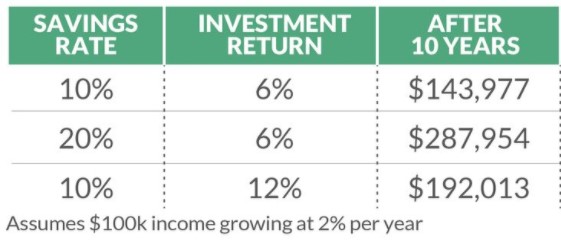
The lesson: late starters need contribution power. Investment returns matter, but your savings rate is the steering wheel. If you are behind, the first question is not “What magical fund will save me?” It is “How much more can I consistently invest?”
Step 3: Grab the Employer Match Before Doing Anything Fancy
If your employer offers a 401(k) match, treat it as part of your compensation. Not using the match is like leaving a gift card on the sidewalk because the envelope is not glamorous enough.
For example, if your employer matches 50% of your contributions up to 6% of salary, and you earn $80,000, contributing 6% could put $4,800 of your own money into the plan and add $2,400 from your employer. That employer match is an immediate boost before market growth even enters the conversation.
Late starters should usually prioritize at least enough contribution to receive the full match. After that, consider increasing contributions toward the annual maximum, funding an IRA if eligible, and using other tax-advantaged accounts.
Step 4: Raise Your Savings Rate Without Declaring War on Joy
Making up lost ground requires a higher savings rate. That does not mean you must live on lentils, cancel every birthday, and glare at anyone who orders guacamole. It means you need to redirect money from low-value spending to high-value future security.
Start With Big Levers
Small cuts help, but big levers move the needle faster. Look at housing, vehicles, insurance, subscriptions, taxes, dining out, vacations, and debt payments. A $12 streaming service matters less than a $900 car payment that quietly eats your retirement like a raccoon in a pantry.
Consider raising your retirement contribution by 1% every few months until it hurts a little but does not break your budget. Automating increases can work especially well because it removes the monthly debate between “future me” and “today me,” a debate today me often wins while holding a takeout bag.
Redirect Windfalls
Tax refunds, bonuses, raises, side-gig income, inherited money, or paid-off debt payments can become catch-up fuel. If a $500 monthly car payment ends, do not let it dissolve into mystery spending. Send at least part of it to retirement savings, an IRA, or debt reduction.
Step 5: Attack High-Interest Debt Before It Attacks Your Future
High-interest debt is one of the biggest enemies of late retirement planning. If your credit card charges 22% interest, paying that balance down can be one of the strongest “returns” available. It is hard for a retirement portfolio to grow when debt is sprinting in the opposite direction.
This does not mean you should stop every retirement contribution until all debt is gone. A balanced approach often works better: contribute enough to receive your employer match, build a small emergency fund, then aggressively target high-interest debt. Once the debt is gone, redirect those payments into retirement accounts.
Debt freedom also lowers your required retirement income. A person entering retirement with no credit card debt, no car loan, and a paid-off or manageable mortgage needs less monthly cash than someone dragging a parade of payments into their 70s.
Step 6: Invest for Growth, But Do Not Gamble With Your Rescue Plan
Late starters often feel tempted to “make up time” by taking extreme investment risks. That can be dangerous. If you are 55 and behind, putting your retirement hopes into a hot stock tip, a speculative coin, or your cousin’s alpaca-themed business app is not a strategy. It is a financial cliff with confetti.
Balance Growth and Risk
You still need growth because retirement may last 20 to 30 years. Keeping too much money in cash can allow inflation to quietly shrink your buying power. But you also need diversification so one bad investment does not knock the plan sideways.
A diversified portfolio may include stock funds for growth, bond funds for stability, and cash reserves for short-term needs. The exact mix depends on your age, risk tolerance, income stability, pension or Social Security expectations, and retirement date. Target-date funds can be useful for some investors because they automatically adjust over time, though they are not perfect for everyone.
Watch Fees
Investment fees matter more when you are trying to catch up. A 1% annual fee may sound small, but over many years it can drain serious money. Review expense ratios, advisory fees, and account charges. Low-cost index funds and diversified ETFs are popular for a reason: they let more of the market return stay in your pocket.
Step 7: Consider an HSA as a Retirement Health-Care Tool
If you are eligible for a Health Savings Account through a high-deductible health plan, an HSA can be a powerful retirement planning tool. HSAs offer a rare triple tax advantage: contributions may be tax-deductible or pre-tax, growth can be tax-free, and withdrawals for qualified medical expenses can also be tax-free.
For 2026, the HSA contribution limit is $4,400 for self-only coverage and $8,750 for family coverage. Eligible individuals age 55 or older can contribute an additional $1,000 catch-up amount. Because health care is often one of the largest retirement expenses, an HSA can help late savers prepare for medical costs without relying only on a 401(k) or IRA.
If possible, some savers pay current medical costs out of pocket and let HSA funds stay invested for the future. That is not realistic for every budget, but it can be useful for people with enough cash flow and a long-term plan.
Step 8: Delay Retirement or Redefine It
One of the most powerful catch-up moves is working longer. That may not sound as exciting as a secret investment trick, but it can change the math in several ways at once.
Working longer gives you more years to save, fewer years to fund from savings, more time for investments to grow, and potentially higher Social Security benefits if you delay claiming. Social Security delayed retirement credits can increase benefits for each month you wait beyond full retirement age, up until age 70.
Retirement Does Not Have To Be All or Nothing
You may not need to work full-time until 75. A phased retirement can help: consulting, part-time work, seasonal work, freelance projects, teaching, bookkeeping, tutoring, or turning a professional skill into flexible income. Even earning $15,000 to $25,000 per year for a few extra years can reduce pressure on your portfolio.
For example, if you planned to withdraw $40,000 per year from savings but earn $20,000 from part-time work, you may cut your portfolio withdrawal need in half. That gives your investments more room to recover during market downturns and may reduce the risk of running out of money.
Step 9: Make Social Security Timing Part of the Plan
Social Security is not the whole retirement plan, but it is a major income source for many Americans. Claiming early can provide income sooner, but it usually reduces monthly benefits permanently. Waiting until full retirement age, or even delaying beyond that when possible, can increase monthly income.
The right claiming age depends on health, family longevity, marital status, income needs, employment, taxes, and whether a spouse may rely on survivor benefits. A higher earner in a married couple may want to think carefully before claiming early because the decision can affect the surviving spouse later.
Late savers should not treat Social Security as an afterthought. It is one of the few retirement income streams that lasts for life and adjusts for inflation. That makes timing valuable.
Step 10: Downsize, Relocate, or Monetize Assets Carefully
If savings are behind, your home may be part of the solution. Downsizing from a large house to a smaller home, moving to a lower-cost area, renting out part of a property, or using home equity strategically can all improve retirement readiness.
But be careful. Selling a home has transaction costs. Moving affects family, health care, transportation, taxes, and quality of life. A cheaper town is not cheaper if you need expensive travel to see family or specialized doctors. Run the numbers before making a big move.
Also review unused assets. A second vehicle, storage unit full of forgotten items, expensive hobby equipment, or collectibles may be converted into retirement savings. Your garage might not contain treasure, but it may contain several thousand dollars wearing dust as a sweater.
Step 11: Build a Simple Late-Starter Action Plan
A good catch-up plan does not need to be complicated. In fact, complicated plans often collapse under their own fancy shoes. Start with a clear order of operations.
A Practical Retirement Catch-Up Checklist
- Calculate current savings, debts, and expected retirement income.
- Contribute enough to receive the full employer match.
- Increase workplace retirement contributions every few months.
- Use catch-up contributions if you are eligible.
- Pay down high-interest debt aggressively.
- Consider IRA and HSA contributions when eligible.
- Invest in a diversified, low-cost portfolio.
- Review Social Security claiming strategies before filing.
- Consider working longer, part-time income, or phased retirement.
- Update the plan at least once a year.
Late retirement saving is about consistency. The perfect plan you ignore is useless. The decent plan you follow every paycheck can be life-changing.
Common Mistakes Late Retirement Savers Should Avoid
Mistake 1: Waiting for a Perfect Time
There is rarely a perfect time to save more. Cars break, roofs leak, kids need help, and inflation acts like it has a personal grudge. Start with what you can, then increase it.
Mistake 2: Taking Wild Investment Risks
Trying to double your money quickly can turn a manageable shortfall into a disaster. Avoid concentrated bets, scams, and investments you cannot explain clearly.
Mistake 3: Ignoring Taxes
Traditional 401(k)s, Roth accounts, IRAs, taxable brokerage accounts, and HSAs are taxed differently. Tax diversification can help you manage income in retirement. Late savers should understand not only how much they save, but where they save it.
Mistake 4: Helping Adult Children at the Expense of Retirement
Supporting family is generous, but there are loans for college and homes. There are no loans for being 82 and out of money. Set loving boundaries. Your future self is family too.
Realistic Experience-Based Lessons for Catching Up on Retirement Savings
People who successfully make up lost ground often do not rely on one dramatic move. They make a series of boring, repeatable decisions that slowly become powerful. From real-world retirement planning patterns, the most effective late savers usually change both their money habits and their identity. They stop thinking, “I am bad with retirement,” and start thinking, “I am the kind of person who pays my future first.” That shift matters.
One common experience is the shock of seeing the numbers for the first time. Many late starters avoid looking because they fear bad news. But once they finally list their accounts, debts, income, and expenses, the fear often becomes more manageable. A vague monster under the bed is scarier than a spreadsheet. The spreadsheet may be unpleasant, but at least it has rows.
Another lesson: automation beats motivation. Motivation is wonderful, but it has the attention span of a puppy near a sandwich. Automatic paycheck contributions, automatic IRA transfers, automatic savings increases, and automatic debt payments remove the need to make the same good decision every month. Many people catch up not because they become financial superheroes, but because they design a system that works even when they are tired.
Late savers also learn that lifestyle inflation is sneaky. A raise feels like breathing room, and breathing room quickly becomes a nicer car, better restaurants, upgraded vacations, and subscriptions nobody remembers signing up for. The most successful catch-up savers capture raises before they disappear. When income increases, they raise retirement contributions immediately, then enjoy part of what remains. This approach feels less painful because they are saving money they were not used to spending yet.
Debt payoff is another emotional turning point. Many people underestimate how much stress disappears when high-interest debt is gone. The freed-up payment becomes a retirement contribution, an emergency fund deposit, or an HSA contribution. Instead of sending money to the past, they start sending it to the future. That feels different. It builds momentum.
Couples often need a different kind of experience: the honest money conversation. If one person wants to save aggressively and the other wants to enjoy life now, tension can build. The solution is not usually a lecture. It is a shared vision. What does retirement look like? Staying near grandchildren? Traveling twice a year? Working part-time by choice? Keeping the house? Moving somewhere warmer? Once the dream becomes specific, the savings plan feels less like punishment and more like buying tickets to a future both people actually want.
People catching up also discover that retirement planning is not only about accounts. Health, skills, relationships, and flexibility matter too. Staying employable into your 60s can be worth a lot. That may mean learning new software, keeping certifications current, maintaining professional relationships, or shifting into less physically demanding work. Protecting your health can also protect your finances. A retirement plan that ignores health care is like packing for a trip and forgetting shoes.
Finally, late starters learn to stop comparing themselves with people who began at 22. Comparison is noisy and usually unhelpful. Someone else’s perfect chart does not pay your bills. Your job is to improve your own trajectory. If you saved nothing last year and save $8,000 this year, that is progress. If you increase your 401(k) contribution from 4% to 10%, that is progress. If you delay retirement by two years and eliminate a car payment, that is progress. Retirement catch-up is not about shame. It is about direction.
The most encouraging lesson is this: late is not the same as too late. A late start requires urgency, but not panic. It requires trade-offs, but not misery. With higher savings, smart account choices, lower debt, thoughtful investing, and flexible retirement timing, many people can build a more secure future than they thought possible.
Conclusion: You Can Still Change the Retirement Math
If you got a late start saving for retirement, your path may be steeper, but it is not closed. The best strategy is to combine several moves: save more, use catch-up contributions, capture employer matches, reduce high-interest debt, invest wisely, consider HSAs, delay retirement if possible, and make Social Security decisions carefully.
Do not waste energy blaming your younger self. Younger you had different problems, questionable hair choices, and possibly no idea how expensive everything would become. Today you can make better decisions with better information.
Start where you are. Increase what you can. Automate the plan. Review it yearly. A secure retirement is not built only by people who started early. It is also built by people who finally got serious and kept going.











