
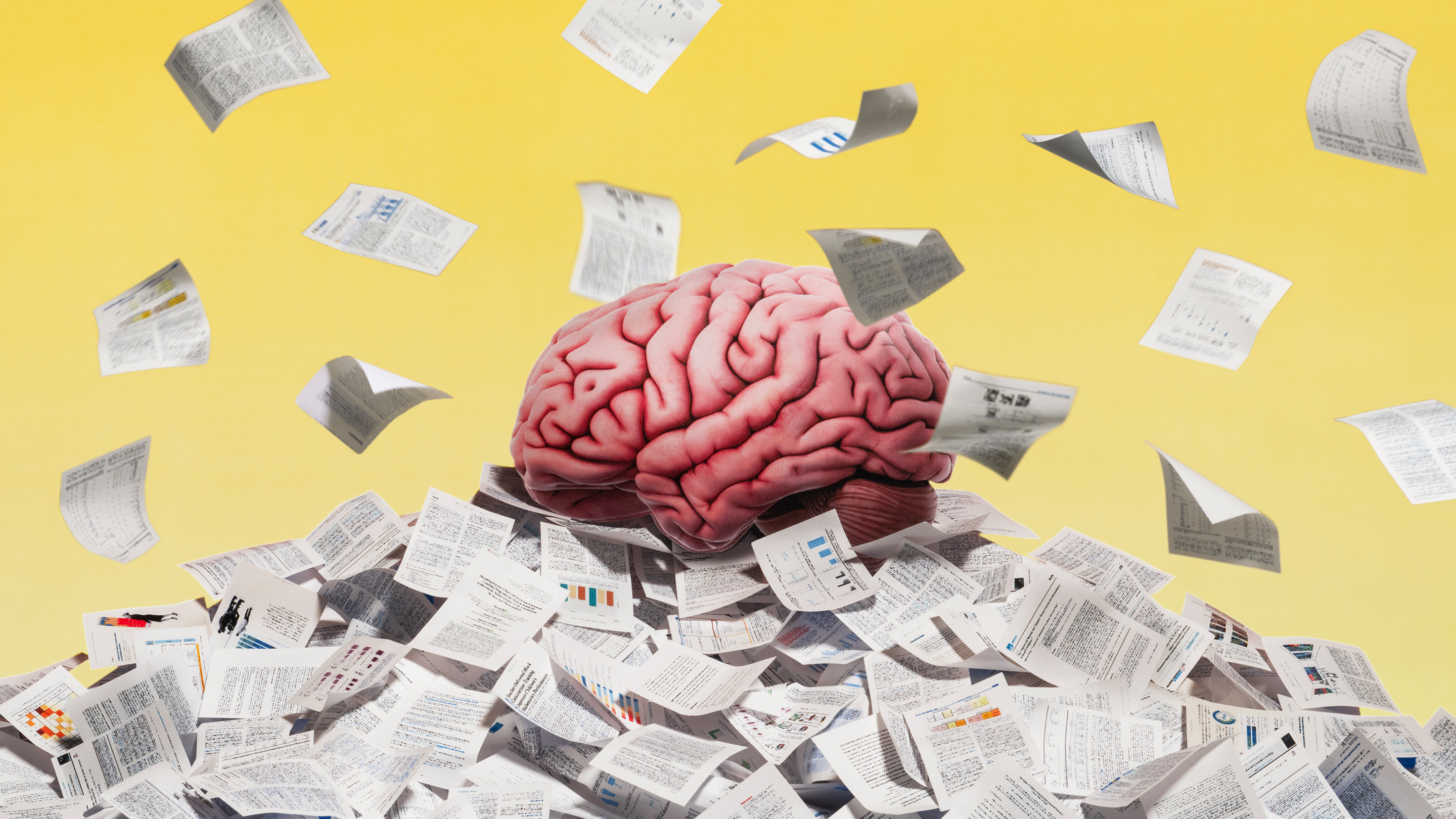
If 2024 was the year schools tried to steady the ship, 2025 was the year researchers climbed on deck with clipboards and said, “All right, let’s talk about what’s actually happening.” The results were not always cheerful. In some cases, they were downright forehead-rubbing. But they were useful. Very useful.
To be fair, I’m using the word studies a little generously here. This list includes peer-reviewed papers, major national assessment releases, working papers, and large research reports. In other words, these are the pieces of education research that most meaningfully shaped the conversation in 2025. They influenced how schools talked about reading, math, absenteeism, AI, tutoring, special education, and early childhood policy. Some confirmed old fears. Others challenged cherished assumptions. A few basically walked into the room and flipped over the furniture.
Here are the 10 most significant education studies of 2025, what they found, and why they mattered.
1. NAEP delivered the year’s biggest academic reality check
The most important education release of 2025 was the new round of NAEP results, better known as The Nation’s Report Card. The headline was simple and brutal: American students were still below pre-pandemic levels in reading and math, and the weakest readers were falling even further behind.
Reading was the biggest alarm bell. Fourth and eighth grade reading scores dropped again, and the lowest-performing students posted especially troubling results. Math was a mixed picture. Fourth grade math ticked upward a bit, but eighth grade math stayed stubbornly flat overall, with gains among stronger students often offset by declines among weaker ones.
Why did this matter so much? Because NAEP cut through spin. District slogans, tutoring pilots, curriculum rebrands, and motivational posters all had to answer to the same question: Are students actually learning more? In 2025, NAEP’s answer was basically, “Not enough, and not evenly.” That made it the year’s most important benchmark for everyone from classroom teachers to governors.
2. A major reading-comprehension review showed classrooms still aren’t doing enough
For years, the science-of-reading conversation has focused heavily on phonics, decoding, and early word recognition. Important? Absolutely. Sufficient? Not even close. One of 2025’s most significant reading studies reviewed decades of classroom observation research and found that evidence-based reading comprehension instruction still appears far less often than it should.
That finding mattered because comprehension is the whole point of reading. Kids do not learn to read so they can heroically pronounce every word in a paragraph and then stare into the middle distance, spiritually unchanged. They need explicit support in making meaning, building knowledge, discussing text, and using strategies that deepen understanding.
The review suggested that instruction has improved since the 1970s, which is good news. But it also showed that many classrooms still spend surprisingly little time on actual reading and high-quality comprehension work. In 2025, that landed like a warning label on the national reading debate: decoding matters, but reading reform cannot stop there.
3. Special education research got a major shake-up over inclusion
Few topics in education are as emotionally and politically charged as inclusion. So when a 2025 paper argued that the academic evidence supporting full inclusion for students with disabilities is methodologically weaker than many people assume, the reaction was immediate.
The core argument was not that inclusion is bad, nor that separate settings are always better. It was that the research base has often struggled with selection bias. Students with milder disabilities are more likely to spend more time in general education classrooms, so higher outcomes in those settings may not prove that the setting itself caused the gains.
This study mattered because it pushed the field away from slogans and toward a harder question: not just where students should be taught, but how they should be taught. In 2025, that distinction became a much bigger part of the conversation. Instead of treating placement as the entire debate, researchers and practitioners were forced to talk more directly about specialized instruction, intervention intensity, and actual student needs.
4. The cellphone-ban study gave policy makers the evidence they were waiting for
By 2025, school cellphone bans were everywhere in policy conversations. What had been missing was strong causal evidence. Then came a closely watched Florida study showing that cellphone restrictions were linked to small but meaningful academic gains over time, along with lower unexcused absences.
The results did not suggest that banning phones suddenly turns algebra into a beach vacation. Gains were modest. But in education policy, modest gains attached to a relatively low-cost intervention get attention fast. The study also found an uncomfortable tradeoff: suspensions rose in the short term, with Black students affected disproportionately as schools adjusted to enforcement.
That combination made the study especially significant. It did not hand schools a fairy-tale solution. It handed them something more useful: evidence that cellphone restrictions can help learning, but only if schools implement them carefully and equitably. In other words, the phones may go away, but the adult work does not.
5. Tutoring research showed that scale is education’s favorite villain
High-dosage tutoring entered the post-pandemic era with the reputation of a superhero. Decades of research had shown that when tutoring is frequent, structured, and well implemented, students can make impressive gains. In 2025, a large multi-site tutoring report asked a painful but necessary question: what happens when districts try to do that in the real world, at scale, with normal scheduling chaos and finite staffing?
The answer was sobering. Tutoring still helped, but the gains were much smaller than the field’s most optimistic believers had hoped. In many cases, students simply did not receive enough minutes of tutoring to generate the kind of effects seen in earlier research.
This was one of the year’s most important studies because it clarified the difference between proof of concept and systemwide execution. It did not kill the case for tutoring. It refined it. The lesson of 2025 was that tutoring works best when schools protect time, staffing, and consistency. Without those ingredients, “high impact” turns into “nice idea, shame about the logistics.”
6. RAND’s math-engagement study explained why recovery still feels sluggish
Another hugely influential 2025 report focused on something schools often discuss in vague terms and students experience very specifically: boredom. RAND’s national youth survey found that about half of middle and high school students lose interest during math class around half the time or more.
That finding mattered because it connected achievement problems to lived classroom experience. Students were not just saying math is hard. They were saying it often feels disconnected, repetitive, and insufficiently relevant. Many wanted more real-world application and less passive online work.
Plenty of education conversations treat motivation like a side dish, something nice to have once standards, assessments, and pacing guides are settled. This study argued the opposite. Engagement is not decorative. It is part of the engine. If students are bored out of their minds, recovery efforts stall, no matter how polished the curriculum binder looks from central office.
7. The student-engagement report exposed a giant parent-perception gap
One of 2025’s most revealing education reports came from Brookings and Transcend, which surveyed more than 65,000 students and nearly 2,000 parents. Their core finding was striking: parents routinely overestimate how engaged their children feel in school.
That gap showed up in multiple ways. Students were less likely than parents believed to say they loved school, learned a lot, developed their own ideas, or felt a strong sense of belonging. For 10th graders, the disconnect was particularly sharp.
Why was this so significant? Because it reframed the absenteeism and motivation crisis. Schools often rely on visible signals like grades, attendance, and behavior. But students can be technically present and emotionally checked out. This report pushed educators to treat engagement as something deeper than compliance. A quiet student is not always a thriving student. Sometimes they are just very good at looking busy while their brain files an emotional complaint.
8. Chronic absenteeism research showed the problem is not “over” just because the pandemic is
By 2025, many education leaders wanted chronic absenteeism to become a yesterday problem. Research said otherwise. A major RAND report found absenteeism remained far above pre-pandemic levels, with especially severe rates in many urban districts.
What made the report important was its refusal to oversimplify. Students were not missing school for one single reason. Illness still mattered. Mental health mattered. Family routines had changed. Some young people no longer saw school attendance as nonnegotiable. That combination made absenteeism less like a one-off attendance glitch and more like a structural change in student-school relationships.
This mattered because attendance is not just an administrative metric. It is the gateway variable for almost everything else. Reading recovery, math intervention, tutoring, social support, and school belonging all get dramatically harder when students are frequently absent. In 2025, absenteeism was no longer a side conversation. It was one of the main conversations.
9. AI-use research in higher education raised hard questions about cognitive offloading
Generative AI was impossible to ignore in 2025, but one of the most useful education studies moved beyond hot takes and looked at how university students were actually using it. Anthropic’s education report analyzed a large set of student-related AI conversations tied to higher education accounts and found that students were often using AI for content creation, explanation, analysis, and problem solving.
That alone was not surprising. What made the report significant was its deeper implication: students were frequently turning AI toward higher-order academic tasks, not just grammar cleanup or quick fact checks. In plain English, the bots were not only helping polish the homework; they were increasingly helping do the thinking that homework is supposed to provoke.
That shifted the higher education debate in 2025. The question was no longer just whether students were cheating. It was whether institutions had any coherent plan for protecting learning while still allowing productive AI use. Assessment design, writing instruction, and academic honesty policies suddenly looked overdue for renovation. And not the charming kitchen-remodel kind. The expensive kind.
10. Early childhood research showed universal preschool can have unintended consequences
One of the year’s most eye-opening early childhood studies came out of California, where transitional kindergarten expansion was supposed to broaden preschool access. Instead, research from Los Angeles County showed a more complicated story. Enrollment grew, but gains were stronger in wealthier areas, and many community-based preschool providers lost enrollment and shut down.
This was a major finding because it challenged the assumption that expanding public pre-K automatically strengthens the broader early childhood ecosystem. In reality, policy can create winners and losers. If families leave private and nonprofit centers for free public options, those community providers may lose the older children whose tuition helps keep the lights on.
The significance here went well beyond California. The study became a warning for other states: expanding early education is not just about opening seats. It is also about preserving the child-care infrastructure families rely on, especially for infants and toddlers. A policy can be pro-access on paper and destabilizing in practice at the very same time.
What these studies said about education in 2025
Taken together, the most significant education studies of 2025 delivered a surprisingly consistent message. The biggest problems were not mysterious, and the best solutions were not magical. Students still need to be in school. Reading requires more than phonics. Tutoring works only when schools can actually deliver it. Engagement matters more than adults often realize. AI is useful, but it can also become an intellectual crutch. And policy ideas that sound elegant in a briefing memo can get messy once they hit real classrooms, real families, and real budgets.
If there was a single theme running through the year, it was this: implementation is destiny. The research did not reward wishful thinking. It rewarded careful design, honest measurement, and a willingness to admit when beloved ideas are underperforming.
Experiences behind the data: what this looked like in real schools, classrooms, and homes
The easiest mistake readers make with education research is imagining that every finding lives inside a chart, far away from ordinary people. In reality, the 2025 studies felt intensely human. You can almost see them.
You see the fourth grader who can sound out a passage just fine but cannot explain what it means. The teacher realizes the student is not dealing with a decoding problem anymore; it is a comprehension problem, a knowledge problem, a discussion problem. That is what the reading studies were really about. Not abstract literacy theory, but the daily moment when a child finishes a paragraph and still has no map of the idea.
You see the middle school math class where students are physically present, technically logged in, and spiritually somewhere near the moon. The assignment is on a screen. The pace feels flat. The students do the minimum, then wonder why math seems pointless. RAND’s work on boredom did not invent that scene; it just gave it research vocabulary.
You see the principal trying to improve attendance while also dealing with illness, transportation issues, anxious students, and parents who no longer treat every missed day like a flashing emergency. Chronic absenteeism is not one dramatic event. It is a thousand ordinary absences that slowly turn into academic quicksand.
You see the tutoring coordinator who knows the model is solid, knows the evidence is strong, and still cannot get enough trained tutors in the right rooms at the right times. There is no villain in that story, just the eternal truth that schools run on schedules, staffing, and stamina.
You see the college student opening an AI chatbot, asking for help with an outline, then a summary, then an argument, then a draft that sounds suspiciously more polished than anything written at 2:13 a.m. by a tired sophomore has any right to sound. The convenience is real. So is the temptation to outsource the struggle that learning requires.
You see a parent who thinks school is going fine because the report card is decent and the child is not getting into trouble, while the student quietly feels bored, disconnected, and unconvinced that school has much to do with their actual life. That gap between adult perception and student experience may be one of the most important emotional stories in education right now.
And in early childhood, you see the family thrilled to get free public preschool while, a few miles away, a community provider loses enough enrollment to close. Both experiences are real. Both are part of the same policy story.
That is why the most significant education studies of 2025 mattered. They did not just produce findings. They translated everyday frustrations into evidence. They made visible what teachers, students, administrators, and families have been feeling for a while: learning recovery is uneven, engagement is fragile, and good intentions are not the same thing as good outcomes. Research, at its best, gives those experiences shape. In 2025, education needed that clarity badly.
Conclusion
The 10 most significant education studies of 2025 did not offer a miracle cure for American schooling. What they offered was something better: a sharper picture of where the system is improving, where it is stalling, and where adults may still be telling themselves comforting stories. The year’s research showed that reading remains a national weak spot, math recovery is incomplete, absenteeism is still a serious drag on progress, and AI is changing the rules faster than institutions can rewrite them. At the same time, the studies also pointed toward practical truths: students need stronger comprehension instruction, better-designed tutoring, more engaging math experiences, and schools that pay closer attention to belonging, attendance, and implementation. If education leaders take these findings seriously, 2025 may be remembered not just as a year of sobering evidence, but as a year that forced the field to get more honest.











