
Editorial note: This article is based on reported interviews, episode histories, creator commentary, and entertainment journalism about Phil Hartman, Troy McClure, and “The Simpsons.” The project discussed here was never produced and appears to have remained in the conversation-and-enthusiasm stage rather than becoming a completed screenplay.
The Troy McClure Movie That Almost Escaped Springfield
Hi, I’m Troy McClure. You may remember me from such almost-real Hollywood projects as The Simpsons Movie Before The Simpsons Movie and A Live-Action Spin-Off That Fans Still Wish Existed. Okay, those titles are fakebut only barely. The idea of a live-action Troy McClure movie starring Phil Hartman was very real in the sense that it was discussed by Hartman and members of The Simpsons creative team during the show’s classic era. It did not get made, but the fact that it was even considered tells us a lot about Hartman’s talent, the writers’ affection for him, and why Troy McClure remains one of the most beloved side characters in animated comedy history.
The short version is simple: Phil Hartman wanted to play Troy McClure in live action, and the writers thought the idea was terrific. The longer version is more interesting. It involves a washed-up fictional actor, a real performer with astonishing comic precision, a legendary Season 7 episode, and the kind of creative energy that makes fans ask, decades later, “Waithow did this not happen?”
Who Was Troy McClure?
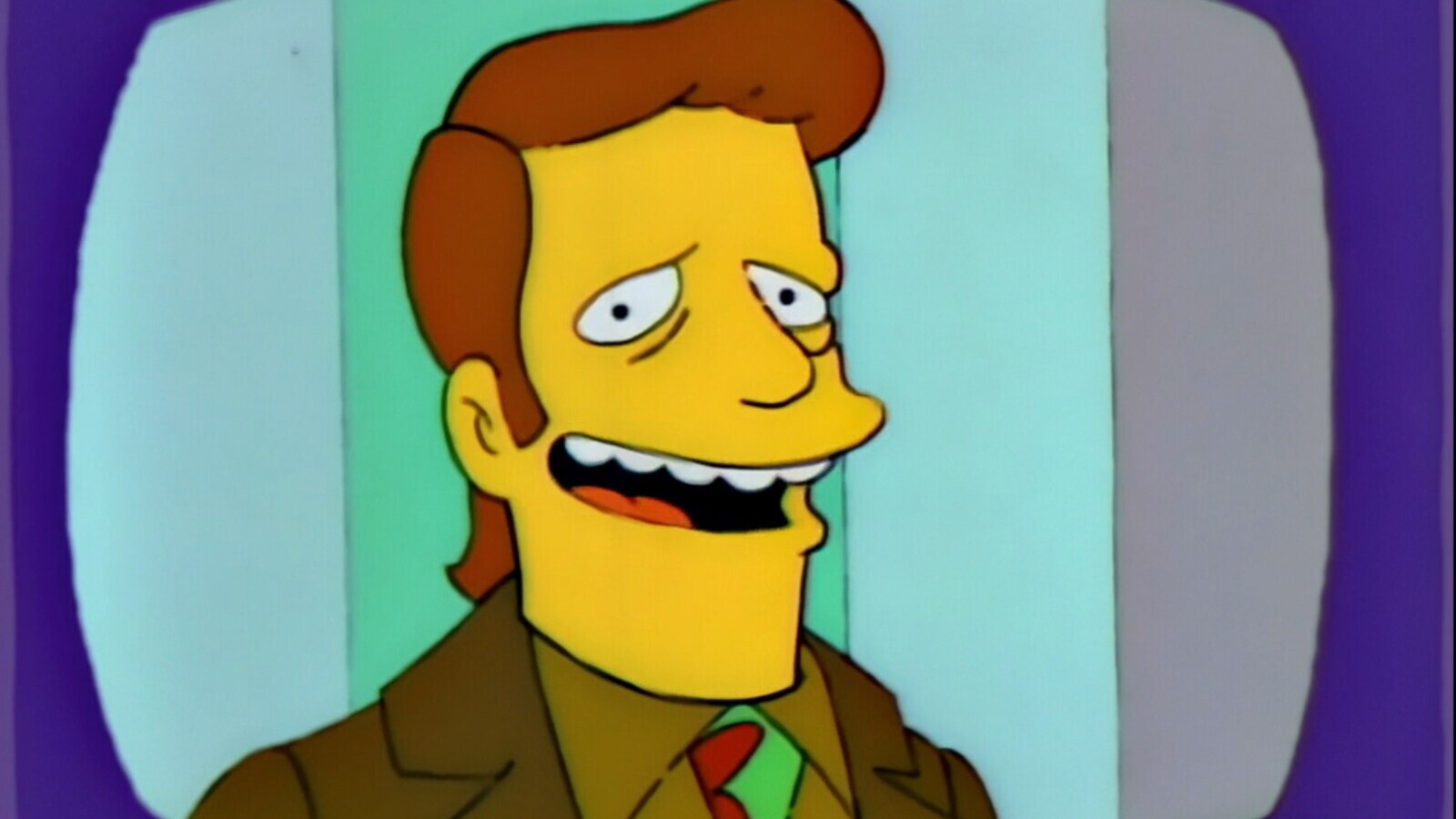
Troy McClure was the perfectly polished, deeply hollow celebrity host who floated through The Simpsons like a man smiling through a midlife crisis in a salmon-colored sweater. He introduced educational films, dubious documentaries, school videos, public-service announcements, and strange B-movies with the immortal formula: “You may remember me from such films as…” Then came the titles, which were often funnier than entire sitcom pilots.
The joke worked because Troy was not just a parody of Hollywood has-beens. He was show business itself, shrink-wrapped in fake sincerity. His voice was smooth, his hair was immovable, and his confidence seemed rented by the hour. He could introduce a safety video, a religious film, or a scandal-management special with the same cheerful emptiness. The character was absurd, but he was also strangely plausible. Anyone who grew up watching low-budget classroom films, late-night cable oddities, or celebrity-hosted specials understood the type immediately.
Why Phil Hartman Made Troy McClure Work
Phil Hartman’s genius was that he never played Troy as a cartoon clown. He played him as a professional. Troy believed in the product, even when the product was ridiculous. That seriousness made the comedy sharper. Hartman’s voice could sound warm, plastic, desperate, and self-satisfied all at oncea combination that should not fit in one human throat, but somehow did.
Hartman also had the rare ability to make a character funny before the punchline arrived. With Troy, the setup was often enough. The moment he appeared on screen, viewers knew they were about to hear a fake title so strange that it might need its own insurance policy. The character became one of the show’s most reliable comedic devices because Hartman understood the rhythm: smile first, sell second, reveal the absurdity third.
The Pitch: A Live-Action Troy McClure Film
According to accounts from people connected with The Simpsons, Hartman talked with the writers about making a live-action Troy McClure movie in which he would physically portray the character. Former showrunner Josh Weinstein has described the idea as something Hartman himself wanted to do, and the writers were enthusiastic because Hartman did not merely voice Troyhe practically was the live-action version already. His face, timing, posture, and polished showman energy all seemed ready-made for the part.
The pitch reportedly never developed into a finished feature script, but there were conversations about what it could be. One possible angle involved Troy’s fictional film career, including the making of The Contrabulous Fabtraption of Professor Horatio Hufnagel, the absurd 20th Century Fox project mentioned in “A Fish Called Selma.” Other versions imagined a movie built around Troy’s strange adventures, with live-action clips from his fake filmography woven into the story. In other words, the movie might have functioned as a Hollywood satire, a mock biography, and a parade of fake trailers all at once.
Why the Idea Was So Unusual
At the time, The Simpsons had not yet made a theatrical film. The eventual animated Simpsons Movie would not arrive until 2007. A live-action Troy McClure movie would have been a wildly left-field first leap to the big screen. Instead of focusing on Homer, Bart, or the Simpson family, the film would have centered on a recurring side character who existed mostly as a fake celebrity inside the show’s universe.
That sounds risky because it was. It also sounds brilliant because Troy McClure was built for exactly that kind of risk. A live-action film could have expanded Springfield’s Hollywood ecosystem without forcing the animated family into an awkward real-world format. It could have treated Troy as a character from the margins who suddenly becomes the main event. That is a very Simpsons idea: take the least likely person in the room, give him a spotlight, and watch the spotlight file a complaint.
“A Fish Called Selma” Proved Troy Could Carry a Bigger Story
The strongest evidence that a Troy McClure movie could have worked is “A Fish Called Selma,” the Season 7 episode that gave Troy his biggest showcase. In that episode, Troy tries to rebuild his career by marrying Selma Bouvier, Marge’s chain-smoking, romance-weary sister. The plot turns a fake Hollywood comeback into a surprisingly layered story about image, loneliness, ambition, and the strange machinery of celebrity rehabilitation.
The episode is also home to one of the most famous musical set pieces in Simpsons history: Stop the Planet of the Apes, I Want to Get Off! The “Dr. Zaius” sequence has become a classic because it is ridiculous in at least six directions at once. It parodies Broadway, science fiction, celebrity vanity projects, and the entertainment industry’s habit of turning every recognizable brand into a musical whether humanity asked for it or not.
The Episode Functioned Like a Mini Troy McClure Movie
“A Fish Called Selma” is not just another Troy appearance. It gives him a mansion, an agent, a scandal, a comeback strategy, a sham marriage, a musical, and a final professional pivot. In 22 minutes, it sketches the outline of a showbiz satire that could easily have grown into a feature. The episode demonstrates that Troy was more than a one-joke character. His joke had rooms inside it.
Most importantly, the episode shows that Troy could be funny and pathetic at the same time. He is selfish, vain, and manipulative, but he is not entirely monstrous. Hartman gives him a weird sweetness under the showbiz varnish. Troy wants to be loved, or at least recognized by casting directors, which in Hollywood is sometimes treated as the same thing with better catering.
Why Phil Hartman Was the Perfect Person to Bring Troy Into Live Action
Phil Hartman’s career made the live-action idea feel natural. Before and during his time as a voice performer on The Simpsons, Hartman had already built a reputation as one of the most dependable comic actors of his generation. He was a key cast member on Saturday Night Live, where he became known as “The Glue” because he could hold sketches together with calm authority. He was also a gifted impressionist, writer, and ensemble player.
After leaving SNL, Hartman starred as Bill McNeal on NewsRadio, another character who mixed confidence, insecurity, ego, and absurd professionalism. That role showed that Hartman could anchor live-action comedy without losing the careful artificiality that made Troy funny. He knew how to play a man performing himself, which is exactly what Troy McClure was always doing.
Voice Acting With a Face Already Attached
Some animated characters work because the voice has no obvious physical equivalent. Troy was different. Hartman’s own screen presence matched the character’s old-Hollywood grin and polished delivery. He had the look of a local commercial spokesman who accidentally wandered into a major studio lot and convinced everyone he belonged there. That quality made the live-action pitch unusually logical.
For many voice actors, stepping into a live-action version of an animated character could feel like a stunt. For Hartman, it might have felt like removing one layer of animation and letting the same performance breathe in real space. He did not need to imitate Troy McClure. He needed to stand there, smile, and let the blazer do the rest.
What the Movie Might Have Looked Like
Because the project never reached production, any detailed plot description must be treated as speculation. Still, based on what has been reported and what the character already offered, we can imagine a few likely ingredients. A live-action Troy McClure movie probably would have leaned into fake film clips, mockumentary-style showbiz history, scandal management, and a comeback narrative that goes wrong in increasingly ridiculous ways.
The film could have opened with Troy narrating his own career in the style of a serious Hollywood biography, while the audience sees clips from his “classic” works: nature specials, health films, detective thrillers, monster movies, and educational shorts that should never have passed a school board. From there, the story might have followed Troy trying to win back fame through a prestige project, a bizarre franchise reboot, or the making of The Contrabulous Fabtraption of Professor Horatio Hufnagel.
A Satire of Hollywood Comebacks
The most promising version of the movie would have been a satire of celebrity reinvention. Troy McClure was already a comeback machine. Every appearance suggested a man who had fallen from some previous level of fame and was now cheerfully hosting whatever paid in cash. A feature film could have explored that desperation on a larger scale: bad agents, fake charities, confused studio executives, public-relations disasters, and Troy’s relentless belief that every humiliation was merely “exposure.”
That approach would have fit the 1990s perfectly. The decade was full of talk shows, tabloid TV, celebrity scandals, direct-to-video oddities, and questionable franchise extensions. Troy was a walking commentary on that media environment. Put him in live action, and he could have become the Forrest Gump of low-rent Hollywood nonsensepresent at every embarrassing cultural moment, smiling like the check cleared.
Why the Movie Never Happened
The main reason the live-action Troy McClure movie did not happen is heartbreakingly simple: Phil Hartman was killed in 1998. After his death, The Simpsons retired Troy McClure and Lionel Hutz out of respect for Hartman. The decision made sense. Those characters were inseparable from his voice, his timing, and his unique comic warmth. Recasting them would have felt technically possible but spiritually wrong.
The Troy McClure movie also seems to have been in an early stage before Hartman’s death. It was discussed with excitement, but there is no evidence that it had become a formal production with a completed screenplay, director, budget, and release plan. In Hollywood terms, it lived in that magical and dangerous zone where everyone at a party says, “We should absolutely do this,” and then someone has to wake up Monday morning and call a lawyer.
The Lost Potential Still Matters
Even though the movie was never made, the idea remains fascinating because it captures a moment when The Simpsons was confident enough to consider almost anything. The show’s classic years were packed with side characters who felt rich enough to wander into their own stories. Troy McClure, in particular, had the rare combination of instant recognizability and unexplored depth. He was both a punchline and a doorway.
The movie also reminds us of Hartman’s unusual place in comedy. He was not always the loudest performer in the room, but he was often the one making the room work. His characters had structure. They knew who they were, even when they were ridiculous. That is why fans still imagine the live-action Troy McClure movie with such affection: it feels like a missed opportunity not just for a franchise, but for a performer who had more to give.
Why Fans Still Talk About the Lost Troy McClure Movie
Most unmade projects disappear into entertainment trivia. This one has lasted because fans can picture it instantly. The concept does not require a complicated explanation. Phil Hartman as live-action Troy McClure? Yes. Fake clips from Troy’s terrible movies? Yes. A Hollywood comeback story told with Simpsons intelligence? Also yes. Please include at least one scene where a studio executive says, “The fish thing is testing surprisingly well.”
There is also nostalgia at work, but it is not empty nostalgia. Troy McClure represents a specific kind of Simpsons comedy: smart, silly, fast, and deeply informed by American pop culture. He was a character who could mock show business without sounding bitter. His existence made the fictional world of Springfield feel bigger, as if there were entire cable channels, forgotten studios, and weird celebrity scandals happening just outside the Simpson family’s living room.
A Perfect “What If?”
The live-action Troy McClure movie is one of those “what if?” stories that hurts because it seems plausible. Many abandoned projects are easy to dismiss. This one is different. The actor wanted it, the writers liked it, the character had already proven he could carry a story, and the concept had room for both satire and absurdity. It was not guaranteed to workno comedy ever isbut it had the right ingredients.
In another timeline, the first Simpsons feature might not have opened with Springfield in animated chaos. It might have opened with Phil Hartman, in a perfectly ridiculous suit, welcoming us to the story of Troy McClure’s greatest role: himself. That alternate timeline probably also has flying cars and affordable movie popcorn, but we can dream.
Experiences and Lessons From the Lost Troy McClure Pitch
One of the most useful experiences connected to this topic is the creative lesson hidden inside the pitch: sometimes the best spin-off idea comes from listening to the performer who understands the character from the inside. Hartman reportedly saw a future for Troy McClure because he knew the character’s rhythm, not just his catchphrase. That is a valuable reminder for writers, producers, and content creators. A side character may begin as a joke, but if the performer finds a full human engine under the hood, the character can travel much farther than expected.
Another experience is the importance of timing. The 1990s were an ideal cultural moment for Troy. Hollywood was full of celebrity reinventions, tabloid narratives, and strange career pivots. A live-action Troy McClure movie could have turned those trends into comedy while they were still fresh. Creative projects do not exist in a vacuum. They are shaped by the era around them. When the timing is right, even a bizarre idea can feel obvious. When the moment passes, the same idea becomes a fascinating museum piece.
There is also a lesson in restraint. The Simpsons team retired Troy McClure after Hartman’s death, and that choice preserved the character’s dignity. In an entertainment culture that often reboots, recasts, and resurrects anything with name recognition, restraint can be powerful. Fans miss Troy because he was not overused after Hartman was gone. His absence became part of his legacy. The character remains frozen at his best, forever walking into another fake documentary with a smile that says, “I have made several questionable career decisions, and I regret none of them publicly.”
For writers, Troy McClure also shows how specificity creates lasting comedy. The fake movie titles, the polished delivery, the Hollywood house, the agent, the comeback plot, and the “Planet of the Apes” musical all make Troy’s world feel tangible. The joke is not simply “washed-up actor.” The joke is a complete ecosystem of bad projects, old scandals, and desperate optimism. That is why the idea of a movie still works in the imagination. The character already came with a universe attached.
Finally, the lost pitch is a bittersweet reminder that comedy history is full of projects that almost happened. Some disappear because the idea was weak. Others disappear because life intervenes. The Troy McClure movie belongs to the second category. It remains compelling because it would have brought together the best qualities of Phil Hartman and The Simpsons: precision, parody, warmth, and just enough showbiz nonsense to make the whole thing sparkle like a star on a very questionable Walk of Fame.
Conclusion: A Movie We Never Saw, But Still Remember
Phil Hartman’s live-action Troy McClure movie never reached theaters, but the idea has earned a strange kind of afterlife. It survives because it was not just a random spin-off pitch. It was a natural extension of a character Hartman made unforgettable and a show that, at its best, could turn even a fake educational-film host into comedy gold.
The unrealized project also shows why Hartman’s work still resonates. He brought elegance to ridiculous characters. He could play vanity without cruelty, stupidity without laziness, and artificial charm with real heart underneath. Troy McClure was a joke about Hollywood, but through Hartman, he became oddly lovable. That is why fans still imagine the movie, quote the character, and return to “A Fish Called Selma” as one of the great showcases of The Simpsons golden age.
So, no, we never got the live-action Troy McClure film. But we did get the idea, the stories, the episode that proved it could have worked, and the lasting image of Phil Hartman as the only actor who could have stepped out of Springfield and into live action without missing a beat. You may remember him from such beloved performances as Troy McClure, Lionel Hutz, Bill McNeal, and half the reason a lost movie still feels worth writing about.











