
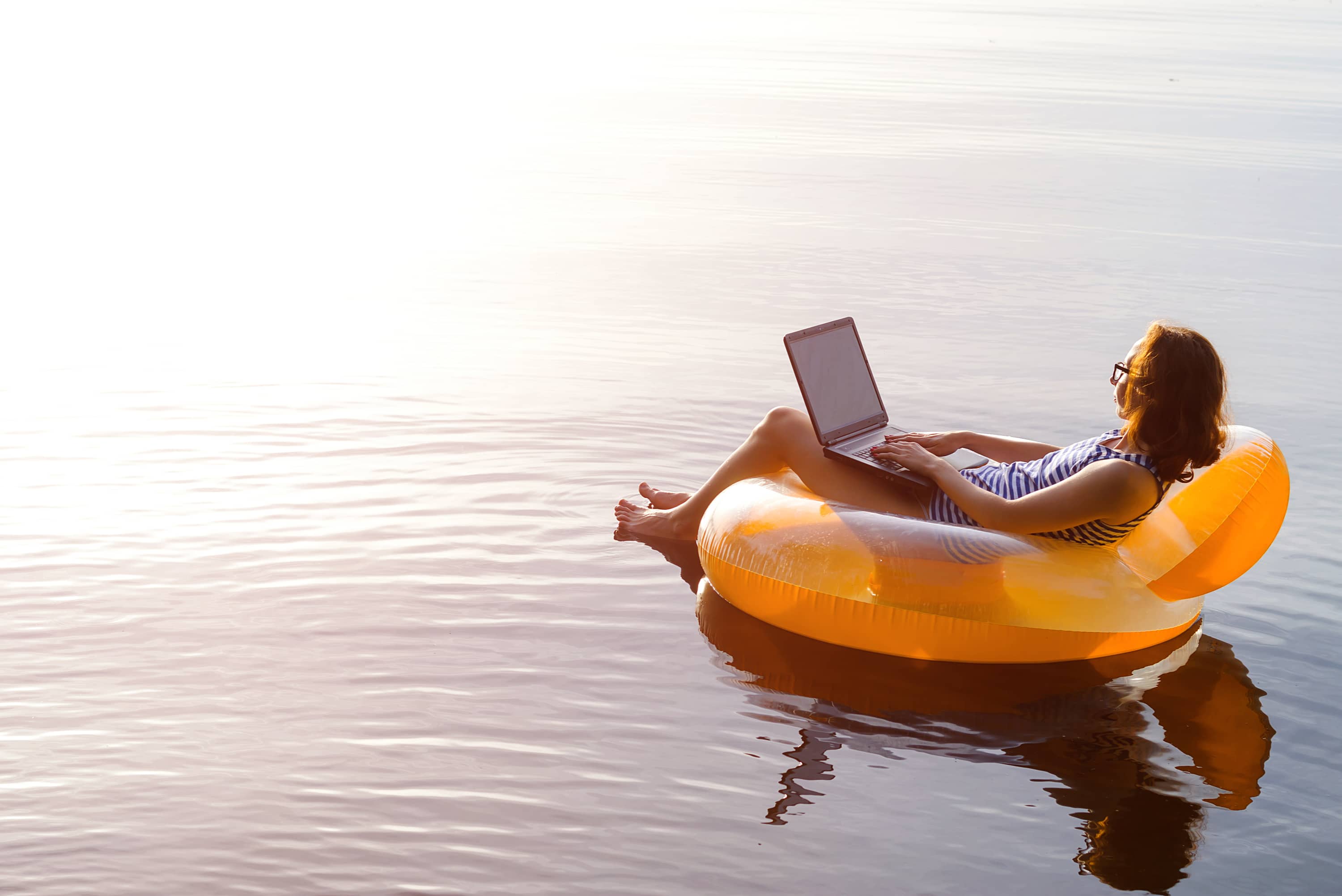
Becoming a digital nomad sounds glamorous because, on the surface, it is. You work from your laptop, change countries like some people change phone cases, and answer emails with a coffee in one hand and a boarding pass in the other. But the real version is less “influencer on a beach” and more “professional adult who figured out how to make work portable without setting their finances, health, or sanity on fire.”
If that still sounds appealing, good. The digital nomad lifestyle can be amazing. It can also be surprisingly practical if you build it the right way. The key is to stop thinking of it as permanent vacation and start treating it like a remote-work system. The goal is not to escape real life. The goal is to design a version of real life that travels well.
This guide breaks down how to become a digital nomad step by step, from finding remote income and handling taxes to choosing destinations, protecting your devices, and staying productive while your friends back home assume you spend every Tuesday in a hammock. Spoiler: sometimes you do. But usually after deadlines.
What a Digital Nomad Really Is
A digital nomad is someone who earns income online and can work independently of a fixed office location. That income might come from a fully remote job, freelance client work, consulting, ecommerce, content creation, software development, design, customer support, virtual assistance, or an online business. In plain English: if your paycheck can follow your laptop, you have the raw material for a nomadic lifestyle.
That does not mean every remote worker should immediately book a one-way ticket. Plenty of people are remote but still tied to a state, a company policy, a licensing requirement, or a schedule that makes constant travel a terrible idea. Becoming a digital nomad is less about having Wi-Fi and more about having the right type of work, the right legal setup, and the right tolerance for mild chaos.
Step 1: Build Portable Income Before You Pack Anything
The first rule of digital nomad life is brutally simple: money comes before movement. A tropical background does not fix an unstable income stream. Before you start comparing apartments in Lisbon, Medellín, or Chiang Mai, make sure your work can survive an airport delay, a time-zone change, and an unreliable café internet connection.
Best income paths for new digital nomads
Most people start in one of three lanes:
Fully remote employment: This is the most stable option. You get a paycheck, predictable work, and sometimes benefits. The catch is that many companies allow remote work only in approved states or countries, so you need written permission before you start crossing borders like a budget James Bond.
Freelancing or consulting: This is flexible and location-friendly, but income can be uneven. Writers, designers, developers, marketers, editors, virtual assistants, bookkeepers, and project managers often start here. If you freelance, build recurring revenue before you leave. Retainer clients are gold. Random gigs are glitter: exciting at first, then suddenly everywhere and not actually valuable.
Online business: Ecommerce, coaching, education products, affiliate sites, SaaS tools, and content businesses can all work well for nomads. The upside is control. The downside is that you are the boss, the employee, the IT department, and occasionally the person yelling at a payment processor at 2 a.m.
What to have in place first
Before you go nomadic, try to build at least three layers of stability:
First, have consistent monthly income. Second, keep a cash buffer for slow months, emergencies, and surprise flights that cost approximately the same as your dignity. Third, document your work systems: contracts, invoicing, file storage, passwords, backups, and client communication standards.
A smart beginner move is to test your setup while staying domestic for a few weeks. Work from another city, keep your normal hours, and see what breaks. If your workflow collapses because the hotel Wi-Fi sneezed, that is useful information.
Step 2: Make Sure Your Work Is Legally Portable
This is the part many aspiring nomads skip because it is less fun than shopping for luggage. Unfortunately, immigration and employment rules do not disappear just because your laptop stickers are cute.
Check your employer or client restrictions
If you work for a company, review your contract and remote-work policy. Some employers restrict where employees can work for tax, payroll, data privacy, licensing, or security reasons. Others allow domestic travel but not international stays. Never assume “remote” means “anywhere on Earth, forever.” Sometimes it means “your apartment, plus maybe Denver.”
Understand visas before you land
Many countries now offer digital nomad visas or other long-stay options for remote workers. In general, those programs are designed for people earning foreign income while living temporarily in the destination country. That is very different from casually working online while entering on a tourist visa and hoping nobody asks questions at the border. Check the rules for each destination before you go, including allowed activities, income requirements, insurance requirements, and length of stay.
Set up your business basics
If you freelance or run a business, separate personal and business finances early. Use a business bank account, clear invoices, signed agreements, and a reliable bookkeeping system. If you still run everything through a notes app, three screenshots, and vibes, now is an excellent time to evolve.
You should also think through practical details like mail forwarding, a permanent mailing address, and where important legal and tax documents will be sent. Old-school mail still exists, which is rude but true.
Step 3: Learn the Tax Rules Before the Tax Rules Learn You
Digital nomad taxes are where romantic travel dreams go to meet spreadsheets. For U.S. citizens and resident aliens, worldwide income is still taxable, even when you live abroad. That means moving overseas does not automatically make the IRS forget you exist. Sadly, they are organized.
Key tax realities for digital nomads
Your state ties may still matter. Residency is not only about where you physically sleep. Things like your driver’s license, voter registration, mailing address, and employer location can affect state tax obligations.
You may need estimated tax payments. If taxes are not withheld from your income, quarterly estimated payments may be part of life.
Travel records matter. Keep a clean log of where you were, how long you stayed, who paid you, and where income was earned. Your future self will thank you. Your accountant may send flowers.
Working abroad can trigger extra complexity. Depending on your situation, you may need to look at foreign bank reporting rules, foreign asset disclosures, self-employment tax issues, or exclusions and deductions available to qualifying Americans abroad.
A simple rule that saves headaches
Track everything from day one: invoices, receipts, days in each location, travel dates, lodging used for business, and subscriptions tied to your work. The digital nomad version of “I’ll remember later” is one of the most expensive sentences in the English language.
Because tax law can get complicated fast, especially across states or countries, many serious nomads hire a CPA who understands remote work and international issues. That is not glamorous advice, but neither are penalties.
Step 4: Choose Destinations Based on Workability, Not Just Beauty
A destination can be gorgeous, affordable, and totally wrong for your actual job. The best digital nomad locations are not just photogenic. They are functional. You need a place where you can work well, live reasonably, and avoid turning every Tuesday into an administrative scavenger hunt.
What to evaluate before booking
Internet reliability: Not just “the apartment says Wi-Fi.” You want stable internet, strong backup options, and ideally a nearby coworking space if your meeting schedule matters.
Time-zone fit: A 12-hour difference sounds adventurous until your weekly team call is at 2:30 a.m. every Wednesday. Some people can handle that. Others become nocturnal goblins and start resenting daylight.
Cost of living: Compare short-term rent, food, transportation, coworking, laundry, and visa costs, not just rent screenshots from social media.
Seasonality and climate: Weather affects productivity more than people admit. Extreme heat, rainy seasons, smoke, or hurricane periods can turn a dream base into a moldy life lesson.
Safety and daily convenience: Think walkability, healthcare access, transit, and whether you can buy basics without turning errands into an expedition.
Community: If you want networking, social life, or accountability, a city with coworking spaces and an established nomad scene can help.
Start with slow travel
New nomads often imagine changing countries every week. In reality, constant movement is exhausting, expensive, and terrible for focused work. Slow travel usually wins. Staying one to three months in a place gives you time to settle in, build routines, and stop confusing the grocery store with the pharmacy.
Step 5: Build Your Travel Admin Stack Like a Responsible Chaos Goblin
Successful digital nomads usually have boring systems, and that is a compliment. The more organized your admin, the more freedom you actually feel.
Documents and safety basics
Make sure your passport is valid well in advance of travel. Some countries and airlines may deny entry if your passport expires too soon. Check visa requirements for each destination, enroll in the Smart Traveler Enrollment Program if you are a U.S. traveler abroad, and keep digital copies of important documents.
Health planning
Stay current on routine vaccines before international travel, and research destination-specific health considerations. Bring a basic medical kit, any prescription medications you need, and enough refill planning that you do not end up explaining your life story to a pharmacist in broken hand gestures.
Insurance and financial tools
For longer trips, review both health coverage and travel insurance options. Some plans marketed to nomads include medical coverage, trip interruption support, or emergency assistance. Separately, use bank accounts and cards with traveler-friendly features such as low ATM fees, no foreign transaction fees, and smoother international access. A multicurrency option can also make life easier if you move often.
Mail, payments, and backup access
Set up mail forwarding or a virtual mailbox if you will be away for long periods. Use two-factor authentication, but do not depend on a single phone number as your only recovery method. Add backup codes, secondary authentication methods, and a second payment option in case one card gets frozen the moment you finally arrive somewhere with good coffee.
Step 6: Protect Your Tech Like It Pays Rent, Because It Does
Your laptop is not just a device. It is your office, payroll department, filing cabinet, and possibly your reason for paying for checked baggage you swore you would never buy.
Digital security rules that matter
Avoid using unsecured public Wi-Fi for sensitive work whenever possible. Use a trusted hotspot, secure network, or strong VPN policy if your company requires it. Keep software updated, use a password manager, enable multifactor authentication, and back up critical files automatically. Public wireless connections, open Bluetooth settings, and sloppy device habits are exactly the kind of invitation cyber criminals appreciate.
Physical gear rules that matter too
Carry spare batteries and power banks correctly according to airline rules, keep chargers organized, and never leave work devices unattended in public. A secondary phone, backup laptop plan, or cloud-based workspace can save your entire month if a device fails or disappears.
Step 7: Create a Routine That Makes Travel Sustainable
The best digital nomad schedule is not the most aesthetic. It is the one you can repeat without burning out. Freedom works better with structure than most people expect.
A practical weekly rhythm
Set working hours that match your clients or team. Batch travel days away from critical deadlines. Reserve one “admin block” each week for expenses, bookings, laundry, renewals, and documentation. Choose housing with a real desk when possible. Romanticizing a kitchen stool as an ergonomic setup is how backs file complaints.
It also helps to separate “explore time” from “work time.” When you try to do both at once, you usually get mediocre work and a blurry memory of a beautiful place you were too stressed to enjoy.
Common Mistakes Future Digital Nomads Should Avoid
Leaving before income is stable
Travel amplifies weaknesses. If your business model is shaky at home, it will become shakier abroad.
Ignoring legal and tax details
Tourist entry rules, employer restrictions, tax residency, and reporting obligations are not optional trivia.
Moving too fast
More flights do not automatically equal more freedom. Often they equal more exhaustion, more fees, and less output.
Choosing cheap over workable
A low-cost apartment is not a bargain if the internet fails daily, the bed ruins your sleep, and the neighborhood makes you anxious.
Underestimating loneliness
Even independent people can get isolated. Build community intentionally through coworking spaces, language exchanges, interest groups, or regular calls with people who knew you before you started rating airports for fun.
Final Thoughts
Becoming a digital nomad is not about escaping adulthood. It is about redesigning it. The most successful nomads are not the ones chasing the most stamps in their passports. They are the ones who build reliable income, understand the rules, organize their systems, and travel in a way that supports both work and life.
If you approach it thoughtfully, the digital nomad lifestyle can give you more than pretty views. It can give you flexibility, lower living costs in the right places, more control over your schedule, and a clearer sense of what kind of work and life you actually want. And once you discover that your office can be anywhere, it becomes much harder to pretend that “someday” is a plan.
Experiences From the Road: What Digital Nomad Life Actually Feels Like
The first week of digital nomad life usually feels like you hacked the system. You wake up in a new city, order coffee in a slightly awkward accent, open your laptop, and think, “This is it. I have won.” The second week is when reality taps you on the shoulder and politely asks whether you remembered to account for time zones, laundry, and the fact that your Airbnb chair was apparently designed by medieval enemies of the spine.
That does not mean the lifestyle is disappointing. It means it is real. And honestly, the real version is better. You stop chasing the fantasy and start appreciating the practical magic. Like finding a neighborhood bakery that knows your order. Or learning which coworking space has the good monitors, the fast Wi-Fi, and the blessed silence. Or realizing you can finish a client call, shut the laptop, and walk straight into a city you are still learning.
One of the biggest surprises for many new nomads is how quickly “travel” turns into “temporary normal life.” You still need groceries. You still need focus. You still have bad workdays, weird emails, and moments when your brain refuses to function until it gets a decent breakfast. The difference is that now those ordinary moments happen in places that once felt impossibly far away. Your daily life becomes bigger, not because every day is dramatic, but because your backdrop changes your perspective.
There are hard moments too. Delayed flights can wreck carefully planned workweeks. Apartments that looked perfect online can turn out to have dim lighting, a weak shower, and internet that behaves like it is powered by hope. Loneliness can sneak up on you in places that are crowded and beautiful. There is also a peculiar form of fatigue that comes from making too many tiny decisions: where to stay, where to work, how long to stay, whether to renew, what to do about visas, where to print a document, why the bank flagged your card again, and whether you really need that second backup charger. You do.
But there are also moments that feel almost suspiciously good. Catching up with a client while watching sunrise from a quiet apartment balcony. Finishing a deep work session, then taking an evening walk in a place you used to see only in movies. Building a routine in a foreign city and realizing you are no longer just passing through it. You know the shortcut home. You know which café has terrible music but excellent coffee. You know that Tuesdays are market day and that your best writing happens before the city wakes up.
Many experienced nomads eventually learn the same lesson: the lifestyle gets better when you slow down. Fewer destinations often means richer experiences. Longer stays create better work, deeper rest, and more meaningful memories. Instead of collecting airports, you start collecting rhythms. Morning route. Favorite lunch spot. Wednesday coworking crowd. Weekend train ride. Life gets less flashy and more satisfying.
In the end, digital nomad life is not a permanent vacation and it is not a productivity hack with a passport. It is a trade. You trade familiarity for flexibility, convenience for adventure, and predictability for possibility. For the right person, that trade is absolutely worth it. Not because every day feels cinematic, but because the life you build starts to feel undeniably your own.











