
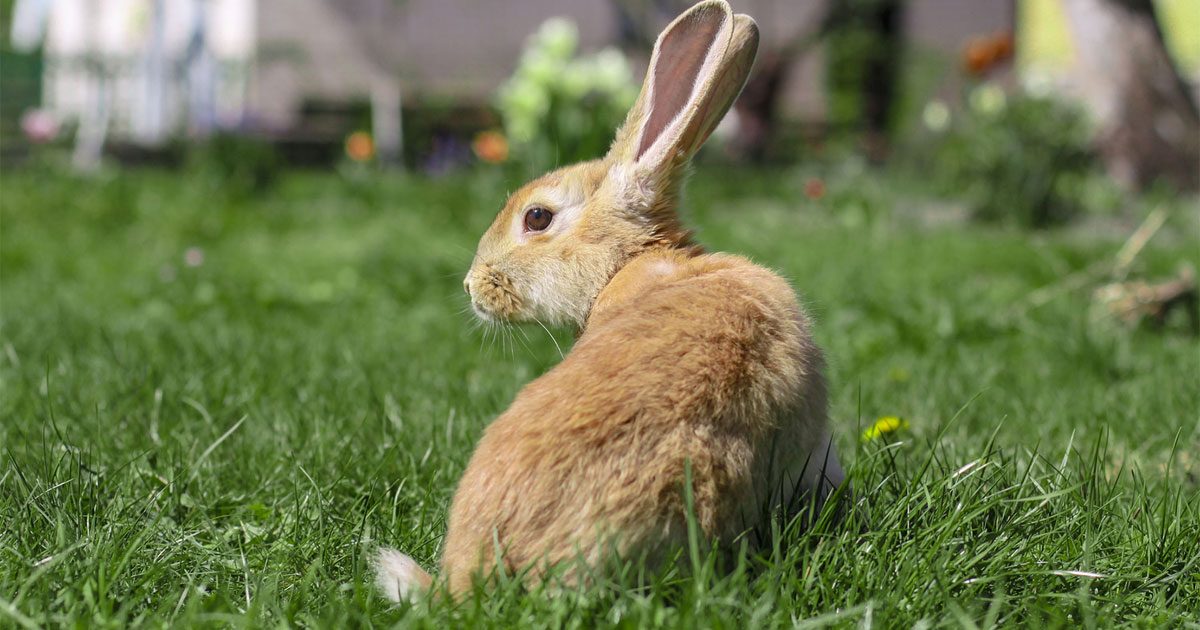
Rabbits are adorable right up until they treat your carefully maintained lawn like an all-you-can-eat salad bar. One evening, your grass looks green and respectable. By breakfast, the clover has been shaved, the flower bed has been remodeled without permission, and a young shrub looks as though someone attacked it with tiny pruning shears.
Fortunately, learning how to keep rabbits away from your lawn does not require turning your property into a fortress. The most effective approach combines physical barriers, habitat changes, plant protection, lawn maintenance, and carefully selected repellents. The goal is not to harm the rabbits. It is simply to convince them that the easier restaurant is somewhere else.
This guide explains how to identify rabbit activity, protect vulnerable areas, and build a humane rabbit-deterrent plan that works through every season.
Confirm That Rabbits Are Actually Causing the Damage
Before buying fencing, sprinklers, or a decorative plastic owl with an alarmingly intense expression, make sure rabbits are responsible. Deer, voles, groundhogs, squirrels, and even poorly aimed string trimmers can produce similar-looking damage.
Look for clean, angled cuts
Rabbit damage usually appears close to the ground. Their sharp front teeth often leave clean, diagonal cuts on stems and twigs, commonly at about a 45-degree angle. Deer browsing tends to look rougher or torn because deer pull vegetation rather than clipping it neatly. Rabbits may also leave small tooth marks on bark and irrigation tubing.
Check for droppings and tracks
Small, round pellets scattered near feeding areas are another clue. Rabbit tracks usually show two larger hind-foot prints ahead of two smaller front-foot prints. The pattern can be especially easy to recognize in soft soil, mud, or snow.
Inspect young trees and shrubs
During winter, rabbits may switch from tender leaves and grass to bark, buds, and twigs. They can girdle a young tree by removing bark around the trunk, interrupting the flow of water and nutrients. Snow makes the problem worse by giving rabbits an elevated platform from which to reach higher branches.
Install a Rabbit-Proof Fence
Physical exclusion is generally the most reliable long-term way to keep rabbits away from valuable lawn areas, vegetable gardens, flower beds, and berry patches. Repellents may fade, scare devices may become familiar, and rabbits may decide that your pinwheel is merely outdoor entertainment. A properly installed fence remains stubbornly boring and effective.
Choose the correct mesh
Use poultry wire, welded wire, or hardware cloth with openings no larger than one inch. Larger gaps may allow young rabbits to squeeze through. For temporary seasonal protection, lightweight chicken wire is usually sufficient. Welded wire is a better investment when you want a sturdier, longer-lasting barrier.
Make the fence at least two feet high
An 18- to 24-inch fence can exclude most cottontails when it is installed correctly. A height of about three feet provides additional protection where jackrabbits are present or where startled rabbits might jump. In snowy regions, increase the height so the effective barrier remains tall enough after snow accumulates.
Secure the bottom
The bottom edge matters as much as the height. Bury it several inches, stake it tightly against the soil, or bend the lower portion outward to discourage digging. Pay special attention to gates and corners. A beautiful fence with a three-inch gap underneath is not a fence; it is a rabbit entrance with decorative trim.
Inspect the perimeter regularly for loose stakes, bent wire, soil erosion, or holes made by other animals. Keep gates closed, and check the enclosed area before sealing repairs so a rabbit does not become trapped inside its new private dining room.
Protect Individual Plants Instead of the Entire Lawn
Fencing the entire property may be unnecessary, expensive, or prohibited by neighborhood rules. When damage is concentrated around a few trees, shrubs, or flower beds, individual barriers are often more practical.
Use trunk guards on young trees
Surround trunks with hardware cloth, poultry wire, or a commercial tree guard. Leave space between the guard and the bark so rabbits cannot press the mesh against the trunk and nibble through it. Extend the protection roughly 18 to 24 inches above the expected snow level, not merely above the bare ground.
Keep leaves, mulch, and debris from collecting inside the guard. Trapped moisture and decaying material can encourage insects or disease. Expand or replace guards as the trunk grows so the protection does not become a botanical corset.
Cage vulnerable shrubs and flowers
Wire cages can protect young shrubs, tulips, seedlings, and other favorite rabbit snacks during their most vulnerable growth stages. Temporary covers are especially useful in early spring, when fresh shoots appear before many wild food sources have returned. Iowa State guidance specifically recommends wire protection over spring flowers and seasonal cages around shrubs.
Make Your Yard Less Comfortable for Rabbits
Rabbits prefer feeding areas located near quick escape cover. Dense weeds, low branches, brush piles, stone piles, tall grass, and openings beneath decks or sheds can provide safe resting or hiding places. A lawn that offers both lunch and shelter earns a five-star review in the rabbit community.
Remove unnecessary hiding places
Clear brush piles, stacked debris, excessive weeds, and dense vegetation near the parts of your yard you want to protect. Trim low shrub branches where appropriate, and block accessible spaces beneath porches, decks, and outbuildings after confirming that no animal is currently inside.
Do not eliminate every patch of wildlife habitat indiscriminately. Native shrubs and ground cover may benefit songbirds, pollinators, and other desirable wildlife. Concentrate your cleanup around high-value plants, garden borders, and known rabbit travel routes.
Keep lawn edges maintained
Mow tall grass around fences, sheds, gardens, and young trees. Remove fallen fruit and excess plant debris that may provide food or cover. Repair leaking irrigation systems and organize lumber, pots, and equipment rather than leaving scattered hiding spots.
Regular maintenance will not guarantee a rabbit-free lawn, but it makes the property less inviting and improves the performance of fencing, repellents, and motion devices.
Use Rabbit Repellents Correctly
Rabbit repellents generally work through unpleasant taste or odor. Common active ingredients include capsaicin, garlic compounds, dried blood, and putrescent egg solids. Their effectiveness varies with weather, rabbit pressure, food availability, application timing, and the product itself.
Apply repellents before serious feeding begins
Repellents are more useful when rabbits encounter the bad taste or smell before establishing a feeding habit. Apply the product according to its label, cover the recommended plant surfaces, and reapply when required after rain, irrigation, heavy dew, or new growth.
Read edible-plant restrictions carefully
Many repellents are intended only for ornamental plants, dormant woody plants, or nonedible portions of the landscape. Do not assume that a product labeled “natural” belongs on lettuce, herbs, strawberries, or other food crops. The label determines where and how a repellent can legally and safely be used.
Repellents should support physical barriers rather than replace them. University extension guidance repeatedly notes that rabbits may tolerate odors over time and that products require regular reapplication. When the alternative is a patch of young beans, a hungry rabbit can display impressive courage.
Never scatter mothballs around the lawn
Mothballs are pesticides designed for controlling fabric pests inside tightly sealed containers. They are not outdoor wildlife repellents. Using them in a yard can expose children, pets, wildlife, soil, and water to pesticide vapors or residues, and using a pesticide contrary to its label is illegal.
Try Motion-Activated Sprinklers and Changing Scare Devices
A motion-activated sprinkler can surprise a rabbit with a short burst of water when it approaches a protected area. This method is humane, chemical-free, and especially useful near flower beds or small gardens where permanent fencing would be awkward.
Position the sensor toward likely entry routes rather than busy sidewalks, patios, or the place where you stand while drinking your morning coffee. Move the sprinkler occasionally so rabbits do not learn its exact range.
Reflective tape, moving pinwheels, predator-shaped decoys, and other visual devices may provide short-term relief, but rabbits often become accustomed to objects that never pose a real threat. Iowa State notes that scare tactics tend to work only nearby and for a limited time. Rotate their positions and combine them with barriers or repellents instead of relying on one motionless plastic owl to manage the entire property.
Choose Plants Rabbits Are Less Likely to Eat
No plant is completely rabbit-proof. When natural food is limited, a hungry rabbit may sample plants it ignored the previous year. However, rabbits are often less attracted to plants with strong fragrances, prickles, leathery foliage, milky sap, or unappealing textures.
Depending on your climate and growing conditions, less-preferred options may include lavender, Russian sage, yarrow, catmint, peonies, bleeding heart, ornamental grasses, and strongly scented culinary herbs. Use resistant plants around the outside of beds while placing vulnerable flowers closer to the house or behind wire protection.
Plant selection is best viewed as risk reduction, not a magical force field. A label that says “rabbit resistant” means “usually less appetizing,” not “protected by an ancient botanical curse.”
Maintain a Healthy Lawn Without Creating a Rabbit Buffet
Rabbits naturally eat grasses, clover, and other tender plants, so it may be unrealistic to prevent every nibble from an open lawn. The practical goal is to keep feeding at a level that does not produce noticeable damage.
Repair thin or damaged grass
Overseed bare patches with grass varieties suited to your region, improve compacted soil, and correct irrigation problems. Healthy turf generally recovers from light grazing more effectively than stressed grass.
Avoid excessive fertilizer
Heavy nitrogen applications can produce lush, tender growth that is attractive to herbivores and more vulnerable to environmental stress. Follow local extension recommendations or a soil test rather than fertilizing according to the “more must be better” theory.
Focus on high-value zones
Trying to exclude rabbits from every square foot of a large property may be unnecessary. Protect vegetable beds, young trees, newly seeded areas, and expensive ornamentals first. Tolerating occasional feeding on a distant patch of clover may reduce pressure on the plants that matter most.
Be Careful With Trapping and Relocation
Trapping laws vary by state and municipality. In some areas, rabbits are classified as game animals; in others, permits, landowner permission, trap-checking schedules, or restrictions on relocation may apply. Moving a rabbit can also transfer the problem elsewhere and may expose the animal to territorial conflicts, predators, or unfamiliar conditions.
Before setting a trap, contact your state wildlife agency, local animal-control office, or cooperative extension service. For most residential lawns, exclusion and habitat modification are safer, easier, and more sustainable than repeatedly removing individual rabbits.
If you discover a shallow nest of baby rabbits, do not assume it has been abandoned merely because the mother is absent. Mother cottontails typically limit their visits to avoid attracting predators. Keep pets and lawn equipment away, temporarily mark or protect the area, and contact a licensed wildlife rehabilitator when the nest is injured or in immediate danger.
A Simple Rabbit-Control Plan for Homeowners
- Identify the damage. Look for angled cuts, pellets, tracks, gnawed bark, and feeding close to the ground.
- Protect priority areas. Install one-inch mesh fencing around gardens and cages around young plants.
- Secure ground-level gaps. Bury or stake fencing and inspect gates and corners.
- Reduce nearby cover. Clear brush, control tall weeds, and close access beneath structures.
- Add a labeled repellent. Use it on appropriate plants and reapply as directed.
- Introduce movement. Add a motion sprinkler or rotate temporary scare devices.
- Inspect weekly. Rabbit control works best as routine maintenance rather than an emergency response after every petunia disappears.
Practical Experiences: What Usually Works in Real Yards
The following composite examples reflect common experiences reported by homeowners and gardeners. They illustrate why combining several methods works better than searching for one miracle product.
Experience 1: The repellent-only experiment
A homeowner notices rabbits feeding near a front flower bed and applies a strong-smelling granular repellent. For several days, the rabbits disappear. Then a rainstorm arrives, the odor weakens, and the rabbits return with the confidence of customers who know the manager personally.
The homeowner reapplies the product, but the cycle repeats. The eventual solution is a low decorative border backed with small-mesh wire. Repellent is still used around a few exposed plants, but the barrier performs the main job. The lesson is straightforward: scent products are temporary tools, while exclusion provides consistent protection.
Experience 2: The attractive hiding place
Another yard has no vegetable garden, yet rabbits regularly damage young shrubs. The lawn is neatly mowed, so the homeowner cannot understand why rabbits keep choosing the property. A closer inspection reveals a dense evergreen shrub, an old stack of landscaping stones, and an opening beneath a shedall within a few hops of the damaged plants.
After removing the stone pile, trimming the lowest branches, and screening the shed opening, rabbit visits become less frequent. The shrubs receive temporary wire cages during winter. Nothing dramatic happens; the yard simply stops providing perfect cover beside convenient food. Habitat modification is rarely glamorous, but neither is cleaning rabbit droppings off the patio every morning.
Experience 3: The fence with one tiny flaw
A gardener builds a two-foot chicken-wire enclosure and assumes the problem is solved. The following morning, several seedlings are missing. The fence is tall enough and the mesh is small enough, but the wire follows uneven ground and leaves a narrow opening at one corner.
After the gap is staked firmly and the soil is packed beneath it, the damage stops. This experience demonstrates why fence height receives too much attention while the bottom edge receives too little. Rabbits are not famous for engineering degrees, but they are excellent at finding the only unsecured opening in fifty feet of wire.
Experience 4: The motion-sprinkler surprise
On a property where permanent fencing is undesirable, a motion sprinkler is aimed toward a flower-bed entrance. It works immediately, but after several weeks the rabbits begin feeding just outside the sensor’s range. The homeowner moves the sprinkler, adjusts its angle, and adds small cages around the most valuable plants.
The combined setup succeeds because the strategy changes before the rabbits fully adapt. The sprinkler discourages casual visits, while the cages prevent damage when a particularly determined rabbit decides that getting wet is a reasonable price for dinner.
Experience 5: The winter protection lesson
A young tree is fitted with a short trunk guard in fall. By spring, bark above the guard has been removed. The homeowner initially suspects deer but then notices clean tooth marks and rabbit tracks. Snow had raised the feeding level, allowing rabbits to reach beyond the top of the guard.
The following year, the barrier is extended well above the expected snow depth and checked after each major storm. The tree remains protected. This is one of the most important seasonal lessons: measure winter barriers from the future snow surface, not just from the ground visible on a pleasant October afternoon.
Across these experiences, the same pattern appears repeatedly. Successful rabbit control is not about finding the strongest smell, the most realistic owl, or the angriest garden ornament. It is about removing easy access, protecting valuable plants, reducing shelter, and adjusting the plan when conditions change.
Conclusion
The best way to keep rabbits away from your lawn is to make the areas you value difficult to enter and unrewarding to visit. Start with properly installed fencing or individual plant cages, then reduce nearby hiding cover and add labeled repellents or motion sprinklers where appropriate.
Check your defenses throughout the year, especially after storms, irrigation, plant growth, and snowfall. Rabbits are persistent, but they are also practical. When your lawn stops offering easy shelter and effortless meals, they are more likely to hop toward less complicated dining arrangements.
Note: Use humane methods whenever possible, follow all pesticide labels, and check local wildlife laws before trapping, relocating, or otherwise handling wild rabbits.











