
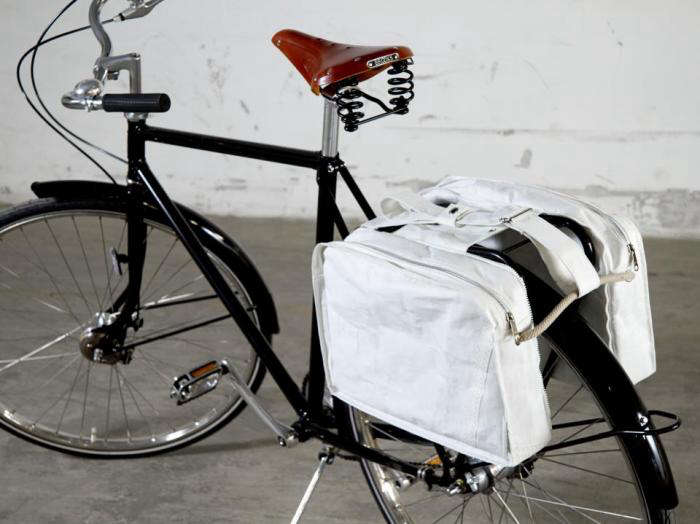
Some bicycle bags whisper, “I am practical.” Bicycle bags from Save the C announce, “I used to chase wind across the Baltic Sea, and now I’m carrying your laptop.” That is a much better résumé than most tote bags can offer.
Save the C, a Finnish brand rooted in sail recycling, became known for turning reclaimed boat sails into sleek, useful bags. Its bicycle-focused designs stood out because they did not treat sustainability like an afterthought or a beige punishment. Instead, these bags looked crisp, nautical, urban, and quietly clever. They belonged on a commuter bike, beside a Scandinavian entryway, or in the hands of someone who has strong opinions about coffee, rain jackets, and attractive storage.
The best-known piece in the collection is the Carry bicycle bag, designed by Helsinki studio Aalto+Aalto. Made from recycled boat sails and lined with hemp textile, the Carry bag could be fastened to a bike with elastic button fasteners. It was designed for real life: errands, workdays, small grocery runs, books, papers, and yes, the laptop that somehow weighs more at 5 p.m. than it did at 9 a.m.
This article explores what made Bicycle Bags from Save the C so interesting, how they fit into the wider world of commuter bike bags, what cyclists should look for in a practical bicycle bag, and why upcycled sailcloth still feels fresh in a market overflowing with nylon rectangles pretending to have personalities.
What Are Bicycle Bags from Save the C?
Bicycle Bags from Save the C are part of a larger design idea: take durable sail material that has already served one adventurous life and give it another. Instead of sending used sails toward waste, Save the C transformed them into handbags, totes, laptop bags, wrist bags, and bicycle-ready carryalls.
The concept is simple, but the appeal is layered. A sail is built to handle wind, spray, tension, sunlight, and the occasional dramatic weather event that makes people on shore say, “Glad I’m not out there.” When repurposed into a bag, that material carries a built-in story. It is not just recycled; it is recycled with a past.
Save the C was founded in Hamari, near where the Porvoo River meets the Baltic Sea. That location matters because the brand’s identity is not a random “ocean aesthetic” slapped onto a product label. It comes from a maritime environment, from sailing culture, and from a practical desire to reuse materials already connected to water, wind, and movement.
The Design: Minimal, Nautical, and Surprisingly Urban
The Carry bicycle bag designed by Aalto+Aalto is the centerpiece for cyclists. It has the clean lines associated with modern Finnish design: unfussy, functional, and attractive without begging for compliments. In other words, it is the opposite of a backpack with twelve dangling straps and the visual energy of a camping octopus.
The bag was made from recycled boat sails, with an interior lining of hemp textile. Hemp is a fitting choice because sails were historically made from natural fibers before the rise of modern synthetics. That detail gives the bag a nice material conversation: old sail history on the inside, modern recycled sailcloth on the outside.
The fastening system is another key feature. Instead of acting like an ordinary tote that awkwardly flops over a handlebar, the Carry bag was designed to attach to the bike using elastic button fasteners. This matters because a bicycle bag must behave itself. A bag that swings, bumps the wheel, blocks brake cables, or tries to escape at every pothole is not a bag. It is a tiny villain.
Why Recycled Sailcloth Makes Sense for Bike Bags
Sailcloth is a smart material for bicycle bags because it combines strength, lightness, and weather-minded performance. Not all sailcloth is the same, and recycled sails may vary depending on their original use, age, weave, and finish. But as a category, sailcloth brings several advantages that align beautifully with cycling.
It Is Lightweight
Bike commuters notice every unnecessary ounce, especially when climbing hills, carrying the bike upstairs, or racing a traffic light that is clearly judging them. Recycled sailcloth can create a structured bag without the heavy, overbuilt feel of some waxed canvas or leather options.
It Handles Weather Better Than Ordinary Fabric
A good bicycle bag does not need to be a submarine, but it should tolerate splashes, mist, and light rain. Sailcloth was originally designed for demanding outdoor conditions, so it naturally fits the needs of people who ride through surprise drizzle and then pretend they “planned for it.”
It Has Character
Many upcycled sail bags include marks, stitching lines, numbers, or subtle discoloration from their first life. That makes each piece feel individual. In a world of identical black commuter bags, a bag with a sailcloth past feels like it has already seen a few things and is still polite about it.
It Supports a More Circular Design Mindset
Reusing existing material reduces reliance on virgin resources and keeps useful textiles in circulation longer. That is the heart of good sustainable design: not making more stuff just because we can, but making better use of what already exists.
Save the C vs. Ordinary Bicycle Bags
Most bicycle bags fall into familiar categories: panniers, handlebar bags, frame bags, saddle bags, trunk bags, baskets, and backpacks. Each has a job. Panniers carry groceries and work gear. Saddle bags hold tubes and tools. Frame bags keep snacks and small essentials within reach. Handlebar bags are perfect for cameras, wallets, sunscreen, and snacks you fully intend to eat after the ride but will probably eat before leaving the driveway.
Save the C’s bicycle bags occupy a more design-forward space. They are not expedition panniers for crossing a continent with a camp stove, four pairs of socks, and a philosophical relationship with oatmeal. They are urban carry bags for people who want storage that works on and off the bike.
That off-bike usefulness is important. Many cyclists do not want a bag that screams “technical equipment” in a coffee shop, office, or bookstore. The Carry bag’s tote-like silhouette makes it more versatile. It can move from bike to meeting without looking like it just completed a gravel race.
Who Are These Bicycle Bags Best For?
Bicycle Bags from Save the C are best suited for design-conscious riders, urban commuters, casual cyclists, students, and anyone who likes the idea of a bag with a second life. They are especially appealing if you value sustainability but still want something polished enough for daily use.
Best for Commuters
The Carry bag’s laptop-friendly size makes it attractive for people riding to work or class. Instead of wearing a sweaty backpack, a rider can attach the bag to the bike and let the bicycle carry the load. Your back will appreciate this. Your shirt will appreciate this. Your coworkers will appreciate this more than they will ever say aloud.
Best for Errands
A tote-style bicycle bag is handy for short trips: library books, a light grocery run, a scarf, a water bottle, or a suspiciously expensive loaf of sourdough. It gives riders enough room for everyday cargo without turning the bike into a delivery truck.
Best for Minimalists
If you like clean design and dislike overcomplicated gear, Save the C’s aesthetic makes sense. It is functional without being cluttered. It has personality without wearing a costume.
How to Choose a Bicycle Bag Like Save the C
Even if you are shopping vintage, secondhand, or looking for a similar upcycled sailcloth bike bag today, the buying principles remain the same. A beautiful bag is nice; a beautiful bag that does not bounce into your spokes is better.
1. Check the Attachment System
The bag should attach securely to the bike. For handlebar-mounted or front-mounted bags, make sure the straps, clips, or fasteners do not interfere with brake levers, shifters, cables, lights, or steering. A bike bag should be stable, not interpretive dance.
2. Consider Capacity
Think about what you carry most often. A laptop, charger, notebook, and lunch require more room than a phone, keys, and patch kit. For daily commuting, a medium tote or pannier is usually more practical than a tiny saddle bag. For long touring, panniers or bikepacking bags make more sense.
3. Look for Weather Resistance
Recycled sailcloth can be water-resistant, but construction matters. Seams, closures, zippers, and lining all affect how dry your belongings stay. If you carry electronics, use a padded sleeve or dry bag inside, especially during heavy rain.
4. Protect Your Laptop
Some stylish bags are roomy enough for laptops but not padded like dedicated tech bags. If your computer is coming along for the ride, add a protective sleeve. Your laptop is not impressed by nautical romance when it hits pavement.
5. Watch the Weight Distribution
A front bag or handlebar bag should not be overloaded. Too much weight high on the front of a bike can affect steering. For heavier cargo, rear panniers, a rack trunk, or a low-mounted setup may be safer and more comfortable.
The Sustainability Story: More Than a Pretty Sail
The strongest part of Save the C’s appeal is that the bags demonstrate sustainable design without sounding like a lecture. They show instead of scold. A used sail becomes a commuter bag. A material with history gets a second job. The result is practical, attractive, and easier to love than a generic “eco-friendly” product with a leaf icon and no further personality.
Upcycling is especially compelling because it preserves some of the original material’s identity. A plastic bottle recycled into fiber may be useful, but the bottle’s past disappears. A sailcloth bag still looks and feels connected to the sea. The material carries visible memory, and that emotional value can make owners keep the item longer.
That matters. The most sustainable bag is not always the newest bag made with the trendiest green material. Often, it is the durable bag you use for years, repair when needed, and do not replace just because a new color showed up online and started flirting with you.
Style Notes: How to Use a Save the C Bicycle Bag
A Save the C bicycle bag works best with a simple urban setup. Picture a city bike, upright riding position, fenders, lights, and maybe a front rack or handlebar area suited for carrying. Add the bag, and suddenly the bike looks less like transportation and more like a lifestyle decision that remembered to be useful.
For work, pair it with a laptop sleeve, small pouch for cables, flat notebook, wallet, keys, and a compact rain shell. For errands, keep a reusable produce bag inside so groceries do not roll around like they are training for a circus act. For weekend rides, use it for a book, sunglasses, snacks, and a light jacket.
The bag’s nautical material pairs naturally with classic colors: navy, white, orange, gray, and black. But the real charm is contrast. A sailcloth bike bag can look great on a vintage steel bicycle, a modern commuter bike, or an e-bike with clean lines.
Potential Downsides to Consider
No bicycle bag is perfect. Save the C’s bags, particularly the Carry design, are best understood as stylish urban carry solutions, not heavy-duty waterproof expedition panniers. If you ride through winter storms, carry large grocery loads, or need sealed waterproof storage, a dedicated roll-top pannier may be more practical.
Availability is another issue. Because Save the C’s bicycle bags were featured years ago and may not be widely available through regular retail channels today, buyers may need to search resale marketplaces, design shops, vintage listings, or comparable upcycled sailcloth brands. If you find one in good condition, treat it like a small design treasure. Not “museum gloves” treasure, but definitely “do not leave it under a leaky garage shelf” treasure.
Finally, upcycled materials can vary. That variation is part of the charm, but it also means buyers should inspect stitching, attachment points, lining, closures, and wear. A recycled sail can be tough, but a bag is only as good as its construction.
Real-World Experience: Living with a Bicycle Bag Like Save the C
The first thing you notice when using a bicycle bag like Save the C is how much calmer a ride feels when cargo is not on your body. A backpack is fine for short rides, but after twenty minutes in warm weather, it can turn your back into a tiny indoor swimming pool. Moving that weight to the bike feels liberating. The bicycle becomes what it was always meant to be: a graceful machine that carries both you and your questionable decision to bring three books “just in case.”
On a workday, a tote-style bike bag shines when the routine is predictable. Laptop, charger, notebook, wallet, keys, lunch, and a thin rain jacket all have a place. The trick is organization. Use small pouches so the bag does not become a fabric cave where pens go to retire. Keep electronics in a sleeve. Put keys on a clip. Place lunch upright unless you enjoy opening your bag to discover soup has become a regional weather event.
The on-bike attachment is the make-or-break feature. A good bag feels secure within the first block. It should not swing into the wheel, tug the handlebars, or make the rider nervous every time the road gets rough. With a front-mounted bag, lighter packing is usually better. A laptop and papers may be fine, but a watermelon, two canned goods, and a hardcover cookbook could make steering feel like negotiating with a stubborn shopping cart.
For errands, the bag encourages smaller, more intentional trips. Instead of loading a car trunk, you buy what fits. That can be oddly satisfying. A loaf of bread, coffee beans, apples, flowers, and a jar of olives suddenly feel like a very European achievement, even if you are just biking six blocks in Ohio. The bag becomes part of the rhythm: ride, park, unfasten, shop, reattach, roll home.
There is also a social side. Upcycled sailcloth has a way of starting conversations. Someone may ask what the bag is made of. You get to say, “recycled boat sails,” which is much more fun than saying “polyester blend.” The bag carries a story before you put anything inside it. That story can make daily commuting feel a little less routine and a little more like participation in a smarter, less wasteful design culture.
After weeks of use, the best experience is not dramatic. It is practical. You stop thinking about the bag because it simply works. It holds the day’s essentials, keeps your shoulders free, looks good off the bike, and reminds you that sustainable products do not need to look like homework. They can be handsome, useful, and quietly witty. That is the real magic of Bicycle Bags from Save the C: they make responsible design feel effortless.
Conclusion
Bicycle Bags from Save the C are more than attractive cycling accessories. They are a smart example of how recycled materials, thoughtful design, and everyday transportation can come together. By transforming used sails into bike-ready bags, Save the C gave riders a product with durability, style, and a genuine environmental story.
The Aalto+Aalto Carry bicycle bag remains especially memorable because it balances function and beauty. It attaches to a bike, carries daily essentials, uses recycled sailcloth, includes hemp lining, and looks polished enough to bring indoors. That combination is harder to find than it should be.
For modern cyclists, the lesson is clear: choose bags that fit your riding style, protect your belongings, attach securely, and last. Whether you find an original Save the C piece or a similar upcycled sailcloth bicycle bag, the best choice is one you will use often and keep for years. Your bike gets better storage. Your back gets a vacation. And an old sail gets one more adventure, this time with fewer waves and more coffee stops.
Note: Product availability, pricing, and retailers may have changed since the original Save the C bicycle bags were featured. For publication, verify current stock before presenting any item as available for purchase.











