
Note: This article is written for educational, defensive, and lawful research purposes. RF experimentation should always happen on equipment you own, in permitted frequency ranges, and without interfering with public, commercial, emergency, aviation, medical, or private communications.
Radio frequency hacking sounds like something that should come with a trench coat, a lightning storm, and a soundtrack full of suspicious beeps. In reality, the world of RF hacking is less movie-villain and more “curious engineer with a spectrum analyzer, a notebook, and a strong respect for the FCC.” The phrase RF Hacking Hack Chat captures a growing community interest in understanding how wireless signals work, how connected devices communicate, and how security researchers can responsibly study the invisible highways carrying modern data.
From garage door remotes and RFID badges to Bluetooth sensors, Wi-Fi networks, smart meters, LoRa devices, weather satellites, amateur radio, and industrial telemetry, RF is everywhere. It is the nervous system of the connected world. The problem is that many people treat wireless signals like magic. Press button, thing happens. Tap card, door opens. Pair gadget, app smiles. But underneath the convenience is a stack of modulation, protocols, antennas, timing, encryption, authentication, interference, and occasionally, design decisions that look like they were approved during a lunch break.
An RF hacking conversationespecially one inspired by Hack Chat-style community learningis not about causing chaos. It is about asking better questions: What is this signal? Is it encrypted? Does the device authenticate properly? Can the system detect interference? What happens when the environment gets noisy? How should engineers build safer wireless products? And, most importantly, how do we explore all of this without becoming the reason someone’s baby monitor starts picking up a garage door opener from three blocks away?
What Is RF Hacking?
RF hacking is the study, analysis, testing, and security evaluation of radio frequency systems. RF stands for radio frequency, which refers to electromagnetic signals used for wireless communication. These signals can carry voice, data, control messages, sensor readings, identification information, or timing data. When people talk about RF hacking, they usually mean investigating how wireless devices transmit, receive, encode, and protect information.
The phrase can sound intimidating, but the legitimate side of RF hacking overlaps heavily with electrical engineering, cybersecurity, digital signal processing, embedded systems, wireless networking, and regulatory compliance. A security researcher might study whether an access control badge system protects its credentials. A hardware engineer might evaluate whether a sensor network remains reliable near noisy machinery. A hobbyist might use a receive-only software-defined radio to observe public weather satellite signals. A company might test whether its wireless product resists spoofing, interference, or accidental misconfiguration.
The “hack” in RF hacking should be understood in the classic maker sense: explore, understand, improve. Unfortunately, wireless systems can also be abused. That is why responsible RF education must be clear about boundaries. Unauthorized transmission, interference, eavesdropping on private communications, cloning credentials, bypassing access systems, and disrupting networks are not “cool tricks.” They are legal and ethical trouble wearing a cheap antenna.
Why the RF Hacking Hack Chat Matters
The RF Hacking Hack Chat concept became especially interesting because it brought together makers, security researchers, software-defined radio users, and curious learners in a community setting. Hackaday’s Hack Chat format is built around live technical discussions, and RF is a perfect topic for that environment. It has enough mystery to attract beginners, enough math to humble experts, and enough real-world impact to matter far beyond hobby projects.
One reason these discussions are valuable is that RF security sits at the intersection of physical and digital worlds. Traditional cybersecurity often focuses on software, networks, passwords, cloud systems, and endpoints. RF security adds antennas, propagation, range, signal strength, shielding, spectrum rules, and hardware behavior. In other words, the bug may not be in the code alone. Sometimes the “bug” is that the device cheerfully trusts any signal that sounds friendly.
Community chats also help demystify tools like software-defined radio, often shortened to SDR. SDR moves many radio functions from fixed hardware into software. Instead of needing a separate physical radio for every type of signal, researchers can use compatible RF hardware with software tools to observe, process, and analyze signals. Tools such as GNU Radio, open-source RF frameworks, and SDR peripherals have made wireless research more accessible than it used to be. That accessibility is powerful, but like a soldering iron, it should be handled with care and not waved around near curtains.
The Big Idea: Wireless Security Is Not Optional
Wireless design has historically been a tug-of-war between convenience, cost, battery life, range, and security. A tiny sensor running on a coin cell battery cannot behave like a full server in a data center. Still, that does not mean security gets to nap in the corner. Modern RF systems must consider confidentiality, integrity, authentication, availability, privacy, and resilience against interference.
For example, a smart lock that uses radio signals should not simply trust a repeated command. A medical device should not rely on obscurity as its primary defense. A warehouse RFID system should consider privacy and unauthorized reads. A Wi-Fi network should use strong authentication and monitoring. An industrial radio link should account for interference and operational safety. These are not paranoid concerns; they are practical engineering requirements in a world where wireless devices are cheap, common, and frequently deployed faster than anyone reads the manual.
RF Is Different From Normal Networking
Ethernet cables generally stay where you put them. Radio waves do not. They bounce, fade, leak, reflect, overlap, travel through walls, and occasionally behave like they have personal drama. This makes RF security uniquely challenging. A signal intended for one room may be detectable outside a building. A weak antenna placement may create dead zones. A poorly shielded device may emit more information than expected. A nearby transmitter may create interference that looks like system failure.
Because RF crosses physical boundaries, the security mindset must expand. It is not enough to ask whether the app is secure. You also need to ask whether the radio protocol is authenticated, whether the device can handle noisy environments, whether firmware updates are protected, whether keys are stored safely, and whether monitoring exists for strange wireless behavior.
Common Technologies Discussed in RF Hacking
RF hacking conversations often cover a wide range of wireless technologies. Some are everyday consumer systems; others are industrial or specialized. A responsible article can discuss them at a high level without turning into a recipe book for bad decisions.
RFID and NFC
RFID and NFC technologies are used for ID badges, payment cards, inventory systems, transit passes, and device pairing. Security varies widely depending on the implementation. Strong systems use cryptography and proper authentication. Weak systems may rely too heavily on static identifiers or outdated assumptions. In defensive research, RFID testing helps organizations understand whether access control systems are modern, properly configured, and resistant to casual misuse.
Bluetooth and Bluetooth Low Energy
Bluetooth connects headphones, fitness trackers, keyboards, medical accessories, smart home devices, and industrial sensors. Bluetooth Low Energy, or BLE, is especially common in small battery-powered devices. Security depends on pairing methods, encryption, device privacy features, firmware quality, and how well developers protect data in companion apps. A fancy BLE gadget with weak authentication is basically a digital handshake with sweaty palms.
Wi-Fi
Wi-Fi is the familiar giant of wireless networking. It has improved significantly over the years with stronger security standards, but configuration still matters. Weak passwords, outdated encryption, poor segmentation, rogue access points, and unmanaged guest networks remain common problems. Enterprise environments often use wireless intrusion detection and prevention systems to monitor suspicious behavior and enforce policy.
LoRa, ISM Devices, and IoT Sensors
Long-range low-power systems, including LoRa-based devices and other ISM-band sensors, are popular in agriculture, utilities, logistics, and environmental monitoring. These systems often prioritize range and battery life. That makes efficient security design essential. Engineers need to consider message authentication, replay resistance, key management, and device lifecycle planning before thousands of sensors are mounted in places that require ladders, trucks, or regret to reach.
Amateur Radio and Public Signals
Amateur radio has long been a legal and educational path into RF. Licensed operators learn about propagation, antennas, operating rules, emergency communications, and spectrum etiquette. Receive-only study of permitted public signals can also teach beginners about modulation and signal behavior. The key is respecting regulations and avoiding private or restricted communications.
Software-Defined Radio: The Learning Gateway
Software-defined radio is one of the biggest reasons RF research became more approachable. Instead of treating radio as a black box, SDR lets learners visualize and process signals with software. Spectrum views, waterfalls, demodulators, filters, sample rates, and IQ data become part of the learning experience. For beginners, the first time a signal appears on a waterfall display can feel like discovering an invisible city.
Tools in the SDR ecosystem range from beginner-friendly receivers to advanced transceivers used in research and development. GNU Radio is widely known as a flexible open-source toolkit for building signal processing workflows. HackRF One is a well-known open-source SDR platform capable of receiving and transmitting across a broad frequency range, though transmitting requires legal knowledge and proper authorization. RTL-SDR receivers are popular for low-cost receive-only exploration. Frameworks such as FISSURE aim to organize RF research workflows, signal classification, protocol discovery, and educational experimentation.
However, accessibility does not erase responsibility. Owning an SDR does not mean every signal is fair game. Receiving public signals for learning is very different from intercepting private communications or transmitting without permission. The best RF researchers develop two habits early: they learn the technology, and they learn the rules.
The Legal Side: The Spectrum Has Traffic Laws
The radio spectrum is regulated because interference can have serious consequences. Wireless systems support aviation, maritime services, emergency response, broadcasting, cellular networks, medical devices, industrial controls, satellites, and public safety systems. If everyone transmitted whenever and wherever they felt like it, the result would not be innovation. It would be electromagnetic soup, and not the comforting kind with noodles.
In the United States, the Federal Communications Commission regulates radio frequency devices and radio operations. Many consumer devices operate under rules that allow low-power use without an individual license, but those rules still have limits. Devices may need equipment authorization before being marketed or used. Unauthorized radio operation can lead to enforcement actions, including penalties and equipment seizure. That is why responsible RF hacking focuses on controlled labs, receive-only study, authorized testing, shielded environments, dummy loads, test equipment, and clear permission.
For organizations, legal compliance should be part of the security program. Before testing wireless equipment, define scope, ownership, permissions, frequencies, power levels, safety controls, and documentation. A penetration test that ignores RF regulations is not a professional assessment; it is a paperwork generator with antennas.
Ethical RF Research: What Good Looks Like
Ethical RF research begins with permission. If you do not own the device or have written authorization to test it, do not test it. If a signal is private, do not decode it. If a system controls access, vehicles, alarms, infrastructure, or safety equipment, do not experiment with it in the wild. Good RF research happens in a defined environment with known equipment and no impact on bystanders.
A responsible RF lab might include receive-only experiments, low-power test devices, shielded enclosures, attenuators, dummy loads, spectrum monitoring, and careful notes. Researchers may analyze their own development boards, training kits, permitted public transmissions, or simulated signals. The goal is to learn signal structure, wireless design, and defensive testing without interfering with real systems.
Ethical researchers also practice responsible disclosure. If a vulnerability is found in a product, they report it to the vendor or affected organization through appropriate channels. They avoid publishing details that enable abuse before a fix is available. The best security work protects users first and feeds egos second. Ideally, it skips the ego buffet entirely.
RF Threat Models: What Defenders Should Understand
Organizations that depend on wireless systems should treat RF as part of their threat model. Wireless attacks are not limited to dramatic scenarios. Many risks are mundane: weak pairing, exposed management interfaces, insecure default settings, unmonitored access points, poor key rotation, insufficient logging, and devices that cannot be updated easily.
Interference and Availability
Wireless systems can be affected by accidental or intentional interference. A poorly designed network may fail when nearby devices create noise. Public safety communications, industrial environments, and enterprise Wi-Fi all need plans for detection, troubleshooting, and resilience. CISA and public safety guidance emphasize the importance of understanding RF interference because communications are only useful when they work at the moment people need them most.
Weak Authentication
If a wireless device accepts commands without proving who sent them, trouble is already standing in the doorway. Authentication ensures that a device can distinguish trusted messages from random noise or malicious input. Strong authentication matters in access systems, smart home products, sensors, industrial controls, and connected vehicles.
Privacy Leakage
Some wireless systems expose identifiers, device names, location patterns, or behavioral clues. Even when message contents are encrypted, metadata may reveal information. Privacy-focused wireless design should limit unnecessary broadcasting, randomize identifiers when appropriate, and avoid leaking more information than the user expects.
Lifecycle Problems
Wireless devices often remain in service for years. If they cannot receive secure updates, rotate keys, disable old features, or support modern encryption, they become long-term liabilities. A sensor installed today may still be chirping away long after its original vendor page has vanished into the internet attic.
Defensive Best Practices for RF-Aware Security
For businesses, schools, labs, makerspaces, and product teams, RF security should be practical rather than theatrical. Start with an inventory. Know which wireless technologies are in use, which frequencies they occupy, what data they carry, who owns them, and how they are maintained. Unknown wireless devices are not automatically malicious, but they are automatically worth identifying.
Next, apply secure configuration. Wi-Fi networks should use modern encryption, strong authentication, network segmentation, guest isolation, and regular audits. Bluetooth and BLE products should use secure pairing, encrypted communication, privacy features, and firmware update protections. RFID systems should avoid outdated credential technologies where stronger alternatives are available. IoT systems should use unique credentials, protected keys, secure boot where practical, and update mechanisms that do not require a small miracle.
Monitoring is also important. Wireless intrusion detection and prevention tools can help enterprises identify rogue access points, suspicious devices, policy violations, and unusual activity. Spectrum analysis can help diagnose interference. Logs from wireless controllers, IoT gateways, and access systems should feed into broader security monitoring when possible.
Finally, train people. The fanciest antenna array in the world cannot fix a team that does not know who owns the wireless door controller, where the documentation lives, or whether the vendor still exists. Security is not only hardware and software; it is process, ownership, and memory.
How Beginners Can Learn RF Safely
Beginners should start with fundamentals: frequency, wavelength, bandwidth, modulation, antennas, gain, noise, filters, and signal-to-noise ratio. These basics make every later topic easier. Without them, RF tools can feel like staring at modern art while someone whispers “quadrature sampling” behind you.
A safe learning path includes reading about wireless regulations, using receive-only equipment, analyzing public or simulated signals, experimenting with legal low-power development boards, and studying official documentation. Learners can explore GNU Radio tutorials, SDR concepts, amateur radio licensing materials, cybersecurity guidance from NIST and CISA, and hardware documentation from reputable vendors. Joining community discussions is also valuable because experienced RF people often know the difference between “interesting experiment” and “please do not do that near an airport.”
It is also wise to document everything. Keep notes about equipment, frequencies, sample rates, observations, diagrams, and questions. RF learning is full of tiny details that matter later. Yesterday’s confusing squiggle may become tomorrow’s breakthrough once you understand filtering or modulation.
Specific Examples of Responsible RF Analysis
A product team developing a warehouse sensor might test how reliably devices communicate through metal shelving, whether messages are authenticated, and how the network behaves during interference. The goal is not to “break” the product for sport. The goal is to prevent downtime, false readings, and future security incidents.
A school cybersecurity club might use a receive-only SDR to observe public weather satellite signals or local amateur radio beacons where allowed. Students learn about antennas, Doppler shift, modulation, and spectrum visualization without touching private systems. That is the RF equivalent of learning to drive in an empty parking lot instead of merging into freeway traffic while blindfolded.
An enterprise security team might audit Wi-Fi coverage, identify rogue access points, check whether guest networks are segmented, and verify that wireless monitoring alerts reach the security operations center. This is not glamorous, but neither is explaining to leadership that an old access point under a conference table became the network’s unofficial welcome mat.
What RF Hacking Hack Chat Teaches the Security Community
The biggest lesson from an RF Hacking Hack Chat mindset is that wireless security benefits from open, responsible discussion. RF can be intimidating because it mixes physics, hardware, software, regulation, and security. Community learning lowers the barrier. It helps beginners avoid unsafe mistakes and helps experts compare tools, methods, and defensive strategies.
It also reminds us that security is not only about finding vulnerabilities. It is about building better systems. A good RF discussion should leave engineers thinking about authentication, updateability, interference handling, privacy, documentation, and user safety. It should leave hobbyists excited but cautious. It should leave organizations asking whether they actually know what is transmitting inside their buildings.
In a world where everything from thermostats to tractors has a wireless personality, RF literacy is becoming a practical skill. You do not need to become a spectrum wizard living in a cave of coax cables. But understanding the basics of wireless risk helps you make smarter decisions as a maker, buyer, engineer, security analyst, or curious human who wonders why the router works better when it is not hidden behind a fish tank.
Extended Experience: Lessons From the RF Hacking Hack Chat Mindset
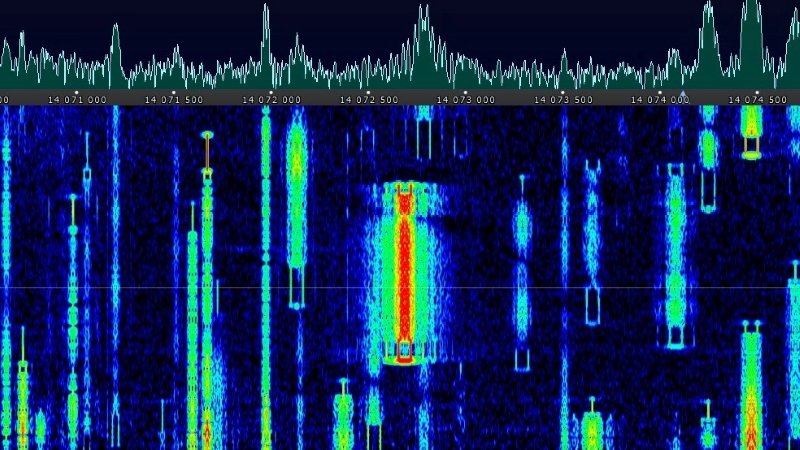
The most useful experience related to RF Hacking Hack Chat is not a single “aha” moment. It is the slow realization that wireless systems are living in the space around us, quietly negotiating convenience and risk. The first time someone opens an SDR waterfall display, the screen can look like a neon barcode designed by a caffeinated raccoon. There are spikes, bands, drifting shapes, bursts, and mystery blobs. At first, it is confusing. Then patterns emerge. A device transmits only when a button is pressed. A sensor chirps on a schedule. A public broadcast stays steady. Noise changes when electronics nearby turn on. Suddenly, the invisible becomes visible.
That experience changes how you see technology. A key fob is no longer just a plastic button. It is a transmitter with a design history, a protocol, a battery budget, a regulatory label, and a security model. A smart home sensor is not just a convenience; it is a tiny radio making promises about privacy and reliability. A Wi-Fi access point is not just a box with antennas; it is a shared medium where configuration choices decide whether the network behaves like a guarded lobby or a wide-open snack table.
One of the strongest lessons is humility. RF does not always behave the way beginners expect. Move an antenna a few inches and reception changes. Add a wall and the signal weakens. Change orientation and the pattern shifts. A device that works perfectly on a desk may become unreliable in a warehouse, basement, hospital, or apartment building packed with competing radios. This is why practical RF security cannot be separated from real-world testing. The environment matters. The installation matters. The antenna matters. The boring label on the device matters more than people want to admit.
Another experience is the importance of restraint. Modern tools make it easier to observe and analyze signals, but capability is not permission. A mature RF learner develops a habit of asking, “Am I allowed to do this? Could this affect someone else? Is there a safer lab method?” That mindset separates responsible research from reckless tinkering. It also makes the work more professional. Companies, schools, and communities benefit from researchers who can explain risk clearly without acting like every discovery must be turned into a dramatic exploit demo.
Community learning is the secret ingredient. In RF discussions, someone may understand antennas, another person knows embedded firmware, someone else knows wireless regulations, and another has experience with enterprise monitoring. Together, they build a more complete picture than any one person could create alone. That is the real value of the Hack Chat style: it turns scattered curiosity into shared understanding.
The best takeaway is simple: RF hacking, done responsibly, is not about mischief. It is about literacy. It teaches people how wireless systems work, where they fail, and how to design them better. It encourages makers to respect spectrum rules, engineers to build stronger products, and defenders to monitor the airwaves as part of the security landscape. The air is full of signals. The question is whether we understand them well enough to keep them useful, reliable, and safe.
Conclusion
RF Hacking Hack Chat represents more than a niche technical discussion. It reflects a broader shift in cybersecurity: wireless systems are now too common, too important, and too complex to ignore. Responsible RF research helps reveal how devices communicate, how protocols protect data, and how organizations can reduce risk before problems become expensive or dangerous.
The key is balance. Curiosity is good. Experimentation is good. Community learning is excellent. But RF work must stay legal, ethical, and controlled. The spectrum is shared infrastructure, not a playground without rules. Learn the fundamentals, use proper tools, respect boundaries, document your work, and focus on defensive outcomes. Do that, and RF hacking becomes what it should be: a smart, practical, and surprisingly fascinating way to make wireless technology safer.











