
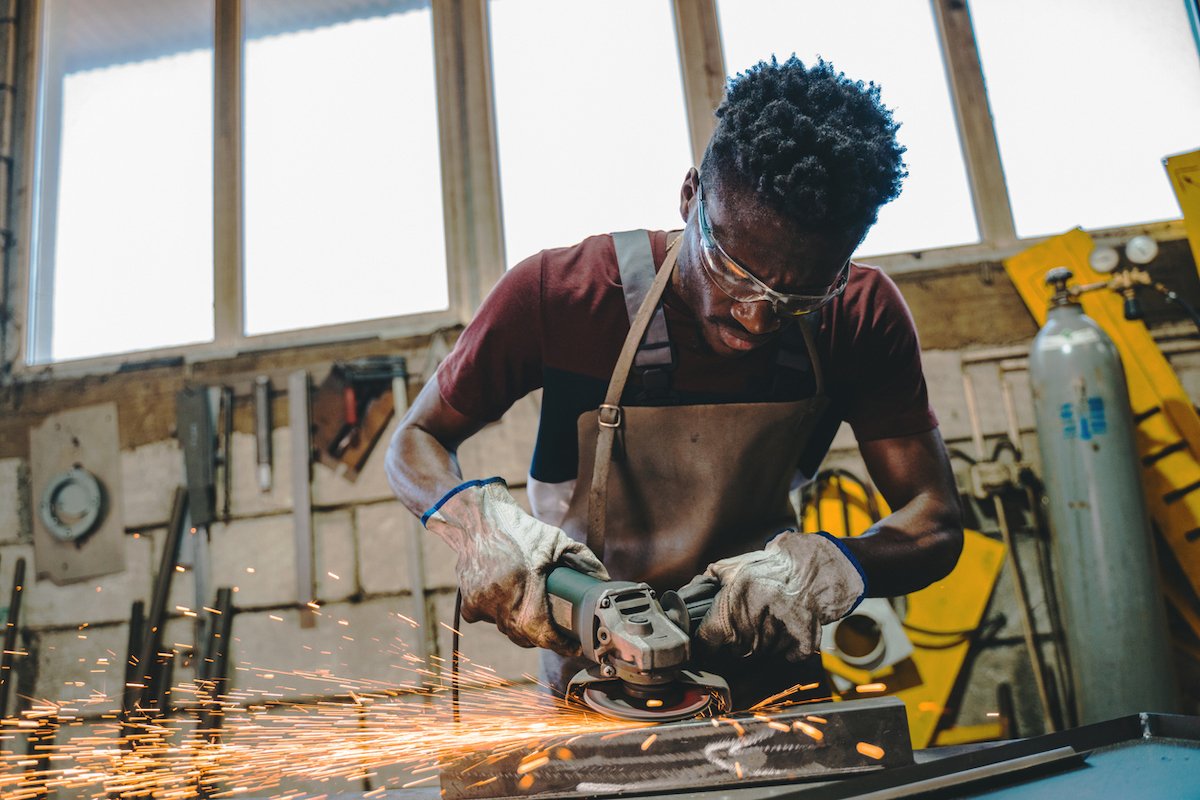
Welding looks simple from across the garage: bright light, a little smoke, a satisfying bead, and suddenly two pieces of metal are best friends forever. Up close, though, it is more like cooking, engineering, and controlled lightning having a very serious meeting. Choosing the right type of weld matters because the weld shape, joint design, metal thickness, load, heat input, and project environment all affect whether the finished piece becomes a strong structure or an expensive lesson with sparks.
This guide breaks down the nine common types of welds that beginners, DIYers, mechanics, fabricators, and curious homeowners are most likely to hear about: fillet, groove, plug, slot, surfacing, spot, seam, flash, and upset welds. Some are everyday shop heroes. Others live mostly in manufacturing, rail work, pipelines, or automated production lines. Understanding the difference helps you match the weld to the job instead of treating every metal problem like it can be solved with “more bead.” Welding, unfortunately, is not peanut butter.
Note: This article is for educational and general project-planning purposes. Welding can involve fire, fumes, ultraviolet radiation, electrical shock, burns, and structural risk. Always follow your welder manufacturer’s instructions, use proper personal protective equipment, provide ventilation, keep fire extinguishing equipment nearby, and consult qualified welding codes or a certified welder for load-bearing, pressure-containing, automotive safety, or structural work.
Weld Types vs. Weld Joints: The Difference Matters
Before diving into the nine types of welds, it helps to separate two commonly mixed-up ideas: weld types and weld joints. A weld type describes the shape or method of the weld itself. A weld joint describes how the pieces of metal are arranged before welding.
The five basic weld joint types are butt joints, lap joints, T-joints, corner joints, and edge joints. A fillet weld might be used on a T-joint. A groove weld might be used on a butt joint. A plug weld might be used on a lap joint. In other words, the joint is the handshake; the weld is how firmly the handshake is locked in.
For DIY welding, this distinction is practical. If you are building a small workbench frame, a fillet weld may be the right choice for square tubing. If you are joining two pieces of plate edge-to-edge and need high strength, a groove weld may be better. If you are repairing an old vehicle floor pan, a plug weld may mimic the function of a spot weld where a resistance spot welder cannot reach.
1. Fillet Weld
What It Is
A fillet weld is one of the most common types of welds. It joins two pieces of metal that meet at an angle, overlap, or form a T-shape. The finished weld usually has a triangular cross-section, sitting in the corner where the two pieces meet.
Fillet welds are popular because they are versatile, relatively fast, and usually require less edge preparation than groove welds. For many beginners learning MIG welding, the fillet weld is the first real “aha” momentright after the first “oops, I forgot how bright this arc is” moment.
When to Use a Fillet Weld
Use a fillet weld for T-joints, lap joints, corner joints, frames, brackets, shelves, gates, carts, railings, and general fabrication. It is a go-to choice when two pieces meet at roughly 90 degrees or when one piece overlaps another.
For example, if you are welding square tubing to make a garage workbench, fillet welds are likely to appear at most corners. If you are attaching a metal tab to a plate, a fillet weld around the tab may be the practical solution. Fillet welds can be continuous for more strength or intermittent when full-length welding is unnecessary and heat distortion needs to be reduced.
Best For
General fabrication, home shop projects, brackets, frames, T-joints, lap joints, and corner joints where full penetration is not required.
2. Groove Weld
What It Is
A groove weld is made by depositing weld metal into a prepared groove between two workpieces. The groove may be square, V-shaped, U-shaped, J-shaped, or beveled depending on the material thickness, access, strength requirement, and welding procedure.
Groove welds are often associated with butt joints, where two pieces meet edge-to-edge in the same plane. Because the weld can penetrate deeply into the joint, groove welds are commonly used when strength and complete fusion are priorities.
When to Use a Groove Weld
Use a groove weld when joining plates, pipes, structural members, pressure-related components, or thick metal sections where a surface-level weld will not provide enough strength. A groove weld is often the better choice when the joint must transfer significant load through the full thickness of the metal.
For instance, if two thick steel plates need to behave like one continuous plate, simply laying a bead on top may not be enough. Preparing a V-groove allows the weld metal to fill the joint more completely. The tradeoff is time: beveling, cleaning, fitting, root passes, fill passes, and cap passes can make groove welding feel like the long-form documentary version of welding.
Best For
High-strength butt joints, pipe welding, structural fabrication, thick plates, and projects requiring deeper penetration.
3. Plug Weld
What It Is
A plug weld joins overlapping pieces of metal by filling a round hole in the top piece with weld metal, fusing it to the lower piece. Think of it as a welded metal button, except it is not decorative and nobody should sew it onto a shirt.
Plug welds are often used as an alternative to spot welds when the equipment cannot reach the joint or when the material is too thick for typical spot welding. They are common in automotive repair, sheet metal work, and situations where access is available from one side.
When to Use a Plug Weld
Use plug welds for lap joints, automotive panel repair, floor pan replacement, brackets, and overlapping sheet metal. They are especially useful when you need to attach one piece of sheet metal to another while keeping the outside relatively clean.
For example, in vehicle restoration, a technician may drill holes in a replacement panel, clamp it over the support structure, and weld through those holes to recreate a factory-style attachment. The finished welds can then be ground flush if needed. The key is proper fit-up: gaps between layers weaken the weld and make the process messy, like trying to glue two crackers together while one is floating away.
Best For
Overlapping sheet metal, automotive repairs, one-sided access, and replacing spot welds where a spot welder is impractical.
4. Slot Weld
What It Is
A slot weld is similar to a plug weld, but instead of a round hole, the top piece has an elongated slot. The welder fills the slot with weld metal, joining the upper piece to the lower piece along a longer area.
The extra length gives a slot weld more contact area than a plug weld. More contact area can mean more strength, provided the weld is properly designed, cleaned, fitted, and executed. It also means more filler metal and more heat, so distortion needs to be managed carefully.
When to Use a Slot Weld
Use a slot weld when joining overlapping components that need more strength than a plug weld or spot weld can provide. Slot welds can be useful in metal fabrication, repair work, and applications where load needs to be spread over a longer section.
Imagine attaching a reinforcement plate to a larger steel member. A few round plug welds may hold it, but elongated slots can provide more weld length and distribute forces more effectively. However, slot welds should not be treated as magic strength coupons. The slot size, spacing, edge distance, and weld quality all matter.
Best For
Stronger lap joints, reinforcement plates, repair work, and overlapping materials requiring increased weld area.
5. Surfacing Weld
What It Is
A surfacing weld is different from most other weld types because it is not primarily used to join two pieces of metal. Instead, weld metal is deposited onto the surface of a workpiece to build it up, restore worn material, improve corrosion resistance, or add a tougher wear-resistant layer.
Surfacing includes build-up welding, overlay welding, cladding, and hardfacing. It is the welding world’s version of resurfacing a driveway, except the driveway may be a loader bucket, a shaft, a worn edge, or a piece of industrial equipment that has had a very rough Tuesday.
When to Use a Surfacing Weld
Use surfacing welds for repairing worn parts, filling damaged surfaces, restoring dimensions, reinforcing edges, and adding wear resistance. In farm, construction, mining, and maintenance work, hardfacing is commonly applied to components exposed to abrasion, impact, or metal-to-metal wear.
For example, the cutting edge of a bucket, a worn hinge area, or a machine component that has lost material can often be rebuilt with weld deposits and then ground or machined back to shape. The filler metal choice matters because a hardfacing rod designed for abrasion may not behave like a general-purpose structural electrode.
Best For
Surface restoration, build-up, hardfacing, wear protection, and repair of damaged metal components.
6. Spot Weld
What It Is
A spot weld is a resistance weld that joins overlapping metal sheets at small points. The process uses pressure and electrical current to generate heat at the contact area between the sheets. When done correctly, the metals fuse into a small weld nugget.
Spot welding is widely used in high-volume manufacturing, especially automotive production. If you have ever looked closely at a car body panel and seen rows of small circular weld marks, you have seen spot welds doing their quiet little job.
When to Use a Spot Weld
Use spot welding for thin sheet metal, automotive panels, appliance parts, cabinets, ductwork, and production environments where speed and repeatability matter. It is usually not the first choice for thick structural pieces or joints requiring a continuous seal.
In a home shop, spot welding may be useful if you have the right resistance spot welder and the joint is accessible from both sides. However, many DIYers substitute plug welds when restoring cars because a standard spot welder may not have enough reach for certain panels.
Best For
Thin overlapping sheet metal, automotive body work, appliance manufacturing, and fast repetitive production welds.
7. Seam Weld
What It Is
A seam weld is usually a resistance welding process that creates a continuous or nearly continuous weld along a joint. Instead of the small individual nuggets of spot welding, seam welding often uses rotating wheel electrodes to make overlapping welds in a line.
The result can be a leak-resistant seam, which is why this weld type is commonly associated with tanks, containers, drums, mufflers, and sheet metal assemblies. In simple terms, if spot welds are dots, seam welds are the dotted line that got promoted to full-time employee.
When to Use a Seam Weld
Use seam welding for overlapping sheet metal joints that need to resist leaks. Fuel tanks, fluid containers, metal drums, and certain automotive components are classic examples. Seam welding can also appear in specialized arc welding applications, though resistance seam welding is the common industrial method.
For DIY users, seam welds are less common because the equipment is specialized. If you are building a small decorative box, you may use MIG or TIG beads instead. But when manufacturing needs a fast, consistent, leak-resistant joint, seam welding earns its keep.
Best For
Leak-resistant sheet metal seams, tanks, drums, mufflers, containers, and high-volume production work.
8. Flash Weld
What It Is
A flash weld, often called flash butt welding, is a resistance welding process used to join ends of similar cross-section parts. The parts are clamped, electrical current creates intense heat at the joint, and pressure forges the heated ends together. Excess hot metal is expelled from the joint in bright flashes, which explains the name and also why this is not a “try it next to the cardboard box” situation.
Unlike many arc welds, flash welding typically does not use filler metal. It relies on heat, pressure, and controlled machine settings. The process is specialized and usually automated or machine-controlled.
When to Use a Flash Weld
Use flash welding for rails, pipes, rods, chains, wheels, rings, and production components where end-to-end joining is needed with strong, repeatable results. It is common in industrial and infrastructure applications, not casual garage projects.
Rail welding is a classic example. Long sections of rail require strong, continuous joints that can survive heavy loads and vibration. Flash welding can produce a high-integrity joint when performed with proper equipment and procedures.
Best For
Rail sections, pipe ends, rods, rings, chains, and industrial end-to-end joining.
9. Upset Weld
What It Is
An upset weld, or resistance butt weld, joins pieces by clamping them under pressure and passing current through the joint area. The resistance generates heat, and the pressure forces the softened metal together. The word “upset” refers to the forging action and deformation at the joint, not the emotional state of the welder after burning a hole through thin metalthough that is also common.
Upset welding is similar in concept to flash welding but is often used on smaller, lighter, or more uniform parts. It is commonly automated and produces consistent joints when the material size, pressure, current, and timing are controlled.
When to Use an Upset Weld
Use upset welding for wires, rods, tubes, rings, hoops, small shafts, and repetitive production parts. It is especially useful when components have similar cross-sections and need to be joined end-to-end without filler metal.
For example, steel hoops, wire products, and tubular rings may be resistance butt welded in production. The process is efficient, consistent, and well-suited to manufacturing environments where the same joint is made repeatedly.
Best For
Small end-to-end joints, rods, wires, rings, hoops, tubes, and automated production work.
How to Choose the Right Type of Weld
Start With the Joint Design
The joint design is your first clue. A T-joint often points toward a fillet weld. A butt joint in thick plate may call for a groove weld. An overlapping sheet metal joint may suggest a spot, plug, slot, or seam weld. If the metal pieces are not arranged properly, even a beautiful bead can fail. Welding is one of those crafts where looking good and being good are not always the same thing.
Consider Metal Thickness
Thin sheet metal behaves very differently from heavy plate. Thin material can burn through quickly, so spot welding, careful MIG welding, TIG welding, or plug welding may be appropriate depending on the project. Thick material often needs beveling, multiple passes, preheating, or a groove weld to achieve proper fusion.
Think About Strength and Load
Not every project needs maximum strength, but every project needs appropriate strength. A decorative plant stand does not face the same demands as a trailer repair, stair railing, pressure tank, or structural beam. For anything load-bearing or safety-related, follow applicable welding codes and consult a qualified professional.
Account for Access
Some welds require access from both sides. Resistance spot welding, for instance, typically needs electrodes on both sides of the work. Plug welds are useful when you only have access from one side. Groove welds may need room for edge preparation and torch angle. The best weld on paper is not always the best weld when the workpiece is wedged behind a bracket, under a car, or in the one corner of the shop where gravity has become personally hostile.
Control Heat Distortion
Welding adds heat, and heat moves metal. Long welds, high amperage, poor fit-up, and too many passes can cause warping. Intermittent fillet welds, tack welding, clamping, back-stepping, and controlled sequencing can help reduce distortion. Thin sheet metal is especially sensitive, so patience beats panic.
Safety Basics Before You Strike an Arc
Welding safety deserves more than a passing mention. At minimum, use a proper welding helmet with the correct shade, flame-resistant clothing, welding gloves, safety glasses, closed-toe leather footwear, and hearing protection when grinding or chipping. Keep flammable materials away from the work area, and remember that sparks travel with the confidence of toddlers in a grocery store.
Ventilation is equally important. Welding fumes can contain hazardous metals and gases depending on the base metal, filler metal, coating, paint, plating, and shielding gas. Never weld on unknown coated metal, sealed containers, fuel tanks, or galvanized material without proper preparation, ventilation, and expertise. A shiny bead is not worth a dangerous exposure.
Also keep fire prevention in mind. Clean the surrounding area, check both sides of walls or floors when sparks may pass through openings, and keep a suitable extinguisher nearby. After welding, inspect the area for smoldering material. The weld may be finished, but the hot little BBs hiding under the bench did not receive that memo.
Real-World Experience: Lessons From Choosing Welds the Practical Way
One of the biggest lessons in welding is that the “right weld” is rarely chosen by memorizing a chart alone. Charts help, but the real decision happens when you look at the metal, the joint, the load, the tools, and the consequences of failure. In a home shop, a fillet weld often becomes the default because it is straightforward and works for many brackets, frames, carts, and repair tabs. But over time, you learn that default does not mean universal.
For example, when building a small rolling welding cart, fillet welds on square tubing are practical and strong enough when the joints are fitted well. The tubing edges meet cleanly, the welds are easy to reach, and the load is predictable. But if you try to join two flat plates edge-to-edge with only a surface bead, the result may look fine while lacking deep fusion. That is where a groove weld makes more sense. Preparing the edges takes longer, but the weld has a better chance of becoming part of the full thickness of the material rather than just a decorative metal caterpillar sitting on top.
Automotive sheet metal teaches a different lesson: heat is sneaky. When replacing a floor patch or panel flange, plug welds can be more practical than trying to run a long bead. A continuous bead on thin sheet can warp the panel, burn through the edge, and create a wavy surface that looks like it lost an argument with a potato chip. Plug welds, spaced properly and cooled patiently, can attach panels securely while reducing distortion. The same idea applies to many thin-metal repairs: small controlled welds often beat one heroic pass.
Surfacing welds offer another practical lesson. Sometimes the job is not to join metal but to put metal back where time, rust, abrasion, or poor decisions removed it. Rebuilding a worn edge with weld beads can save a part that would otherwise be replaced. However, hardfacing is not just “use the hardest rod and win.” The base metal, wear type, preheat, cooling rate, and final shape all matter. A very hard deposit can crack if applied incorrectly or used in the wrong impact conditions.
Spot and seam welds also show the difference between shop repair and manufacturing. A factory can make hundreds of consistent spot welds because the machines control pressure, current, and timing. A DIYer with a MIG welder may instead use plug welds to recreate the attachment. The goal is not always to copy the factory process exactly; sometimes the goal is to achieve the function safely with the tools available.
Flash and upset welds are good reminders that not every weld belongs in the garage. They are excellent for specific production tasks, but they require specialized machinery and procedure control. Knowing when not to use a process is part of becoming better at welding. The smartest fabricator in the room is not the one who can name the most welds; it is the one who can look at a job and say, “This needs a certified procedure,” before sparks start flying.
The best experience-based advice is simple: fit-up first, cleanliness second, settings third, technique fourth, and ego last. Poor fit-up forces the weld to bridge gaps it was never meant to bridge. Dirt, paint, oil, rust, and mill scale can cause porosity and weak fusion. Wrong settings can turn good steel into either cold-lapped disappointment or molten Swiss cheese. Technique matters, but even a skilled welder struggles when the preparation is sloppy. Welding rewards patience. It does not reward rushing, guessing, or saying, “That should hold,” in the same tone people use before calling a tow truck.
Conclusion
Understanding the 9 types of welds helps you choose the right method for the job instead of relying on guesswork and extra filler metal. Fillet welds are everyday workhorses for frames and brackets. Groove welds provide deeper strength for butt joints and thick materials. Plug and slot welds are useful for overlapping metal, especially in repair work. Surfacing welds restore or protect worn parts. Spot and seam welds shine in sheet metal and manufacturing. Flash and upset welds belong mostly to specialized industrial joining.
The best weld is not always the biggest, prettiest, or loudest. It is the one that matches the joint, material, load, access, and safety requirements. When in doubt, slow down, clean the metal, check the fit, confirm the process, and remember: sparks are fun, but strong, safe welds are better.











