
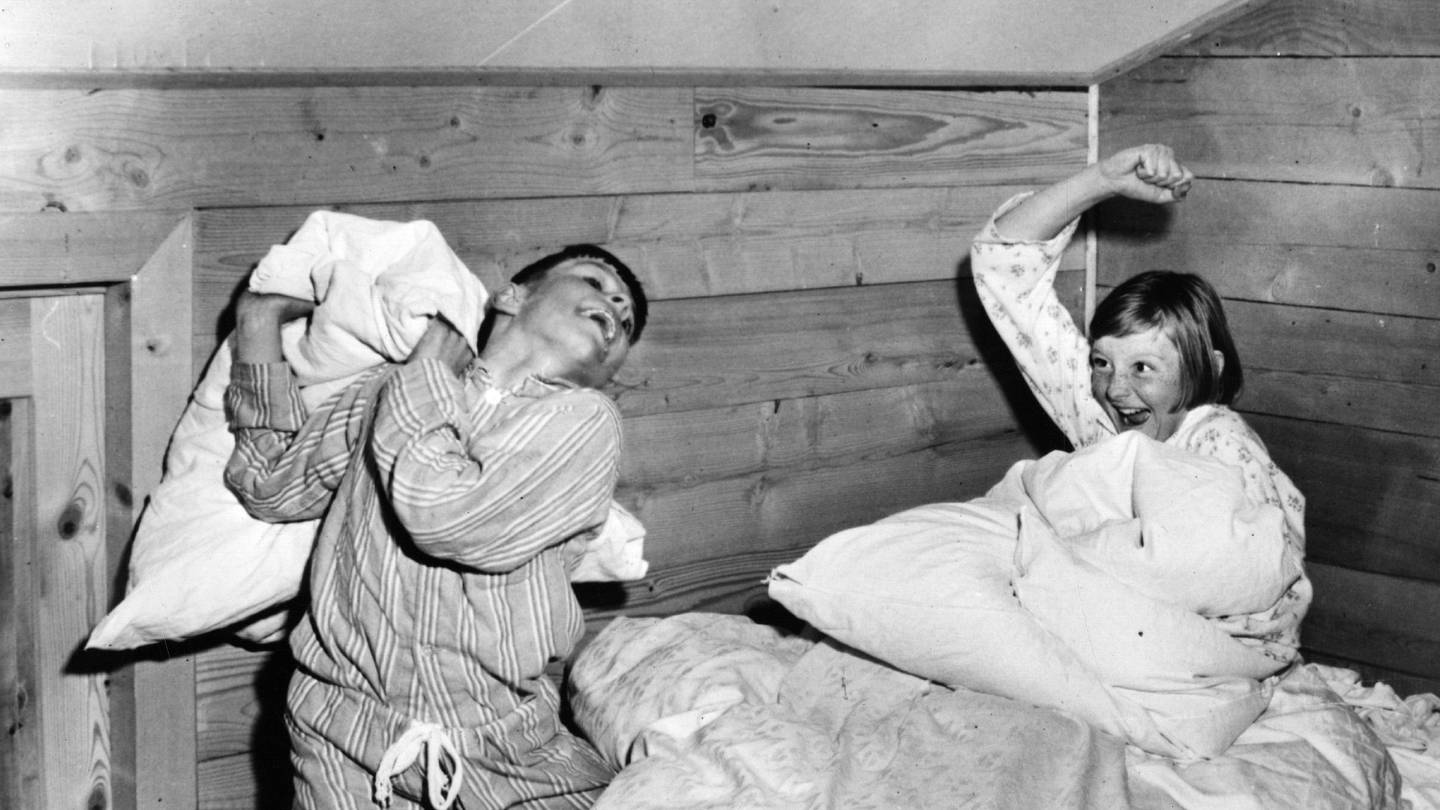
Pillow fights are supposed to be the least intimidating form of combat ever invented. Nobody hears the words “pillow fight” and imagines legal paperwork, police reports, concussions, court dates, municipal cleanup bills, or a parliament behaving like a sleepover that drank too much coffee. And yet, history has a way of taking innocent activities, adding poor judgment, and producing headlines that sound like rejected sitcom plots.
The funny thing about pillow fights is that they live in a strange cultural space. They are playful, childish, nostalgic, and usually harmless. A pillow is not a sword. It is not a baseball bat. It is the thing you blame when your neck hurts. But when hundreds of people gather in public, when someone stuffs hard objects into a pillowcase, when feathers clog city drains, or when lawmakers start wrestling over bedding, the softest object in the room can suddenly become the center of very serious trouble.
Below are eight real pillow fights that went wrong in memorable ways. Some caused injuries. Some led to arrests. Some produced cleanup costs. Some became legal oddities. All of them prove one timeless truth: never underestimate a crowd armed with bedding.
1. The West Point Pillow Fight That Ended With 30 Injuries
The most infamous modern pillow fight disaster happened in 2015 at the United States Military Academy at West Point. What began as an annual bonding tradition for first-year cadets turned into a chaotic scene that left 30 cadets injured, including 24 diagnosed with concussions. Other reported injuries included a broken nose, a dislocated shoulder, and a cheekbone fracture.
The event was meant to build camaraderie after a demanding summer training period. In theory, it was the kind of tradition that says, “We survived training; now let us whack each other with pillows like exhausted warriors in a dormitory.” In practice, some participants reportedly placed hard objects inside pillowcases. Suddenly, the “pillow” part of the pillow fight became a technicality.
West Point investigated the incident, and the tradition was later banned. The lesson was painfully obvious: the moment a pillowcase becomes a delivery system for helmets or other hard gear, the activity stops being goofy and starts being dangerous. A pillow fight should sound like laughter and feathers, not emergency evaluations and official statements.
2. The Providence Place Mall Pillow Fight That Became an Assault Case
In May 2026, a pillow fight inside a Macy’s store at Providence Place mall in Rhode Island turned into a police matter. According to local reporting, several juveniles were involved in what police described as an “aggressive” pillow fight after a verbal dispute. The situation escalated, and two 14-year-olds were arrested and charged with simple assault.
One person was treated at the scene for injuries. Reports also indicated that the suspects had already been banned from the mall before the incident. That detail gives the story a classic “this was not their first customer-service rodeo” flavor.
This case shows why location matters. A pillow fight at home among willing friends is one thing. A pillow fight in a department store, around shoppers, merchandise, security guards, and people who absolutely did not sign up for surprise bedding combat, is another. Public spaces come with rules, property concerns, and bystanders. When horseplay turns into intimidation or injury, the joke ends quickly.
3. The New York Pillow Fight Arrest That Hit the Wrong Target
Public pillow fights became a flash-mob trend in the late 2000s, with crowds gathering in parks and plazas for International Pillow Fight Day. New York City, being New York City, naturally brought energy, cameras, chaos, and at least one arrest.
In 2009, during a large pillow fight event near Wall Street, a woman was reportedly arrested after hitting a police officer with a pillow. On the surface, that sounds like the kind of sentence a city lawyer would read twice to make sure the coffee was working. But the principle is simple: even if the object is soft, striking an officer during a public event can become a serious legal problem.
The broader event may have been joyful, but the arrest put a damper on the feather-filled festivities. It also became a useful warning for future flash mobs: consent matters. So does common sense. Hitting your friend with a pillow is one thing. Hitting a police officer during a crowded public gathering is a fast way to turn whimsy into booking paperwork.
4. Detroit Police Confiscated Pillows Before the Fight Began
In 2009, Detroit police stopped a planned pillow fight at Campus Martius Park before it even got started. Participants arrived expecting a fluffy public battle. Instead, police confiscated pillows and sent people home. The concern was not necessarily that adults were going to destroy one another with bedding. Officials worried about cleanup, crowd control, and public order.
It may sound heavy-handed to seize pillows in a park. After all, there are worse things to carry downtown than a cushion. But from the city’s point of view, a large unsanctioned gathering can create headaches: feathers everywhere, blocked pathways, confused pedestrians, and the possibility that someone will push the joke too far.
The Detroit incident became a mini-symbol of the tension between spontaneous public fun and city management. Flash mobs look effortless online. In real life, somebody has to clean the feathers, redirect traffic, answer complaints, and explain why a business district briefly looked like a goose exploded.
5. The Vermont Pillow Fight That Led to a Court Date
Burlington, Vermont, also joined the 2009 pillow-fight weirdness. A Facebook-organized event drew around 50 participants and reportedly lasted only a couple of minutes before police intervened. One organizer was cited for disorderly conduct, creating the wonderfully odd phrase “pillow fight legal case.”
The situation later softened. Authorities ultimately did not pursue the charge, but the incident still made news because it highlighted how quickly harmless group fun can collide with disorderly conduct laws. No major property damage or injuries were reported, which makes the whole thing feel like a courtroom sketch drawn with feathers.
Still, the Vermont story matters because it shows that legality is not only about whether an activity is dangerous. It can also depend on permits, public disruption, police discretion, and whether a crowd is behaving in a way that blocks normal use of a public space. Sometimes the trouble is not the pillow. It is the crowd around the pillow.
6. San Francisco’s Valentine’s Day Pillow Fights Became a Cleanup Problem
San Francisco has hosted annual Valentine’s Day pillow fights that attracted hundreds of participants. The romantic idea was simple: instead of dinner reservations and awkward small talk, people could gather in a plaza and joyfully smack strangers with pillows. Love is complicated. Feathers are simpler.
The aftermath, however, was less adorable. City cleanup crews had to deal with piles of feathers, synthetic stuffing, and debris. Reports over the years noted cleanup costs around $5,000 for some events. In 2009, rainy conditions made the mess worse when wet feathers clogged drains and contributed to flooding concerns. In 2015, one person was reportedly knocked unconscious after slipping on feathers.
This is the part of pillow fights that Instagram does not show: the morning after. Feathers that look magical in slow-motion video become slippery trash on pavement. Wet stuffing sticks to everything. Public works employees inherit the party no one invited them to. A pillow fight can be fun for one hour and annoying for a city for days.
7. The Australian Parliament Pillow Fight of 1914
In 1914, the Australian House of Representatives reportedly descended into a disorderly scene involving pillows and blankets during an all-night parliamentary session. The majority party had arranged bedding so members could rest during the long proceedings. Opposition members, apparently less blessed by the linen fairy, took issue with the setup.
Archival reports described lawmakers fighting over pillows and blankets, with the scene compared to a “battle royal” and “nursery days.” Imagine a legislative chamber where the usual weapons are speeches, procedural delays, and stern facial expressionsthen suddenly the tools of conflict include blankets.
The parliamentary pillow fight is funny because it makes powerful adults look wonderfully human. It is also serious because it shows how quickly frustration, exhaustion, and unfair treatment can turn a formal institution into a school dormitory at midnight. Democracy may survive arguments over policy, but apparently bedding distribution is where civilization begins to wobble.
8. The Fatal Pillow Fight Reported in 1916
Not every troubling pillow-fight story is comic. In 1916, Australian newspaper archives reported a fatal accident involving a teenage girl named Mary Jane Cook, who had been helping make beds when a pillow fight broke out. The account said she received a light blow during the play and later died, with the case becoming the subject of a coroner’s inquiry.
The historical report is brief, and modern readers should treat old newspaper accounts with care. Medical understanding, reporting standards, and available details were very different a century ago. Still, the incident is a sobering reminder that even ordinary play can carry risk when people are standing on beds, moving quickly, near furniture, or unaware of underlying health factors.
This does not mean pillow fights are secretly terrifying. It means that “usually safe” is not the same as “risk-free.” The rare serious case is precisely why people should keep playful roughhousing away from hard furniture, stairs, glass, lamps, and anyone who does not want to participate.
Why Pillow Fights Go Wrong
Most pillow fights are harmless because the rules are informal but understood: use a soft pillow, stop when someone asks, avoid the face, and do not swing like you are auditioning for a medieval siege. Trouble begins when those invisible rules disappear.
Bad objects make soft games dangerous
The West Point case became dangerous because some pillowcases were reportedly loaded with hard objects. That changes the nature of the activity completely. A pillow fight depends on softness. Remove the softness, and you remove the joke.
Public spaces add legal pressure
New York, Detroit, Burlington, Providence, and San Francisco all show the same pattern: once a pillow fight enters a public place, it becomes a public-order issue. Even if participants are laughing, police and city officials must think about bystanders, cleanup, injuries, blocked pathways, property damage, and liability.
Crowds magnify small mistakes
One pillow bursting at home is a vacuuming problem. Five hundred pillows bursting downtown is a public works problem. One overenthusiastic swing in a bedroom is a scolding. One overenthusiastic swing in a store can become an assault allegation.
Experience Notes: What These Pillow Fights Teach Us
After reading enough pillow-fight incidents, one experience-based lesson stands out: the pillow is rarely the real problem. The real problem is the setting. A living room with space, willing participants, and a clear “stop” rule is very different from a crowded mall, a military courtyard, a public plaza, or a parliamentary chamber full of sleep-deprived adults. The same action changes meaning depending on where it happens and who is affected.
For parents, the takeaway is not to ban every pillow fight like the family home is a courtroom waiting to happen. The better approach is to make the environment safe. Move the lamps. Keep kids off high beds. Make sure no one is swinging near glass, stairs, sharp furniture, or younger children who may not understand the game. A quick reminder“soft pillows only, no head shots, stop means stop”can prevent most problems without turning fun into a lecture series.
For schools, camps, and youth organizations, the West Point incident is the big warning label. Traditions can be meaningful, but traditions also need supervision and boundaries. When a group activity is framed as a rite of passage, some people may push harder than expected to prove toughness, impress friends, or avoid looking weak. That is when playful culture can slide into hazing culture. The safest traditions are the ones where everybody knows the limits before the first pillow flies.
For city event organizers, San Francisco and Detroit offer a practical lesson: cleanup is part of the event, not an afterthought. Feathers look charming until they are wet, slippery, and stuck in storm drains. Any large public pillow fight needs rules about synthetic-fill pillows, cleanup volunteers, trash bags, clear start and end times, and coordination with local authorities. A flash mob may feel spontaneous, but the city bill afterward is very real.
For ordinary participants, the best rule is simple: do not surprise people who are not playing. Consent is the difference between fun and confrontation. That matters in homes, stores, parks, dorms, and public squares. A person holding a shopping bag in Macy’s is not automatically a pillow-war combatant. A police officer managing a crowd is not the final boss. A stranger walking through a plaza may not appreciate being drafted into your comedy sketch.
And finally, there is the great pillow-fight paradox: the sillier an activity seems, the less people plan for it. That is exactly why things go wrong. Nobody thinks, “Before this pillow fight, we should discuss liability, drainage, crowd movement, emergency response, and whether Uncle Dave is about to swing a memory-foam brick like he is defending a castle.” But maybe they shouldat least a little.
Conclusion
Pillow fights are funny because they turn something soft and sleepy into something energetic and ridiculous. They belong to childhood memories, sleepovers, hotel-room jokes, and the strange human need to make harmless chaos out of household objects. But the stories above show that even fluffy fun can cause serious trouble when people ignore safety, location, consent, and cleanup.
From West Point’s concussions to San Francisco’s feather bills, from mall arrests to parliamentary blanket battles, these incidents remind us that “just playing around” is not a magic shield against consequences. The good news is that the formula for a safe pillow fight is not complicated: keep it soft, keep it consensual, keep it away from hazards, and never put anything inside a pillowcase that would make an emergency-room doctor sigh.
Note: This article is based on publicly reported incidents and archival accounts, rewritten in original language for web publication. Source links are not inserted in the article body to keep the HTML clean for publishing.












