
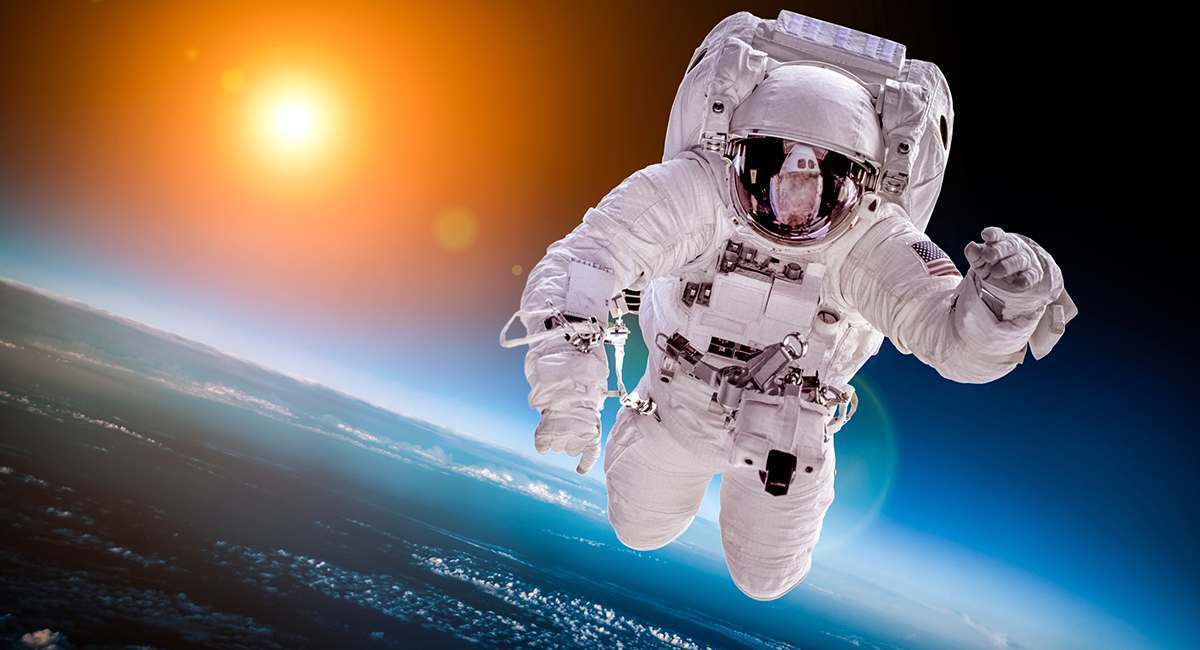
Mass space travel sounds like the ultimate vacation upgrade. Skip the airport lounge, dodge the middle seat, and watch Earth shrink into a glowing blue marble while you sip recycled water from a bag. Romantic, right? Well, not so fast, Captain Optimism. The dream of ordinary people boarding rockets the way we board planes is exciting, but the practical version may feel less like “cosmic luxury cruise” and more like “expensive camping trip inside a very loud thermos.”
The idea of mass space travel has been polished by movies, billionaire launch events, and glossy animations of floating hotels with panoramic windows. Yet real human spaceflight is not a theme park ride with better lighting. It is physically stressful, mentally weird, technically fragile, and wildly expensive. Even astronautshighly trained professionals who do not panic when a checklist has 900 stepsdeal with radiation, motion sickness, bone loss, isolation, cramped quarters, and the constant knowledge that the nearest repair shop is not exactly around the corner.
So before we all start packing moon sandals and arguing over who gets the window seat to Mars, let’s look at the unglamorous side of space tourism and mass space travel. Here are six reasons why, for most people, it would completely suck.
1. Your Body Was Built for Earth, Not a Floating Metal Can
Human beings are wonderfully adaptable, but we are still Earth creatures. We evolved under gravity, surrounded by air, water, magnetic protection, plants, dirt, weather, and the comforting possibility of ordering tacos. Space offers none of that by default. Everything your body takes for granted has to be engineered, monitored, filtered, recycled, and backed up by several systems with intimidating acronyms.
Microgravity Sounds Fun Until Your Muscles Quit the Group Chat
Floating looks adorable in short videos. People laugh, snacks drift by, and someone inevitably spins like a confused rotisserie chicken. But microgravity is not just a party trick. Without the daily resistance of gravity, muscles do not have to work as hard. Bones, especially weight-bearing bones such as hips and spine, can lose density over time. Astronauts exercise for hours to fight these changes because space is basically a gym membership you cannot cancel.
For mass space travel, this becomes a serious problem. A short suborbital hop may not ruin anyone’s skeleton, but longer commercial trips, orbital hotels, lunar stays, or Mars transfers would require passengers to maintain physical conditioning. Imagine paying a fortune for your dream vacation, only to discover that your itinerary includes “mandatory treadmill time while strapped down like luggage.” Not exactly the spa package you pictured.
Space Can Mess With Your Eyes and Fluids
On Earth, gravity politely pulls fluids downward. In space, bodily fluids shift toward the head. This can contribute to facial puffiness, pressure changes, and eye issues associated with spaceflight-associated neuro-ocular syndrome, often shortened to SANS. Some astronauts have experienced vision changes after long-duration missions. For a future space tourist, “I went to orbit and came back needing stronger glasses” is a souvenir with poor resale value.
2. Space Motion Sickness Could Turn the Trip Into a Vomit Ballet
Motion sickness on Earth is already annoying. A bumpy bus ride can defeat even the proudest stomach. Now imagine your inner ear, eyes, and brain all trying to understand why the ceiling is now the floor and your lunch is drifting past your face with suspicious confidence.
Space adaptation syndrome is a real challenge during the first days of weightlessness. Symptoms can include nausea, disorientation, headache, drowsiness, and general misery. Some people adapt quickly; others spend precious mission time feeling like they accidentally swallowed a carnival ride. This is not ideal when tickets cost more than a suburban house and the brochure promised “awe-inspiring views,” not “bring extra bags.”
Mass Travel Means Mass Human Reactions
Astronaut crews are carefully selected, medically screened, and trained. Mass space travel would involve a broader slice of humanity: retirees, influencers, honeymooners, tech executives, science fans, and that one guy who ignores every safety briefing because he “watched a documentary once.” The more passengers you add, the more likely you are to get a floating parade of motion sickness, anxiety, dehydration, and embarrassing questions about where the restroom is.
Airlines already struggle when one passenger reclines too aggressively. Now picture dozens or hundreds of people adapting to microgravity at once. The first mass-market orbital cruise may need less champagne and more anti-nausea medication.
3. The Bathroom Situation Is Not Exactly Five-Star
Let’s address the glamorous elephant in the spacecraft: going to the bathroom in space. On Earth, toilets are simple because gravity does unpaid labor. In space, gravity has left the building. Waste management requires suction, airflow, seals, straps, procedures, training, and a level of humility usually reserved for assembling furniture with missing screws.
Modern spacecraft toilets are engineering marvels. They are also reminders that space travel turns basic human activities into technical operations. For trained astronauts, this is part of the job. For casual tourists, it could be the moment they realize space is not a luxury resort; it is a hostile environment wearing a very expensive seatbelt.
Water Recycling Is Brilliant, But Psychologically Weird
Long-duration spaceflight depends on recycling. The International Space Station has demonstrated advanced water recovery systems because hauling huge amounts of water from Earth is impractical and expensive. Technically, this is amazing. Emotionally, some passengers may need a minute.
Future mass space travelers would need to accept that air, water, and waste are part of a closed-loop system. The phrase “yesterday’s humidity is today’s hydration” may be scientifically reasonable, but it probably will not appear on a luxury travel poster. Space requires people to become comfortable with systems that are efficient, safe, and deeply unromantic.
4. The Cabin Fever Would Be Astronomical
Space is huge. Spacecraft are not. That contrast is almost funny until you realize you may be sharing a compact sealed habitat with strangers, recycled air, constant machine noise, limited privacy, and no option to step outside for a calming walk unless you own a spacesuit and a terrifying amount of training.
Isolation and confinement are major human-spaceflight concerns. Astronauts train for teamwork, communication, stress management, and living in extreme environments. Mass space travel would have to solve the same issue for ordinary passengers who may not enjoy being trapped in a cabin with someone chewing loudly in zero gravity.
Personal Space Becomes a Luxury Item
On Earth, we complain about small airplane seats. In space, volume equals mass, and mass equals money. Bigger cabins require bigger rockets, more fuel, stronger systems, and higher costs. That means early space tourism vehicles and orbital habitats may be less “cosmic cruise ship” and more “high-tech bunk room with a window.”
Even if the view is spectacular, people still need sleep, hygiene, quiet, and alone time. Without enough private space, tiny annoyances can become mission-level drama. Someone’s floating sock. Someone’s music. Someone’s habit of narrating every sunrise, despite the fact that orbital travelers may see many sunrises in a single day. Space may be infinite, but patience is not.
5. Radiation Is the Invisible Party Crasher
Earth protects us with a magnetic field and atmosphere. Space removes much of that protection, which means travelers can be exposed to higher levels of ionizing radiation from galactic cosmic rays and solar particle events. Radiation risk is one of the biggest health concerns for deep-space missions, especially beyond low Earth orbit.
This is not the kind of danger you can solve by wearing sunscreen and a bold hat. Shielding adds weight, and weight is expensive. Solar storms can be unpredictable. Deep-space missions require careful monitoring, storm shelters, mission planning, and risk management. For mass space travel, this creates a hard truth: the farther people go, the more complicated passenger safety becomes.
Short Trips Are Easier; Big Dreams Are Harder
A brief suborbital flight has a very different risk profile from a lunar vacation or a Mars cruise. The public often talks about “space travel” as if every trip is the same. It is not. A few minutes above the atmosphere is not the same as weeks in deep space. The longer the trip and the farther the destination, the more serious the radiation planning becomes.
This matters because mass space travel marketing tends to sell the wonder, not the fine print. People imagine floating hotels, moon selfies, and Mars postcards. The operational reality includes dosimeters, shielding tradeoffs, medical screening, solar weather monitoring, and informed consent forms that may cause your vacation mood to exit through the nearest airlock.
6. Space Traffic, Space Junk, and Launch Risk Are Buzzkills
Space may look empty, but Earth orbit is increasingly crowded. Satellites, spent rocket bodies, fragments, and tiny debris pieces move at extremely high speeds. Even a small object can damage spacecraft if it hits at orbital velocity. NASA considers micrometeoroids and orbital debris a major risk for human spaceflight programs.
Mass space travel would add more launches, more vehicles, more stations, more docking events, and more chances for something to go wrong. Space traffic management is already a complex issue. Scaling up human passengers makes it even more important because the stakes are not just hardware and insurance claims; they are lives.
Launch and Reentry Are Not Casual Commutes
Rockets are controlled explosions with seating. That sentence may not appear in the brochure, but it captures the mood. Launch involves extreme acceleration, vibration, noise, and risk. Reentry involves heat, speed, and precision. Commercial passengers may be informed about known and unknown hazards, but signing a form does not magically turn spaceflight into a bus ride.
Air travel became safe through decades of engineering, regulation, standardization, training, and painful lessons. Spaceflight is still young by comparison. For mass space travel to become routine, vehicles would need extremely high reliability, rapid rescue capability, medical support, debris tracking, traffic coordination, and passenger systems designed for people who are not elite astronauts. That is a tall order, and the order comes with a rocket engine attached.
Why People Will Still Want to Go Anyway
Despite all of this, people will still line up for space. Of course they will. Humans are curious, stubborn, and easily tempted by views that make our problems look tiny. Seeing Earth from above may be emotionally life-changing. The overview effect, the sense of awe reported by many astronauts, is powerful. Space travel can inspire science, technology, environmental awareness, and a deeper understanding of our planet.
The point is not that space travel is bad. The point is that mass space travel is often imagined as clean, easy, and glamorous when the real version would be difficult, risky, uncomfortable, and expensive. It may improve over time, just as aviation improved. But the early era of popular space tourism will probably be less like a relaxing vacation and more like an extreme expedition with better branding.
Extra Experience Notes: What Mass Space Travel Might Actually Feel Like
Imagine the experience from the passenger’s point of view. The excitement begins long before launch. You would likely go through medical checks, safety training, emergency drills, suit fitting, and repeated reminders that space is not impressed by your bucket list. At first, that may feel thrilling. You are not just taking a trip; you are joining a tiny club of people who have left Earth. Then the practical details begin to pile up.
Training would probably include how to buckle in, how to breathe during high acceleration, how to avoid bumping into equipment, how to use the toilet, how to handle nausea, how to respond to alarms, and how not to become a human projectile inside the cabin. That last part is important. In microgravity, every push has consequences. A casual movement can send you drifting into a wall, a crewmate, or a very expensive panel that was not designed to meet your forehead.
Launch day would be unforgettable, but not necessarily comfortable. The rocket would shake, roar, and press your body into the seat. Some passengers might feel pure joy. Others might wonder, with excellent timing, whether they left the stove on. Once weightlessness begins, the cabin may erupt in laughter, gasps, floating objects, and at least one person discovering that their stomach has filed a formal complaint.
The first view of Earth would likely be magnificent. Blue oceans, white clouds, thin atmosphere, and the sudden realization that every argument on the internet is happening on a small glowing ball. For a while, awe would win. People would take photos, cry, laugh, and use words like “indescribable” because sometimes the dictionary simply clocks out.
Then the ordinary discomforts would return. Sleeping in space can feel strange because there is no natural up or down. Eating requires patience because crumbs are not cute when they float into equipment. Showering is limited or impossible in the familiar sense. Privacy is scarce. Noise from fans and life-support systems may be constant. The air may have a particular spacecraft smell. Your schedule may be controlled. Your body may feel congested. Your back may ache. Your sense of direction may temporarily resign.
On a longer trip, the novelty could fade into routine. The same walls, the same people, the same procedures, the same packaged food, the same need to conserve resources. A passenger who expected freedom might discover that space travel is actually a life of rules. Do not waste water. Do not block vents. Do not touch that switch. Secure loose items. Exercise now. Report symptoms. Follow the checklist. Space is beautiful, but it is also bossy.
Returning to Earth would bring another intense chapter. Reentry heat, deceleration, vibration, and landing forces are not gentle spa treatments. After landing, gravity would return like an old friend who hugs too hard. Depending on the trip length, passengers could feel weak, dizzy, heavy, or disoriented. Even walking might feel oddly dramatic. The planet would smell rich, the air would feel thick, and a normal toilet might look like civilization’s greatest invention.
That is the strange truth about mass space travel. It would be amazing and annoying at the same time. It would expand human imagination while shrinking personal comfort. It would give ordinary people extraordinary views, then ask them to sleep in a bag, drink recycled water, and share a tiny cabin with someone who keeps losing their socks in orbit. Space may be the future, but the future clearly needs better legroom.
Conclusion: Space Is Amazing, but Mass Space Travel Needs a Reality Check
Mass space travel is one of the most exciting ideas of the modern age, but excitement should not erase reality. Human bodies struggle in microgravity. Space motion sickness can wreck the mood. Bathrooms are complicated. Privacy is limited. Radiation is serious. Orbital debris and launch risks are not science-fiction decorations; they are engineering problems with real consequences.
Still, none of this means humanity should stop exploring. It means we should be honest about what exploration requires. The dream of space tourism will become more realistic only when safety, comfort, cost, medicine, sustainability, and traffic management improve together. Until then, mass space travel may be inspiring, historic, and unforgettablebut also cramped, stressful, nauseating, and deeply inconvenient. In other words, it may be the most expensive way ever invented to miss your couch.











