
Every now and then, the internet collectively stops doomscrolling, blinks twice, and says the same thing in perfect harmony:
“Woah, dude.” That’s the exact energy behind the viral ‘Woah Dude’ group that Bored Panda recently highlighted in their feature
on 50 mesmerizing, hilarious, and downright reality-bending images shared by users from all over the world.
Think of it as a perfectly curated feed of moments that sit somewhere between a science documentary, a trippy art gallery, and the
weirdest dream you’ve ever had after eating pizza at midnight. From mind-bending clouds and hyper-realistic paintings to red cabbage
that looks like a portal to another dimension, these posts don’t just make you chuckle—they make you pause and look twice.
In this article, we’ll break down what the ‘Woah Dude’ phenomenon is all about, why we love sharing these surreal moments,
and how communities like Bored Panda’s audience and the r/woahdude subreddit became go-to destinations for anyone craving a daily
dose of “wait… is that even real?”
What Is The ‘Woah Dude’ Group, Anyway?
The ‘Woah Dude’ community started on Reddit back in 2009 and has grown into a massive online group with millions of members,
all united by one thing: a love for visually striking, surreal, or hypnotic content.
The moderators describe it as a home for images and videos that feel psychedelic, reality-distorting, or
just plain mind-melting.
It’s not just “anything cool.” The rules are surprisingly strict. Posts are expected to be:
- Mesmerizing — the kind of visuals you can stare at for way too long.
- Surreal or abstract — bending or twisting reality in some way.
- Pattern-heavy or geometric — think fractals, symmetry, recursion, optical illusions.
- Vivid or high contrast — punchy colors, strange textures, or extreme details.
Notably, the mods actively discourage “cheap wow.” Extreme sports stunts, rare talents, or one-in-a-million shots might be impressive,
but if they’re not visually hypnotic, they don’t really fit the vibe. The goal is less “that’s awesome, bro” and more
“I feel like I just unlocked a new layer of reality.”
How Bored Panda Turned ‘Woah Dude’ Moments Into a Visual Feast
Bored Panda is known for curating the internet’s strangest, sweetest, and most shareable content, and their feature on
“50 Times People Found Something So Amusing, They Just Had To Share In The ‘Woah Dude’ Group” is basically a highlight reel
for the ages.
The collection pulls together some of the most striking posts from the community:
- A cross section of purple cabbage that looks like a neon, geometric tunnel into another universe.
- Nature scenes where clouds, light, and timing line up so perfectly that the sky resembles CGI concept art.
- Hyper-realistic paintings of small-town America so detailed you’d swear they were high-resolution photos.
- Long-exposure images of thunderstorms, eclipses, or night skies that turn ordinary weather into cosmic art.
- Macro photographs of animals, shells, or plants that reveal patterns you’d never notice at a glance.
Bored Panda’s editors also highlight the artists and Redditors behind the posts, often sharing usernames, captions,
and top comments. That sense of community is part of what makes the feature so bingeable: you’re not just scrolling images,
you’re peeking into a global conversation about what counts as “trippy,” “beautiful,” or “woah-worthy.”
Why Our Brains Love ‘Woah Dude’ Moments
It’s not just you—our brains are wired to light up when we see something novel, surprising, or
slightly hard to process. Research on viral content and social media behavior shows that people are more likely to share
posts that trigger strong emotions like awe, joy, or amusement.
Studies on the psychology of sharing suggest a few key reasons:
- Awe grabs attention. When something feels larger than life—like a vast sinkhole, a perfectly aligned planetary diagram, or a never-ending fractal pattern—we feel small, curious, and kind of thrilled all at once.
- Humor and surprise boost engagement. Content that makes people laugh or say “no way that’s real” is more likely to be saved, reshared, and commented on.
- We like to look interesting and “in the know.” Sharing something weird or visually stunning is a way of saying, “Look at this cool thing I found; I have good taste in internet content.”
Academic work on memes and humorous posts even suggests that funny or visually surprising content can drive engagement much
more effectively than dry, informational posts. That’s true for brands trying to catch attention and for ordinary users
showing off their find of the day.
From Subreddit to Viral Article: How Communities Keep Things Fresh
The magic recipe here is collaboration. The ‘Woah Dude’ community supplies a constant stream of original images, artworks,
and perfectly timed photos. Bored Panda curates the best of them into a scroll-friendly package, complete with commentary,
context, and witty captions.
At the same time, the subreddit’s moderation team sets high quality standards. They encourage:
- Descriptive titles that explain what viewers are seeing or what makes it special.
- Clear crediting of sources and original artists.
- Warnings if content might trigger epilepsy, vertigo, or “bad vibes.”
- Discouraging low-effort reposts or stolen content.
That combination of user creativity, editorial curation, and thoughtful guidelines keeps the feed from turning into just
another chaotic meme dump. Instead, it feels closer to a living, breathing digital art gallery where everyday people
accidentally submit masterpieces.
Types of ‘Woah Dude’ Content That Always Hit
Scroll through the gallery and you’ll notice a few recurring categories. Even if you can’t predict which specific post
will go viral, these themes tend to perform incredibly well because they tap into universal human fascinations.
1. Nature Looking Unbelievably Extra
We expect nature to be beautiful. We don’t necessarily expect it to look like a scripted sci-fi movie.
That’s why shots like a “perfectly aligned cloud,” an impossible-looking thunderstorm over Colorado, or a
moss-covered turtle that resembles a mythical creature tend to blow up online.
Photos of sinkholes, eclipses, auroras, and rare weather phenomena combine scientific reality with dreamlike visuals.
They give us proof that the real world can be just as wild as anything AI-generated—sometimes more.
2. Everyday Objects Turned Optical Illusions
The famous cabbage that looks like a portal, a starfish that resembles a creature from a metal album cover,
or coffee foam that shapes itself into galaxies—these images mess with our expectations.
Cognitive science research shows that our brains love patterns but get especially excited when something almost fits a
pattern we know, yet not quite. That “almost, but not really” effect is deeply satisfying and slightly unsettling,
which is prime “woah dude” territory.
3. Hyper-Realistic or Surreal Artwork
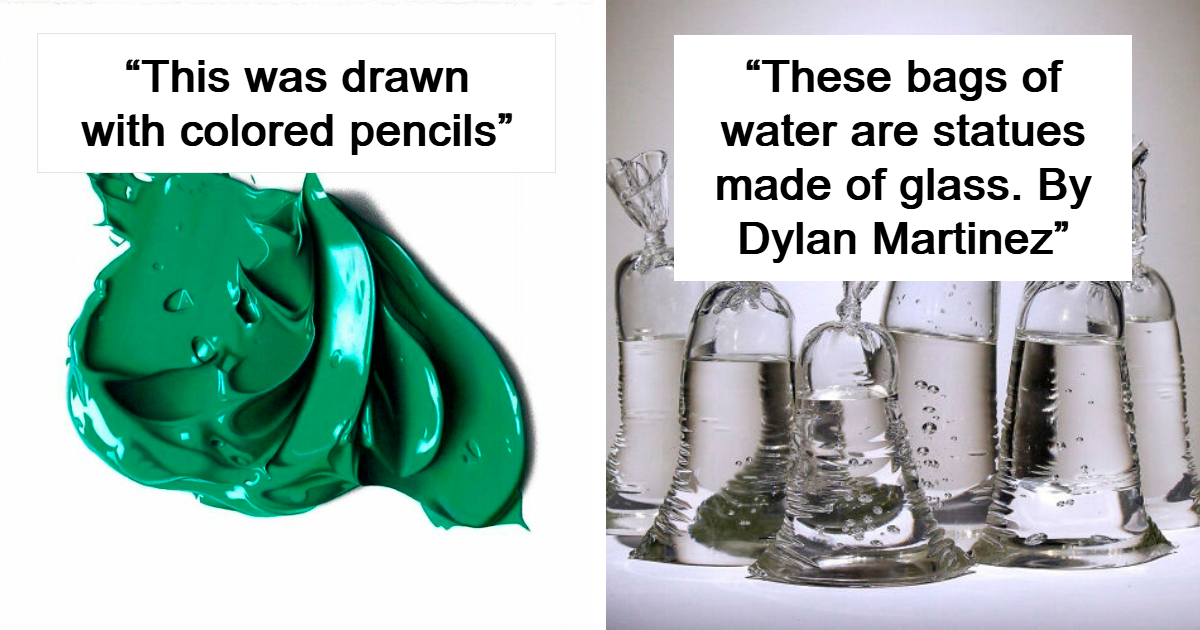
Some posts in the Bored Panda gallery feature artists who recreate reality so precisely it loops around into unreality.
Hyper-realistic paintings of diners, gas stations, and quiet streets feel more detailed than the scenes they’re copying.
On the flip side, psychedelic murals, portal-themed graffiti, and intricate geometric patterns make walls and alleys look like
entrances to other dimensions.
These works remind us that the line between photography, painting, and digital art is thinner than ever. And for viewers,
trying to guess “photo or painting?” becomes a game in itself.
4. Cosmic Perspective Shots
Another fan favorite: all things space. Planet alignments drawn along their orbital curves, detailed composite images
of solar eclipses, or stitched-together maps of Mercury or other planets give us a glimpse at our universe on a scale
we rarely see.
These visuals aren’t just pretty; they tap into awe—a feeling that research shows can actually change how we think,
making us feel more connected to others and more open-minded.
Why People Just Had to Share These 50 Moments
So why did these particular posts inspire people not only to upvote them, but to pass them along to friends, family,
and their favorite social media feeds?
Studies on the psychology of sharing point to a few core motivations:
- To entertain others. Most people say they share content simply because they think others will enjoy it or find it valuable.
- To express identity. Posting surreal art or wild nature shots sends a message: “I like smart, weird, beautiful things.”
- To feel connected. Reacting with “woah dude” together is a tiny but meaningful shared experience in an online world.
- To spread positivity. In a news cycle full of worry, a bizarre cabbage-portal or a double-portal mural is a welcome break.
Meanwhile, marketers and social media strategists have noticed the same thing: posts that trigger strong emotional reactions
— especially awe, amusement, or surprise — tend to get more shares, comments, and saves than neutral content.
What Creators Can Learn from the ‘Woah Dude’ Effect
Even if you’re not painting cosmic murals or capturing once-in-a-lifetime lightning shots, there are a few takeaways from the
‘Woah Dude’ gallery that any creator, photographer, or brand can borrow:
- Lean into your niche weirdness. The subreddit doesn’t try to be everything to everyone. It focuses on psychedelic, surreal, and reality-bending visuals—and that clear identity attracts the right audience.
- Quality beats quantity. Strict posting rules, creative titles, and source crediting keep the content strong, which in turn keeps people coming back.
- Tell a story with your visuals. The most memorable posts aren’t just “nice pictures.” They hint at stories: a moss-covered turtle like an ancient myth, a portal-like mural, a city street that feels like a film still.
- Respect your audience’s time. People will scroll for a long time if each image feels like a reward. Low-effort posts, on the other hand, send them straight to another tab.
When you combine eye-catching visuals with an emotional hook and a clear sense of style, you’re not just chasing clicks—you’re
building a community of people who genuinely look forward to your next “woah” moment.
of Real-Life ‘Woah Dude’ Experiences
Reading through the Bored Panda compilation, it’s impossible not to think about your own “woah dude” experiences—the moments
that felt too strange, too pretty, or too perfectly timed not to share. They might not have racked up thousands of upvotes, but
they live rent-free in your memory anyway.
Maybe it was the first time you saw a total solar eclipse. You were standing in a parking lot with a bunch of strangers, holding
flimsy paper glasses, wondering if all the hype was overblown. Then the light dimmed in a way that didn’t feel like sunset, the
temperature dropped just enough to give you goosebumps, and suddenly the sun was a black circle burning with a white halo.
For a few minutes, everyone went quiet. Even the kid who’d been yelling about snacks stopped. That’s a textbook “woah dude” moment:
visually extreme, scientifically real, emotionally overwhelming.
Or maybe your big moment was way smaller—like cutting into a head of red cabbage and discovering the inside looked exactly
like the images you’d seen online: nested concentric curves, tight labyrinths of purple and white, a natural mandala hidden in
your produce drawer. You paused, laughed, snapped a photo, and sent it to a friend with something deep and philosophical like,
“Cabbage is wild.”
Experiences like that hit differently because they blur the line between ordinary life and internet life. One minute you’re doing
groceries or walking home from work; the next minute the sky turns neon pink, a flock of birds moves like a single organism,
or fog swallows your neighborhood in a way that feels like movie CGI. You don’t just see it—you reflexively think,
“I wish someone else could see this too.”
That impulse to share is more than just chasing likes. Social psychologists point out that we use shared experiences to bond,
to check our perceptions, and to feel less alone. When you text a friend a picture of weird shadow patterns on your wall and
they respond with “woah dude,” what you’re really hearing is, “I see it too. I get it. I’m here with you in this moment, even
if we’re miles apart.”
The digital version of that is what the ‘Woah Dude’ group and Bored Panda capture on a massive scale. Thousands of people who
will never meet are still synced up in the same emotional beat: surprise, curiosity, delight. A mural in one city, a thunderstorm
in another, a turtle in a pond, a cloud in the sky—stitched together into a single global gallery of “you have to see this.”
If you’ve ever scrolled through a thread like that and then stepped outside and looked at the world a little more closely,
you’ve already had the full “woah dude” experience. You start noticing reflections in puddles, patterns in tree bark, shifting
colors in the evening sky. You realize the next viral shot might not come from a high-end camera on a mountain range; it might
come from your phone on a random Tuesday because the light in your kitchen just happened to hit a glass, a plant, and a wall
at exactly the right angle.
And maybe that’s the real takeaway: you don’t have to be a pro artist or astrophotographer to participate. The ‘Woah Dude’
energy is mostly about paying attention, being curious, and being willing to share the little slices of surreal beauty that
crash into your day. Whether your masterpiece is a cabbage, a cloud, or a perfectly framed snapshot of your coffee steam,
there’s probably someone out there ready to say, “woah, dude,” right along with you.













