
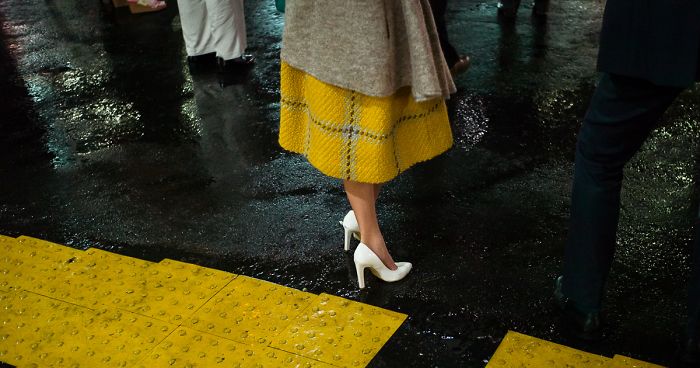
Everyday life in Japan has a way of looking perfectly normal until you look twice. A commuter waits with monk-like patience. A child turns a sidewalk into a tiny stage. A dog, a sign, a shadow, and a passing stranger somehow form a scene so strange it feels as if a movie director yelled “Action!” and then ran away before anyone noticed. This is the delightful territory of Shin Noguchi, a Japanese street photographer known for finding humor, beauty, and quiet humanity in the flow of ordinary days.
The title 50 Quirky And Extraordinary Moments Of Everyday Life In Japan By Shin Noguchi points to more than a photo collection. It captures a way of seeing. Noguchi’s work reminds us that “everyday life” is not boring; we are simply too busy answering emails, checking train times, and wondering what happened to our left sock to notice the miniature theater happening around us.
Born in Shinjuku, Tokyo, and based between Kamakura and Tokyo, Shin Noguchi has built a reputation as an award-winning street and documentary photographer. His images often focus on unposed public life in Japan: city crossings, beaches, festivals, families, children, commuters, storefronts, and small gestures that appear for a second and then vanish. He does not need explosions, celebrities, or dramatic lighting. Give him a sidewalk, a splash of color, and one unexpected human movement, and suddenly the world looks awake.
Who Is Shin Noguchi?
Shin Noguchi is best known for color street photography that blends documentary observation with poetic timing. His photographs are often described as discreet, humorous, sensitive, and enigmatic. That combination matters. He is not chasing cheap weirdness. He is not laughing at people. Instead, his camera seems to say, “Look, life is doing something wonderful again.”
Noguchi’s work has appeared in respected photography spaces and publications, and his projects often explore the relationship between individual people and the larger rhythm of Japanese society. He has photographed public streets, private family life, children at play, and the small social rituals that shape daily experience. His ongoing project Something Here is especially connected to the idea that beauty exists inside ordinary reality, even when that reality is messy, crowded, funny, lonely, or slightly confusing.
What separates Noguchi from many street photographers is his patience with ambiguity. His best images do not explain themselves too quickly. A viewer may first notice the color. Then the shape. Then the joke. Then, a few seconds later, the emotional undertow. It is like opening a snack bag and discovering philosophy inside. Not bad for a Tuesday afternoon.
Why Everyday Life In Japan Looks So Extraordinary Through His Lens
Japan is often photographed through familiar symbols: temples, cherry blossoms, bullet trains, neon streets, vending machines, sushi counters, and Mount Fuji wearing its most photogenic hat. Those subjects are real, but Noguchi’s photography moves away from postcard Japan and toward lived-in Japan. His scenes feel immediate, imperfect, and human.
In his images, Japan is not a static cultural display. It is a country in motion. People cross intersections, wait in lines, play at the beach, carry umbrellas, attend events, dress for ceremonies, and share space with strangers. The extraordinary moments come from how these ordinary actions collide with color, framing, timing, and surprise.
The Magic Of Timing
Street photography depends on timing, but Noguchi’s timing feels unusually generous. He catches people at the exact instant when reality becomes a visual joke or a tiny poem. A person may align with a poster in the background. A child may move through a scene with superhero confidence. A group of strangers may unintentionally form a pattern so perfect it looks rehearsed.
That is the beautiful trick: the scenes are not staged. Noguchi’s photographs often feel choreographed, but life did the choreography. He simply noticed before the moment disappeared.
Color As A Character
Color plays a huge role in Shin Noguchi’s street photography. His images often use bright clothing, painted walls, signs, toys, umbrellas, and urban details to create visual rhythm. The color does not just decorate the photograph; it becomes part of the story.
A red coat can pull a viewer’s eye across a crowded street. A yellow object can turn a plain corner into a comic panel. A blue sky can make a strange human gesture feel oddly heroic. In Noguchi’s world, color is not background music. It is the drummer who showed up early and brought extra cymbals.
What Makes These 50 Quirky Moments So Memorable?
The phrase “50 quirky and extraordinary moments” works because Noguchi’s photography thrives on variety. His images can be funny, tender, mysterious, or quietly emotional. Some scenes feel like visual punchlines. Others feel like a pause between two thoughts. Together, they create a portrait of Japan that is playful without being shallow.
1. Humor Without Cruelty
Many street photos chase awkwardness. Noguchi’s work is different because the humor usually feels warm. He finds absurdity in public life, but he does not reduce people to jokes. The viewer laughs because the world is strange, not because someone has been mocked.
This is a difficult balance. A less sensitive photographer might turn a strange pose or accidental expression into a cheap gag. Noguchi tends to frame such moments with affection. His camera seems curious, not predatory. That is why the humor lasts longer than a quick scroll.
2. Children As Natural Surrealists
Children appear often in Noguchi’s work, and for good reason: children are basically tiny performance artists with snack requests. They move through public space with a freedom adults often lose. They point, jump, stare, hide, run, and invent games out of nothing.
In photographs of children, Noguchi often captures the contrast between adult order and childhood spontaneity. A formal street, school event, or public setting suddenly becomes unpredictable when a child enters the frame. The result is not chaos; it is energy. The photograph reminds us that society may build systems, but children will still find a way to turn a curb into a spaceship.
3. Public Space As A Stage
Japan’s streets, train stations, beaches, shopping areas, and crosswalks become stages in Noguchi’s images. People are not actors, but the frame gives their movements theatrical force. A person waiting near a sign may suddenly look like part of the sign. A crowd may become a pattern. A lonely figure may look monumental when placed against the right background.
This is one reason Noguchi’s photographs reward slow viewing. At first, the image may seem simple. Then the relationships inside the frame begin to appear. The background talks to the foreground. The color talks to the gesture. The tiny dog in the corner may be doing more narrative work than anyone expected. Honestly, give that dog an agent.
Shin Noguchi’s View Of Japanese Culture
Noguchi’s photography is not a tourist brochure, and that is exactly why it feels valuable. He photographs Japanese culture from within, paying attention to subtle behaviors, social rhythms, and the unspoken rules of public life. His work can show politeness, loneliness, playfulness, discipline, fatigue, curiosity, and tenderness in the same visual universe.
In many of his images, there is a quiet tension between order and accident. Japan is often associated with precision: trains that arrive on time, clean public spaces, careful packaging, and social etiquette. But Noguchi’s camera shows that no society is perfectly controlled. Life spills over. People improvise. A child photobombs the system. A gust of wind edits the composition. A passerby becomes art without signing the release form.
The Beauty Of The Unplanned
One of the most important lessons in Noguchi’s work is that the unplanned moment can reveal more truth than the polished one. A staged image may show what people want to present. A candid street photograph can show how people actually move, rest, react, and connect.
This does not mean every candid image is automatically meaningful. The photographer still needs visual intelligence, patience, and empathy. Noguchi’s strongest photographs succeed because they are not random snapshots. They are carefully seen moments, organized by instinct and experience.
Why Shin Noguchi’s Photography Connects With Global Audiences
Although his work is deeply rooted in Japan, Shin Noguchi’s photography travels well across cultures. Viewers from the United States and elsewhere can recognize the emotions inside his scenes: surprise, boredom, joy, awkwardness, affection, curiosity, and that universal human expression that says, “I am waiting in public and trying to look normal.”
His photographs also appeal to modern audiences because they offer an antidote to overly polished digital life. Social media often rewards perfection: perfect meals, perfect outfits, perfect vacations, perfect people pretending they did not take 47 versions of the same selfie. Noguchi’s work celebrates the opposite. It says the imperfect second may be the best one.
That makes his photography feel refreshing. It does not beg for attention with artificial drama. It invites the viewer to pay better attention to what is already here.
Street Photography Lessons From Shin Noguchi
For photographers, Noguchi’s work offers practical lessons. For everyone else, it offers a better way to look at the sidewalk. Either way, there is something to learn.
Look For Relationships, Not Just Subjects
A beginner may photograph a person because the person looks interesting. Noguchi’s images suggest a deeper approach: photograph the relationship between the person and the environment. How does a figure interact with a wall, shadow, poster, window, color, or crowd? Does the background add meaning? Does the scene create contrast?
The subject matters, but the visual conversation around the subject may matter even more.
Be Patient With Ordinary Places
Many people think they need exotic locations to make interesting photographs. Noguchi proves otherwise. Ordinary places are full of possibility if you wait long enough and look carefully enough. A crosswalk, a neighborhood street, or a beach can become visually rich when the right elements come together.
The trick is not to force the moment. The trick is to be ready when the moment decides to stop by, usually without texting first.
Respect The People In The Frame
Street photography raises important ethical questions. Noguchi’s best-known work feels powerful because it preserves dignity. Even when the scene is funny, the people in it remain human. That should be a guiding principle for anyone inspired by his style.
Photographing public life is not just about being quick. It is about being aware. The camera should sharpen empathy, not replace it.
The Deeper Meaning Behind The Quirky Moments
The word “quirky” can sound light, but Noguchi’s photography often carries emotional depth. The oddness in his images is not just visual entertainment. It points to something larger: the unpredictable beauty of being alive among other people.
Everyday life is full of private struggles that remain invisible. Someone crossing the street may be carrying grief, excitement, exhaustion, or hope. Someone laughing in a public square may be having the best five seconds of a difficult week. Noguchi’s photographs cannot tell us everything about these people, but they remind us that strangers are not background objects. They are complete lives passing through the same frame.
That is why his work feels humanistic. It finds meaning without needing to explain everything. It leaves space for mystery, and mystery is where viewers become participants.
Experience Section: Seeing Everyday Japan Through Shin Noguchi’s Lens
Spending time with Shin Noguchi’s photographs feels like training your eyes to wake up. At first, you may look for the obvious joke: the strange pose, the surprising color match, the perfectly timed passerby, the small visual accident that makes the image memorable. But after a while, the experience changes. You begin to notice how much is happening inside ordinary public life, not just in Japan, but everywhere.
Imagine walking through Tokyo after viewing Noguchi’s work. The city would no longer feel like a simple checklist of famous places. Shibuya would not be only a crossing. A train platform would not be only a waiting area. A narrow street would not be only a route to somewhere else. Each place would become a possible frame. The person adjusting an umbrella, the child leaning into a parent’s hand, the reflection in a shop window, the delivery worker passing a bright wall, the dog staring with suspicious wisdom at absolutely nothingall of it would seem charged with possibility.
This is one of the great experiences connected to Noguchi’s photography: it makes the viewer feel less passive. You do not simply consume the image and move on. You start practicing the same attention in your own surroundings. A grocery store parking lot in Ohio may not look like Kamakura, and a bus stop in Texas may not resemble a Tokyo street, but the principle remains. Life is always arranging itself into strange little compositions. Most of us simply arrive three seconds too late.
There is also a gentle emotional experience in the work. The photographs can be funny, but they are rarely empty. They suggest that people are connected by shared spaces and brief overlaps. You may never speak to the stranger beside you at a crosswalk, but for one second you are part of the same scene. Noguchi’s camera honors that tiny connection. In a world where people often feel isolated, that idea lands softly but deeply.
For travelers, his images offer a useful reminder: do not race through Japan only collecting landmarks. Of course, visit the temples, eat the ramen, admire the trains, and take the classic photos. The classics are classics for a reason. But leave room for the unscheduled moments. Sit on a bench. Watch how people move through a station. Notice the color of raincoats on a gray day. Pay attention to how children behave at festivals, how elderly people rest in public parks, how store signs interact with passersby, how the sea changes the mood of a street. The best travel memory may not be the famous view. It may be the tiny scene you almost ignored.
For photographers, the experience is even more practical. Noguchi’s work encourages discipline without stiffness. You learn to wait, but not lazily. You learn to observe, but not coldly. You learn that humor and respect can belong in the same frame. Most importantly, you learn that the world does not need to be made interesting by force. It already is interesting. The photographer’s job is to notice, compose, and press the shutter before the magic slips away to buy a vending-machine coffee.
Conclusion
50 Quirky And Extraordinary Moments Of Everyday Life In Japan By Shin Noguchi is more than a catchy title. It is a doorway into a photographic philosophy built on patience, humanity, color, and surprise. Shin Noguchi shows that the everyday world is not dull; it is simply fast. His images slow it down just enough for us to see the joke, the beauty, the loneliness, the connection, and the small miracle hiding in plain sight.
In a culture overflowing with staged perfection, Noguchi’s candid photographs feel wonderfully alive. They remind us that real life has better timing than we think. Sometimes the most extraordinary scene is not waiting at the top of a mountain or inside a famous museum. Sometimes it is standing at the crosswalk, wearing a yellow jacket, next to a confused dog, under a sign that accidentally completes the whole story.












