
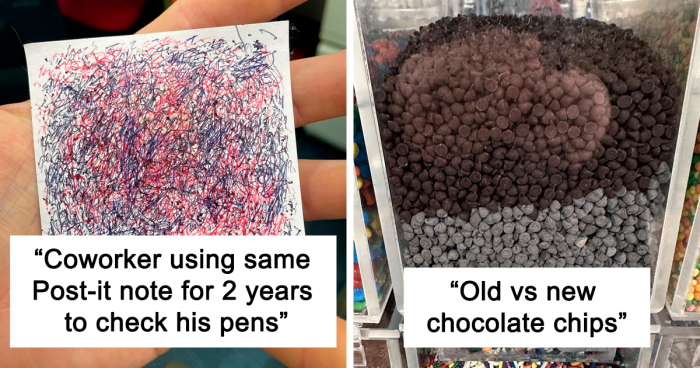
Time is the world’s most patient artist. It does not rush, ask permission, or leave a forwarding address. Instead, it works quietlyfading paint, polishing stone, bending trees, reshaping coastlines, shrinking glaciers, aging faces, and turning yesterday’s cutting-edge technology into something children examine like an ancient farming tool.
That is why photos that show how time changes things are so captivating. A single weathered object may look ordinary, but place it beside an unused version and suddenly it becomes a visual diary. The scratches, stains, worn edges, and missing pieces reveal where hands touched, feet stepped, water flowed, or sunlight landed thousands of times.
Repeat photography gives this fascination scientific and historical value. The U.S. Geological Survey has recreated historic glacier photographs from matching viewpoints, while NASA uses satellite images to reveal changes in rivers, forests, farms, ice shelves, and cities. Public collections maintained by the Library of Congress and National Archives also make it possible to compare American streets and communities across generations.
From worn-out teddy bears to dramatically altered landscapes, the following 50 examples show that time changes nearly everything. Sometimes the result is beautiful. Sometimes it is unsettling. Occasionally, it makes a kitchen spoon look like it survived three wars.
Everyday Objects Transformed by Years of Use
1. A Brand-New Teddy Bear Beside a Childhood Favorite
One bear remains fluffy and perfectly shaped. The other has flattened fur, loose stitching, and the unmistakable expression of a toy that has heard every family secret.
2. Two Identical Wallets, One Used for 20 Years
The unused wallet looks stiff and formal. Its older twin has softened, darkened, and curved around the cards, receipts, and emergency cash it carried for decades.
3. A Restaurant Spoon Worn Thin
Years of stirring coffee can gradually smooth a spoon’s edges. Beside a replacement, the veteran utensil appears smaller, shinier, and suspiciously exhausted.
4. An Old Wooden Cutting Board
Thousands of knife strokes create pale grooves across the center while the untouched edges preserve the original surface. Dinner preparation becomes accidental abstract art.
5. A Well-Loved Paperback
The new copy stands straight and crisp. The frequently reread edition has a broken spine, curled corners, faded ink, and the comfortable posture of an old friend.
6. A Keyboard With Polished Keys
Frequently used letters become glossy while less popular keys remain textured. The keyboard quietly records its owner’s habitsand possibly an alarming dependence on the backspace key.
7. A Staircase Worn Down the Middle
Stone steps can develop shallow depressions where generations placed their feet. No sign says “walk here,” yet thousands of people somehow reached the same agreement.
8. A Carpenter’s Hammer With a Smoothed Handle
A new wooden handle has sharp contours and visible grain. Years of gripping, sweat, and friction round the surface until it fits one particular hand perfectly.
9. A Kitchen Knife Sharpened for Decades
Repeated sharpening slowly narrows the blade. Placed beside a new model, the old knife reveals how much metal has disappeared while producing countless dinners.
10. A Door Handle Polished by Human Hands
The surrounding metal may remain dark or tarnished, while the area touched most often gleams. Every visitor contributes a microscopic amount of polish without realizing it.
Clothing and Personal Items That Record a Life
11. New Boots Beside a Pair Worn Daily
The older boots display creases, softened leather, scratched toes, and worn soles. They may look rough, but they have stories the untouched pair has not earned.
12. Jeans Faded Around the Knees and Pockets
Denim loses color unevenly according to movement and contact. Phones, wallets, knees, and repeated washing gradually create a personalized map of daily life.
13. A Wedding Ring After Half a Century
Decades of contact can soften decorative details and thin the band. The ring becomes less perfect physically while growing far more valuable emotionally.
14. A Baseball Cap Bleached by Sunlight
Lift the brim or remove an old patch and the original color suddenly appears. The contrast shows exactly what years of sunshine quietly removed.
15. A Leather Belt Stretched at One Hole
The most frequently used hole becomes larger and darker than the others. Few objects document changing routinesor changing waistlineswith such brutal honesty.
16. A Watchband Molded Around a Wrist
A new strap lies straight. An older one keeps its curved shape even when removed, as though the wrist left behind a permanent invisible impression.
17. A Pair of Glasses With Faded Temples
The sections resting behind the ears often lose their finish first. Skin oils, movement, and years of adjustment create wear in highly specific places.
18. A Favorite Jacket Repaired Again and Again
Patches, replacement buttons, faded elbows, and hand-sewn seams turn ordinary clothing into a timeline. At some point, the repairs become the design.
19. A Child’s Shoes Saved Into Adulthood
Tiny shoes beside the owner’s current pair create an immediate sense of scale. Growth that felt gradual suddenly appears enormous in one photograph.
20. A Backpack From the First and Final Day of School
In August it looks structured and optimistic. By spring it is slouching, stained, overloaded, and emotionally ready for summer vacation.
Nature’s Slow, Powerful Transformations
21. A Glacier Photographed a Century Apart
Repeat photographs can reveal exposed rock, expanding lakes, and fragmented ice where a large glacier once dominated the landscape. The change becomes impossible to dismiss as an abstract statistic.
22. A Tree Growing Around a Metal Sign
As the trunk expands, it may surround a sign, fence, or bicycle left against it. The tree appears to swallow the object in extremely slow motion.
23. A River Changing Its Course
Satellite image sequences can show bends migrating, banks eroding, and channels shifting across decades. Rivers are less like permanent lines and more like restless handwriting.
24. Coastal Rocks Rounded by Waves
Sharp fragments become smooth pebbles after repeated collisions with water, sand, and other stones. Nature operates the world’s largest rock tumbler without reading the instruction manual.
25. A Fence Post Slowly Covered With Lichen
A clean wooden surface gradually develops patches of gray, yellow, and green. What began as lumber becomes a miniature ecosystem.
26. A Trail Created Across an Empty Field
Repeated footsteps flatten grass and expose soil until an unofficial path appears. It is a photograph of collective impatienceand usually the shortest route.
27. Tree Rings Revealed in a Fallen Trunk
Each ring represents a period of growth, preserving evidence of changing conditions. A cross-section turns decades of invisible development into a readable pattern.
28. A Deserted Building Overtaken by Plants
Vines enter windows, roots lift floors, and moss covers walls. Once maintenance stops, nature wastes little time beginning its renovation project.
29. A Waterfall Carving Into Rock
Individual drops seem harmless, yet continuous flow can deepen channels and smooth stone. Persistence defeats hardness, provided persistence has several thousand years available.
30. Seasonal Satellite Views of Farmland
From space, planting, growth, harvest, flooding, and drought can transform the same fields into entirely different patterns. NASA’s image archives make these cycles visually measurable.
Buildings, Cities, and Human-Made Landscapes
31. A City Skyline Before and After Skyscrapers
Historic photographs often show church steeples and smokestacks dominating skylines now filled with towers. The horizon becomes a graph of economic and architectural change.
32. A Main Street Across 100 Years
The buildings may remain recognizable while horses become cars, awnings become neon signs, and pedestrians acquire far more complicated coffee orders.
33. Copper Roofing Turning Green
Exposure to air and moisture can form a colored surface layer on copper. A bright new roof may gradually develop the familiar green associated with historic architecture.
34. An Abandoned Factory Returning to Silence
Broken windows, rusting machinery, and weeds rising through concrete reveal the speed with which an industrial workplace can become an archaeological site.
35. Brick Steps Rounded by Generations
Corners soften, mortar recedes, and central sections wear lower. The staircase keeps a physical record of every delivery, departure, homecoming, and hurried morning.
36. A Painted Wall Hidden Behind an Old Sign
When the sign is removed, a rectangle of stronger color remains. The protected patch functions like a tiny time capsule for the building’s original appearance.
37. A Monument Before and After Restoration
Conservation photographs can reveal corrosion, paint loss, repairs, and structural treatment. The goal is not always to erase age, but to stabilize the object while respecting its history.
38. A Road Consumed by an Expanding City
A once-rural route may become a multilane commercial corridor. Old photographs preserve farms and open land where traffic lights and parking lots now stand.
39. A Historic Neighborhood After Urban Renewal
Then-and-now images may expose dramatic changes in density, transportation, housing, and public space. They also reveal what a city gainedand what it erased.
40. Graffiti Accumulating in Layers
One artist paints over another until the wall becomes thicker, brighter, and harder to interpret. Time does not merely add history; it occasionally starts an argument with it.
People, Animals, Technology, and Unexpected Visual Timelines
41. Siblings Recreating a Childhood Photograph
The pose, clothing colors, and expressions may match, but adult bodies squeezed into childhood positions produce a funny and surprisingly emotional comparison.
42. A Person Photographed Every Year
Annual portraits show aging as a continuous process rather than a sudden event. Hairstyles change first; facial structure, posture, and expression gradually follow.
43. A Puppy Beside the Same Fully Grown Dog
The paws that once looked comically oversized finally fit. The favorite sleeping position, however, often remains unchanged despite the dog becoming five times larger.
44. A Cat’s Favorite Spot Worn Into a Couch
Compressed cushions, embedded fur, and scratched fabric identify the exact location of thousands of naps. The cat has essentially created a custom throne.
45. A Family Standing Beside the Same Tree for Decades
Children become parents, adults grow older, and the tree rises above everyone. The photograph records several biological clocks running at different speeds.
46. A Mobile Phone Collection From Several Decades
Large antennas and physical buttons gradually give way to slim glass screens. Devices become more powerful while mysteriously losing the ability to survive a simple fall.
47. Computer Storage Then and Now
A stack of disks or tapes may hold less information than a tiny modern memory card. Few comparisons demonstrate technological progress so effectivelyor make old office equipment look so adorable.
48. A Photograph Fading Inside Its Frame
The protected edge may retain stronger color than the exposed center. Light, temperature, humidity, and chemical instability can alter photographic materials even while the scene itself remains frozen.
49. An Antique Object Darkened by Handling
Porous materials can develop stains or patina from age, skin oils, dust, and environmental exposure. The surface becomes a record of both time and human contact.
50. A Final Photograph Beside the First One
Whether the subject is a garden, construction project, pregnancy, artwork, or personal transformation, the first-and-last comparison compresses an entire journey into one unforgettable glance.
Why Before-and-After Photos Feel So Powerful
Most change is difficult to notice while it is happening. We see our homes, possessions, pets, and faces too frequently to detect every tiny difference. A photograph interrupts that familiarity. It preserves one precise version of reality and waits patiently until the present becomes different enough to make the contrast meaningful.
This is also why old photographs function as more than decoration. Archives use them to document clothing, transportation, labor, architecture, public events, and everyday behavior. Conservators use detailed imaging to examine deterioration and previous repairs, while scientists align historic and modern views to measure landscape change.
The best then-and-now photos usually contain a recognizable anchor: the same doorway, mountain ridge, tree, person, or object. That stable element helps the viewer understand everything that has changed around it. Without an anchor, two pictures may simply look unrelated. With one, the passage of time becomes almost physical.
These images also challenge the idea that aging always equals damage. A scratched table may record years of family meals. A faded jacket may recall hundreds of adventures. Patina, softened edges, repaired seams, and worn handles can make objects more meaningful because they reveal use rather than neglect.
A Personal Experience With Photographing the Passage of Time
One of the simplest ways to understand the emotional power of transformation photography is to recreate an old family picture. The experience sounds easy: find the location, copy the pose, and press the shutter button. In reality, it feels like stepping into a conversation between your past and present selves.
Imagine finding a photograph taken outside your childhood home. In the original image, the front yard is mostly dirt, a newly planted tree barely reaches the window, and everyone is wearing clothes that should probably remain safely in the 1990s. Returning years later, you discover that the house has been repainted, the sidewalk has cracked, and the tiny tree now shades the entire roof.
At first, the differences are entertaining. Someone tries to recreate a dramatic childhood expression. Another person complains that the original pose requires knees they no longer possess. Everyone argues about where the camera was positioned, as though reconstructing a major historical event rather than a family snapshot featuring questionable bangs.
Then the quieter details begin to matter. The fence installed by a relative may still be standing. A window may belong to a room that once seemed enormous but now looks surprisingly small. Someone visible in the original photograph may no longer be present. The recreated picture becomes more than a visual joke; it becomes proof that a particular collection of people once occupied the same moment.
Photographing everyday objects over time can create a similar effect. Consider taking a picture of a new pair of work boots on the first day of a job, then photographing them again after a year. The second image may contain mud, scratches, collapsed heels, and faded leather. Those marks can recall difficult shifts, new friendships, mistakes, achievements, and ordinary mornings that would otherwise blend together.
A garden provides another rewarding long-term subject. Photographing it from the same location every month reveals growth patterns that are nearly invisible from day to day. Bare soil fills with seedlings. Seedlings become tangled foliage. Flowers appear, fade, and produce seeds. Winter clears the scene, and spring begins the cycle again. The resulting sequence makes the garden feel less like a static place and more like a living performance.
The same method can be applied to home renovations, creative projects, fitness goals, restorations, neighborhood development, or a child’s growth. Consistency matters more than expensive equipment. Using the same viewpoint, similar lighting, and a visible reference point makes the eventual comparison stronger.
Most importantly, taking these photographs encourages attention. It reminds us that familiar things are never truly motionless. The coffee mug is collecting scratches. The floor is developing a path. The dog’s muzzle is turning gray. The skyline beyond the window is changing one construction project at a time.
Years later, the photograph may reveal something its creator never intended to document. A parked car becomes historically interesting. A store sign disappears. Clothing becomes fashionable again for reasons nobody can explain. The background acquires as much value as the original subject.
That is the real experience behind photos that show how time changes things: they teach us to look twice. The first look recognizes the subject. The second recognizes the years.
Conclusion: Time Leaves Evidence Everywhere
The most fascinating visual transformations are not always dramatic disasters or massive construction projects. Sometimes they are simply a worn key, a faded photograph, a polished step, or a stuffed animal hugged until its original shape becomes a distant memory.
These 50 examples demonstrate that time creates patterns through repetition. Footsteps carve paths. Hands polish metal. Sunlight removes color. Water reshapes stone. Families grow, cities expand, technology shrinks, and landscapes move in ways that become obvious only when photographs preserve an earlier state.
The next remarkable before-and-after image may already be forming somewhere in your home. Take the first photograph now. Time will handle the sequel.
Note: This original editorial article was developed from established photographic, archival, conservation, and earth-science information. Before publication, pair each numbered example with an appropriately licensed image and verify any image-specific caption details.












