
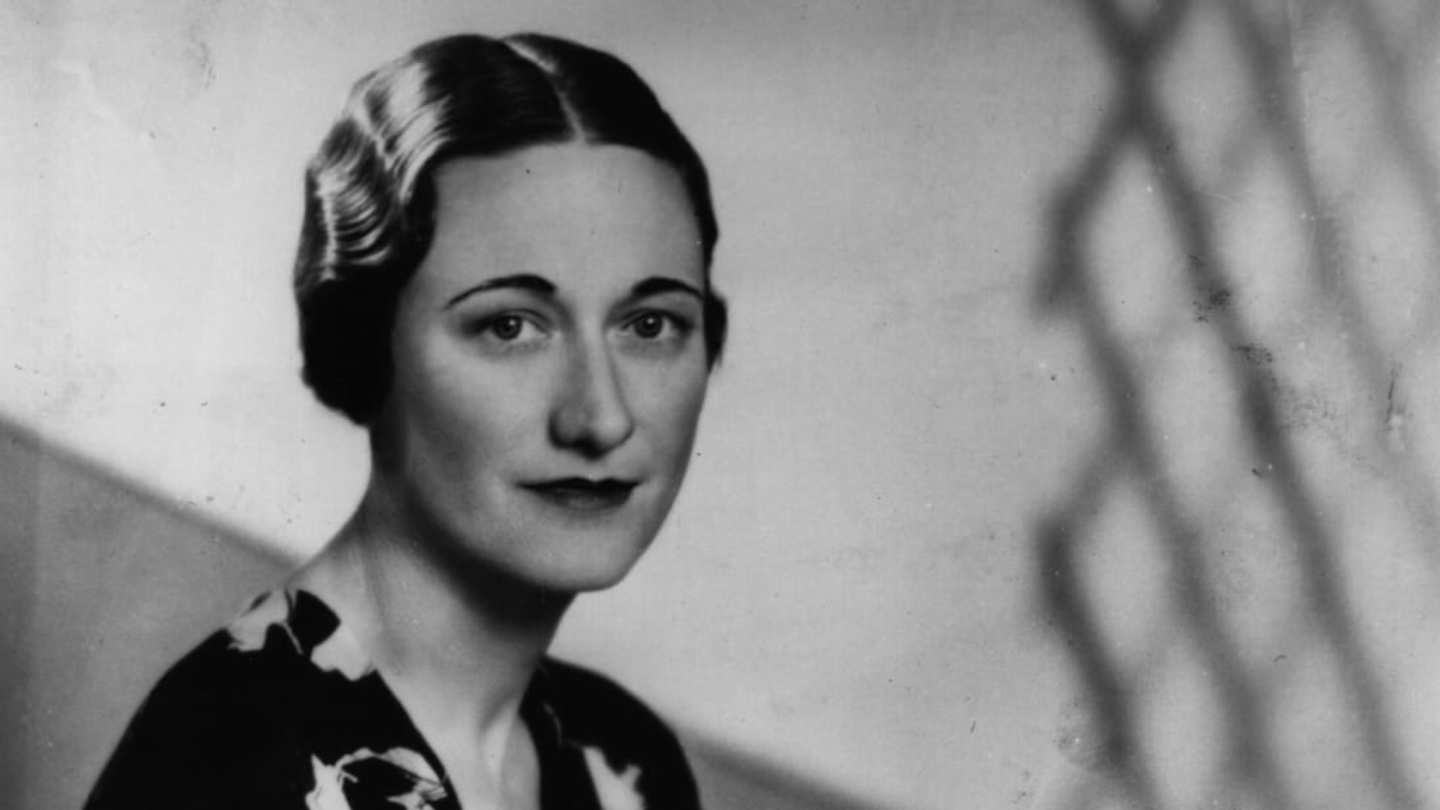
Wallis Simpson is one of those historical figures who tends to arrive in a room before the facts do. Say her name, and people instantly picture scandal, a crown left on the table, and a king who chose romance over duty. It is a dramatic story, certainly. It has everything: royalty, exile, gossip, expensive jewelry, international intrigue, and enough awkward family dinners to power an entire streaming franchise.
But Wallis Simpson was not just “the woman Edward VIII abdicated for.” That phrase is catchy, but it flattens a complicated life into a royal headline. Born Bessie Wallis Warfield in Pennsylvania in 1896, she moved through American society, troubled marriages, London drawing rooms, newspaper hysteria, wartime suspicion, and decades of exile in France. Her life was glamorous, controversial, lonely, stylish, and often misunderstood.
This article explores five things you might not know about Wallis Simpson, from her difficult early years to her influence on fashion, her place in media history, and the rumors that followed her like an uninvited guest who refuses to leave the cocktail party.
1. Wallis Simpson’s Early Life Was Less Glamorous Than People Imagine
The popular image of Wallis Simpson is all sharp tailoring, Cartier jewels, and aristocratic confidence. Yet her beginning was not especially grand. She was born Bessie Wallis Warfield on June 19, 1896, in Pennsylvania and grew up largely in Baltimore, Maryland. Her father died when she was still very young, and her mother depended heavily on support from relatives.
That background matters because it helps explain Wallis’s lifelong talent for presentation. She did not inherit the easy security of Europe’s old aristocracy. Instead, she learned early that charm, manners, clothes, and social intelligence could open doors. In a world where status was treated almost like a second language, Wallis became fluent.
She Learned Social Survival Early
Wallis attended good schools and moved within respectable circles, but she was not born into the kind of wealth that guarantees permanent comfort. Her social rise required discipline. She became known for quick wit, polished conversation, and an ability to make herself memorable without appearing desperate for attention. That is not easy. Many people try it at parties and end up discussing weather patterns for 40 minutes.
Her first marriage, to U.S. Navy pilot Earl Winfield Spencer Jr., began in 1916. It was troubled and eventually ended in divorce. Her second marriage, to Ernest Simpson, brought her into a more international social world. Through that marriage, she entered London society, where she met Edward, then Prince of Wales, in the early 1930s.
In other words, Wallis did not simply float into royal history wearing a perfect gown. She arrived after years of adapting, surviving, and carefully shaping the version of herself the world would see.
2. She Was Not Eager to Become Queen
One of the biggest myths about Wallis Simpson is that she schemed her way toward the throne. The historical record is more complicated. Edward VIII was deeply determined to marry her, but Wallis seems to have understood better than he did how explosive the situation had become.
When Edward became king in January 1936, Wallis was still married to Ernest Simpson and was already a controversial figure in elite circles. By the end of that year, her divorce proceedings and Edward’s insistence on marrying her had created a constitutional crisis. The problem was not simply romance. Edward was king, head of the British state, and Supreme Governor of the Church of England. At that time, marriage to a twice-divorced woman with living former husbands was considered unacceptable by the British government, the Church, and many officials across the Empire.
The Abdication Was Edward’s Decision
Edward was presented with a choice: keep the crown or marry Wallis. On December 10, 1936, he signed the Instrument of Abdication. The following day, the abdication became official, and his younger brother became King George VI. Edward’s famous radio broadcast framed the decision as an act of love, saying he could not carry the responsibilities of kingship without the woman he loved.
That sentence turned Wallis into a global symbol overnight. Yet being cast as “the woman who stole a king” was not exactly a spa weekend. She was blamed by many people for shaking the monarchy, embarrassing the royal family, and changing the line of succession. Edward lost a throne, but Wallis gained a lifetime of public suspicion.
After the abdication, Edward was created Duke of Windsor. He and Wallis married on June 3, 1937, at the Château de Candé in France. No member of Edward’s immediate royal family attended. Wallis became Duchess of Windsor, but she was not granted the style “Her Royal Highness,” a decision that deeply angered Edward and marked the couple’s permanent distance from the royal establishment.
3. Wallis Simpson Became the First Woman Named TIME’s “Woman of the Year”
Wallis Simpson did not become queen, but she did become one of the most talked-about people on Earth. In 1936, TIME named her its first “Woman of the Year,” a title that later became part of the magazine’s broader “Person of the Year” tradition.
That title was not necessarily a compliment. TIME’s annual selection has historically recognized influence, not moral approval. Wallis was chosen because her relationship with Edward VIII had shaken a monarchy, dominated international headlines, and forced millions of people to debate love, duty, divorce, religion, class, and constitutional power.
She Was a Media Phenomenon Before Social Media Existed
Today, a royal scandal would break the internet before breakfast. In Wallis’s day, the machinery was slower but no less intense. British newspapers initially held back from reporting the full details of the relationship, while American and European publications covered it far more openly. When the story finally exploded in Britain, it did so with enormous force.
Wallis became a symbol onto which everyone projected something. To some, she represented modern love challenging old institutions. To others, she represented social ambition, foreign influence, and moral decline. To still others, she was a convenient villain in a story where Edward’s own weaknesses were easier to ignore.
Her celebrity was unusual because it was not built on performance, art, politics, or military achievement. It was built on proximity to power and the public’s fascination with a private relationship that became a constitutional earthquake. Long before influencers learned how to turn personal drama into global attention, Wallis Simpson had already lived the deluxe, terrifying, no-filter version.
4. Her Fashion Influence Was Enormous
Whatever one thinks of Wallis Simpson’s choices, her style was difficult to dismiss. She was not conventionally glamorous in the movie-star sense, but she understood proportion, tailoring, restraint, and impact. Her clothes often looked precise rather than extravagant. She favored clean lines, elegant silhouettes, and carefully chosen accessories.
Her 1937 wedding dress, designed by Mainbocher, was made in a pale shade that became known as “Wallis blue.” The color was chosen to complement her eyes, proving that even royal scandal occasionally pauses for good color theory.
Jewelry Became Part of Her Personal Myth
Wallis was also associated with some of the most famous jewelry of the twentieth century. Edward gave her remarkable pieces from houses such as Cartier and Van Cleef & Arpels. Their jewels were not merely decorative; they often carried personal inscriptions, private messages, and symbolic meaning.
One of the most famous stories involves the Van Cleef & Arpels Zip necklace, a design often linked to the Duchess of Windsor’s suggestion that a zipper could be transformed into high jewelry. Whether viewed as fashion history or very expensive fastener enthusiasm, it shows how Wallis helped inspire luxury design in ways that lasted beyond her lifetime.
She also wore designs connected with major fashion figures, including Elsa Schiaparelli. Her image appeared in carefully staged portraits that helped create the sleek, controlled, almost architectural look associated with her. In exile, style became one of the few arenas where Wallis could still exercise power. She could not control the monarchy, the press, or public opinion, but she could control the cut of a suit, the placement of a brooch, and the impression she made when entering a room.
5. The Rumors Around Her Were Often Bigger Than the Evidence
Wallis Simpson’s reputation was shaped not only by facts but also by rumor, political fear, and social prejudice. Some criticism of the Duke and Duchess of Windsor was serious and rooted in genuine concern. Their 1937 visit to Nazi Germany, where they met Adolf Hitler, remains one of the darkest chapters in their public lives. During World War II, British and American officials worried about the Duke’s judgment and sympathies. He was later appointed Governor of the Bahamas, a role he held from 1940 to 1945, partly removing him from the center of European wartime politics.
But other stories about Wallis were lurid, sexist, and poorly supported. The most notorious involved her time in China during the 1920s. Wallis had spent time there during and after her first marriage, and later gossip turned that period into a swamp of sensational claims. Stories circulated about alleged sexual training, espionage, drug use, and scandalous behavior. Much of this material has been challenged by historians, and the so-called “China Dossier” has often been treated as a mixture of rumor, political weaponry, and fantasy.
She Became a Convenient Scapegoat
Wallis was an American, divorced, stylish, socially ambitious, and connected to a king who disliked many parts of royal duty. That combination made her an easy target. Blaming her simplified the abdication crisis. Instead of confronting Edward’s impatience with constitutional limits, his poor political judgment, and his own choices, critics could point to Wallis and declare the mystery solved.
This does not mean Wallis was innocent of every misjudgment. She lived a controversial life and moved in circles that deserve scrutiny. But it does mean that the cartoon version of her as a calculating enchantress is historically lazy. Real people are rarely that tidy. Wallis was not a fairy-tale villain. She was a sharp, stylish, complicated woman trapped inside one of the loudest public narratives of the twentieth century.
Wallis Simpson After the Abdication
After their marriage, the Duke and Duchess of Windsor lived mostly outside Britain. They spent time in France, the Bahamas, and the United States, but France became their primary home. They entertained celebrities, politicians, aristocrats, and socialites, yet their life was marked by exclusion from the royal center they could never fully rejoin.
Edward died in Paris in 1972. Wallis lived for another fourteen years, increasingly isolated in poor health. She died in Paris on April 24, 1986, and was buried beside Edward at the Royal Burial Ground at Frogmore, near Windsor Castle.
Her ending was quieter than her legend. The woman once accused of toppling a king spent her final years far from the shouting crowds and newspaper storms. History, however, never really let her leave the room.
Experiences and Reflections Related to Wallis Simpson’s Story
Wallis Simpson’s story continues to fascinate because it feels strangely modern. It is about public judgment, private love, image management, media pressure, and the cost of becoming famous for the wrong reason. Anyone who has ever been misunderstood by a group chat, an office rumor, or one badly timed photograph can recognize a tiny piece of the Wallis problem. Of course, most of us do not accidentally trigger a constitutional crisis before lunch, but the emotional pattern is familiar.
One experience many readers have when learning about Wallis is surprise. At first, the story appears simple: king meets woman, king gives up throne, woman becomes infamous. Then the details begin to complicate everything. Wallis had a difficult childhood. Edward had long-standing tensions with royal duty. The British establishment had political and religious reasons to oppose the marriage. The press shaped public opinion. Rumors grew faster than facts. Suddenly, the neat scandal becomes a messy human drama.
That is one reason her life is useful for modern readers. Wallis reminds us to be careful with one-sentence biographies. When a woman is remembered mainly as a disruption in a man’s life, there is usually more to investigate. She may still be flawed. She may still have made questionable choices. But she deserves to be studied as a full person, not merely as a plot device in someone else’s royal adventure.
Her story also offers a lesson in image. Wallis understood that presentation mattered. Clothes, posture, conversation, and timing were tools. In today’s language, she had a personal brand before personal branding became a career category. But her life also shows the limits of image control. You can choose the dress, the jewels, and the angle of the portrait, but you cannot always choose the caption history places underneath it.
There is also a relationship lesson hiding inside the glamour. Edward’s decision has often been romanticized as the ultimate sacrifice. Yet sacrifice can be complicated when it places a lifelong burden on another person. Wallis became the public reason for Edward’s abdication, whether she wanted that role or not. Love may be powerful, but when mixed with power, politics, and public duty, it can become heavy enough to crush the people inside it.
For writers, historians, and readers, the best way to approach Wallis Simpson is with curiosity rather than instant judgment. Her life was not a simple love story, not a simple scandal, and not a simple tragedy. It was a collision between personality and institution, romance and responsibility, modern celebrity and old monarchy. That is why people still read about her. Beneath the jewels and headlines is a question that never gets old: how much should one person have to pay for becoming the symbol of an era’s fears?
Conclusion
Wallis Simpson remains one of the most debated women in royal history because her life sits at the intersection of love, class, gender, media, and power. She was not merely the American divorcée who married Edward VIII. She was a socially skilled survivor, a fashion force, a media phenomenon, a target of rumor, and a woman whose private relationship became a public crisis.
The five things you might not know about Wallis Simpson reveal a person far more layered than the old scandal suggests. Her story changed the British monarchy, influenced fashion history, and exposed how quickly society can turn a woman into a symbol. Whether viewed with sympathy, criticism, or fascination, Wallis Simpson still challenges us to look past the headline and ask better questions.
Note: This article is based on synthesized historical biographies, royal records, archive summaries, museum information, fashion history, and reputable media reporting. Source links are not displayed in accordance with the requested publishing format.











