
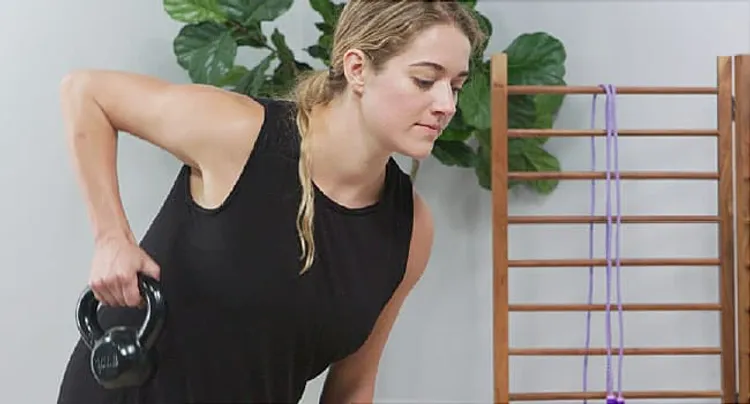
If a dumbbell and a cannonball had a very athletic baby, it would be a kettlebell. Small, simple, and slightly intimidating at first glance, this handled weight can deliver a serious total-body workout without requiring a garage full of equipment or a gym membership that quietly judges your bank account every month.
The beauty of kettlebell training is efficiency. Because the weight sits below the handle instead of evenly balanced in your hand, your body has to work harder to control it. Your grip, core, shoulders, hips, glutes, legs, and back all get invited to the party. And unlike machines that isolate one muscle group at a time, total-body kettlebell exercises train real-life movement patterns: hinging, squatting, pressing, pulling, rotating, bracing, and standing tall like you absolutely did not just trip over the yoga mat.
Below are five must-try total-body kettlebell exercises that build strength, power, coordination, and conditioning. They are practical, scalable, and surprisingly fun once you stop treating the kettlebell like a mysterious metal coconut.
Why Kettlebell Exercises Work So Well
Kettlebell workouts are popular because they combine strength training and cardio-style effort in one compact session. Many kettlebell moves are compound exercises, meaning they use several joints and muscle groups at once. That is exactly what makes them useful for people who want a full-body workout without spending two hours counting ceiling tiles between sets.
For general health, adults are encouraged to include muscle-strengthening activities that work all major muscle groups at least two days per week. Kettlebell training can fit beautifully into that goal when performed with good form, smart weight selection, and enough recovery. The goal is not to swing the heaviest bell in the room like you are trying to launch it into orbit. The goal is smooth, controlled power.
Before you begin, choose a kettlebell that allows you to move well. Beginners usually do better starting lighter than they think. If your form falls apart after three reps, the kettlebell is not “challenging”; it is auditioning to become a bad idea. Warm up with hip hinges, bodyweight squats, arm circles, glute bridges, and light marching before starting the main workout.
1. Kettlebell Swing
Best for: Power, glutes, hamstrings, core, and conditioning
The kettlebell swing is the superstar of kettlebell exercises. It is explosive, athletic, and extremely effective when done correctly. It is also one of the most commonly butchered moves in the gym, usually by people who turn it into a front raise with extra panic. A proper kettlebell swing is not an arm exercise. It is a hip-hinge exercise powered by the glutes and hamstrings.
How to do it
Stand with your feet about shoulder-width apart and place the kettlebell slightly in front of you. Hinge at your hips, keeping your back neutral, and grab the handle with both hands. Pull the bell back between your legs like you are hiking a football. Drive your hips forward powerfully and let the kettlebell float to about chest height. At the top, your body should look like a standing plank: ribs down, glutes tight, core braced, and knees softly locked out. Let the bell fall naturally as you hinge again, then repeat.
Form tips
Think “hips snap, arms guide.” Your arms should not yank the bell upward. Keep your shoulders packed, your neck relaxed, and your spine long. The kettlebell should travel close to your body on the backswing, not dip so low that it threatens your knees. If your lower back feels like it is doing all the work, stop and practice the hip hinge with no weight.
Try this
Perform 3 sets of 10 to 15 swings with 45 to 60 seconds of rest. Focus on crisp reps instead of speed. When the swing feels smooth, you can use it as a conditioning finisher after your strength exercises.
2. Goblet Squat to Press
Best for: Legs, shoulders, core, posture, and full-body strength
The goblet squat is one of the friendliest ways to learn strong squat mechanics because holding the kettlebell in front of your chest helps you stay upright. Add an overhead press, and suddenly your legs, core, shoulders, triceps, and upper back are all working together. It is efficient, spicy, and mildly humbling in the way all good exercises are.
How to do it
Hold the kettlebell by the horns close to your chest, elbows pointing down. Stand with your feet about shoulder-width apart. Brace your core and lower into a squat, keeping your chest tall and knees tracking in the same direction as your toes. Push through your feet to stand. Once you are fully upright, press the kettlebell overhead. Lower it back to your chest with control and repeat.
Form tips
Do not rush the transition from squat to press. Stand tall first, then press. Keep your ribs from flaring as the bell goes overhead. If your back arches like a dramatic movie bridge, use a lighter kettlebell or perform only the goblet squat until your core control improves.
Try this
Complete 3 sets of 8 to 12 reps. Use a weight that allows a strong squat and a controlled press. If the overhead portion feels too difficult, turn the movement into a goblet squat with a forward press at chest height.
3. Single-Arm Kettlebell Clean and Press
Best for: Total-body coordination, shoulders, hips, core, and grip
The clean and press is a full-body kettlebell exercise that teaches your hips, core, and upper body to cooperate. It starts with lower-body power, moves through the core, and finishes with an overhead press. When done well, it looks smooth and athletic. When done poorly, the kettlebell slaps your wrist like it has unresolved personal issues.
How to do it
Place the kettlebell between your feet. Stand with your feet hip-width apart. Hinge at the hips and grip the handle with one hand. Drive through your legs and hips to pull the kettlebell upward, keeping it close to your body. As it rises, rotate your hand around the bell so it lands softly in the front rack position, resting near your forearm and upper arm. Brace your core, squeeze your glutes, and press the kettlebell overhead. Lower it back to the rack, then return it to the floor or swing it gently into the next rep.
Form tips
The clean is not a biceps curl. Use your hips to create momentum. Keep the bell close so it does not crash onto your wrist. In the rack position, your elbow should stay close to your body, your wrist should be neutral, and your shoulder should feel stable. During the press, avoid leaning sideways like you are dodging a surprise dodgeball.
Try this
Do 3 sets of 5 to 8 reps per side. Rest as needed between sides. This move rewards patience, so practice the clean separately before adding the press.
4. Kettlebell Renegade Row
Best for: Back, core, shoulders, arms, and anti-rotation strength
The renegade row is basically a plank that went to business school and came back with more responsibilities. It trains your back and arms while forcing your core to resist twisting. That anti-rotation challenge is a big reason this exercise feels like a full-body workout even though the visible movement is a row.
How to do it
Place two kettlebells on the floor about shoulder-width apart. Hold the handles and step your feet back into a high plank position. Keep your feet wider than usual for balance. Brace your abs, squeeze your glutes, and row one kettlebell toward your ribs. Lower it slowly, then repeat on the other side.
Form tips
Use stable kettlebells with flat bottoms. Keep your hips as still as possible. If your torso twists dramatically every time you row, widen your stance or use a lighter weight. Your body should stay long from head to heels. Do not let your shoulders creep up toward your ears; they already have enough drama from daily life.
Beginner modification
If the full renegade row feels too intense, perform a supported single-arm kettlebell row instead. Place one hand on a bench, chair, or sturdy surface, hinge at the hips, and row the kettlebell toward your ribs. You will still train your back, grip, and core without asking your plank to file a complaint.
Try this
Perform 3 sets of 6 to 10 reps per side. Move slowly and prioritize control over speed. This exercise is not a race; it is a stability test wearing a back-workout costume.
5. Turkish Get-Up
Best for: Mobility, shoulder stability, core strength, coordination, and full-body control
The Turkish get-up may look complicated at first, but it is one of the most valuable total-body kettlebell exercises because it teaches your body to move as one connected system. You begin lying on the floor and finish standing tall with the kettlebell overhead. Then you reverse the entire movement. It is part strength drill, part mobility test, and part “how did I get from the floor to here?” puzzle.
How to do it
Lie on your back with the kettlebell in your right hand, arm extended toward the ceiling. Bend your right knee and keep your right foot flat on the floor. Your left arm and left leg should angle out slightly. Keep your eyes on the kettlebell. Roll onto your left elbow, then press up to your left hand. Lift your hips and sweep your left leg underneath you into a half-kneeling position. Stand up while keeping the kettlebell overhead. Reverse each step carefully until you return to the floor. Switch sides.
Form tips
Start with no weight or a very light object until the pattern feels natural. Keep your wrist stacked over your elbow and shoulder. Move slowly. The Turkish get-up is not supposed to be fast; it is supposed to be clean, controlled, and stable. If the kettlebell wobbles overhead, pause and reset.
Try this
Do 2 to 3 sets of 1 to 3 reps per side. This is a quality-first exercise. One beautiful rep is better than five messy ones that look like furniture assembly gone wrong.
How to Turn These Exercises Into a Workout
You can perform these five total-body kettlebell exercises as a circuit or as straight sets. If you are newer to kettlebell training, start with straight sets so you have enough rest to keep your technique sharp. More experienced exercisers can use a circuit format for a stronger conditioning effect.
Beginner-friendly full-body kettlebell workout
- Kettlebell Swing: 3 sets of 10 reps
- Goblet Squat to Press: 3 sets of 8 reps
- Single-Arm Clean and Press: 3 sets of 5 reps per side
- Supported Single-Arm Row or Renegade Row: 3 sets of 8 reps per side
- Turkish Get-Up: 2 sets of 1 rep per side
Rest 45 to 90 seconds between sets. If your breathing is out of control or your form starts getting wobbly, rest longer. Fitness is not a punishment. Your body is allowed to negotiate.
Intermediate circuit option
Perform each move for the suggested reps, rest 60 to 90 seconds, then repeat for 3 to 4 rounds:
- 12 kettlebell swings
- 8 goblet squats to press
- 6 clean and press reps per side
- 8 renegade rows per side
- 1 Turkish get-up per side
This format trains strength, muscular endurance, and conditioning without requiring a long session. Keep the kettlebell weight manageable. The last round should be challenging, not chaotic.
Common Kettlebell Mistakes to Avoid
Choosing a kettlebell that is too heavy
A heavy kettlebell can be useful, but only when your form is ready. If the bell controls you more than you control it, go lighter. Good reps build strength. Ugly reps build regret.
Squatting the swing
The kettlebell swing is a hinge, not a squat. Your hips move back and forward, not straight down and up. Practice Romanian deadlifts or wall taps if you need to learn the hinge pattern.
Ignoring the core
Your core is not just there for crunches. It stabilizes your spine, transfers force, and keeps your ribs and pelvis aligned. Brace gently before each rep, as if preparing for someone to poke your stomach.
Skipping warm-ups
Kettlebell exercises often involve speed, range of motion, and coordination. A short warm-up helps your joints, muscles, and nervous system get ready. Five minutes can make the difference between “great workout” and “why does my hip sound like popcorn?”
Experience Notes: What Training With These 5 Kettlebell Exercises Feels Like
The first experience many people have with kettlebell training is surprise. A single kettlebell does not look like much. It sits there quietly, almost politely. Then you pick it up, try a set of swings, and suddenly your lungs are sending strongly worded emails. That is the magic of total-body kettlebell exercises: they ask many muscles to work at the same time, so the workout feels bigger than the equipment.
One of the best things about these five moves is how quickly they teach body awareness. The swing teaches you whether you truly know how to hinge. The goblet squat to press shows whether your core can stay braced while your arms move overhead. The clean and press teaches timing, because the bell will not land softly unless your hips, hand, and shoulder cooperate. The renegade row exposes sneaky rotation. The Turkish get-up reveals whether you can stay calm while moving through several positions under control.
At first, progress may not feel dramatic. You may spend a session simply learning how to park the kettlebell safely, how to keep your wrist straight, or how to stop shrugging your shoulders during rows. That still counts. In fact, those early technique wins are often more valuable than adding weight. Kettlebells reward patience. They are not impressed by ego, and they have a special talent for making rushed reps look suspicious.
After a few weeks of consistent practice, many people notice everyday benefits. Carrying groceries feels easier. Climbing stairs feels less like a personal attack. Posture may feel stronger because the upper back and core are working regularly. Hips may feel more powerful from swings and squats. Shoulders may feel more stable from presses and get-ups, especially when the movements are done slowly and with attention.
Another real-world advantage is convenience. These exercises do not require a complicated setup. You can train in a living room, garage, small gym corner, or backyard. One kettlebell and a little floor space are enough for a meaningful session. That makes consistency easier, and consistency is where the results live. Not in the fanciest equipment. Not in the most dramatic workout video. Just in repeated, focused practice.
There is also a mental benefit. Kettlebell training feels active and skill-based. Instead of simply moving weight from point A to point B, you are learning rhythm, breathing, balance, and control. That keeps workouts interesting. A swing has snap. A clean has timing. A Turkish get-up feels like solving a movement puzzle. Even the goblet squat feels better when you realize the kettlebell helps you sit deeper and stand taller.
The smartest approach is to treat these exercises like skills, not chores. Start with lighter weights, practice clean movement, and increase difficulty gradually. Some days you will feel strong and smooth. Other days the kettlebell will feel like it has been filled with wet cement. Both days are normal. Keep your reps honest, rest when needed, and remember that training should build you up, not leave you limping around like a background zombie in a low-budget movie.
In the end, these five must-try total-body kettlebell exercises are popular for a reason. They are efficient, practical, challenging, and adaptable. Whether your goal is general strength, better conditioning, improved coordination, or a more engaging home workout, the kettlebell can earn a permanent spot in your fitness routine. Just respect the form, respect the weight, and maybe give the kettlebell a little nod before you start. It looks small, but it knows things.
Conclusion
Total-body kettlebell exercises are a powerful way to train multiple muscle groups, improve movement quality, and build practical strength with minimal equipment. The kettlebell swing, goblet squat to press, single-arm clean and press, renegade row, and Turkish get-up cover the major movement patterns your body uses every day: hinge, squat, push, pull, brace, rotate, stabilize, and stand.
For the best results, start with a weight you can control, move with intention, and keep your technique clean. A kettlebell workout does not need to be complicated to be effective. In fact, simple moves performed well are usually the ones that deliver the biggest payoff. Train consistently, recover well, and let the kettlebell do what it does best: turn a small amount of space into a surprisingly mighty full-body workout.












