
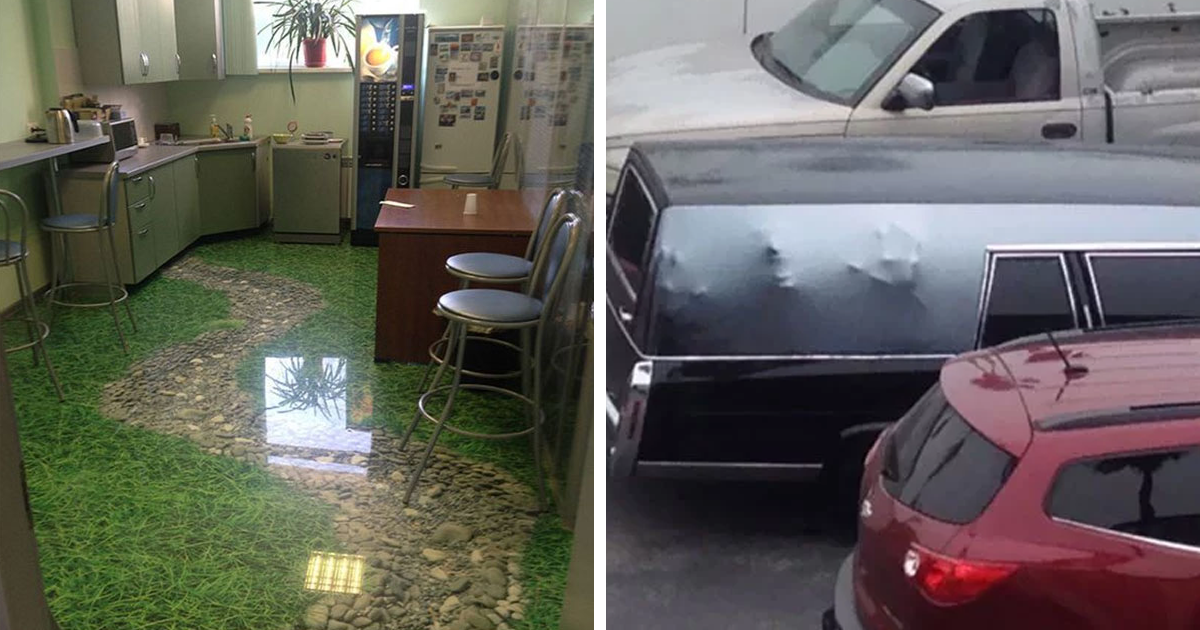
Note: This is an original, SEO-ready article written for web publishing. It is inspired by the internet-famous idea of “awful taste but flawless execution” and synthesized from real design, pop culture, craftsmanship, and online humor discussions without copying captions, posts, or source text.
Some creations are beautiful. Some creations are useful. Some creations make you stop, squint, and whisper, “Who approved this?” And then, five seconds later, you realize something even more disturbing: whoever made it was extremely talented.
Welcome to the strange, sparkly, occasionally cursed world of awful taste but flawless executiona place where rhinestones meet power tools, furniture loses its dignity, cars become rolling fever dreams, and someone spends 200 hours making an object that should probably have remained a group chat joke.
The magic of this category is the contradiction. The idea may be questionable. The colors may be loud enough to file a noise complaint. The final result may look like it escaped from a luxury mall, a haunted garage sale, and a Vegas wedding chapel at the same time. But the craftsmanship? Immaculate. The seams are clean. The paint job is smooth. The welding is professional. The commitment is terrifyingly admirable.
That is why people cannot look away. These designs are not simple failures. They are triumphs of effort applied in deeply confusing directions. And honestly, that makes them far more interesting than another beige room with a beige couch and a sad little beige vase trying its best.
What Does “Awful Taste But Great Execution” Actually Mean?
The phrase describes creations where the concept, style, or aesthetic choice feels bizarre, tacky, over-the-top, or simply wrongbut the technical skill behind it is impressive. It is not the same as bad design in the ordinary sense. A poorly painted chair with wobbly legs is just bad. A perfectly carved chair shaped like a giant human foot, polished to museum quality and upholstered in velvet? That is awful taste executed flawlessly.
The difference matters. “Awful taste” is subjective. It depends on culture, trend cycles, class, nostalgia, humor, and personal preference. What one person calls tacky, another person calls iconic. What looks ridiculous today may become collectible tomorrow. The internet loves this tension because it turns design criticism into a comedy routine with a plot twist: you may hate the object, but you still have to respect the maker.
Why the Internet Loves Flawlessly Executed Bad Taste
Online audiences are exhausted by safe design. We have seen the same minimalist apartments, the same white kitchens, the same “clean girl” branding, and the same perfectly staged spaces where no human has apparently ever eaten a sandwich. Against that backdrop, a hand-built motorcycle covered in baroque gold detailing feels aliveeven if it also looks like it belongs to a vampire who won the lottery.
These objects give people something to react to. They invite comments, jokes, debates, and reluctant admiration. They are visually loud, emotionally immediate, and easy to understand in one glance. You do not need a design degree to know that a toilet-shaped handbag is a choice. You also do not need a design degree to notice that the stitching is excellent.
It Is the Comedy of Commitment
Half the humor comes from imagining the creative process. Someone had an idea. Someone bought materials. Someone cleared a weekend, then probably several more weekends. Someone pushed through doubt, fatigue, and maybe a concerned text from their cousin. And after all that, the result was not a mistake. It was exactly what they meant to make.
That level of commitment is funny because most people abandon projects when they cannot find the scissors. These makers go all the way. They do not merely dip a toe into questionable design; they cannonball into the deep end wearing a sequined cape.
40 Types of Awful Taste Executed Flawlessly
Instead of copying any viral gallery, let’s look at the kinds of creations that often fall into this wonderfully chaotic category. These examples are original descriptions based on common patterns in design culture, DIY communities, custom fashion, automotive modification, interiors, and internet humor.
1. The Luxury Object That Should Not Be Luxury
Think of a trash can covered in premium leather, a plunger with a hand-carved walnut handle, or a toilet seat finished like a grand piano. The materials are rich. The finish is elegant. The concept is aggressively unserious.
2. The Car Modification With Too Much Confidence
Custom cars are fertile ground for flawless bad taste. A vehicle wrapped in fake marble, fitted with glowing underbody lights, and decorated with gold trim may be technically pristine. It may also look like a nightclub learned how to drive.
3. The Hyper-Realistic Cake Nobody Asked For
A cake shaped exactly like a raw steak, a sneaker, or a kitchen sponge can be stunningly realistic. The baker’s skill is undeniable. The appetite, however, may need a moment alone.
4. The Furniture That Forgot Its Job Was to Be Normal
A couch shaped like lips, a chair shaped like a hand, or a coffee table supported by sculpted animal legs can be built beautifully. Whether anyone wants to relax near it is another question.
5. The Outfit That Could Stop Traffic for Legal Reasons
Some clothing is tailored perfectly but designed like a dare. Neon feathers, metallic fringe, plastic armor, denim-on-denim-on-denimif the proportions are sharp and the sewing is excellent, it earns its place in the hall of spectacularly questionable fame.
6. The Nail Art With Engineering Ambitions
Tiny sculptures, aquarium nails, miniature food nails, nails with dangling chainstechnically impressive, visually chaotic, and almost certainly incompatible with opening a soda can.
7. The Home Renovation That Chose Drama Over Peace
A bathroom covered floor-to-ceiling in mirrored tiles. A kitchen with purple cabinets, tiger-print stools, and crystal chandeliers. A bedroom ceiling painted like outer space. These choices may not soothe the nervous system, but they rarely lack effort.
8. The Handbag That Became a Conversation Threat
Some bags are shaped like telephones, animals, food, household items, or tiny pieces of furniture. When made well, they become wearable jokes with luxury-level finishing.
9. The Sculpture With Too Much Personality
A garden statue of a muscular frog, a ceramic cat with human teeth, or a metal rooster wearing sunglasses might be beautifully made. It might also cause neighbors to avoid eye contact.
10. The Wedding Detail That Went Full Theater
Custom cake toppers, dramatic centerpieces, themed seating charts, smoke machines, and monogrammed everything can cross from romantic to “Broadway production funded by a coupon code.” Still, flawless execution makes the spectacle unforgettable.
11. The Themed Room That Never Blinked
A pirate bathroom, a jungle kitchen, a spaceship bedroom, or a medieval dining room can become ridiculous when every detail is included. Yet the total commitment often makes it strangely impressive.
12. The Tattoo That Is Technically Brilliant and Emotionally Confusing
Some tattoos show extraordinary line work, shading, and color control while depicting ideas that raise immediate questions. The artist did their job. The client’s Pinterest board may need supervision.
13. The Pet Accessory With Royal Delusions
A tiny velvet throne for a chihuahua, a rhinestone helmet for a cat, or a miniature tuxedo with better tailoring than most prom suits can be absurd and beautifully made at the same time.
14. The Kitchen Gadget That Solves a Problem Nobody Had
Not every clever invention is necessary. A banana slicer shaped like a dragon or a golden cereal dispenser may work perfectly while making breakfast feel like a low-budget magic show.
15. The Yard Decoration Visible From Space
Giant inflatables, themed mailboxes, neon flamingos, and custom fountains can be neighborhood legends. Tasteful? Maybe not. Memorable? Absolutely.
The Fine Line Between Tacky and Iconic
Bad taste is not always a design crime. Sometimes it is rebellion. Sometimes it is humor. Sometimes it is a refusal to let every room, outfit, and object behave like it is interviewing for a corporate wellness brochure.
Many styles once dismissed as tacky later return as trends. Shag rugs, chrome furniture, animal prints, bold wallpaper, lava lamps, maximalist rooms, and Y2K fashion have all moved in and out of favor. Taste changes because culture changes. People get tired of restraint, then they get tired of excess, then they repeat the cycle while pretending this time is totally different.
That is why “awful taste but flawless execution” is more than a joke. It exposes how unstable taste really is. When an object is made poorly, people can reject it easily. But when it is made beautifully, the viewer has to wrestle with a more complicated question: do I dislike this because it is bad, or because it refuses to follow the rules I expect?
Why Craftsmanship Can Rescue a Questionable Idea
Execution changes everything. Clean technique gives even the strangest concept a kind of authority. A hand-painted mural with precise detail feels intentional. A custom jacket with perfect tailoring feels designed, not random. A wild interior with balanced lighting, strong proportions, and consistent materials can feel theatrical rather than messy.
This is the difference between chaos and controlled chaos. The best examples of awful taste with great execution have discipline underneath the madness. The colors may be outrageous, but they are applied cleanly. The object may be silly, but the structure is sound. The joke may be loud, but the maker understands form, texture, scale, and finish.
In other words, skill gives the viewer permission to enjoy the absurdity. We may not want the object in our own living room, driveway, closet, or wedding album, but we can admire the fact that someone made the impossible-looking thing work.
The Role of Kitsch, Camp, and Maximalism
Many flawless bad-taste creations overlap with kitsch, camp, and maximalism. Kitsch leans into sentimentality, novelty, and mass-culture imagery. Camp enjoys exaggeration, theatricality, and artificiality. Maximalism says, “Why stop at one pattern when seven are available and emotionally ready?”
These styles are often dismissed because they reject quiet refinement. They want attention. They sparkle. They wink. They may include fake fruit, velvet, gold trim, oversized shapes, plastic flowers, or a lamp that looks like it knows secrets. But they also offer something minimalism often avoids: personality with the volume turned up.
That does not mean every loud design is good. Some objects are simply too much in the way a raccoon in a chandelier is too much. But when the execution is strong, kitsch can become charming, camp can become clever, and maximalism can become immersive instead of cluttered.
What Designers Can Learn From Awful Taste
Professional designers often talk about balance, hierarchy, contrast, usability, and restraint. Those principles matter. But the internet’s love for strange, flawlessly made objects reveals another truth: people crave surprise.
Safe design is easy to approve and easy to forget. Risky design creates emotion. It may be delight, confusion, laughter, or horror, but at least it creates something. A perfectly executed oddball idea can teach designers to be braver, more specific, and less allergic to personality.
Lesson One: Skill Makes Weirdness Work
If you want to make something strange, make it well. Poor execution turns a bold idea into a mess. Strong execution turns it into a statement.
Lesson Two: Humor Is a Design Tool
Objects that make people laugh are not automatically inferior. Humor can create emotional attachment, memorability, and shareability. A playful design may travel farther online than a tasteful one because it gives people a reason to respond.
Lesson Three: Taste Is Not Universal
What feels tacky in one context may feel joyful in another. A rhinestone-covered cowboy hat might be ridiculous in a boardroom and perfect at a themed party. Design does not exist in a vacuum; it lives in culture, use, memory, and mood.
Why These Creations Go Viral
Viral design usually has a strong hook. Awful taste with flawless execution has one of the best hooks of all: conflict. The viewer’s brain receives two messages at once. Message one: “This is terrible.” Message two: “This is incredibly well made.” That contradiction creates instant engagement.
People share these images because they want others to experience the same mental traffic jam. They tag friends. They argue in comments. They defend the object. They roast it. They secretly want it. The best examples become tiny cultural events because they are not neutral. Nobody shrugs at a crystal-covered lawn mower.
When Awful Taste Becomes Personal Expression
It is easy to laugh at strange design, but there is something sincere underneath many of these creations. Someone loved an idea enough to build it. Someone wanted a room, outfit, vehicle, cake, or object that felt personal rather than approved by invisible taste police.
That sincerity matters. The world has enough products designed to offend no one and excite no one. A bizarre but beautifully executed creation may not be elegant, but it is rarely boring. It says, “This is what I like,” with the confidence of a karaoke singer who knows every word and fears no key change.
Experiences Related to Awful Taste But Flawless Execution
Anyone who has spent time online, visited flea markets, attended themed parties, explored custom car shows, or wandered through very enthusiastic home décor stores has probably encountered this phenomenon in real life. The experience usually begins with disbelief. You see something from across the room and assume it cannot possibly be intentional. Then you get closer and realize every detail has been carefully considered. That is when the confusion turns into respect.
One common experience is the “I hate it, but I need a photo” reaction. Maybe it is a gold-painted chair shaped like a seashell. Maybe it is a motorcycle with dragon scales airbrushed across the tank. Maybe it is a cake that looks exactly like a fast-food burger, complete with sesame seeds and fake melted cheese made from fondant. You may not want to own it, ride it, or eat it, but you absolutely want proof that it exists.
Another familiar experience is discovering that the object works better than expected. A wildly themed restaurant may have outrageous wall art, giant props, and colors that appear to have been chosen during a sugar rush. Yet the lighting is flattering, the seating is comfortable, the menu is readable, and the atmosphere is fun. Suddenly, what looked tacky from the outside becomes effective because the execution supports the experience.
There is also the strange emotional shift that happens when you meet the maker. Online, it is easy to judge an object in two seconds. In person, the creator may explain the hours of planning, the custom tools, the failed prototypes, the family story, or the joke that started it all. The object does not necessarily become tasteful, but it becomes human. The rhinestone mailbox is no longer just a rhinestone mailbox. It is a retirement project, a tribute, a neighborhood landmark, or a deliberate attempt to make the mail carrier laugh.
Many people have also experienced this in fashion. A friend arrives wearing something objectively outrageous: a neon jacket, glitter boots, printed pants, and sunglasses that look like they were designed by a disco ball with a law degree. At first, it seems like too much. But the fit is perfect, the confidence is real, and the whole outfit has rhythm. Somehow, the person pulls it off. That is flawless execution in motion.
These experiences remind us that taste is not only about rules. It is about intention, context, confidence, and craft. A strange idea can succeed when it is made with care. A loud design can feel joyful when it commits fully. And a questionable object can become unforgettable when the execution is too good to ignore.
Conclusion: Sometimes Bad Taste Deserves a Standing Ovation
The world of awful taste but flawless execution is funny because it refuses to be simple. These creations are not failures, exactly. They are not masterpieces, exactly. They live in the glorious middle, where talent and questionable judgment shake hands and produce something nobody can stop discussing.
Whether it is a luxury trash can, a dragon-painted car, a surreal cake, a maximalist room, or a handbag shaped like an object that should never be a handbag, the appeal comes from the same delightful contradiction: the idea may be unhinged, but the execution is excellent.
And maybe that is the real lesson. Taste can be debated forever. Skill cannot. When someone brings a bizarre idea to life with precision, patience, and confidence, they earn a strange kind of respect. You may laugh. You may cringe. You may whisper, “Absolutely not.” But deep down, you know the truth: they nailed it.













