
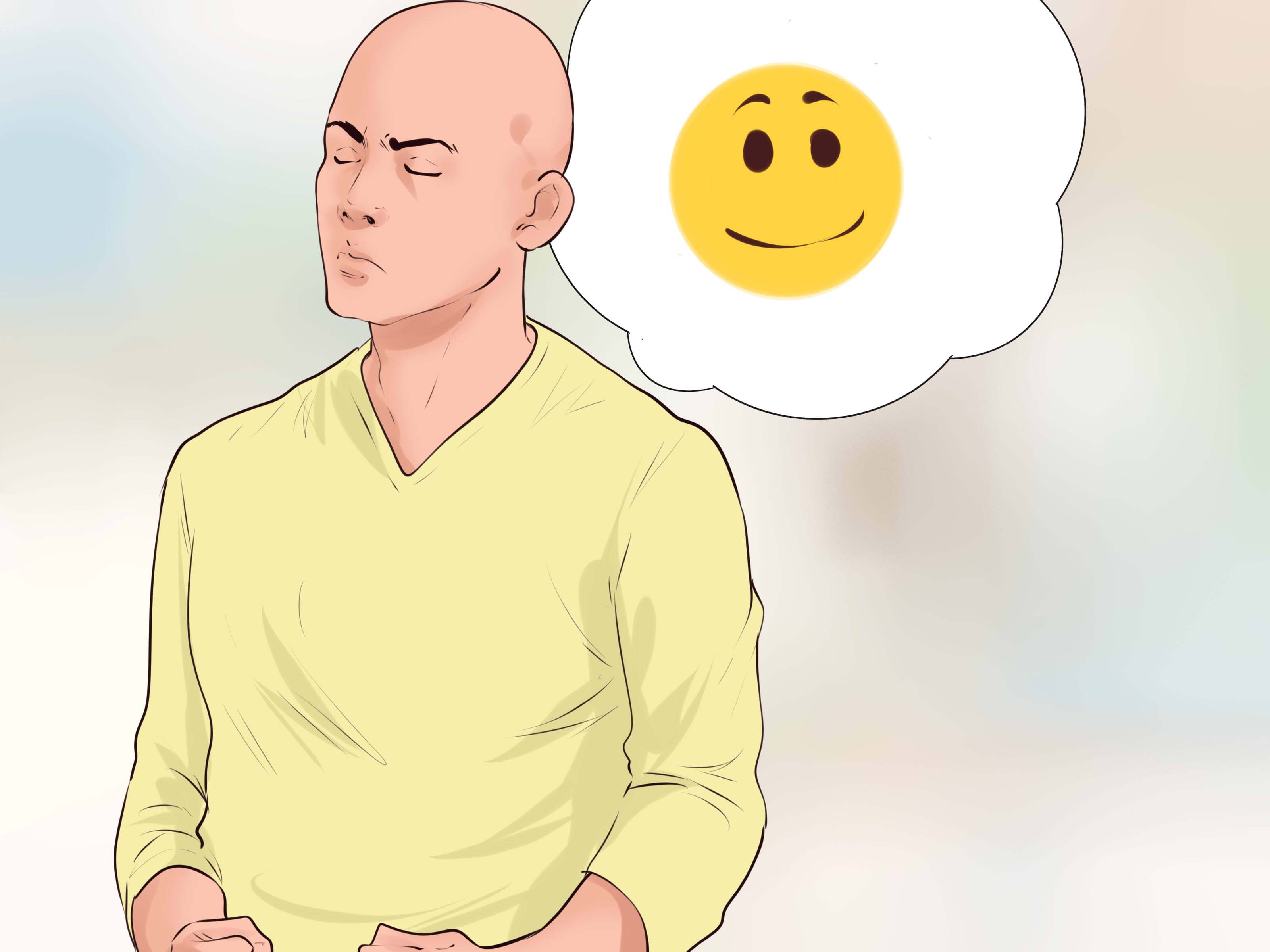
Annoying people are one of life’s great mysteries. They appear in office kitchens, group chats, checkout lines, family reunions, apartment buildings, andsomehowevery comment section on the internet. One minute you are enjoying a perfectly peaceful day, and the next someone is chewing loudly, interrupting every sentence, giving unsolicited advice, or explaining your own job to you with the confidence of a man holding a backwards map.
The good news? You do not have to let every irritating person rent a penthouse in your brain. Learning how to ignore annoying people is not about becoming cold, rude, or emotionally unavailable. It is about protecting your peace, choosing your battles, and saving your energy for things that actually matterlike your goals, your relationships, your health, and remembering where you put your keys.
Of course, “ignore them” sounds easy until the person in question is your coworker, neighbor, classmate, relative, roommate, or someone who seems to have earned a professional certificate in being difficult. That is why the best approach is not simply pretending they do not exist. A healthier strategy combines emotional self-control, clear boundaries, smart distance, and practical communication.
Below are four realistic ways to ignore annoying people without losing your manners, your mind, or your last tiny thread of patience.
Why Ignoring Annoying People Can Be Healthy
Before we get into the four methods, let’s clear up a common misunderstanding: ignoring someone is not always immature. Sometimes it is mature enough to deserve a small parade.
When a person repeatedly pushes your buttons, your body may react as if there is an actual threat. Your heart rate rises, your muscles tense, your thoughts speed up, and suddenly you are composing a dramatic courtroom speech in your head over something that began with, “Actually, you’re doing that wrong.” Stress can make it harder to listen, respond calmly, or make good decisions. That is why learning to pause instead of immediately reacting is a powerful life skill.
Ignoring annoying behavior can help you avoid unnecessary arguments, reduce emotional exhaustion, and stay focused on your own priorities. It is especially useful when the other person is looking for attention, drama, or a reaction. Some people toss little verbal fishing hooks into the air and wait to see who bites. You do not have to be the fish.
However, ignoring is not the right tool for every situation. If someone is threatening you, harassing you, bullying you, stalking you, discriminating against you, or creating an unsafe environment, the answer is not silent suffering. In those cases, document what happened, get support, speak with a supervisor or trusted authority, and prioritize safety. Ignoring is for irritation, not danger.
1. Control Your Reaction Before You Control the Situation
The first way to ignore annoying people is to manage your own reaction. This sounds unfair at first. Why should you have to do emotional gymnastics because someone else has the social awareness of a shopping cart with one broken wheel? Because your reaction is the part you can actually control.
Annoying people often become more powerful when they get a visible response from you. Eye rolls, sharp replies, sighs, and sarcastic comments may feel satisfying for five seconds, but they can also turn a small irritation into a full-blown conflict. If someone is baiting you, your reaction becomes their entertainment. Do not hand them popcorn.
Use the pause-and-breathe method
When someone irritates you, pause before responding. Take one slow breath. Then take another if your soul is still trying to leave your body. This tiny delay helps your brain move from reaction mode into decision mode. You do not need a twenty-minute meditation session in the middle of a meeting. Even a few seconds can help.
Try this simple internal script:
- “This is annoying, but it is not an emergency.”
- “I do not need to respond to everything.”
- “My peace is more important than winning this moment.”
- “Let them be loud. I can stay steady.”
These phrases may sound small, but they interrupt the mental spiral. Instead of thinking, “How dare they?” you shift into, “How do I want to handle this?” That difference is huge.
Keep your face and tone neutral
Neutral does not mean fake-smiling like a customer service robot running on low battery. It means keeping your expression, posture, and voice calm. Annoying people often look for emotional fuel. A neutral response gives them nothing useful to work with.
For example, if someone makes a snide comment, instead of snapping back, you can simply say, “Okay,” “I hear you,” or “Noted.” Then return to what you were doing. The goal is not to impress them with your vocabulary. The goal is to end the performance before it becomes a season finale.
2. Create Physical, Digital, and Mental Distance
Distance is one of the most underrated tools for dealing with annoying people. You do not always need a dramatic confrontation. Sometimes you need a different chair, a muted chat, a closed door, or the spiritual power of noise-canceling headphones.
Physical distance reduces exposure. Digital distance reduces interruptions. Mental distance reduces the amount of emotional meaning you attach to someone’s behavior. Together, they can turn a daily irritation into background noise.
Use physical distance when possible
If the annoying person is a coworker, try sitting somewhere else, changing your lunch schedule, taking calls in a different space, or limiting unnecessary one-on-one time. If it is a neighbor, keep conversations short and polite. If it is a relative at a gathering, move toward people who make you feel relaxed instead of getting trapped in the “So, when are you going to fix your entire life?” corner.
You do not have to announce your distance like a royal decree. Quiet adjustments often work better. Sit farther away. Leave the room. Take a walk. Step outside. Refill your water. Suddenly your hydration habits are excellent and your stress level is lower. A win-win.
Use digital distance without guilt
Modern annoying people do not even need to be in the same room. They can arrive through texts, emails, social media comments, voice notes, and group chats named something cheerful like “Family Updates” that somehow contain 87 unread messages and one emotional explosion.
Use the tools available to you:
- Mute conversations that drain you.
- Turn off nonessential notifications.
- Unfollow accounts that constantly irritate you.
- Block people who repeatedly cross the line.
- Check messages at set times instead of reacting instantly.
Muting someone is not a crime. It is a tiny digital fence. You are allowed to decide what gets access to your attention. Your phone is a tool, not a leash.
Practice mental distance
Mental distance means reminding yourself that another person’s annoying behavior is not always personal. Some people interrupt everyone. Some people complain in every room. Some people treat unsolicited advice like a competitive sport. Their behavior may be frustrating, but it may not be specifically about you.
Instead of thinking, “They are trying to ruin my day,” try, “This is their pattern, and I do not need to absorb it.” That mindset helps you stay calmer. You can observe the behavior without emotionally adopting it.
3. Set Clear Boundaries With Short, Boring Responses
Sometimes ignoring annoying people requires wordsbut not many. In fact, the fewer words, the better. Long explanations can invite debate. Over-apologizing can weaken your boundary. Emotional speeches can give the other person more material to argue with.
The best boundary statements are clear, brief, and calm. Think of them as verbal traffic cones: simple, visible, and not interested in your opinion.
Use “I” statements
“I” statements help you express your limit without turning the conversation into a personal attack. Instead of saying, “You are impossible and your voice makes my brain fold in half,” you might say, “I need to focus right now,” or “I am not discussing this today.”
Here are a few boundary scripts you can use:
- “I can’t talk right now. I need to finish this.”
- “I’m not available for that conversation.”
- “Please don’t comment on my personal life.”
- “I understand your opinion. I’m going to make my own decision.”
- “Let’s keep this conversation work-related.”
- “I’m going to step away now.”
Notice that none of these scripts include a 14-page emotional dissertation. You do not need to prove that your boundary deserves to exist. A boundary is not a group project.
Try the gray rock approach for drama-seekers
For people who seem to thrive on conflict, short and uninteresting responses can be very effective. This is sometimes called the “gray rock” approach: you make yourself as emotionally exciting as a gray rock. No sparkle. No drama. No fuel.
For example:
- Annoying person: “Wow, you’re really wearing that today?”
- You: “Yes.”
- Annoying person: “Don’t you care what people think?”
- You: “I’m fine with it.”
- Annoying person: “I’m just being honest.”
- You: “Okay.”
Then you move on. No defending. No explaining. No emotional fireworks. The conversation falls flat because you refuse to perform in it.
This approach works best for low-level provocations, nosy questions, passive-aggressive comments, and attention-seeking behavior. It is not a substitute for getting help if someone is abusive or unsafe.
Repeat your boundary like a calm broken record
Some people hear a boundary and treat it as the opening offer in a negotiation. When that happens, repeat the same statement calmly.
For example:
- “I’m not discussing that.”
- “Like I said, I’m not discussing that.”
- “I’m going to change the subject now.”
The trick is to avoid adding new reasons each time. New reasons create new arguments. Repetition creates clarity. Yes, you may feel like a customer service recording, but in this case, that is a compliment.
4. Redirect Your Attention to What Actually Matters
The final way to ignore annoying people is to stop letting them become the main character in your day. Annoying people are attention magnets. They pull your focus toward their behavior, their tone, their habits, their comments, and their spectacular ability to find your last nerve with both hands and a flashlight.
To take back control, deliberately redirect your attention. This is not denial. It is attention management.
Use a focus anchor
A focus anchor is something you return to when irritation starts taking over. It could be your work task, your breathing, your music, your grocery list, your workout, or one simple question: “What matters most right now?”
For example, if a coworker keeps complaining while you are trying to finish a report, your focus anchor might be: “I need to complete this section before lunch.” If a relative makes an irritating comment at dinner, your anchor might be: “I am here to enjoy the meal and connect with the people I love.” If someone online posts something ridiculous, your anchor might be: “I do not need to argue with a stranger whose profile picture is a motorcycle.”
Replace rumination with action
Rumination is when your mind keeps replaying an annoying interaction like a terrible movie you did not buy tickets for. The more you replay it, the more irritated you become. Instead of mentally re-arguing, do something that shifts your state.
Try one of these quick resets:
- Take a walk around the block.
- Write down what happened in one sentence, then write what you will do next.
- Listen to music that changes your mood.
- Do a short breathing exercise.
- Move your body for five minutes.
- Talk to someone calm and trustworthy.
The point is to move from “I cannot believe they said that” to “Here is what I am doing now.” Annoying people lose power when your attention returns to your own life.
Protect your energy like it has a password
Not everyone deserves full access to you. Some people get your warmth. Some get your patience. Some get your professionalism. Some get a polite nod and absolutely nothing else.
This does not make you mean. It makes you intentional. Your emotional energy is limited, and you are allowed to spend it wisely. You can be kind without being endlessly available. You can be polite without being absorbent. You can be peaceful without letting every loud personality rearrange your nervous system.
Common Mistakes to Avoid When Ignoring Annoying People
Ignoring annoying people sounds simple, but there are a few traps that can make the situation worse.
Mistake 1: Pretending you are fine while secretly boiling
If you ignore someone outwardly but rage internally for three business days, you are not really protecting your peace. You are just moving the argument into your head, where there are no witnesses and somehow you still lose sleep. Use calming techniques, talk things out with a trusted person, or set a clearer boundary if needed.
Mistake 2: Being passive-aggressive
Silent treatment, fake politeness, dramatic sighing, and “I’m fine” delivered with the emotional temperature of a haunted freezer are not healthy ignoring. They keep the tension alive. Aim for calm distance, not emotional revenge.
Mistake 3: Explaining too much
If someone loves arguing, your detailed explanation is a buffet. Keep it short. “I’m not available for this conversation” is stronger than a five-minute defense of your entire personality.
Mistake 4: Ignoring serious behavior
Again, ignoring is not appropriate when someone is threatening, harassing, abusive, or violating important rules. In a workplace, school, or shared living situation, ongoing harmful behavior may need documentation and support from the proper channels.
Real-Life Experiences: What Ignoring Annoying People Looks Like in Practice
One of the most useful lessons about ignoring annoying people is that it rarely feels graceful at first. The first few times you try to stay calm, your inner voice may still be wearing boxing gloves. That is normal. Emotional control is a skill, not a magic switch.
Imagine working with someone who interrupts constantly. Every meeting becomes a verbal obstacle course. At first, you might try to beat them to the sentence, speak louder, or complain afterward to anyone standing near the coffee machine. But eventually you realize that reacting to every interruption drains more energy than the interruption itself. So you change tactics. When they interrupt, you pause, let them finish, and then say, “I’d like to complete my point.” If they interrupt again, you repeat the same sentence. No anger. No performance. Just a steady return to your boundary. Over time, the room starts to notice. More importantly, you stop feeling powerless.
Or consider the family member who always asks personal questions at gatherings. “Are you dating anyone?” “Why don’t you have kids?” “How much money do you make?” Ah yes, the classic holiday interrogation buffet. Instead of getting defensive, you prepare a few boring answers before you arrive. “I’m not discussing that today.” “Nothing new to report.” “Let’s talk about something else.” Then you redirect: “How was your trip?” or “Did you try the dessert?” If they keep pushing, you excuse yourself. The experience teaches you that you do not need to attend every argument you are invited to.
Digital life offers another powerful example. Maybe there is someone online who posts inflammatory opinions, sends dramatic messages, or comments on everything like they are auditioning to be the mayor of chaos. For a while, you read every post and feel your blood pressure climb. Then one day you mute them. Nothing explodes. The internet keeps spinning. Birds still exist. You realize that access to your attention is optional. That small digital boundary gives you back mental space you did not know you were losing.
Another common experience happens in public: the loud phone talker, the impatient customer, the person who treats a shared space like their personal theater. In those moments, ignoring is less about teaching them a lesson and more about choosing not to let a stranger control your mood. You move seats, put on headphones, focus on your book, breathe slowly, or remind yourself, “This is temporary.” You do not need to turn every irritation into a civic mission. Sometimes peace looks like walking away.
The deepest experience, though, is internal. When you practice ignoring annoying behavior in a healthy way, you start to trust yourself more. You learn that you can feel irritated without acting irritated. You can notice disrespect without becoming consumed by it. You can set a boundary without writing a villain origin story about the other person. You become less reactive, and that makes you harder to manipulate.
Over time, ignoring annoying people becomes less about the annoying people and more about your own self-respect. You stop asking, “How do I make them stop being annoying?” and start asking, “How do I keep myself calm, clear, and focused?” That question changes everything. You may not be able to control who talks too loudly, complains too much, interrupts too often, or shares opinions nobody ordered. But you can control how much space they take up in your day. And sometimes, that is the real victory.
Conclusion
Learning how to ignore annoying people is not about becoming rude or emotionally numb. It is about choosing peace over drama, boundaries over resentment, and self-control over impulsive reactions. The four best ways are simple but powerful: control your reaction, create distance, use short boundaries, and redirect your attention to what actually matters.
Annoying people will always exist. They are practically part of the ecosystem, like mosquitoes with opinions. But you do not have to let them dominate your mood, your schedule, or your mental space. With practice, you can stay calm, protect your energy, and move through irritating situations with more confidence and less emotional cleanup afterward.
Note: This article is for general self-improvement and communication guidance. If someone’s behavior becomes threatening, abusive, discriminatory, or unsafe, seek help from trusted people, workplace leadership, school officials, mental health professionals, or local authorities as appropriate.











