
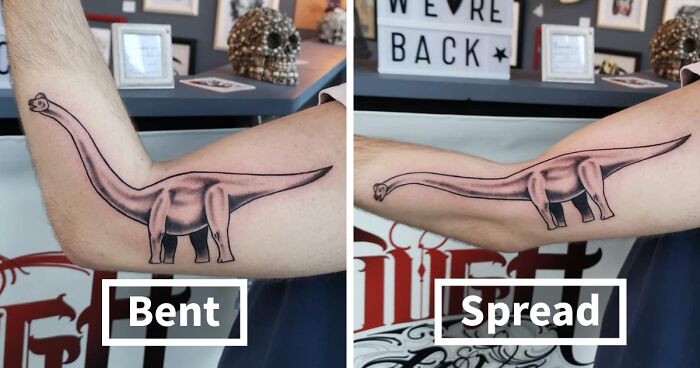
Some tattoos sit quietly on the skin like polite little paintings. Others wait for the elbow to bend, the knee to lift, the fingers to curl, or the shoulder to roll before they reveal their full personality. Those are the tattoos that turn the human body into a flipbook, a stage, a tiny theater with better lighting than most school plays.
Motion-based tattoos are not just “cool ink.” They are design puzzles. The artist has to understand anatomy, skin stretch, joint movement, visual illusion, placement, aging, and the owner’s sense of humor. A shark jaw on the inside of an elbow can “bite” when the arm bends. A butterfly across the back can appear to open its wings when the shoulders move. A frog on a kneecap can suddenly look like it is jumping. It is body art with a built-in special effect, no batteries required.
And yes, people love tattoos more than ever. Tattoos have moved from “rebellious statement” to mainstream self-expression, and creative tattoo ideas now spread across social media faster than a cat knocking over a water glass. But motion tattoos need more planning than a simple symbol on the forearm. Choose the wrong placement, and your clever crocodile might look like a confused sock puppet. Choose the right one, and your body becomes part of the artwork.
What Makes a Tattoo Transform When the Body Moves?
A transforming tattoo uses natural body movement as part of the design. The tattoo does not literally animate, but it creates the illusion of animation when the skin folds, stretches, compresses, or shifts. Joints are the usual stars: elbows, knees, wrists, ankles, fingers, shoulders, and even the neck. These areas can act like hinges, curtains, springs, or doors.
The best examples work because the artist designs for two positions: the “resting” pose and the “moving” pose. A tattoo on a bent elbow may look like a closed mouth, then open when the arm straightens. A design on the fingers may appear scattered until the hand forms a fist. A small figure on the ankle may seem to walk when the foot flexes. This is not random doodling. It is choreography with needles.
38 Creative Tattoos That Change With Movement
1. The Elbow Shark That Bites
Few motion tattoos are as satisfying as a shark mouth placed around the inner elbow. When the arm bends, the jaw closes. When the arm opens, the shark looks ready for lunch. The design is simple, bold, and slightly dramatic, which is exactly what a shark would want.
2. The Knee Tiger That Roars
A tiger face around the kneecap can change expression when the leg bends. The knee’s rounded shape adds volume to the face, while movement gives the tiger an almost growling effect. It is fierce, funny, and probably not ideal for anyone who hates attention.
3. The Butterfly Back That Spreads Its Wings
Placed across the shoulder blades, butterfly wings can appear to open and close as the person moves their shoulders. This idea works beautifully with fine lines, bold color, or blackwork, depending on whether the wearer wants “delicate garden fairy” or “mysterious forest queen.”
4. The Finger Skeleton That Curls
Finger tattoos can create the illusion of tiny bones moving when the hand bends. A skeleton hand design is especially popular because the knuckles naturally behave like joints in the artwork. It is anatomy teaching itself, but with more attitude.
5. The Crocodile Elbow Jaw
Like the shark, a crocodile mouth becomes hilarious when placed around a folding joint. The long snout can run along the forearm, while the mouth opens and closes with the elbow. It is basically a puppet, except permanent and less likely to be approved by your grandmother.
6. The Accordion Wrist Tattoo
A small accordion or fan design around the wrist can compress and expand as the hand moves. The effect is subtle but clever, especially for people who like tiny tattoos with a secret trick.
7. The Jumping Frog on the Knee
A frog on or near the kneecap can appear to crouch and leap when the leg bends. This tattoo is playful, charming, and perfect for anyone whose personality is part woodland creature, part comedian.
8. The Spider That Crawls With the Hand
Placed across the back of the hand or fingers, spider legs can shift as the fingers move. The result looks like the spider is crawling. Wonderful for spooky tattoo fans. Less wonderful for friends who already scream at lint.
9. The Snake That Slithers Around the Arm
A snake wrapping around the forearm or elbow can appear to twist as the arm turns. Curved lines and body contouring make the design feel alive, especially when the head and tail are positioned with movement in mind.
10. The Door That Opens on the Elbow
A small door or window can be designed so that bending the elbow changes its shape. Add a tiny creature peeking out, and suddenly your arm has real estate. Strange real estate, yes, but still real estate.
11. The Angel Wings on the Shoulder Blades
Wing tattoos across the upper back are classic, but shoulder movement can make them feel dynamic. When designed with anatomy in mind, the wings shift naturally as the wearer moves, giving the tattoo a soft animated effect.
12. The Eye That Blinks on the Elbow
An eye tattoo placed near a folding area can appear to blink when the skin creases. It is surreal, artsy, and mildly unsettling in the best possible way.
13. The Dinosaur Mouth on the Arm
A tiny T. rex jaw around the elbow or wrist can become a playful chomping tattoo. It is less “Jurassic Park disaster” and more “adorable prehistoric snack enthusiast.”
14. The Bee Wings That Flutter
A bee or dragonfly tattoo placed near the shoulder, elbow, or ankle can use body movement to make the wings feel active. Fine-line wings work especially well because the skin’s motion adds delicacy.
15. The Crab Claw That Pinches
A crab claw near a finger joint or elbow crease can open and close when the body moves. This is exactly the sort of tattoo that makes strangers say, “Wait, do that again.”
16. The Fish That Swims on the Foot
Foot and ankle tattoos can move with every step. A fish, wave, or koi design can appear to swim as the foot flexes. Placement matters here because feet experience friction and fading more than many other areas.
17. The Puppet Strings on the Fingers
Lines running across the fingers can look like puppet strings in motion. When the hand opens and closes, the strings appear to pull and release. It is minimal, symbolic, and a little theatrical.
18. The Cat Tail That Swishes
A cat design placed along the wrist or ankle can use a curved tail that shifts with movement. This is ideal for cat lovers who want a tattoo that behaves like an actual cat: cute, mysterious, and slightly in charge.
19. The Zipper Tattoo on the Spine
A zipper tattoo following the spine can appear to change as the back bends. Some designs add mechanical or floral details “under” the zipper, turning the body into a surreal reveal.
20. The Scissors That Open and Close
Placed around a finger joint or elbow, scissors can seem to cut when the joint moves. This idea is popular among stylists, crafters, designers, and anyone who has ever threatened a loose thread with dramatic seriousness.
21. The Tiny Dancer on the Ankle
A dancer silhouette near the ankle can appear to shift poses as the foot points and flexes. This works best with simple shapes and clean negative space.
22. The Wolf Jaw on the Knee
A wolf face can become more expressive when placed over the knee. The rounded kneecap gives the snout dimension, while movement changes the face’s intensity.
23. The Book That Opens on the Arm
An open book design near the elbow can look like it is closing or opening as the arm bends. Add tiny stars, flowers, or words, and it becomes a love letter to reading with bonus hinge technology.
24. The Flame That Flickers
Flame tattoos around the wrist, ankle, or elbow can appear to flicker when the body moves. The key is using curved shapes that follow muscle and joint movement.
25. The Octopus Tentacles That Shift
Octopus tattoos are naturally flexible in design. When tentacles wrap around the arm or leg, movement makes them feel like they are curling and uncurling.
26. The Smile That Changes Expression
A face tattoo placed near a fold can change from neutral to smiling when the skin moves. It is clever, but it requires a skilled artist because faces become weird very quickly. One extra line and suddenly your tattoo looks like it knows your browser history.
27. The Mechanical Gear Elbow
Gears around the elbow can create a machine-like illusion. When the arm bends, the joint becomes part of the mechanism. It is a favorite concept for fans of biomechanical tattoos and industrial design.
28. The Bat Wings Under the Arm
Bat wings placed near the inner arm can spread when the arm lifts. The design can be spooky, elegant, or cartoonish, depending on the wearer’s preferred level of vampire energy.
29. The Flower That Blooms on the Shoulder
A flower tattoo can be positioned so petals shift with shoulder movement. Large floral designs often work well because organic shapes naturally forgive small changes in skin position.
30. The Bird That Takes Flight
A bird with wings placed across the shoulder, forearm, or ribs can appear to lift off when the wearer moves. Clean silhouettes often create the strongest illusion.
31. The Mouth on the Palm
A mouth tattoo across the palm or fingers can open and close with hand movement. Palm tattoos can fade quickly, so this idea is bold in more ways than one.
32. The Bow That Tightens
A ribbon or bow near the wrist, ankle, or elbow can appear to tighten or loosen as the joint moves. This is a charming option for people who like delicate tattoos with a visual trick.
33. The Dragon That Wraps and Turns
A dragon winding around the arm or leg can feel alive as muscles move. Long designs with flowing bodies are excellent for motion because they already suggest energy and direction.
34. The Tiny Workout Tattoo
A little barbell, gymnast, runner, or cyclist placed near a joint can “move” with the body. These tattoos are popular because they combine humor, identity, and placement in one neat package.
35. The Wave That Rolls
Wave tattoos around the wrist, ankle, or shoulder can appear to roll with movement. They also age visually well when designed with strong lines and enough breathing room.
36. The Clam Shell That Opens
A clam shell around a hinge-like joint can open and close as the body moves. Add a pearl, and suddenly the tattoo has a punchline and a plot twist.
37. The Robot Arm Illusion
Biomechanical tattoos use the body’s structure to suggest machinery beneath the skin. When placed over moving joints, the design can look like pistons, cables, and plates are working together.
38. The Hidden Message Tattoo
Some tattoos reveal a word, symbol, or image only when the body moves into a certain position. It is the tattoo version of a secret handshake, except you do not have to remember which hand to use.
Why These Tattoos Work So Well
Transforming tattoos work because they respect the body instead of fighting it. A flat drawing copied onto a moving joint can distort in awkward ways. A smart motion tattoo expects distortion and uses it. The elbow becomes a hinge. The knee becomes a dome. The shoulder becomes a wing joint. The fingers become levers. The skin is no longer just a canvas; it is part of the machine.
This is why placement matters as much as the design. Hands, feet, elbows, and knees move constantly, and they can be harder to heal or maintain. Areas that receive a lot of friction or sun exposure may fade faster. Thin lines may blur over time if they are packed too tightly. Heavy detail may not survive well on tiny moving areas. A great tattoo artist will help simplify, resize, or reposition the concept so the joke still lands years later.
How to Plan a Motion Tattoo Without Regret
Choose the Movement First
Before choosing the exact image, decide what the tattoo should do. Should it bite, blink, fly, bloom, crawl, stretch, or reveal a hidden message? Once the motion is clear, the design becomes easier to build.
Work With the Body, Not Against It
Every person’s joints, skin texture, muscle shape, and range of motion are different. A design that looks perfect on one person may not work the same way on another. That is why stencil testing is essential. A good artist may ask you to bend, flex, rotate, or stand in multiple positions before tattooing.
Keep It Readable
Motion tattoos are already doing something visually complicated, so the design should not be overloaded. Bold shapes, clear contrast, and smart negative space usually work better than microscopic details. Tiny details on a moving joint can age like a mystery stain.
Think About Healing and Aftercare
A new tattoo is healing skin. Areas that bend often can be irritated by friction, sweat, tight clothing, and constant motion. Following professional aftercare instructions matters not only for safety but also for keeping the design crisp. A transforming tattoo is fun; an infected transforming tattoo is not a plot twist anyone asked for.
Experience Notes: What People Learn From Motion Tattoos
People who get motion-reactive tattoos often describe the experience as different from choosing a standard design. With a regular tattoo, the big question is usually, “Do I like this image?” With a transforming tattoo, the question becomes, “Does this image do the thing?” That small difference changes the whole process.
The first experience many people mention is the stencil test. This is the moment when the artist places the design on the skin, then asks the client to move. Bend the elbow. Straighten the arm. Make a fist. Lift the shoulder. Flex the foot. It can feel silly, but it is also the moment when the tattoo either becomes brilliant or politely resigns from the project. A shark jaw may need to shift half an inch. A butterfly wing may need to be widened. A hidden word may need more spacing so it does not become alphabet soup when the wrist turns.
The second lesson is patience. Motion tattoos can take longer to design because the artist is solving both an art problem and an anatomy problem. Some clients arrive with a viral image and expect an exact copy. A responsible artist will usually explain that copying someone else’s tattoo is not ideal and that every body moves differently. The better experience is collaborative: bring the idea, explain the effect, then let the artist customize it.
The third experience is the public reaction. These tattoos are conversation starters. A person with a chomping elbow crocodile will probably be asked to bend their arm at parties, offices, gyms, airports, coffee shops, and possibly during serious conversations where crocodile demonstrations are not technically required. If you enjoy playful attention, that can be a bonus. If you prefer mystery and silence, maybe choose a design that reveals itself only occasionally.
The fourth lesson is maintenance. Moving areas can be demanding. Elbows and knees bend all day. Hands are washed constantly. Feet rub against socks and shoes. The tattoo may need extra care during healing and possibly a touch-up later. That does not make motion tattoos a bad idea; it simply means the wearer should understand the trade-off. The coolest placement is not always the easiest one.
Finally, people often say these tattoos feel more personal because they are not complete without the wearer. A flower that blooms when the shoulder moves, a fish that swims when the foot flexes, or a book that opens when the elbow bends depends on the person’s body to finish the artwork. That is the magic. The tattoo is not just on the body. It performs with it.
Conclusion
Creative tattoos that transform when bodies move prove that body art can be clever, funny, elegant, and surprisingly technical at the same time. The best designs do not treat skin like flat paper. They treat it like living architecture, full of hinges, curves, folds, and motion. Whether it is a biting shark, fluttering butterfly, blinking eye, blooming flower, or secret message, a motion tattoo turns everyday movement into a tiny performance.
If you are considering one, start with the effect, not just the image. Find an experienced tattoo artist, test the design in motion, keep the concept readable, and take aftercare seriously. A transforming tattoo should age like a good joke: still clear, still charming, and still worth showing people when they say, “Wait, what happens when you bend your arm?”













