
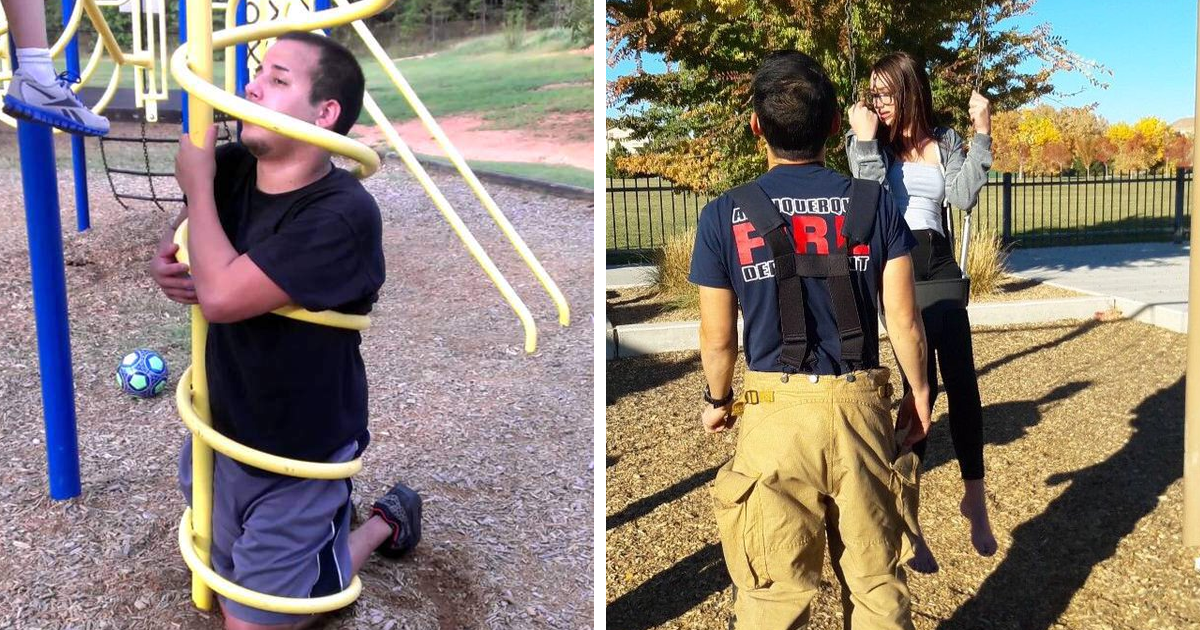
A playground can awaken powerful childhood memories. The swings look welcoming, the monkey bars whisper your old nickname, and the tube slide appears to say, “You still fit.” Unfortunately, playground equipment is a terrible judge of adult dimensions, flexibility, and health-insurance deductibles.
Modern playgrounds are generally designed around children’s ages, sizes, abilities, and developmental stagesnot the proportions of a full-grown person carrying a phone, car keys, and twelve years of lower-back tension. The U.S. Consumer Product Safety Commission separates many playground features into age ranges extending only through age 12, while pediatric safety organizations emphasize appropriate sizing, protective surfacing, equipment maintenance, and correct use.
The following adult playground fails are humorous composite scenarios inspired by common accidents, predictable misjudgments, and familiar “I can absolutely still do this” decisions. No names are included because dignity has already suffered enough.
Why Adults and Kids’ Playground Equipment Are a Risky Match
Children are lighter, smaller, more flexible, and usually closer to the ground. Adults bring additional weight, longer limbs, wider shoulders, less forgiving joints, and an astonishing tendency to perform for whoever has a camera pointed at them.
Falls are the most common playground injury mechanism, and swings, climbing structures, slides, and monkey bars can all become sources of fractures, sprains, head injuries, and bruised pride. Protective surfaces may reduce the severity of a fall, but rubber tiles and wood chips cannot repeal gravity.
Most disasters begin with one of four phrases:
- “Watch this.”
- “I used to do this every day.”
- “There is no way I am too big.”
- “Start recording.”
Slide Disasters: When the Exit Is Not Guaranteed
1. The Tube Slide Traffic Jam
An adult decides the enclosed spiral slide looks fast, nostalgic, and harmless. Halfway down, friction wins. The person stops completely, knees near the chin, while children form a confused line at the entrance. Rescue operations eventually involve pushing from below, instructions from above, and one parent trying very hard not to laugh.
2. The Unexpected High-Speed Launch
The opposite problem occurs when smooth clothing meets an unusually slick slide. Instead of gliding gently to the bottom, the adult exits like a package being launched from a warehouse chute. The landing consists of two heels, one startled noise, and an immediate inspection to determine whether the tailbone is still accepting visitors.
3. The Hot-Slide Surprise
A metal or dark plastic slide can become extremely hot in direct sunlight. An adult sits down without checking the surface and rises again with the speed of a professional athlete. Playground safety guidance recommends testing equipment temperature before use, especially during hot weather.
4. The Lap-Slide Knee Collision
An adult places a small child on their lap and heads down the slide. The adult’s shoes catch against the slide’s sides or surface while the child continues moving, creating a dangerous twisting force. What was meant to be an adorable bonding moment becomes an urgent reminder that children are safer sliding independently when developmentally ready.
5. The Shoulder-Width Calculation Error
The slide entrance appears wide enough from several feet away. It is not. The adult commits, rotates sideways, and discovers that backing out of a molded plastic tunnel requires the flexibility of a gymnast and the emotional strength to ignore nearby witnesses.
6. The Decorative Hood Drawstring Snag
A hoodie string, loose bag strap, or dangling accessory catches against part of the structure. The adult is not seriously injured, but the sudden stop produces panic, spilled coffee, and a valuable lesson: loose clothing and playground equipment are not collaborative partners.
Swing-Set Fails That Made Gravity Feel Personal
7. The Bucket Swing Entrapment
The toddler swing looks amusingly small, which is apparently interpreted as an invitation. An adult squeezes into the bucket seat, takes three triumphant photographs, and then discovers that leaving requires a completely different set of muscles. The final extraction resembles furniture being moved through a narrow doorway.
8. The Chain-Pinch Incident
Adult hips and playground swing chains sometimes compete for the same space. The chains pinch clothing or skin with every pass. Instead of stopping, the rider keeps swinging because several friends are watching. By the end, the adult has gained speed, regret, and two matching bruises.
9. The Jump-Off Dismount
As a child, jumping from a moving swing felt like flying. As an adult, it feels like briefly flying before receiving a detailed message from both knees. The attempted landing becomes a forward roll that was not planned, approved, or performed with recognizable technique.
10. The Backward Flip That Never Became a Flip
Someone remembers wrapping the swing around the top bar as a kid and decides to recreate the experience. The attempt produces twisting chains, a sideways seat, and a slow rotation that leaves the adult suspended in a position normally associated with tangled window blinds.
11. The Standing Swing Performance
Standing on a moving swing is unsafe even for experienced young users, yet an adult decides it will make an excellent video. The seat shifts, the rider’s feet separate, and the performance ends with a dramatic landing in mulch. Nemours KidsHealth advises users to sit properly, hold on with both hands, and stop the swing before getting off.
12. The Walking-Behind-the-Swing Mistake
An adult crosses behind a swinging child while checking a phone. The seat arrives with the punctuality of an express train. Coffee flies in one direction, the phone travels in another, and the adult learns why playground safety rules emphasize staying clear of moving swings.
Monkey Bars and Climbers: Upper-Body Confidence Meets Reality
13. The One-Rung Achievement
An adult announces that monkey bars are “mostly technique.” After grabbing the first two rungs, the shoulders issue a formal objection. The participant swings helplessly for several seconds, drops straight down, and immediately begins discussing how the bars were easier in the 1990s.
14. The Wedding-Ring Pinch
Jewelry catches or pinches against a metal bar during an attempted swing. The adult releases suddenly and lands awkwardly. The ring survives. The finger complains. The person’s spouse asks why any of this seemed necessary.
15. The Cargo-Net Shoe Trap
A sneaker slips through a rope opening while the adult’s body continues climbing. One leg becomes trapped, the other searches for support, and the climber hangs diagonally like a confused decorative flag.
16. The Climbing-Wall Shortcut
The adult ignores the molded handholds and attempts to scale the side using strength alone. Halfway up, the route becomes less obvious and the descent becomes extremely immediate. The landing surface helps, but the ego remains unpadded.
17. The Fire-Pole Friction Burn
A vertical sliding pole invites a heroic descent. The adult grips too tightly, creating intense friction against the hands, arms, or legs. The result is a slow, squeaking journey downward followed by several minutes of pretending everything feels normal.
18. The Overhead-Ring Shoulder Protest
The adult reaches for the rings, swings once, and feels an uncomfortable pull through the shoulder. Strains and sprains can cause pain, muscle spasms, and reduced range of motion, particularly when the body is suddenly asked to perform an unfamiliar movement.
Spinners, Seesaws, and Other Machines of Humiliation
19. The Merry-Go-Round Momentum Crisis
The adult pushes the spinner hard, jumps aboard, and instantly remembers that motion sickness has entered the chat. Children request more speed while the adult stares at the center platform and negotiates with breakfast.
20. The Seesaw Weight Imbalance
A grown adult sits opposite a small child. The child rises into the air and remains there, looking mildly betrayed. The adult tries to adjust carefully, stands too quickly, and sends the opposite seat downward with an alarming thump. Comparable rider size matters for predictable movement.
21. The Spring Rider Compression
A tiny spring-mounted motorcycle appears sturdy. It is not prepared for an adult rider. The spring compresses almost to the ground, the handles approach the rider’s knees, and the entire structure begins making sounds usually heard from an old mattress.
22. The Wobble-Bridge Split
An adult steps onto a moving bridge while holding a drink. One foot slides forward as the other remains behind. The bridge swings, the drink disappears, and the participant briefly achieves a split that has not been attempted since middle school.
23. The Balance-Beam Overcorrection
The adult starts confidently, arms spread wide. A tiny wobble leads to a huge correction, which creates a larger wobble, which ends with one foot in the mulch and the other still trying to complete the original mission.
24. The Playground Zip-Line Reversal
A short track ride looks easy until an adult grabs the handle and discovers that body weight changes acceleration, clearance, and stopping distance. The ride reaches the end with enthusiasm, then swings backward while the rider clings on and reconsiders several life choices.
Environmental Hazards and Socially Motivated Mistakes
25. The Wet-Plastic Wipeout
Morning rain leaves a thin layer of water on a platform. An adult steps onto it in smooth-soled shoes and performs an involuntary dance involving both arms, one leg, and a final seated landing. The platform wins on points.
26. The Sand Landing Miscalculation
Sand looks soft, so an adult jumps from a modest height. Unfortunately, compacted sand can be firmer than expected, and an uneven landing twists the ankle. Pain, swelling, bruising, or difficulty bearing weight after a fall may require medical evaluation.
27. The Wood-Chip Souvenir
The fall itself is harmless. The wood chip that enters a shoe, sock, sleeve, or other highly inconvenient location becomes the true antagonist. The adult spends the walk home moving like someone secretly transporting a cactus.
28. The Filming-While-Climbing Failure
One hand holds the phone while the other attempts to manage a ladder. The adult misses a step, drops the phone, and lunges to save it. The device survives because priorities are strange. The shin receives a long purple reminder.
29. The Parent Rescue That Creates Two Problems
A child says they are stuck at the top of a climbing structure. The adult climbs up, helps the child down, and then realizes there is no comfortable adult-sized route back. The original emergency is over. A new and larger emergency is waving from the platform.
30. The Birthday-Challenge Grand Finale
During a family gathering, someone suggests an adult playground obstacle course. The contestant races across the bridge, hits the slide, grabs a swing, and attempts a dramatic dismount. The course lasts fourteen seconds. The recovery includes ice packs, takeout, and a group agreement that next year’s challenge will involve sitting.
What These Adult Playground Fails Actually Teach Us
These disasters are funny because most adults recognize the emotional sequence. First comes nostalgia. Then confidence arrives without supporting documentation. Finally, the body delivers an updated performance report.
Age changes more than appearance. Adults may have reduced flexibility, slower reaction times, old joint injuries, less grip strength, or weaker balance than they remember. A person who spends most workdays sitting at a desk cannot necessarily switch into monkey-bar mode because a six-year-old says, “Bet you can’t do it.” That six-year-old has nothing invested in the outcome.
Playground equipment also works differently under adult weight. A spring rider compresses farther. A spinner gains substantial momentum. A narrow slide creates more friction. Flexible bridges swing more dramatically. Components intended for children may be uncomfortable, difficult to grip, or unable to provide adequate clearance for adult bodies.
None of this means grown-ups must stand motionless beside the bench. Adults can still play actively with children by choosing activities that match their abilities and the intended use of the space. Walking obstacle courses, playing tag in an open area, kicking a ball, drawing with sidewalk chalk, organizing a scavenger hunt, or using a playground designed for multiple generations can provide plenty of fun without requiring emergency extraction from a bucket swing.
Before participating, adults should look for posted age ranges and rules. Equipment should be checked for visible damage, excessive heat, wet surfaces, loose hardware, sharp edges, and crowded landing zones. Bags, dangling clothing, jewelry, and phones can introduce avoidable hazards. Proper shoes matter, too. Flip-flops and smooth dress shoes are excellent choices for brunch and terrible choices for climbing nets.
Adults should also stop treating pain as a challenge to their character. Sudden severe pain, visible deformity, inability to bear weight, worsening swelling, loss of balance, confusion, weakness, or changes in consciousness after a fall deserve prompt medical attention. Serious head-injury warning signs can include persistent confusion, slurred speech, unequal pupils, seizures, weakness, or a prolonged change in consciousness.
The safest attitude is not fear but realism. A playground is built to encourage movement, experimentation, and joyful risk within a child-centered environment. Adults can support that purpose without personally testing every opening, bridge, ring, and slide.
More Real-Life Experiences From the Adult Side of the Playground
Adults who revisit playgrounds often describe the experience as a confrontation between memory and engineering. In memory, the neighborhood slide was enormous, the monkey bars stretched across the horizon, and completing the climbing frame qualified someone for professional athletics. Returning years later reveals that the equipment is smallerbut somehow much harder to use.
One common experience begins when a parent tries to demonstrate a skill. A child hesitates at the monkey bars, so the parent says, “Let me show you.” The lesson lasts until the second rung. At that point, the parent’s grip begins weakening, the shoulders tighten, and the demonstration quietly changes from athletic instruction to controlled surrender. The child may still feel encouraged, although not for the reason originally intended.
Slides produce another familiar adult dilemma. A young child asks a parent to come along, and refusing feels unnecessarily cautious. The adult climbs the narrow steps, folds into the platform, and discovers that adult legs require more turning space. By the time the person reaches the slide entrance, several children are waiting behind them with the impatient expressions of commuters facing a stalled escalator.
Then there are adults who use playgrounds for social-media challenges. What looks amusing on a phone screen can become dangerous when performed on wet plastic, crowded equipment, or structures intended for much smaller users. Participants may focus on the camera instead of their footing, nearby children, swing paths, or landing area. The clip may receive plenty of views, but none of those viewers will help apply an ice pack.
Grandparents sometimes face a different problem. They are not attempting tricks; they are simply following an energetic grandchild through a structure. The route includes low roofs, tight turns, short ladders, and openings that require crouching. After several minutes, the grandchild remains delighted while the adult begins searching for an emergency exit or a conveniently located bench.
Even successful playground adventures can have delayed consequences. An adult may complete the monkey bars, race up the climbing wall, and leave feeling victorious. The next morning, ordinary activities such as lifting a coffee cup or putting on a jacket suddenly require strategic planning. Muscles that were ignored for years have submitted complaints simultaneously.
The best experiences happen when adults participate without turning play into a test of pride. Pushing a swing gently, joining a ground-level game, inventing stories around the equipment, timing a child’s obstacle course, or exploring an accessible multigenerational play area can create genuine connection. Adults do not need to outperform children to play with them.
Ultimately, the playground teaches the same lesson at every age: curiosity is wonderful, movement is valuable, and gravity remains completely neutral about your confidence level. Adults are welcome to have fun, but they should read the signs, respect the equipment’s intended users, warm up before attempting anything ambitious, and remember that “I did this when I was ten” is not a medical clearance.
Conclusion
Adults playing on kids’ playgrounds can create hilarious memories, but the line between nostalgic fun and an urgent-care visit is surprisingly thin. Child-sized equipment, limited clearance, unexpected momentum, slippery surfaces, and overconfident stunts can turn a harmless challenge into a painful afternoon.
Play with the kids, cheer them on, and enjoy being silly. Just think carefully before entering the toddler swing. The playground may be free, but the extraction team could cost you your dignity.











