
Everyone gets bored. Everyone has scrolled too far, followed a ridiculous celebrity fnt. That does not mean a person has “no life.” It means they are human, and possibly trapped in an airport with 12 percent battery.
The phrase becomes more meaningful when boredom turns into a full-time occupation centered on monitoring, criticizing, controlling, or provoking other people. An AskReddit discussion about behaviors that scream “I have no life” produced answers ranging from hilarious self-owns to painfully recognizable descriptions of workplace spies, neighborhood dictators, internet warriors, and professional gossip distributors. se observations are not scientific diagnoses. Living alone, enjoying video games, avoiding crowds, or spending time online does not automatically indicate an empty existence. Social anxiety, disability, illness, caregiving, financial pressure, and simple introversion can all limit someone’s activities without making their life less valuable. The real red flags appear when a person’s lack of fulfillment begins spilling into other people’s lives.
What Does “Having No Life” Actually Mean?
Social isolation and loneliness are not identical. Someone can spend plenty of time alone and feel peaceful, while another person can attend parties every weekend and still feel disconnected. Healthy social connection depends on the quality, diversity, and usefulness of relationshipsnot merely the number of names in a contact list. Public-health organizations have linked meaningful social connection with better emotional and physical well-being, while prolonged isolation and loneliness may increase several health risks. hnology complicates the picture. Social media can provide support, entertainment, education, and genuine friendship. It can also reward outrage, constant comparison, misinformation, performative conflict, and endless engagement. Algorithms frequently prioritize material that produces strong emotional reactions, which helps explain why one innocent scroll can become a three-hour investigation into a stranger’s kitchen renovation. h that distinction established, here are 30 behaviors that may suggest someone needs a hobby, a boundary, a nap, or all three.
When Other People Become Your Main Hobby
-
1. Turning a Vehicle Into a Mobile Noise Complaint
A loud exhaust does not automatically create a personality. Circling residential streets at midnight merely tells everyone that the driver owns an engine and has not discovered indoor hobbies.
-
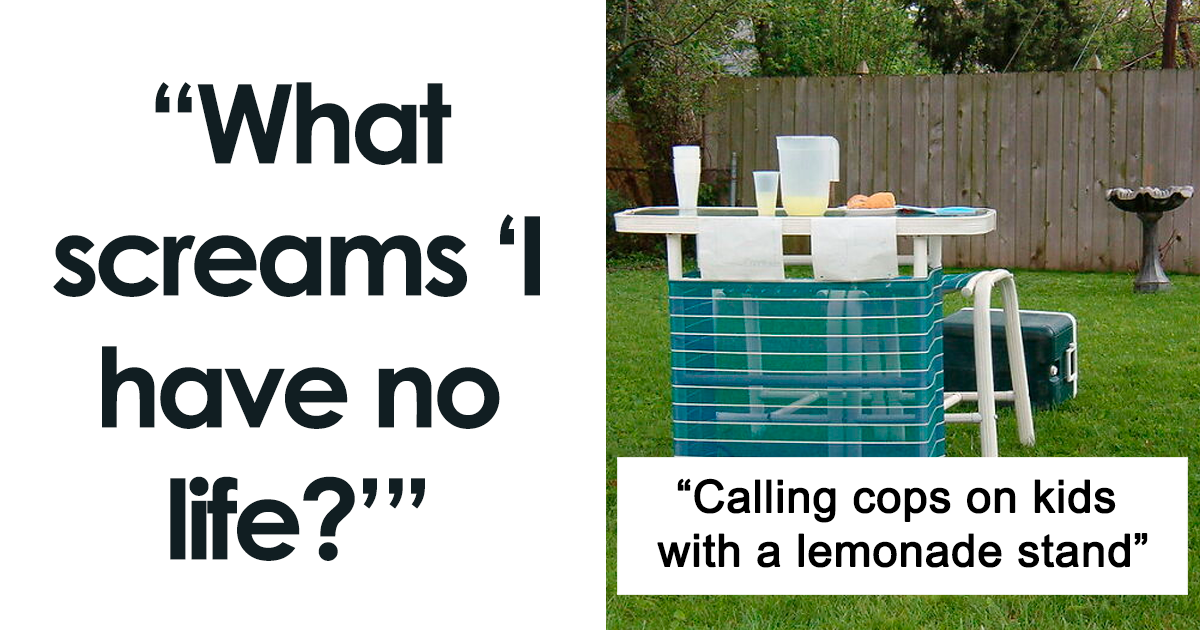
2. Reporting a Child’s Lemonade Stand
Calling authorities over harmless neighborhood fun is an impressive commitment to unnecessary conflict. Unless the children are selling enriched uranium with the lemonade, a friendly conversation will probably do.
-
3. Treating Reality Television Like a Family Emergency
Entertainment is fun. Memorizing every breakup, unfollow, suspicious vacation photo, and cryptic caption becomes less healthy when fictionalized celebrity drama produces stronger emotions than real relationships.
-
4. Mocking Other People’s Hobbies
Laughing at someone for knitting, bird-watching, painting miniatures, collecting rocks, or building model trains rarely makes the critic look sophisticated. It mostly reveals that someone else knows how to enjoy an afternoon.
-
5. Judging Anyone Who Lives Differently
Some people love nightlife. Others enjoy gardening, gaming, baking, hiking, or reorganizing the spice cabinet alphabetically. A full life does not require approval from the unofficial Lifestyle Police.
-
6. Broadcasting Every Relationship Detail
Constant romantic updates can turn a relationship into an ongoing publicity campaign. Healthy affection usually survives without hourly declarations, coordinated captions, or twelve photographs of two hands holding coffee.
-
7. Harassing People Over Harmless Choices
Repeatedly attacking strangers for their clothes, food, music, identity, parenting style, or entertainment preferences is not passionate activism. Sometimes it is simply boredom wearing a heroic cape.
-
8. Talking Negatively About Everyone
If every conversation becomes a review of someone else’s appearance, salary, marriage, haircut, or lunch order, the gossip is no longer occasional seasoning. It is the entire sad casserole.
-
9. Becoming Emotionally Responsible for a Royal Family
Following royal news is ordinary entertainment. Feeling personally betrayed by the seating arrangement at a ceremony involving people you have never met suggests that the parasocial relationship may need recalibrating.
One-sided bonds with celebrities and media figures can feel emotionally real, even though the public figure does not know the audience member personally. These connections are not inherently harmful, but intensity and balance matter. >
-
10. Monitoring Everyone Else’s Life Choices
People who track who is dating whom, who gained weight, who changed jobs, and who left a party early are performing unpaid surveillance. Their own unfinished business is probably filing a missing-person report.
When Work Becomes Your Entire Personality
-
11. Bragging About Working Every Waking Hour
Occasional overtime happens. Proudly announcing that you have not taken a vacation, eaten lunch away from your desk, or seen daylight since March is not the triumph people think it is.
-
12. Tracking Coworkers’ Bathroom and Lunch Breaks
The unofficial office attendance detective always knows who returned two minutes late. Strangely, this person never notices how much work time is spent collecting evidence for a trial nobody requested.
-
13. Making Passive-Aggressive Comments When Others Leave
“Leaving already?” is rarely an innocent question when delivered at closing time. Finishing work efficiently is not a moral failure, and sitting at a desk late does not automatically prove devotion or productivity.
-
14. Talking About Nothing Except Your Job
A career can provide purpose, pride, friendship, and financial security. Trouble begins when job titles replace interests, curiosity, relationships, and every available conversation topic.
-
15. Staying at Work Because Home Feels Empty
This behavior deserves empathy rather than ridicule. Some people volunteer for every shift because they are lonely, struggling financially, avoiding conflict, or living in an unsafe home. What looks like work obsession may actually be survival.
Chronic workplace stress and poor work-life balance are commonly associated with burnout. Warning signs can include exhaustion, cynicism, reduced satisfaction, irritability, and difficulty separating work from personal life. n>
When the Internet Becomes a Battlefield
-
16. Spending All Day on Social Media
Checking social platforms is normal. Refreshing them before getting out of bed, during meals, throughout conversations, and at 2 a.m. may indicate that the phone is managing the schedule now.
-
17. Arguing With Strangers for Hours
An online disagreement can begin with pizza toppings and end with two adults researching each other’s employment history. After the fifth paragraph, nobody is exchanging ideas. They are defending imaginary trophies.
-
18. Trolling People for Entertainment
Deliberately upsetting strangers may create a quick sense of power or attention. It also announces that kindness, creativity, and meaningful conversation were unavailable that afternoon.
-
19. Performing Toughness Behind a Username
The internet tough guy threatens professional athletes, insults random teenagers, and describes fights that almost certainly never happened. His most dangerous opponent is usually the low-battery notification.
-
20. Digging Through Years of Someone’s Posts
Accountability can be legitimate, especially when serious misconduct is involved. Obsessively searching a stranger’s digital history for an awkward comment from adolescence is something else entirely.
-
21. Gatekeeping Music, Movies, Games, or Fandoms
Demanding that someone name three songs before wearing a band shirt does not protect music. It merely turns a pleasant interaction into a surprise oral examination administered by Professor Nobody Asked.
-
22. Chasing Likes, Karma, and Follower Counts
Digital feedback can be satisfying, but imaginary points should not determine self-worth. When every comment is engineered for approval, genuine expression quietly leaves through the emergency exit.
-
23. Abusing Power as an Online Moderator
Moderating a healthy community is useful volunteer work. Inventing microscopic rules, humiliating newcomers, and treating the ban button like a royal scepter is where the stereotype earns its snacks.
Online incivility is not harmless background noise. Harassment, threats, humiliation, and repeated hostile interactions can affect real people, while outrage-driven content encourages users to remain emotionally activated. Digital boundariesincluding refusing to engage with harassmentcan protect both time and well-being. n>
When Control and Nosiness Replace Connection
-
24. Treating an HOA Like a Personal Kingdom
Community associations can handle legitimate shared concerns. Measuring a neighbor’s grass at sunrise or launching a campaign against the wrong shade of beige suggests the rules have become recreational warfare.
-
25. Turning Parent Groups Into Drama Headquarters
School groups can distribute useful information. They become exhausting when 147 messages are required to select a classroom decoration and someone threatens resignation over a cupcake policy.
-
26. Continuing High-School Clique Behavior as an Adult
Exclusion, whisper campaigns, popularity contests, and coordinated cruelty become considerably less impressive when performed by people with mortgages, retirement accounts, and orthopedic pillows.
-
27. Tracking Another Adult’s Location Without Good Reason
Location sharing can improve safety when everyone freely agrees to it. Using it to investigate why a spouse, sibling, or adult child remained home on Monday morning crosses from concern into surveillance.
-
28. Making Parenthood the Only Available Topic
Children naturally occupy enormous parts of parents’ lives. Still, friendships struggle when every subjectfrom movies to weather to dental insuranceis redirected into a 40-minute update about youth soccer.
-
29. Building an Entire Identity Around One Feature
A beard, car, fitness routine, political label, favorite franchise, or expensive coffee machine can be part of someone’s identity. It should not be required to carry the whole building.
-
30. Treating Gaming Achievement as a Substitute for Balance
Video games are legitimate hobbies, social spaces, creative experiences, and even careers. A high level or huge playtime total is not automatically a problem. Concern begins when gaming consistently replaces sleep, health, responsibilities, or wanted relationships.
Late-night scrolling and screen-based entertainment can interfere with a consistent bedtime routine, especially when devices keep the brain engaged after the body should be winding down. Balance matters more than declaring any one hobby universally good or bad. n>
A Reality Check: Solitude Is Not a Character Flaw
The online discussion also included people who described staying inside, lacking friends, living with illness, or experiencing social anxiety. Those situations should not be used as punchlines. A quiet life can be deeply meaningful, and online communities may provide essential connection for people who cannot easily participate in traditional social activities.
The difference lies in whether a behavior is freely chosen, reasonably balanced, and respectful of others. Reading alone all weekend may be restorative. Spending all weekend anonymously insulting readers is something different. Playing a favorite game for hours can be joyful. Cheating, screaming at teammates, and neglecting basic needs is not.
Experiences That Reveal When a Life Has Become Too Narrow
The following are composite experiences based on common situations, not descriptions of specific identifiable individuals.
The Coworker Who Kept an Invisible Time Clock
In one familiar office scenario, an employee seemed to know exactly when everyone arrived, ate lunch, visited the restroom, and packed up for the day. She was not a manager, and none of this information affected her work. Nevertheless, she offered regular comments: “Long lunch?” “Leaving early?” “Another coffee break?”
Eventually, coworkers stopped inviting her into conversations. The irony was almost architectural: her obsession with monitoring other people created the isolation she appeared to resent. Once she began using her breaks for walks, reading, and actual conversations instead, the need to police everyone gradually faded.
The Neighborhood Facebook Detective
Another common example begins with a community group created to share lost-pet alerts and road closures. Soon, one member starts posting blurry security-camera footage of every delivery driver, teenager, dog walker, and unfamiliar sedan.
A parked car becomes “suspicious activity.” Children playing basketball become “an ongoing disturbance.” A neighbor receiving three packages becomes evidence of an underground commercial empire. The group stops feeling helpful because ordinary life is being narrated like a low-budget crime documentary.
The Friend Who Could Not Put Down the Celebrity Drama
A casual interest in celebrity news can provide harmless entertainment. Problems arise when every lunch becomes a briefing about influencers, actors, or reality-show contestants. The friend knows who unfollowed whom but has forgotten to ask how the person sitting across the table is doing.
When the conversation repeatedly returns to people on a screen, real friendships can begin to feel like supporting characters. The healthiest solution is not necessarily abandoning entertainment. It is making room for mutual curiosity, shared activities, and relationships that can answer back.
The Online Argument That Consumed an Entire Evening
Many people have experienced the strange time distortion of an internet fight. A mildly irritating comment appears at 7:10 p.m. The first reply takes one minute. The second requires a link. By 9:30, six strangers are debating punctuation, morality, economics, and whether someone’s profile picture proves intellectual bankruptcy.
Nothing meaningful has changed, dinner is cold, and everyone involved feels worse. Logging off can initially feel like surrender, but it is often the only genuine victory available. The argument cannot steal another hour once nobody is feeding it.
The Person Who Rediscovered a Bigger Identity
Sometimes the “no life” feeling comes not from cruelty but from repetition. Work, sleep, scrolling, and errands gradually occupy every day. The person is not doing anything outrageous; life has simply become narrow.
Improvement may begin with embarrassingly small experiments: attending one local event, calling an old friend, cooking a new meal, volunteering once a month, joining a walking group, or setting the phone outside the bedroom. Not every activity becomes a passion, and not every conversation becomes a friendship. That is fine. A richer life is usually assembled through small acts of participation rather than one dramatic transformation.
Conclusion: Build a Life That Leaves Less Time for Petty Drama
The behaviors that scream “I have no life” are not really about spending weekends at home, loving video games, knowing celebrity trivia, or having an unusual hobby. They are about directing excessive energy toward controlling, watching, criticizing, or provoking others while neglecting personal growth.
A satisfying life does not need to look exciting online. It needs enough meaning, connection, rest, curiosity, and autonomy that a neighbor’s grass length does not become the emotional event of the week.
The easiest self-check is simple: Does this habit add something worthwhile to my life, or does it merely help me avoid living it? The answer may be uncomfortable. Fortunately, it is cheaper than buying a louder exhaust system.













