
If you’ve ever kept a toddler alive, happy, and mostly free of applesauce-related chaos for an entire evening, congratulations: you have work experience. Real work experience. Yet a lot of job seekersespecially teens, students, and anyone applying for a first “official” jobstill treat babysitting like it doesn’t count. That is a mistake. A very polite, very common, very fixable mistake.
Babysitting can absolutely belong on a resume when it is relevant, recent, and presented the right way. It shows employers that you can be trusted, communicate clearly, solve problems on the fly, manage schedules, and keep small humans safe. Frankly, some office jobs are easier than convincing a six-year-old that pajamas are not a human rights violation.
The trick is not just including babysitting. The trick is framing it professionally. Employers do not want a vague line that says, “Watched kids sometimes.” They want evidence of responsibility, consistency, and useful skills. The good news? You do not need a fancy title, a corporate email address, or a swivel chair to make your resume look strong. You just need the right structure.
In this guide, you’ll learn three simple ways to put babysitting on a resume, plus examples, wording tips, and easy mistakes to avoid. By the end, you’ll be able to turn “I babysat for my neighbor” into something that sounds like the valuable experience it actually was.
Why Babysitting Belongs on a Resume
Before we get into the how, let’s settle the “does this even count?” question. Yes, it does. Babysitting is paid or unpaid work that involves responsibility, judgment, time management, communication, and care. If you are building a resume with limited formal job history, babysitting can help fill that gap in a way that feels honest and useful.
It is especially helpful if you are applying for roles in retail, food service, tutoring, camps, childcare, customer service, education, healthcare support, or pretty much any entry-level job where reliability matters. Babysitting shows that another person trusted you with something important. Employers notice that.
That said, relevance matters. If you are applying for your first part-time job, a summer job, an internship, or a childcare-related role, babysitting is usually a smart addition. If you are 20 years into a different career and still listing one weekend of babysitting from 2009, your resume may be trying a little too hard. Keep it current, useful, and tied to the job you want.
1. List Babysitting Like Real Work Experience
The first and simplest method is this: stop hiding it. Put babysitting in your experience section the same way you would list any other job. That means giving it a job title, identifying who you worked for, and including dates.
What to call it
You do not need to get overly creative here. Clear beats clever. Good options include:
- Babysitter
- Childcare Provider
- Family Babysitter
- After-School Caregiver
- Part-Time Babysitter
If you worked for several families instead of one household, you can write something like Babysitter | Multiple Local Families. If you regularly cared for one family, you can use Babysitter | Smith Family, or simply Private Family if you want to keep it more general.
Where to put it
If babysitting is one of your strongest experiences, place it in your Work Experience section. If you have more formal jobs already, but babysitting still supports your application, place it in Relevant Experience or Additional Experience.
This is a smart move for students and first-time job seekers because it shows initiative. You were not waiting around for the perfect opportunity to fall from the sky. You were already building trust, earning money, and learning practical skills.
Simple formatting example
Babysitter
Multiple Local Families, Austin, TX
June 2023 – Present
That is already better than burying the experience in a random skills section. It tells the employer: this happened, it was ongoing, and it mattered.
When this works best
This approach is ideal when babysitting was regular, recent, or part of your main work history. Maybe you watched children every weekend, covered after-school care three days a week, or helped multiple families over two summers. That is not a tiny side note. That is experience.
If you only babysat once for your cousin during an emergency while everyone else was at a wedding, maybe keep that one off the resume. Heroic? Perhaps. Resume-worthy? Probably not.
2. Turn Babysitting Duties Into Achievement-Focused Bullet Points
Here is where many resumes go from decent to forgettable. They list the job, then write bullets like “Responsible for kids” and “Made snacks.” Technically true. Also technically boring.
Employers respond better to bullet points that show what you did, how you did it, and what that says about you. Babysitting includes more transferable skills than people realize, so give those skills a spotlight instead of leaving them backstage eating stale crackers.
Use action verbs
Start each bullet with a strong verb. Words like these work well:
- Supervised
- Coordinated
- Prepared
- Assisted
- Managed
- Organized
- Supported
- Maintained
- Communicated
- Resolved
Add specifics
Specific details make the experience believable and stronger. Include information like:
- The ages of the children
- How many children you cared for
- How often you worked
- The types of tasks you handled
- Any routines, transportation, tutoring, or meal prep responsibilities
- Safety-related duties or emergency readiness
Instead of saying, “Watched children,” say something like, “Supervised two children ages 4 and 8 during after-school hours, including snack prep, homework help, and bedtime routines.” That paints an actual picture.
Focus on outcomes when possible
Even if your role was informal, outcomes still matter. Did you help create a consistent bedtime routine? Did you manage conflicts between siblings? Did you maintain a parent-approved schedule? Those outcomes show dependability and judgment.
Better bullet point examples
- Supervised three children ages 2, 5, and 9 during weekend evening shifts, ensuring a safe, calm, and structured environment.
- Prepared snacks and simple meals while following parent instructions for allergies, routines, and screen-time limits.
- Organized educational games, crafts, and outdoor activities to keep children engaged without relying heavily on devices.
- Assisted with homework and reading practice for elementary-age children, helping maintain after-school routines.
- Communicated clearly with parents about behavior, meals, bedtime progress, and any concerns at the end of each shift.
- Handled sibling conflicts calmly and redirected behavior using consistent, parent-approved discipline strategies.
See the difference? Those bullets do not just say you existed in the same room as a child. They show you managed responsibilities that employers can connect to real workplace value.
One formula to make this easy
Use this formula for each bullet:
Action verb + task + relevant detail + positive result
Example: Managed after-school care for two children ages 7 and 10, including transportation, homework support, and snack preparation, helping parents maintain a reliable weekday routine.
That sounds polished because it is clear, direct, and useful.
3. Highlight Transferable Skills, Certifications, and Trust Signals
Babysitting is not just about experience. It is also about what that experience proves. A smart resume makes those takeaways obvious.
Think of babysitting as a skills goldmine. You were not “just helping out.” You were practicing communication, time management, adaptability, safety awareness, and problem-solving. Those are exactly the kinds of skills employers love to see in entry-level candidates.
Skills you can pull from babysitting
- Communication
- Dependability
- Problem-solving
- Conflict resolution
- Time management
- Organization
- Patience
- Leadership
- Safety awareness
- Adaptability
- Multitasking
- Customer service
If the job description mentions teamwork, responsibility, scheduling, customer interaction, or safety, babysitting can support those points very naturally.
Add certifications if you have them
If you completed CPR, First Aid, babysitting training, lifeguard certification, or any child safety course, include it. These details immediately make your resume stronger, especially for childcare, camp, tutoring, coaching, and healthcare-adjacent roles.
You can place certifications in a dedicated Certifications section, or list them under Skills and Certifications. For example:
- American Red Cross Babysitting Training
- CPR/AED Certified
- First Aid Certified
- Pediatric First Aid/CPR
Use references wisely
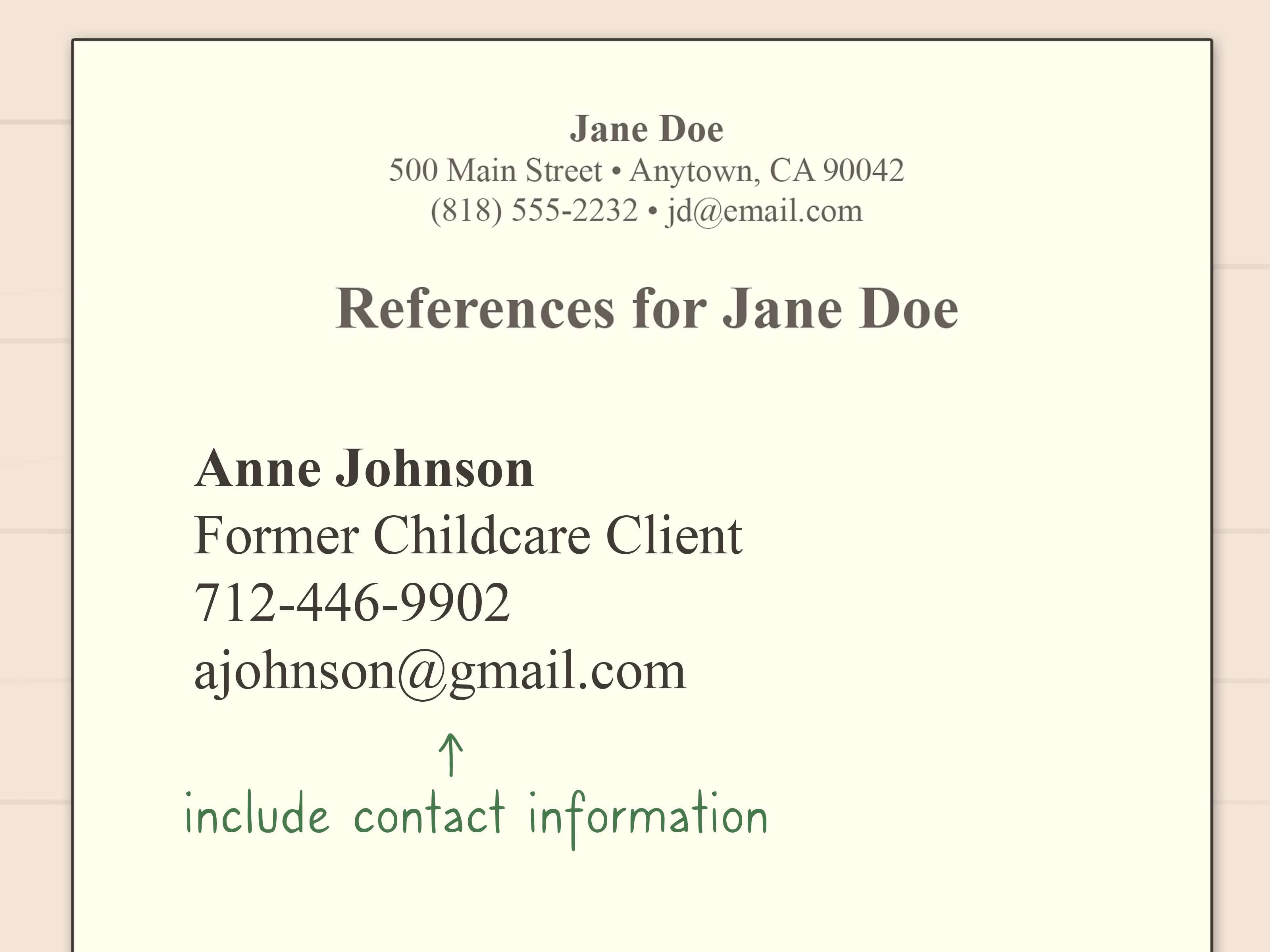
You do not always need to include references directly on the resume, but it helps to have them ready. Parents you worked for can serve as strong references because they can speak to reliability, trustworthiness, punctuality, and communication. That is a pretty solid character witness package.
If you want, you can add a short line such as References available upon request. It is not mandatory, but it can be helpful if babysitting is a major part of your experience.
Sample Resume Entry for Babysitting
Here is a clean example you can adapt:
Babysitter
Multiple Local Families, San Diego, CA
May 2023 – Present
- Provide part-time childcare for up to three children at a time, ranging from ages 3 to 11.
- Supervise play, prepare snacks and simple meals, and maintain safe indoor and outdoor routines.
- Assist with homework, reading, and bedtime preparation during evening and after-school shifts.
- Communicate with parents about schedules, behavior, and daily updates to ensure consistent care.
- Apply calm problem-solving skills during conflicts, schedule changes, and unexpected situations.
Common Mistakes to Avoid
Being too casual
“Helped my aunt with the kids sometimes” will not do you any favors. Even if the work was informal, your wording should be professional.
Being too vague
Do not make the hiring manager guess what you actually did. Add details about ages, tasks, frequency, and responsibility level.
Overselling
You do not need to make it sound like you ran a multinational childcare empire. Be confident, but stay honest. If you prepared snacks, say snacksnot “executed culinary operations for a youth-focused dining program.”
Ignoring the target job
Always tailor your wording. For retail, emphasize customer service and reliability. For tutoring, emphasize homework help and communication. For camp jobs, emphasize activity planning and supervision. A targeted resume wins more attention.
Final Thoughts
Babysitting may not come with a corporate badge, but it can still be resume gold. The key is to treat it like real experience, write bullets that show value, and highlight the skills and trust signals employers care about. That is how you turn a humble side job into a convincing part of your professional story.
So yes, put babysitting on your resumejust do it with a little structure and a lot less apologizing. You were responsible for children, schedules, safety, communication, and the occasional dramatic debate over which dinosaur plate was “the good one.” That counts.
Additional Experience Examples and Real-Life Resume Scenarios
Let’s make this even more practical. Imagine you are a high school student applying for a cashier job. You may think babysitting has nothing to do with ringing up groceries, but that is not true. Babysitting proves punctuality, responsibility, patience, and communication with parents. On a retail resume, you might emphasize showing up on time, following instructions, and staying calm under pressure. For example, if you regularly cared for two children after school until their parents returned from work, that shows consistency and trust. Those are the same qualities a hiring manager wants in someone opening a store, handling customers, or managing a busy shift.
Now picture a college student applying for a camp counselor position. Babysitting suddenly becomes even more relevant. If you planned games, helped with crafts, kept children on a schedule, and handled minor disputes, you already have experience supervising and engaging kids. You can describe how you organized age-appropriate activities, balanced fun with safety, and adapted when plans changed. That kind of wording helps employers see that you are not starting from zero. You already understand how to lead children without turning the day into complete chaos.
Here is another scenario: a job seeker applying for a tutoring, library, or after-school program role. In this case, babysitting experience becomes stronger when you mention homework help, reading support, or educational play. Maybe you spent an hour each afternoon helping a third grader finish spelling homework before dinner. Maybe you read with younger children, practiced flash cards, or kept them focused during a structured routine. Those details transform babysitting from “general childcare” into experience that supports learning, patience, and communication.
Even for someone applying to an office internship, babysitting can still help if it is framed correctly. Employers often want proof that a candidate is dependable, organized, and able to handle responsibility without constant supervision. Babysitting shows exactly that. You can highlight schedule management, clear communication with parents, and problem-solving during unexpected situations like late pickups, bedtime resistance, or sudden changes in routine. No, you do not need to include every sticky-fingered plot twist. But you should show that you can manage real responsibilities with maturity.
The best part is that babysitting often gives you stories and examples that feel more human than generic resume language. It is one thing to claim you are adaptable. It is another to show that you safely managed two energetic siblings, prepared dinner, finished homework routines, and kept the evening on track when one child suddenly decided socks were oppressive. That is memorable. And on a resume, memorable is goodso long as it is still professional.












