
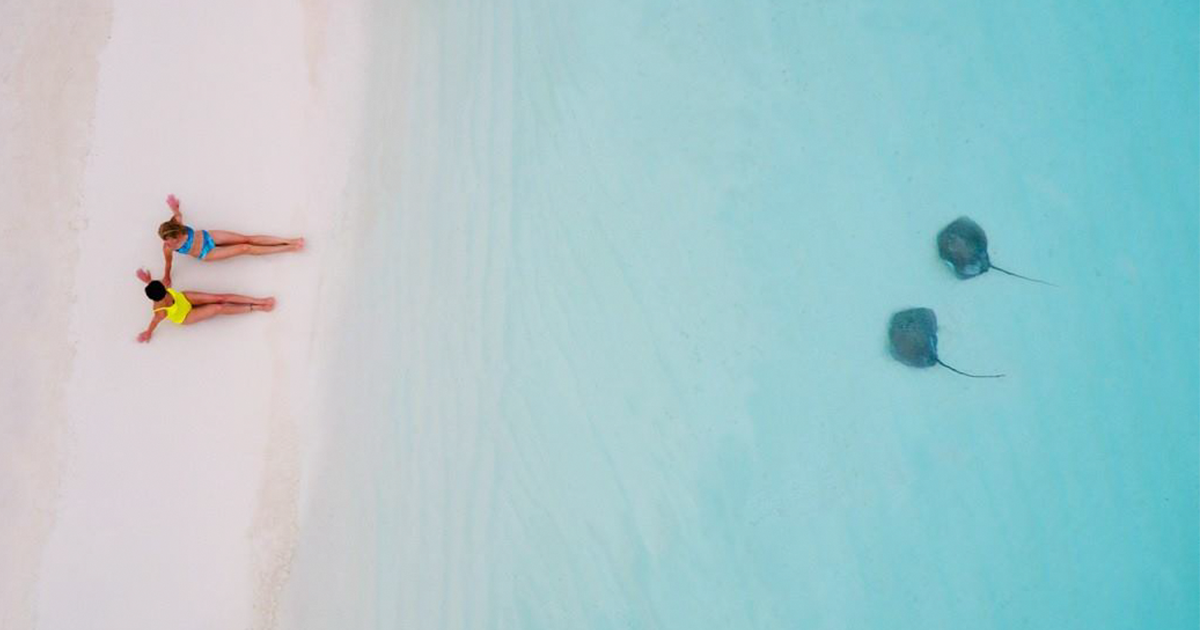
Drone photography has a funny way of making Earth look like it has been quietly hiding its best angles from us. One minute you are looking at a road, a beach, a field, or a city block from ordinary human height. The next minute, a drone rises into the air and suddenly that same scene becomes a painting, a puzzle, a geometry lesson, and occasionally a reminder that humans are very tiny creatures with excellent Wi-Fi.
That is exactly why the 2017 Dronestagram selections made such a splash. The platform, known for bringing together amateur and professional aerial photographers from around the world, announced its standout drone pictures of the year, and the results were not just pretty postcards from the sky. They were visual surprises: lavender fields sliced into patterns, water lilies floating like brushstrokes, city towers glowing like science fiction, and cows casting shadows so dramatic they deserved their own movie trailer.
The 2017 International Drone Photography Contest, organized in partnership with National Geographic, celebrated some of the best aerial photography of the year. Thousands of images were submitted from around the world, and the contest highlighted winners across major categories including Nature, Urban, People, and a special Creativity category. The broader list of 22 best drone pictures showed how far drone photography had come by 2017: no longer a novelty, not merely “look, I flew a camera,” but a serious visual language.
Why the 2017 Dronestagram Drone Pictures Still Feel Fresh
Technology moves fast, especially drone technology. A drone from 2017 may now seem ancient compared with today’s compact flying cameras that stabilize themselves, dodge obstacles, follow subjects, and basically behave like very expensive robotic dragonflies. Yet the best drone pictures from 2017 still hold up because great photography is never only about gear. It is about timing, composition, patience, and the ability to see a familiar place as if you just landed on Earth five minutes ago.
The Dronestagram collection worked because it did not rely on height alone. Many beginners assume drone photography means flying as high as possible and hoping the planet does something interesting. The winning photographers knew better. They used altitude with intention. Some images were high enough to turn landscapes into patterns. Others were low enough to keep people, shadows, roads, and buildings emotionally readable. That balance made the photos feel both grand and intimate.
In a year when aerial photography was becoming more accessible, these pictures showed what separates a snapshot from a stunning drone image. The drone was not the star. The story was.
The Contest That Turned the Sky Into a Gallery
Dronestagram’s 2017 contest recognized photographs in three main categories: Nature, Urban, and People. Because the judges saw so much inventive work, a Creativity category was also added to honor images that pushed drone photography into playful, conceptual territory. That extra category mattered. It suggested that drones were not just tools for documenting landscapes; they could also be used to stage ideas, jokes, personal announcements, and visual experiments.
By 2017, drones had already changed the economics of aerial photography. In the past, a photographer who wanted a bird’s-eye view often needed a helicopter, a plane, a crane, or a very athletic friend with questionable safety instincts. Consumer drones lowered that barrier. Suddenly, photographers could explore beaches, farms, roads, cities, ice fields, and festivals from above without renting half an airport.
But easier access also created a new challenge: if everyone can fly, how do you stand out? The Dronestagram winners answered that question beautifully. You stand out by finding rhythm, color, scale, contrast, and human meaning. You stand out by waiting for a tractor to cut a field into the perfect pattern. You stand out by noticing that two cows drinking water can become a minimalist masterpiece when the morning light stretches their shadows like ink.
Nature From Above: Lavender, Ice, Roads, and Wild Patterns
Provence, Summer Trim
One of the most memorable winning nature images was “Provence, Summer Trim” by jcourtial, photographed in France. The picture captured a lavender harvest from above, turning agricultural work into a vivid composition of color and texture. From ground level, a lavender field is already beautiful. From the air, it becomes a patterned textile, the kind of image that makes you wonder whether nature secretly hired a graphic designer.
The strength of this photograph lies in its combination of human labor and natural beauty. The field is not untouched wilderness; it is a working landscape. The aerial view reveals the relationship between machine, crop, season, and shape. It proves that drone photography can find poetry in farming without pretending that tractors are not involved. Honestly, tractors deserve more artistic representation. They have been quietly doing the heavy lifting while sunsets get all the applause.
Infinite Road to Transylvania
Calin Stan’s “Infinite Road to Transylvania” gave viewers a winding road in Romania, curling through the landscape like a ribbon dropped by a giant with excellent taste in curves. Roads are common subjects in drone photography because they create natural leading lines. This image worked because the road did not merely guide the eye; it created atmosphere. Mention Transylvania, and the mind immediately packs a suitcase full of castles, forests, and possibly one nervous clove of garlic.
The photograph showed how a road can become a character. From the ground, a road is transportation. From above, it becomes design. It tells us where people move, how landscapes are crossed, and how the built world negotiates with mountains, forests, and valleys.
Ice Formation
Florian’s “Ice Formation,” captured in Greenland, offered a completely different mood. Instead of warm rows and winding roads, the image focused on sea ice and the cold elegance of remote geography. Drone photography is especially powerful in icy environments because scale is difficult to understand from the ground. From above, cracks, textures, and floating forms become visible as a larger system.
Images like this can be beautiful and unsettling at the same time. They remind us that Earth is not just scenery; it is movement, climate, temperature, pressure, and change. The drone becomes more than a camera. It becomes a quiet witness.
People From Above: Tiny Figures, Big Stories
End of the Line
In the People category, Martin Sanchez’s “End of the Line” stood out as an abstract human scene photographed along the New Jersey coast. The image demonstrated one of drone photography’s best tricks: it can make human activity look both personal and mysterious. When viewed from above, people become shapes, movements, and symbols. We lose facial expressions, but gain choreography.
That trade-off is fascinating. Traditional portrait photography often gets close to the face. Drone photography pulls back and asks a different question: where is this person within the larger world? The answer can be funny, lonely, peaceful, or surprisingly dramatic. Sometimes the answer is, “They are standing in a composition so good it should pay rent.”
Waterlily
One of the most beloved images from the 2017 selections was “Waterlily” by helios1412, photographed in Vietnam’s Mekong Delta. The picture showed a woman harvesting water lilies in a pond, surrounded by vivid natural color and calm water. It is the kind of photograph that makes viewers pause because it feels both documentary and dreamlike.
The aerial angle matters here. From the ground, the scene might focus on the worker, the flowers, or the water. From above, all three become part of one balanced composition. The person is not swallowed by the landscape, but neither is the landscape reduced to a background. The image respects both labor and beauty. It shows daily life as art without making it feel staged.
That is a rare achievement. Many travel images accidentally turn real places into decorations. “Waterlily” works because it preserves a sense of activity and place. It is graceful, but not empty. It is beautiful, but not just “pretty.” There is a difference, and this picture knows it.
La Vijanera
“La Vijanera” by feelingmovie captured a winter carnival tradition in Spain. Cultural events can be difficult to photograph from above because they are full of motion, symbolism, and local meaning. A drone can either clarify the scene or flatten it into confusion. In this case, the overhead view helped reveal the arrangement of people and ritual action, giving the viewer a structured glimpse of a celebration that might feel chaotic from ground level.
This is where drone photography becomes more than visual spectacle. It can document traditions, gatherings, and public life from a perspective that shows how groups occupy space. It is not only about the individual performer or participant. It is about the community shape.
Urban Drone Photography: Cities Become Circuits
Concrete Jungle
Bachirm’s “Concrete Jungle,” photographed in Dubai, was a strong winner in the Urban category. Dubai is already famous for architecture that seems to compete in an unofficial “who can touch the clouds first?” contest. From above, the city becomes even more striking. Towers, roads, shadows, and reflections combine into a futuristic grid.
What makes a strong urban drone image is not simply the presence of tall buildings. Skyscrapers are impressive, but they can also become visual noise. The best aerial city photos find order inside density. “Concrete Jungle” did exactly that. It presented the city as a pattern of ambition, glass, steel, and desert transformation.
Dawn on Mercury Tower
Alexeygo’s “Dawn on Mercury Tower” in Moscow added a human element to the urban category by capturing workers on a reflective skyscraper. The image was memorable because it played with scale. From the drone’s perspective, the workers appeared small against the vast surface of the building, yet their presence gave the photograph its emotional spark.
Urban life is often photographed as architecture, traffic, or skyline. This image reminded viewers that cities are also maintained by people doing difficult work in unusual places. Window washers on a tower are already brave enough from a normal angle. From above, they look like tiny heroes polishing the future.
Peace
“Peace” by luckydron, photographed in Madrid, showed the power of symmetry. Drone photography loves symmetry the way cats love knocking cups off tables. It is irresistible. But symmetry only works when the image has enough contrast, structure, and mood to avoid feeling like a math worksheet. “Peace” succeeded because it transformed an urban scene into a calm, balanced composition.
Many drone photographers chase dramatic landscapes, but images like “Peace” prove that cities can offer quieter beauty. Sometimes the magic is not in flying over a famous landmark. Sometimes it is in noticing that an ordinary place, seen from directly above, has been hiding a perfect design all along.
The Creativity Category: When Drone Photography Gets Playful
The Creativity category was one of the most delightful parts of the 2017 Dronestagram awards. It gave space to images that were not only visually impressive, but also clever. These pictures used the drone as a storytelling device rather than a simple aerial camera.
Two Moo
LukeMaximoBell’s “Two Moo,” photographed in South Africa, featured two cows drinking near water, with long shadows stretching across the ground. The image is simple, funny, elegant, and oddly profound if you stare at it long enough. It proves that a great subject does not need to be exotic. Sometimes it just needs good light, perfect timing, and cows who understand composition better than most of us understand tax forms.
Ugo le marin
“Ugo le marin” by rga used sand as a giant drawing surface, turning the beach into a playful canvas. Drone photography is perfect for this kind of image because the artwork is designed for the sky. From the ground, the scene may look like a large beach drawing. From above, it becomes complete.
This approach points to an important idea: drones do not only capture the world as it is. They can also inspire people to create scenes specifically for aerial viewing. That changes the relationship between photographer and subject. The camera is no longer just observing; it is part of the concept from the beginning.
Next Level
“Next Level” by macareuxprod used drone photography for a personal announcement with a video game-inspired visual idea. It was charming because it treated aerial photography as a medium for humor and family storytelling. Not every great drone photo needs to look like it belongs in a museum. Some can feel like a clever message from people who looked at a drone and thought, “Yes, this is exactly how we tell everyone the big news.”
What These Stunning Drone Images Teach Us About Composition
The best drone pictures of 2017 shared several creative lessons. First, top-down photography works best when there is strong shape. Roads, rows, shorelines, shadows, crowds, and fields all become more powerful when seen from above. Second, color matters. The purple of lavender, the green of water lilies, the white-blue tension of ice, and the gold of city light all help images stand out.
Third, scale is everything. A tiny person in a huge landscape can create emotion. A small boat in a pond can create calm. A worker on a skyscraper can make architecture feel human. Drone photography succeeds when the viewer understands both the subject and the space around it.
Finally, patience beats altitude. Many of the strongest images depended on waiting: waiting for light, waiting for movement, waiting for a pattern to form, or waiting for cows to be unexpectedly iconic. The drone may fly, but the photographer still has to think.
Why Drone Photography Feels So Addictive
There is something almost childlike about the thrill of drone photography. It gives us the view we imagined when we stared out airplane windows, climbed trees, played video games, or wished we could temporarily borrow a bird’s job. The perspective feels freeing because it breaks the routine of eye-level life.
At the same time, drone images can make familiar things strange. A beach becomes a drawing board. A road becomes a snake. A city becomes a circuit board. A pond becomes a floating garden. A field becomes a piece of fabric. This transformation is why the 2017 Dronestagram selections still attract attention. They remind viewers that beauty often depends on where you standor in this case, where you hover.
Experiences and Reflections Inspired by the 2017 Dronestagram Photos
Looking at the 22 best drone pictures of 2017 feels a bit like being handed a secret map of the world. Not a map that tells you where the highways are, but one that reveals where the hidden patterns live. After spending time with these images, it becomes impossible to look at ordinary places in the same way. A parking lot is no longer just a parking lot. It might be a grid. A swimming pool might be a block of turquoise geometry. A farm might be a living quilt. Even a muddy path suddenly looks suspiciously artistic, as if it has been waiting years for a drone to appreciate its good side.
The most powerful experience these photos offer is the feeling of distance without disconnection. That sounds contradictory, but it is exactly what good aerial photography can do. It pulls the camera away from the subject while somehow making the story clearer. In “Waterlily,” for example, the viewer is physically farther from the woman harvesting flowers, yet the relationship between her work and the surrounding pond becomes more visible. In “Dawn on Mercury Tower,” the workers are tiny, but their bravery becomes more obvious because the scale of the building is so immense.
This is the quiet magic of drone photography: it changes the emotional math of a scene. Bigger does not always mean colder. Smaller does not always mean less important. Sometimes a tiny human figure in a large landscape becomes more moving because the image shows how much world surrounds that person. It gives the viewer room to think.
There is also a practical lesson for anyone interested in taking drone pictures. The best images rarely come from random flying. They come from planning and noticing. A strong drone photographer studies light, weather, location, legal flight rules, battery life, and composition before takeoff. The glamorous final image may look effortless, but behind it is usually a person squinting at maps, checking wind conditions, charging batteries, and hoping the sky cooperates. Drone photography may look like freedom, but it still requires discipline. The drone flies; the photographer worries.
Another experience these 2017 photos create is a renewed respect for patterns in daily life. We often move through the world too closely to see its design. We walk beside roads but do not see their curves. We pass farms but do not see their geometry. We enter cities but do not see how buildings cast shadows across one another. Drone photography gives us a temporary escape from our normal scale. It says, “Step back. Higher. Higher. There it is.”
And yes, there is also simple joy. Not every photograph needs to deliver a grand philosophical statement. Sometimes two cows and their long shadows are enough. Sometimes a playful beach drawing is enough. Sometimes a winding road in Transylvania is enough to make us smile and wonder whether Dracula had excellent aerial navigation skills. The 2017 Dronestagram pictures are stunning because they balance beauty, humor, structure, and surprise. They show that the world is not short on wonder. We are just occasionally standing too low to notice it.
Conclusion
The best Dronestagram drone pictures of 2017 captured more than landscapes from above. They captured a turning point in visual storytelling. Drones had become accessible enough for a global community of photographers to experiment, but still new enough that the results felt fresh, daring, and full of discovery.
From lavender fields in France to water lilies in Vietnam, from icy Greenland to the glowing towers of Dubai and Moscow, these images proved that aerial photography can be artistic, documentary, humorous, and emotionally rich. The drone may be a machine, but the best drone pictures are deeply human. They show curiosity. They reward patience. They turn the planet into a gallery where roads, shadows, workers, animals, buildings, and fields all get their moment from above.
Note: This article is written as original editorial content based on publicly reported details about the 2017 Dronestagram International Drone Photography Contest and broader drone photography context.












