
There are years that quietly age into history, and then there are years that look back at us like, “You connected what to the internet?” For cybersecurity, 2017 was firmly in the second category. It was the year when the connected home stopped feeling like a shiny demo at a trade show and started feeling like a giant group project where somebody had forgotten the part about security. Smart speakers were getting friendlier, connected appliances were getting fancier, and consumers were being told that everything from ovens to vacuums to dishwashers could be controlled from a phone. Very futuristic. Very convenient. Very “what could possibly go wrong?”
Then came the dishwasher story. Or, more precisely, the networked washer-disinfector story. In March 2017, a vulnerability disclosure involving Miele’s connected PG 8528 washer-disinfector gave the internet one of its most unforgettable symbols of the Internet of Things security era. Suddenly, the idea of a security patch for something dishwasher-adjacent was no longer a punchline. It was a warning label for an entire industry. That moment did not single-handedly create the IoT security conversation, but it crystallized it. If a machine designed to clean instruments could become part of a cyber risk discussion, the smart-home honeymoon was officially over.
Why a Dishwasher Became a Cybersecurity Symbol
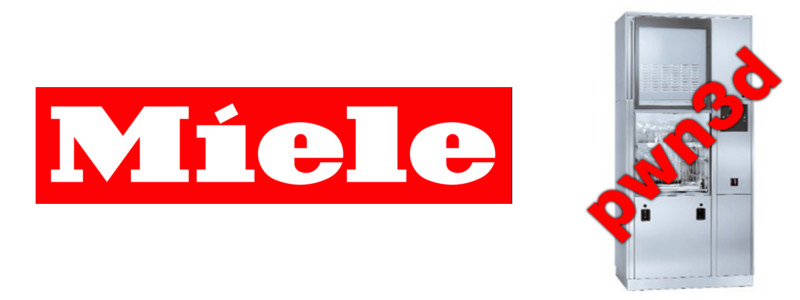
To be accurate, the famous 2017 “dishwasher” was not the suburban appliance humming beside your kitchen sink. The vulnerable machine was a Miele Professional PG 8528 washer-disinfector, a connected commercial and medical device used in places like laboratories, hospitals, and other professional environments. That distinction matters because it makes the story more serious, not less. This was not about a hacker making somebody’s dinner plates sparkle at the wrong time. It was about a networked device in a sensitive setting being exposed through a web server flaw.
The vulnerability, publicly tracked as CVE-2017-7240, involved directory traversal on the device’s embedded web server. In plain English, that meant an attacker on the relevant network could potentially access information they should not have been able to see. At disclosure time, the case became a small but unforgettable emblem of a much larger problem: too many connected devices were being shipped with software complexity that belonged in enterprise computing, but support models that belonged in the “we’ll think about it later” school of engineering.
That is why the phrase “dishwasher security patch” hit so hard. It sounded ridiculous on first read, but it exposed a real shift in modern life. Appliances were no longer just appliances. They were computers with valves, motors, and warranty cards. Once a product becomes a computer, software bugs become product bugs. Once it joins a network, patching becomes part of ownership. And once it lands in a hospital or a business, the consequences get real in a hurry.
2017 Was Already Primed for a Story Like This
The Miele story landed in a climate that was already tense. The Mirai botnet had exploded into public awareness in late 2016 by hijacking huge numbers of insecure IoT devices and helping fuel record-breaking distributed denial-of-service attacks. By 2017, the lesson was sticking: cheap, poorly secured connected devices were not just personal annoyances. They could become internet-scale infrastructure problems. Your weak little gadget was no longer just your problem. It could become everybody’s problem.
That shift in mood mattered. Before the major IoT wake-up calls, smart products were usually marketed with the language of convenience. Start the oven from your phone. Check on the vacuum while you are out. Get alerts from your fridge like it is a needy roommate with Wi-Fi. After Mirai and similar scares, that same convenience started to look like expanded attack surface. Every “smart” feature came with a silent question: who else can reach this thing, how is it updated, and what happens when support fades out but the hardware keeps working?
So when headlines joked that even a dishwasher could get hacked, people laughed, but the laughter had panic in it. The joke only worked because the premise had become believable. In 2017, the culture had finally caught up to the technical truth: once you connect ordinary devices to networks, there is no such thing as an ordinary device anymore.
The Patch Was the Real Story
The most important word in the whole episode was not “dishwasher.” It was “patch.” The patch was the thing that transformed the story from weird cybersecurity trivia into a serious product-management issue. Vulnerabilities happen. Complex software guarantees that. What defines a mature connected-device maker is not whether flaws ever appear, but whether the company can respond quickly, communicate clearly, and deliver reliable updates without turning the fix into a scavenger hunt.
That is exactly why 2017 became such a pivotal year. U.S. regulators and technical bodies were already circling the same issue from different angles. The Federal Trade Commission launched its IoT Home Inspector Challenge in early 2017, explicitly focusing on outdated software and easy-to-guess passwords. That was a big tell. The government was not just worrying about hackers in theory; it was worrying about the boring, messy, everyday mechanics of updates. Can consumers tell which devices they own? Can they tell which ones are out of date? Can they install fixes without needing the patience of a saint and the skills of a network engineer?
At the same time, NTIA’s multistakeholder work on IoT security upgradability and patching pushed the industry toward a more practical conversation about update processes, transparency, and expectations. NIST’s 2017 IoT Cybersecurity Colloquium also treated patch management as part of the device lifecycle rather than a last-minute emergency button. Even more telling, FDA guidance for networked medical devices emphasized ongoing cybersecurity management after products were already in the field. In other words, the institutions were converging on the same message: connectivity creates a long-term maintenance obligation.
That is what made the dishwasher patch moment so culturally sticky. It translated a policy-heavy, engineering-heavy discussion into something any normal person could understand. You should not need a white paper to realize that a connected appliance needs a secure update path. Once that clicked, the old fantasy that appliances could be “smart” without being actively maintained started to fall apart.
From Cool Feature to Potential Liability
If the Miele vulnerability made the point in one dramatic way, the rest of 2017 reinforced it. Later that year, Check Point disclosed “HomeHack,” a flaw tied to LG’s SmartThinQ ecosystem. The issue showed how a weakness in account handling and app infrastructure could potentially let attackers take over connected home appliances. That is the part many consumers missed in the first wave of smart-home marketing: the risk is not always hiding inside the appliance firmware itself. Sometimes it lives in the app, the account system, the cloud service, or the handshake between them.
That distinction is important because it broadened what “appliance security” meant. It was no longer just a question of whether the dishwasher or oven had a bug in its own code. Security also depended on the vendor’s mobile app, backend servers, authentication system, encryption, support workflow, and disclosure process. In the connected-device world, the product is not the box in your kitchen. The product is the whole ecosystem. If one layer fails, the “smart” promise can turn into a very dumb risk.
And unlike a laptop, an appliance is not something most people expect to think about as software for ten years. Consumers replace phones every few years. They do not replace refrigerators, dishwashers, or washing machines on that schedule. That mismatch is one of the core design problems in connected appliances. The hardware lifespan is long. The software support culture, historically, was not.
What 2017 Taught Manufacturers
The deeper lesson of 2017 was that manufacturers could no longer treat security as a decorative trim package. It had to be part of the product. Not a brochure phrase. Not a support-page afterthought. A design requirement.
First, companies had to assume that updates would be part of the normal life of the product. Secure updates, signed updates, documented support windows, and realistic patch processes needed to be designed in from the beginning. Second, they had to improve vulnerability reporting and response. One recurring frustration in IoT security has been how often researchers struggled to find the right contact, get acknowledgment, or receive a timely fix. That kind of silence can turn a moderate bug into a reputational disaster.
Third, manufacturers had to think beyond the appliance itself. Account security, app security, cloud architecture, network exposure, and default settings all became part of product safety. A connected oven is not just a piece of kitchen hardware. It is also an identity system, an API surface, a mobile app, and a remote command channel. Pretending otherwise is how you end up learning cybersecurity from an angry headline.
Finally, 2017 pushed the industry toward a more honest view of risk. Not every vulnerable connected appliance is going to trigger cinematic chaos. Most real-world attacks are less dramatic and more boring: credential theft, lateral movement, privacy leakage, or recruitment into botnets. But boring cyber risk is still real risk. In business, healthcare, and even ordinary households, it adds up.
What 2017 Taught Consumers
Consumers also got a crash course. The first lesson was that “smart” and “safe” are not synonyms. A product can be convenient, sleek, app-friendly, and still have weak security hygiene. The second lesson was that support matters almost as much as features. A connected appliance is not just a purchase; it is an ongoing relationship with the manufacturer’s software competence. That is not romantic, but it is honest.
By the end of 2017, smart-home buyers had better questions to ask. Does this device receive security updates automatically? For how long? Does the company publish security information? Can it be isolated on a guest or segmented network? What happens if the cloud service disappears? Those questions may not look sexy on a showroom floor, but they are often more important than whether the app has a dark mode and a cheerful little push notification about your rinse cycle.
The broader point was simple: once everyday products become connected computers, digital maintenance becomes part of ordinary ownership. You do not just clean the filter. You also need the vendor to clean up the code.
Why the Dishwasher Patch Still Matters
The reason people still remember the 2017 dishwasher story is that it marked a change in public imagination. Before then, connected-device security problems often felt abstract or nerdy. After stories like that, they felt domestic. Intimate. Ridiculously close to home. The vulnerability was memorable precisely because it made cybersecurity sound like part of the laundry room and the kitchen, not just the server room.
And the underlying issue has not gone away. If anything, it has matured. Today’s connected appliances are more common, more integrated, and often more deeply tied to cloud services than the products people worried about in 2017. That makes the old lesson even more valuable. Security must be built into the product lifecycle. Patchability is not a bonus. Transparency is not optional. A device that can join a network should be expected to survive life on a network.
So yes, 2017 really was the year of the dishwasher security patch. Not because every home was under siege from rogue rinse cycles, but because one odd, unforgettable vulnerability helped explain an entire era. It showed that the future of appliances would not just be smart. It would also have to be secure, updatable, and supported long after the glossy launch event ended.
Experiences From the Dishwasher Patch Era
If you worked in IT, security, healthcare operations, or even just happened to be the “tech person” in your family around 2017, the dishwasher patch era felt strangely familiar and completely new at the same time. Familiar, because the old rules still applied: inventory your devices, control access, update software, reduce exposure, and never assume that obscure equipment is harmless. New, because suddenly the devices involved did not look like computers anymore. They looked like appliances, carts, monitors, vacuums, and things with doors that clanked shut.
For security teams, one of the oddest experiences was psychological. You could walk through an office, clinic, lab, or smart home and realize that nearly every object was turning into an endpoint. The mental map of risk changed. A forgotten camera was not just a camera. A smart TV was not just a screen. A washer-disinfector was not just a machine doing a cleaning cycle. Everything had a processor, a service interface, a support dependency, and a chance of being overlooked because nobody thought of it as “IT.”
For consumers, the experience was more confusing than dramatic. Most people did not encounter a headline about a connected appliance and immediately overhaul their home network. What they felt instead was a creeping suspicion that convenience came with hidden maintenance. The smart-home dream had been sold as effortless. Then the fine print started to appear: install the app, create the account, enable the update, accept the permissions, trust the vendor, hope the servers stay alive, and pray your expensive appliance does not turn into a very large, very premium dumb object if support dries up. It was the first time many buyers realized that a modern appliance might age like software, not like steel.
For product makers, 2017 was a year of awkward self-recognition. Security was no longer something only router vendors, laptop makers, or enterprise software companies had to discuss. Appliance brands, consumer electronics firms, and industrial equipment manufacturers were all being pulled into the same conversation. Many were learning in public that customers and researchers expected response plans, disclosure channels, secure updates, and actual timelines. The age of “we make hardware, not software” excuses was fading fast.
And for the rest of us, the lasting experience was a change in how we talk about everyday objects. After 2017, a joke about patching a dishwasher stopped sounding completely absurd. It sounded modern. Slightly cursed, sure, but modern. That was the real legacy of the year: it taught ordinary people to see connected devices for what they had become. Not just helpers. Not just gadgets. Not just appliances. They were small computers with physical consequences, living in ordinary spaces, quietly waiting for either an update or a problem.
Conclusion
The dishwasher security patch story endures because it compressed the entire IoT security debate into one unforgettable image. A device most people would never have considered part of cybersecurity suddenly became a case study in software maintenance, disclosure, patching, and product responsibility. That was the genius of the moment. It made the abstract concrete. It told consumers, manufacturers, and regulators the same thing in one glance: connected products do not get to opt out of cybersecurity just because they wash, chill, spin, or beep.











