
Note: This body-only HTML is ready to copy and publish.
If your yard feels a little too quiet, a little too beige, and a little too committed to lawn culture, nectar plants can fix that. The right flowers turn a plain garden into a living, buzzing, fluttering neighborhood hotspot for bees, butterflies, hummingbirds, and other beneficial pollinators. Better yet, they do it with style. We are talking about scarlet spikes, orange fireworks, purple bottlebrush blooms, and pink clouds of flowers that make your garden look like it got dressed up for company.
Pollinators need more than a pretty flower here and there. They need reliable food from spring through fall, easy-to-find patches of blooms, and a garden that has not been treated like a chemical war zone. That is why the best pollinator-friendly planting plans mix flower shapes, bloom times, and plant heights. A smart garden can feed bumble bees in early summer, monarchs in midsummer, and late-season bees in fall without ever looking messy or dull.
This guide covers 13 colorful nectar plants for pollinators that earn their keep in real gardens. Some are native perennials, some are hardworking annuals, and a few are absolute overachievers. Together, they create a longer bloom season, a brighter landscape, and a much better chance that your garden will sound pleasantly alive instead of suspiciously silent.
Why Nectar Plants Matter in a Pollinator Garden
Nectar is a sugar-rich food source that powers pollinators through flight, foraging, mating, nest building, and migration. In simple terms, nectar is jet fuel in floral packaging. While pollen supplies protein, nectar supplies energy. Many pollinators need both, but nectar is especially important for butterflies and hummingbirds, as well as bees making constant rounds between flowers.
A good pollinator garden does not rely on one superstar plant blooming for two weeks and calling it a day. The strongest gardens layer plants with overlapping bloom periods, using early, midseason, and fall flowers so pollinators can keep finding food. Planting in drifts or clumps also helps insects find blooms faster. One lonely flower can be charming, but a generous patch is what turns a passing bee into a regular customer.
Native plants are often the backbone of the best pollinator gardens because they are adapted to local soils, climate, and local pollinators. Still, a few non-native ornamentals can play a useful supporting role when chosen carefully. The trick is to avoid flowers bred so heavily for looks that they produce little nectar or pollen. If a flower looks like a fancy pom-pom with no visible center, pollinators may admire it less than you do.
How to Choose the Best Colorful Nectar Plants
- Plan for a long bloom season: Aim for flowers from spring through fall, not just one dramatic summer moment.
- Mix flower shapes: Tubular blooms help hummingbirds, while open daisy-like flowers are easier for many bees and butterflies.
- Plant in groups: Big patches are easier for pollinators to spot and use.
- Prioritize regionally adapted plants: Native or well-suited plants usually perform better with less fuss.
- Go easy on pesticides: Pollinators cannot enjoy nectar if they are being poisoned on the way to lunch.
13 Colorful Nectar Plants for Pollinators
1. Bee Balm
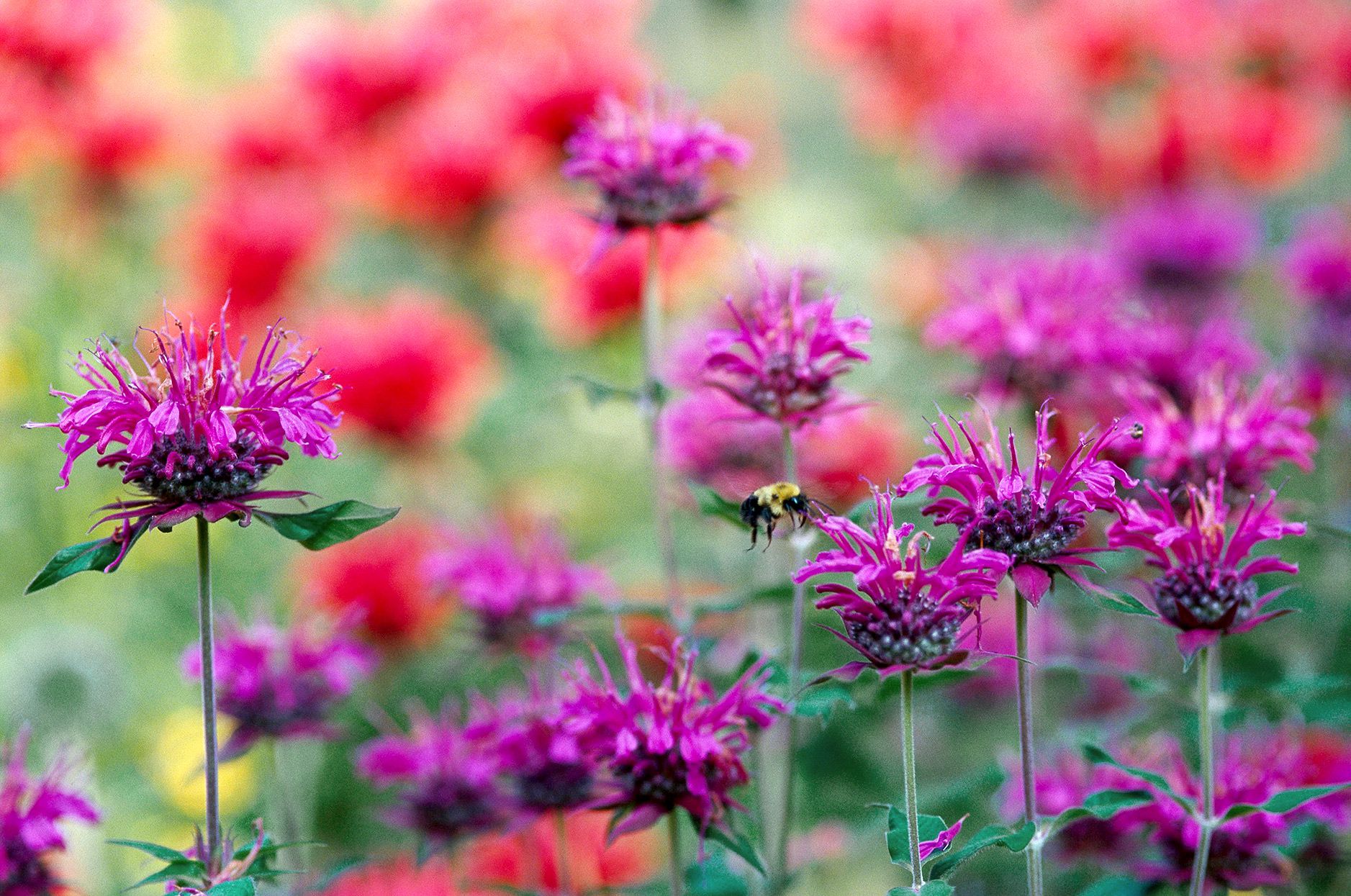
Bee balm is the extrovert of the pollinator border. Its shaggy, firework-like flowers bloom in vivid shades of red, pink, purple, and lavender, and pollinators absolutely show up for the party. Bees love it, butterflies visit often, and hummingbirds are especially drawn to the tubular blooms.
This perennial thrives in full sun to light shade and does best in reasonably moist, well-drained soil. It looks best when planted in generous clumps, where it creates a bold midsummer splash of color. If you want a garden that hums with activity and smells pleasantly minty when you brush past it, bee balm is a strong choice.
2. Purple Coneflower
Purple coneflower is a classic for a reason. It is tough, long-blooming, easy to recognize, and useful to pollinators from the moment its petals open. Native bees and butterflies visit the blooms for nectar and pollen, while the seed heads later feed birds. It is basically the plant equivalent of a multitool.
The flowers usually appear in shades of purple-pink, though newer selections come in white, orange, yellow, and coral. Purple coneflower likes full sun and tolerates heat and periods of drought once established. In a mixed planting, it brings structure and a natural meadow feel without looking sloppy.
3. Blazing Star
Blazing star, also called liatris or gayfeather, brings vertical drama to a pollinator garden with tall spikes of purple, rose, or white flowers. These bottlebrush blooms are packed with tiny nectar-rich florets, which means one flower spike can feed a surprising number of visitors. Butterflies especially seem to treat it like a favorite café.
This plant works beautifully in sunny borders, prairie-style plantings, and meadow gardens. It handles heat well and adds late-summer color when some other perennials are starting to fade. If your garden needs height, movement, and serious pollinator traffic, blazing star deserves a spot.
4. Butterfly Weed
Butterfly weed is one of the brightest plants you can add to a pollinator garden. Its saturated orange flower clusters look like tiny bonfires rising above tidy green foliage. As the name suggests, butterflies love it, but it also provides nectar for bees and other pollinators. As a milkweed, it also serves as a host plant for monarch caterpillars, which makes it twice as useful.
This plant prefers full sun and well-drained soil, even somewhat dry conditions once established. It is a great option for hot borders, prairie plantings, and gardeners who want color without constant watering. In design terms, it pairs beautifully with purple, blue, and yellow companions.
5. Swamp Milkweed
If butterfly weed is the sunburnt orange cousin, swamp milkweed is the elegant pink sibling. It offers clusters of rosy pink flowers that smell sweet and draw a wide range of pollinators, including bees, butterflies, and hummingbirds. It is another valuable monarch host plant, so it helps support both adult butterflies and their caterpillars.
Despite the name, swamp milkweed is not only for soggy bogs. It prefers medium to moist soil and is excellent for rain gardens, low spots, and beds that do not dry out too fast in summer. It is especially useful if your garden has a damp area that has been begging for a purpose.
6. Cardinal Flower
Cardinal flower is what you plant when you want hummingbirds to slam on the brakes midair. Its intense red flower spikes are among the most striking blooms in a native garden, and their tubular shape is especially attractive to hummingbirds. Butterflies also visit, making this plant both dramatic and practical.
It usually grows best in moist, rich soil and can handle full sun in cooler climates or part shade in warmer areas. The bold color makes it an excellent accent plant near patios, paths, or water features. If your garden needs one unforgettable red statement, cardinal flower is it.
7. Anise Hyssop
Anise hyssop is one of those plants that seems to stay busy from the moment it opens. Its spires of purple to lavender flowers bloom over a long period, supplying nectar to bees, butterflies, hummingbirds, and other beneficial insects. The foliage has a sweet licorice-like fragrance, which is a delightful bonus for gardeners who enjoy brushing the leaves as they walk by.
This perennial likes full sun and well-drained soil and is relatively easygoing once established. Because it blooms for so long, it helps bridge the gap between early summer and fall. It is a smart choice for anyone who wants reliable color and a lot of winged visitors without a lot of drama.
8. Garden Phlox
Garden phlox brings old-fashioned charm with a pollinator-friendly twist. Its large flower clusters come in white, pink, magenta, lavender, and reddish tones, and the blooms attract hummingbirds, bees, and butterflies. Many cultivars are also fragrant, which makes them even more appealing in seating areas and walkway borders.
Phlox prefers sun to part sun and evenly moist soil, especially during the hottest part of summer. Choose mildew-resistant varieties when possible, and give plants enough air circulation. In the right spot, garden phlox delivers a big midsummer show that looks lush and generous rather than fussy.
9. Salvia
Salvia is a nectar machine with excellent manners. Its flower spikes come in shades of red, blue, purple, pink, and white, and pollinators regularly crowd the blooms for nectar and pollen. Bees, butterflies, and hummingbirds all make use of it, which is why salvia is such a valuable bridge plant in mixed pollinator beds and containers.
Many ornamental salvias bloom for a long stretch, especially if you deadhead or shear lightly after the first flush. Most prefer full sun and well-drained soil. If you want a plant that fits neatly into borders while quietly feeding half the zip code’s pollinators, salvia is a winner.
10. Coral Honeysuckle
Coral honeysuckle adds a vertical element that many pollinator gardens are missing. This native vine produces clusters of red, coral, or orange tubular flowers that are especially attractive to hummingbirds and other long-tongued pollinators. It can transform a plain trellis, arbor, or fence into a living nectar station.
Unlike some invasive honeysuckles that deserve a firm “absolutely not,” coral honeysuckle is a well-behaved native species worth celebrating. Give it support, decent drainage, and sun to part shade. Once it gets going, it adds both color and architecture to the garden.
11. Goldenrod
Goldenrod is the late-season hero that deserves better public relations. No, it is not the ragweed that makes people miserable in fall. What it does do is offer a substantial nectar source when many other flowers are fading. Its golden plumes support bees, butterflies, wasps, beetles, and other beneficial insects at exactly the time they need fuel most.
Different goldenrod species vary in height and habit, so there is usually one that fits your space. Dwarf selections work in smaller gardens, while taller species suit meadows and naturalized areas. If you want your pollinator garden to stay useful into autumn, goldenrod is close to non-negotiable.
12. Asters
Asters keep the color going when summer starts packing its bags. Their daisy-like flowers bloom in shades of purple, pink, blue, and white, and they are a major nectar source for fall bees and butterflies. When planted with goldenrod, asters create one of the most effective and beautiful late-season pollinator combinations around.
These perennials fit cottage gardens, borders, and naturalistic plantings with ease. Many species and cultivars prefer full sun and average, well-drained soil. They are especially valuable because they help fill the seasonal hunger gap that many gardens accidentally create in fall.
13. Zinnias
Zinnias prove that annual flowers can do serious ecological work while still looking like confetti. They bloom in bright shades of red, orange, pink, yellow, white, and purple, and butterflies are especially fond of them. Bees and hummingbirds may also visit, depending on the variety and flower form.
For the best pollinator value, choose single or semi-double zinnias rather than fully double forms that hide the flower center. Zinnias love full sun, warm weather, and well-drained soil. They are perfect for gardeners who want fast color, long bloom, and a pollinator-friendly flower patch that does not require saint-level patience.
How to Put These Nectar Plants Together in One Garden
If you want your planting to look intentional rather than like a seed catalog exploded in your yard, build it in layers. Use taller plants such as blazing star, goldenrod, cardinal flower, and coral honeysuckle toward the back or on structures. Put mid-height performers like bee balm, coneflower, phlox, and salvia in the middle. Tuck in zinnias, butterfly weed, and shorter asters where you want concentrated color near the front.
Think in seasons, not just species. Early and midsummer flowers such as coral honeysuckle, butterfly weed, bee balm, and coneflower get the show started. High summer plants like salvia, anise hyssop, phlox, blazing star, and cardinal flower keep the buffet open. Then asters and goldenrod carry the garden into fall. This overlap matters because pollinators do not disappear when your favorite June blooms are finished.
Also, do not make the garden too tidy too soon. Hollow stems, seed heads, and leaf litter can provide nesting or overwintering habitat for beneficial insects. A pollinator garden is not a showroom. It is a working ecosystem that just happens to be beautiful.
What the Experience of Growing Nectar Plants Is Really Like
The most surprising thing about growing nectar plants for pollinators is how quickly the garden changes from something you look at into something you experience. At first, you notice the colors. The orange of butterfly weed feels electric in morning light. Bee balm looks almost cartoonishly cheerful. Cardinal flower is so red it seems slightly unreasonable, in the best possible way. But after a week or two, the real magic is not visual. It is the movement and sound.
A pollinator garden is never truly still. Even on a warm afternoon when the rest of the yard looks sleepy, something is happening in the flowers. Bumble bees muscle their way into bee balm blooms like they own the place. Smaller native bees move methodically through anise hyssop and goldenrod. Butterflies seem more theatrical, drifting in, changing direction for no obvious reason, then landing with great importance on zinnias or blazing star. Hummingbirds, meanwhile, behave like tiny airborne drama queens, zipping in to inspect salvia and cardinal flower with obvious standards.
There is also a seasonal rhythm that sneaks up on you. In early summer, the garden feels fresh and hopeful. Coneflowers and milkweeds start to take over, and every new bloom feels like an opening night. By midsummer, the space becomes wonderfully busy and slightly wild. That is often the point when people realize a pollinator garden does not feel sterile or formal. It feels alive. You may even start timing coffee breaks to coincide with peak bee traffic, which sounds ridiculous until you do it once and suddenly understand the appeal.
Late season is where many gardeners get their biggest lesson. A lot of decorative gardens fade badly by early fall, but a nectar-rich planting often hits a second stride. Asters and goldenrod light up just when you assumed the show was winding down. The bees are still working. Butterflies are still visiting. The garden still matters. That changes how you think about plant choices. You stop asking only, “Is this pretty?” and start asking, “Who does this feed, and when?” That question tends to make the whole garden better.
There are practical lessons, too. You learn that clumps work better than lonely singles. You learn that some of the most pollinator-friendly flowers are not the fussiest or the most expensive. You learn that double blooms can be beautiful for people and nearly useless for insects. You learn that if you leave a little mess in fall, the garden repays you with even more life next year. Most of all, you learn that a pollinator garden changes your relationship with the yard. It stops being background scenery and becomes a place you actively notice, listen to, and protect. That is a pretty great return from a few well-chosen plants.
Final Thoughts
The best colorful nectar plants for pollinators do more than brighten a flower bed. They create a longer bloom season, support useful wildlife, and make the garden feel dynamic from spring through fall. If you only have room for a few, start with a mix of shapes and seasons: something tubular for hummingbirds, something open for bees and butterflies, and something that blooms late when the buffet usually closes.
Build the garden one patch at a time, and do not worry if it is not perfect in year one. Pollinator gardening is less about instant perfection and more about steady improvement. Add color, add nectar, reduce chemicals, and let the garden get a little more alive each season. The bees, butterflies, and hummingbirds will notice. So will you.












