
Everyone knows a baby dog is a puppy, a baby cat is a kitten, and a baby cow is a calf. Those names are so familiar they practically come with their own greeting cards. But the animal kingdom has a much deeper vocabulary drawer, and some of the words hiding in it sound like fantasy characters, tiny pastries, or something a wizard would mutter while looking for his glasses.
Learning lesser-known names for baby animals is more than trivia-night decoration. These words reveal how people have observed animals for centuries: on farms, in forests, in falconry, in rivers, in marshes, and even in scientific breeding programs. A “baby animal name” can tell you whether an animal hatches, nurses, clings, swims, molts, hides, or pops into the world already looking suspiciously ready for a calendar photo shoot.
Below are 11 lesser-known names for baby animals that deserve more attention. Some are precise zoological terms. Some come from old language roots. Some are delightfully cute. One or two sound like they should be served with whipped cream. Let’s meet the tiny cast.
1. Puggle: A Baby Echidna
A puggle is a baby echidna, one of the most unusual baby animals on Earth. Echidnas are monotremes, which means they are mammals that lay eggs. That fact alone makes them the animal kingdom’s answer to “Choose your own adventure.” They are mammals, but they hatch. They produce milk, but not through typical nipples. They have spines, but they begin life soft, tiny, and incredibly vulnerable.
Newly hatched puggles are small, hairless, and dependent on their mothers. As they grow, they develop the spines that make adult echidnas look like walking pincushions with serious business to attend to. The word “puggle” is especially associated with echidnas, though many people mistakenly use it for baby platypuses too. In popular animal writing, the name is loved because it is irresistibly cute. Say “puggle” once and try not to smile. It is basically impossible.
Why the name matters
“Puggle” reminds us that baby animal names are not always obvious. If you saw a baby echidna without context, you probably would not guess it belonged to a spiny adult. Nature enjoys dramatic costume changes.
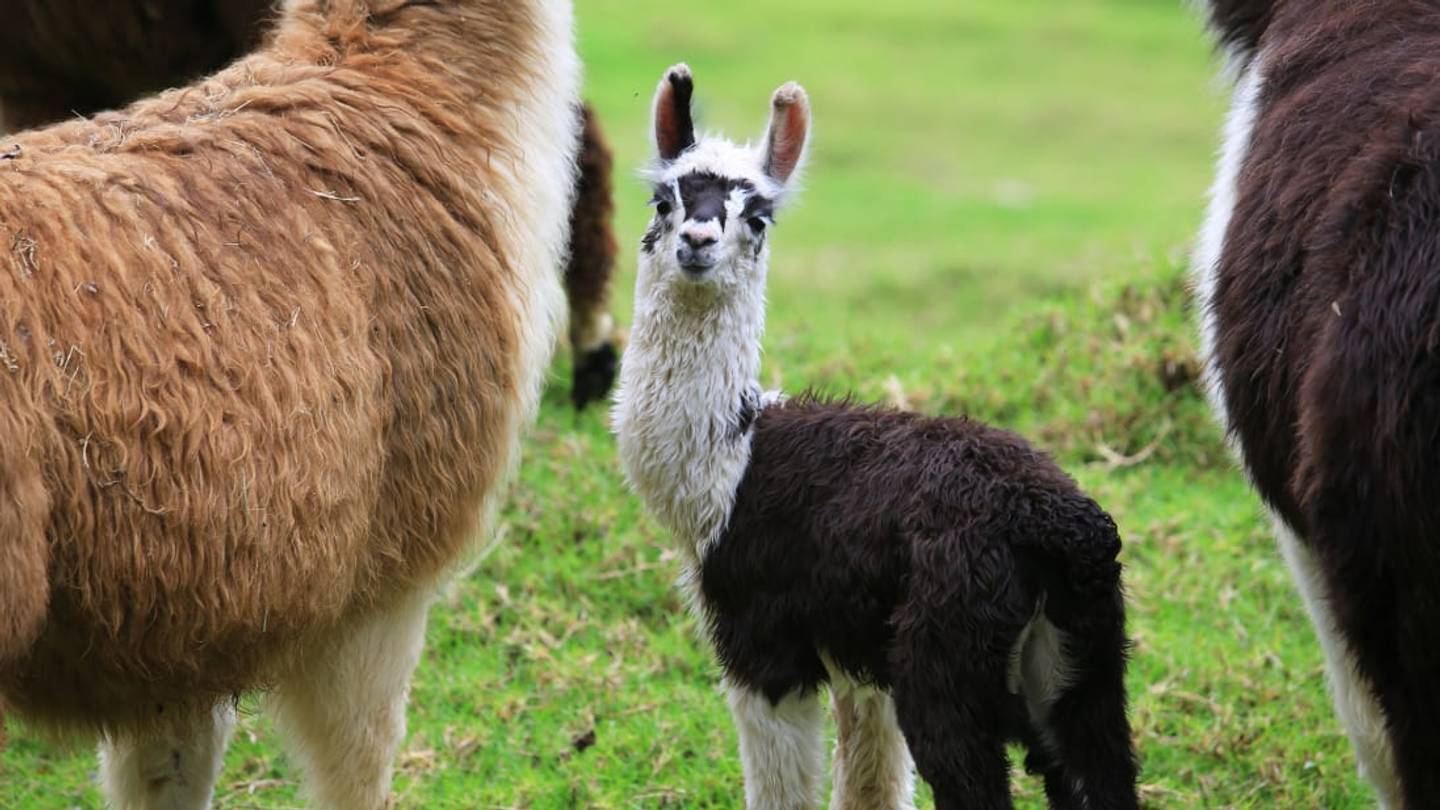
2. Cria: A Baby Llama, Alpaca, Vicuña, or Guanaco
A cria is the young of several camelids, including llamas, alpacas, vicuñas, and guanacos. The word comes from Spanish and generally means a baby or young animal. If you have ever seen a baby alpaca wobbling around on long legs while looking like a cloud that forgot how gravity works, you have seen a cria in action.
Crias are typically born after a long gestation period and are usually standing and moving fairly soon after birth. This makes sense in open habitats where young animals need to become mobile quickly. A cria may look delicate, but it is built with a surprising amount of “let’s get going” energy.
Fun example
On farms and at zoos, visitors often ask whether the young animal is a baby llama or a baby alpaca. Either way, if it belongs to that camelid family group, “cria” is the word that makes you sound like you know exactly what you are talking about.
3. Leveret: A Baby Hare
A leveret is a young hare, especially one less than a year old. This is one of the most elegant lesser-known baby animal names, and it fits the animal beautifully. Hares are often confused with rabbits, but their young are quite different. Baby rabbits are usually born helpless, hairless, and with closed eyes. Leverets, on the other hand, are often born fully furred, with eyes open, and ready to move surprisingly soon.
This gives leverets a head start in the wild. Instead of being tucked away in a burrow like many rabbits, young hares may be left in shallow resting spots called forms. Their mother returns to feed them, often briefly, to avoid drawing attention from predators.
Why it is lesser-known
Most people use “bunny” for nearly anything small, fluffy, and long-eared. But “leveret” is more precise. If you are writing about wildlife, nature photography, or countryside ecology, this word adds accuracy and charm.
4. Cygnet: A Baby Swan
A cygnet is a young swan. Adult swans look graceful enough to have personal stylists, but cygnets begin life as fuzzy, grayish, soft-looking water babies. They often swim close to their parents and may ride on an adult’s back when tired, cold, or simply enjoying premium family transportation.
The word “cygnet” comes from older forms connected to the word for swan. It has a gentle, almost poetic sound, which is fitting because swans have inspired stories, ballet, myths, and plenty of dramatic pond photography.
Specific example
A trumpeter swan, mute swan, or black-necked swan can all have cygnets. The color and growth timeline may vary by species, but the name “cygnet” remains the go-to word for a young swan.
5. Eyas: A Young Hawk or Falcon
An eyas is an unfledged young bird, especially a nestling hawk or falcon. This term is strongly connected with falconry, where precise language matters. A young raptor in the nest is not simply a “baby bird” if you are speaking in the traditional vocabulary of hawks and falcons. It is an eyas.
The history of the word is fascinating because it appears to have developed through a linguistic misunderstanding. Older forms such as “neias” were reinterpreted over time, and the initial sound shifted. English has done this before. Words sometimes change because people hear boundaries differently, the same way “a napron” eventually became “an apron.” Language, like wildlife, occasionally wanders through the bushes and comes out looking different.
Why it stands out
“Eyas” is short, sharp, and rare. It sounds almost too small for a bird that may grow into a powerful hunter. That contrast makes it one of the most memorable baby animal names.
6. Porcupette: A Baby Porcupine
A porcupette is a baby porcupine, and yes, the word is as adorable as the animal is pointy. Porcupines are famous for their quills, but newborn porcupettes do not arrive as tiny danger brushes. Their quills are soft at birth and harden after they are born. This is extremely considerate of nature, especially for the mother.
Porcupettes are usually born relatively well-developed compared with many other baby mammals. They may nurse, explore, and gradually learn the slow, steady lifestyle of adult porcupines. The name sounds like a fancy French dessert, but it describes one of the cutest armored babies in the wild.
Quick writing tip
If you are creating educational content, “porcupette” is a perfect word to include. It surprises readers, is easy to remember, and instantly adds personality to an article about animal babies.
7. Elver: A Young Eel
An elver is a young eel, especially a small immature eel found in fresh or brackish water after earlier life stages. Eels have one of the most mysterious life cycles in the animal world. Many begin as tiny, transparent larvae in the ocean, transform into glass eels, and later become elvers as they move into rivers and estuaries.
Unlike fluffy mammals and wobbly birds, elvers do not win attention with big eyes and fuzzy cheeks. Their appeal is stranger and more scientific. They represent migration, transformation, and survival across huge distances. An elver is a reminder that “baby animal” does not always mean cuddly. Sometimes it means slippery, determined, and shaped like a living question mark.
Why it is useful
The word “elver” often appears in fisheries, conservation, and ecological discussions. If you write about rivers, marine life, or animal life cycles, it is an important term to know.
8. Poult: A Young Turkey or Fowl
A poult is a young fowl, especially a young turkey. People often say “chick” for young birds, and that can be correct in many everyday cases, but “poult” is more specific in poultry and wildlife contexts. Baby turkeys, for example, are commonly called poults.
Wild turkey poults are active soon after hatching. They follow their mother, called a hen, and learn to feed, hide, and survive in a world full of predators. Domestic turkey poults require careful warmth and care during early growth. Either way, the word sounds like it belongs in a farmer’s notebook, which is exactly where it has spent plenty of time.
Common confusion
“Poult” is not the same as “poultry,” though the words are related in meaning. Poultry refers broadly to domesticated birds raised for eggs, meat, or other farm purposes. A poult is the youngster.
9. Spiderling: A Baby Spider
A spiderling is a very young spider. If you have ever seen a cluster of tiny spiders scattering like animated pepper flakes, you have met spiderlings. They hatch from egg sacs and may remain together for a short period before dispersing. Some species travel by “ballooning,” releasing silk threads that catch the wind and carry them to new places.
Spiderlings are small, but they are not simple. They must molt as they grow, shedding their outer covering and gradually taking on the appearance of adult spiders. Many people fear spiders, but spiderlings can be a useful gateway into appreciating how complex and helpful spiders are. They control insect populations, create silk, and perform impressive engineering feats without attending a single architecture class.
Why readers love this word
“Spiderling” is clear and descriptive. The suffix “-ling” makes it sound small, which is accurate, and slightly storybook-like, which is a bonus.
10. Snakelet: A Young or Small Snake
A snakelet is a young or small snake. It is one of those wonderfully straightforward animal names: snake plus “-let,” meaning small. Some snakes hatch from eggs, while others are born live, depending on the species. Either way, many young snakes are independent from the start and receive little or no parental care.
Snakelets may look like miniature versions of adults, though coloration and pattern can change as they grow. Because baby snakes can still be wild animals with defensive instincts, they should be admired from a safe distance. Cute does not always mean cuddly. Nature did not hand out permission slips for nose boops.
SEO-friendly note
For educational articles about reptiles, “snakelet” is a helpful related keyword because many readers search for “what is a baby snake called?” The answer is simple, memorable, and accurate.
11. Kit: A Baby Fox, Ferret, Beaver, or Several Other Mammals
A kit is the young of several mammals, including foxes, ferrets, beavers, and some related animals. The word is short, but it covers a lot of ground. Baby foxes may be called kits, cubs, or pups depending on region and usage. Baby ferrets are commonly called kits. Baby beavers may also be called kits or kittens.
This is where baby animal names become flexible rather than fixed. Animal terminology often changes depending on tradition, geography, scientific context, and everyday speech. That does not make the words useless. It makes them richer. “Kit” is a practical, compact term that appears often in wildlife rescue, pet care, and nature writing.
Example in context
A wildlife rehabilitator might care for orphaned fox kits, while a ferret breeder may refer to a litter of ferret kits. Same word, different species, equally tiny chaos.
Why Do Baby Animals Have Such Specific Names?
Baby animal names developed from many sources: farming, hunting, falconry, scientific classification, local dialects, and old European languages. People who lived close to animals needed words that were more specific than “small one.” Farmers needed to distinguish calves from foals, lambs from kids, and poults from chicks. Falconers needed exact terms for young birds at different stages. Naturalists needed language for growth, migration, and development.
These names also make writing more vivid. “A young swan followed its mother” is fine. “A cygnet followed its mother” is more precise and more graceful. “A baby hare crouched in the grass” is clear. “A leveret crouched in the grass” gives the sentence texture, accuracy, and a little spark of discovery.
How to Remember Lesser-Known Baby Animal Names
The easiest way to remember these words is to connect each name to a strong image. Picture a puggle as a tiny echidna before its spines fully develop. Imagine a cria as a wobbly baby alpaca standing beside its mother. Think of a cygnet as a gray fluffball floating behind a swan. Link an eyas to a hawk’s nest, a spiderling to a tiny spider on a silk thread, and an elver to a young eel slipping upstream.
You can also group them by animal type. Mammals include puggle, cria, leveret, porcupette, and kit. Birds include cygnet, eyas, and poult. Reptiles and invertebrates include snakelet and spiderling. Fish-like aquatic life gives us elver. Once you group them, the list becomes easier to remember and more fun to teach.
Experience Notes: What These Baby Animal Names Teach Us in Real Life
Spending time with unusual baby animal names changes the way you notice the natural world. At first, the words feel like trivia. You learn that a baby swan is a cygnet, nod proudly, and store the fact somewhere between “penguins have knees” and “octopuses are suspiciously smart.” But after a while, these names make ordinary outdoor moments feel more detailed.
Imagine walking beside a pond and seeing a family of swans. Before learning the word, you might simply say, “Look, baby swans.” That is perfectly fine. But when you know “cygnets,” the scene sharpens. You notice their soft gray down, the way they follow the adults, and the contrast between their awkward youth and the elegance they will grow into. A single word helps you look longer.
The same thing happens with hares. Many people call every long-eared animal a rabbit. Then they learn about leverets and discover that hares are different: born furred, eyes open, and often above ground rather than tucked in burrows. Suddenly, a small shape in a field is not just “a bunny.” It might be a leveret, and that word carries a whole survival strategy inside it.
On farms, names like cria and poult create practical clarity. A baby alpaca is not merely “the little fluffy one,” although that description is emotionally accurate. It is a cria, with specific care needs, growth patterns, and behavior. A young turkey is not just a chick in a slightly more Thanksgiving-themed outfit. It is a poult, and poultry keepers use that word because early care matters. Vocabulary becomes a tool, not just decoration.
In classrooms, these names are especially powerful. Children often love animals before they love vocabulary lessons, which means animal words can sneak learning in through the side door wearing muddy boots. Ask a child to memorize random nouns and you may get a dramatic sigh. Ask them what a baby echidna is called, and suddenly “puggle” becomes the best word of the day. It sounds funny, it feels playful, and it opens the door to monotremes, eggs, milk, spines, and Australia’s wonderfully strange wildlife.
For writers, these names add precision and personality. A nature article becomes more colorful when it uses “porcupette” instead of repeating “baby porcupine.” A story about a young falcon gains atmosphere when the word “eyas” appears. Even a simple fact sheet feels more trustworthy when it uses the correct terms naturally.
The best experience, though, is the little spark of recognition that happens later. You read a zoo sign, watch a nature documentary, or scroll past a wildlife rescue update, and there it is: cria, cygnet, poult, kit, spiderling. The word is no longer strange. It has become part of your mental map of the animal world. That is the quiet magic of vocabulary. It does not just help us name things. It helps us see them.
Conclusion
Lesser-known names for baby animals are tiny treasures of language. They make nature writing more accurate, help learners build vocabulary, and reveal surprising details about animal life cycles. A puggle is not just a cute word; it points to one of the planet’s rare egg-laying mammals. A leveret is not just a baby hare; it is a young animal born ready for a very different life than a rabbit. A cygnet, eyas, elver, poult, spiderling, snakelet, porcupette, cria, and kit each carry a story about growth, survival, and human observation.
So the next time someone asks what a baby animal is called, do not stop at puppy and kitten. Reach deeper into the vocabulary nest. There is a whole world of strange, charming, and wonderfully specific words waiting to hatch.












