
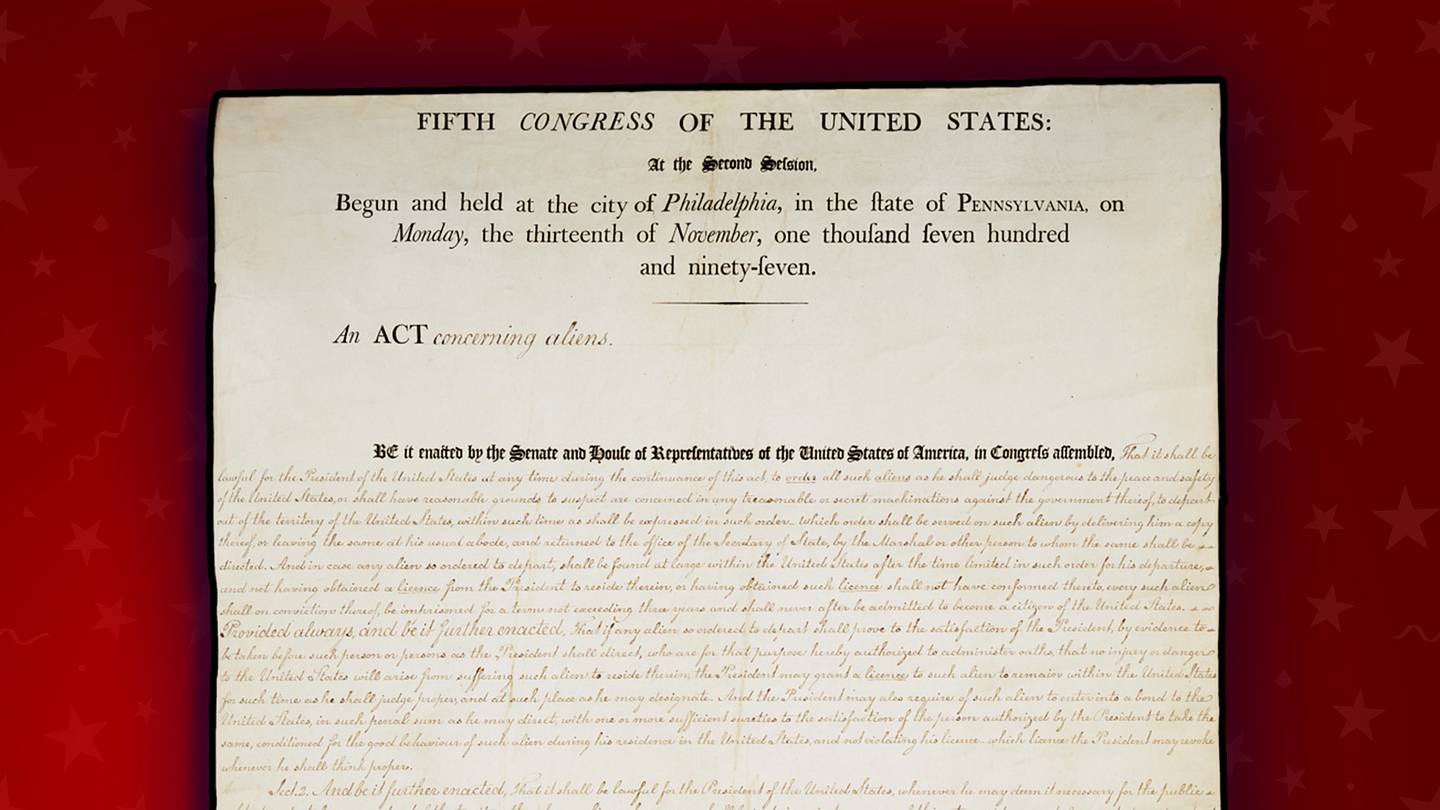
The Alien and Sedition Acts sound like the title of a dusty legal thriller, possibly starring powdered wigs and extremely dramatic quill pens. But these 1798 laws were no historical footnote. They became one of the first major tests of free speech, immigration policy, presidential power, party politics, and the meaning of the First Amendment in the young United States.
Passed during the presidency of John Adams, the Alien and Sedition Acts arrived at a moment when America was nervous, divided, and arguing loudly enough to make modern cable news look like a polite book club. The United States was locked in the Quasi-War with France, political parties were sharpening their elbows, and newspapers were roasting public officials with the energy of a colonial-era comment section.
To Federalists, the laws looked like necessary national security measures. To Democratic-Republicans, they looked like a political muzzle wrapped in patriotic ribbon. Either way, they shaped American constitutional history in a way that still echoes today.
1. The Alien and Sedition Acts Were Actually Four Separate Laws
One of the most important facts about the Alien and Sedition Acts is that they were not a single law. They were a package of four laws passed by a Federalist-controlled Congress in 1798. Those laws were the Naturalization Act, the Alien Friends Act, the Alien Enemies Act, and the Sedition Act.
Each law targeted a different concern. Some focused on immigrants and noncitizens. Others focused on wartime security. The most controversial one, the Sedition Act, focused on speech and the press. Together, they gave the federal government more power over immigration, deportation, and political expression than many Americans believed the Constitution allowed.
2. They Were Passed During the Quasi-War With France
The Alien and Sedition Acts cannot be understood without the Quasi-War, an undeclared naval conflict between the United States and France from 1798 to 1800. After the French Revolution, relations between the two countries soured. American ships were attacked, diplomacy became messy, and many Federalists believed French agents might stir up trouble inside the United States.
That fear was not completely imaginary, but it was politically useful. Federalists argued that the country needed strong laws to protect itself from foreign influence. Democratic-Republicans argued that the Federalists were using national security as an excuse to weaken their opponents. In other words, the young republic discovered very early that “emergency powers” can make everyone reach for the Constitution and a migraine remedy at the same time.
3. The Naturalization Act Made Citizenship Harder to Get
The Naturalization Act of 1798 increased the residency requirement for citizenship from five years to fourteen years. That was not a tiny paperwork adjustment. It was a political earthquake wearing sensible shoes.
Many immigrants at the time leaned toward the Democratic-Republican Party, led by Thomas Jefferson and James Madison. By making naturalization more difficult, Federalists reduced the number of new citizens who might vote against them. Officially, the change was about national security. Politically, it helped slow the growth of the opposition’s voter base.
This law shows how immigration policy and party politics were intertwined from the beginning of American history. Debates over who gets to become a citizen were never only about paperwork. They were also about power, identity, and the future direction of the country.
4. The Alien Friends Act Gave the President Broad Deportation Power
The Alien Friends Act authorized the president to deport noncitizens considered dangerous to the peace and safety of the United States. The key phrase here is “considered dangerous.” The law gave the president wide discretion, meaning a person did not necessarily need to be convicted of a crime before facing removal.
For supporters, this was a practical security tool in a tense international climate. For critics, it was a frightening expansion of executive power. Could a president label political critics as threats? Could immigrants be punished for their opinions or associations? These were not abstract concerns. In a nation still figuring out the boundaries of federal authority, the Alien Friends Act looked to many like a shortcut around due process.
5. The Alien Enemies Act Is the One That Survived
Most of the Alien and Sedition Acts expired or were repealed after the Federalists lost power. But the Alien Enemies Act survived. This law allowed the president, during declared war or invasion, to detain or remove citizens or subjects of a hostile nation.
Unlike the Alien Friends Act, which applied broadly in peacetime, the Alien Enemies Act was tied to wartime conditions. That made it more durable. It remained part of U.S. law and later became relevant during conflicts such as the War of 1812, World War I, and World War II.
Its survival is one reason the Alien and Sedition Acts are not merely museum material. They remain part of legal and political discussions about immigration, executive authority, and national security.
6. The Sedition Act Made Criticizing the Government Risky
The Sedition Act of 1798 was the most explosive part of the package. It made it a crime to publish “false, scandalous, and malicious” writings against the federal government, Congress, or the president. Notably, it did not protect the vice president from criticism. At the time, the vice president was Thomas Jefferson, leader of the opposing Democratic-Republican Party. Subtle? Not exactly. The law had the political delicacy of a marching band in a library.
The Sedition Act struck directly at freedom of speech and freedom of the press. Federalists insisted it punished false and malicious attacks, not honest criticism. Democratic-Republicans argued that it allowed those in power to decide what criticism counted as dangerous. That is a pretty convenient arrangement if you are the person being criticized.
7. Newspaper Editors Became Major Targets
In the 1790s, newspapers were intensely partisan. They did not pretend to be neutral referees. Federalist newspapers attacked Democratic-Republicans, and Democratic-Republican newspapers returned the favor with gusto, sarcasm, and occasionally breathtaking insults.
Under the Sedition Act, several opposition editors and writers were prosecuted. The law became a weapon against newspapers that criticized John Adams and the Federalist administration. This mattered because newspapers were the main political media of the era. There was no television, no radio, no social media, and no viral video of a senator dropping his notes. Newspapers were where political battles happened.
By targeting the press, the Sedition Act raised a question that still matters: Can a republic remain free if the government can punish its loudest critics?
8. Matthew Lyon Became a Symbol of Resistance
One of the most famous Sedition Act cases involved Matthew Lyon, a Democratic-Republican congressman from Vermont. Lyon criticized President Adams and was prosecuted, convicted, fined, and jailed. Instead of disappearing quietly, he became a political martyr.
Even more dramatically, Lyon won reelection while in jail. That detail belongs in the historical hall of fame for “things that did not go according to the government’s plan.” His imprisonment turned him into a symbol of resistance against Federalist power and helped convince many Americans that the Sedition Act was not protecting the nationit was protecting the party in power.
Lyon’s case demonstrated how punishment can backfire. When governments silence critics, they sometimes make those critics louder in the public imagination.
9. The Laws Helped Fuel the Election of 1800
The election of 1800 was one of the most important elections in American history. It led to the defeat of John Adams and the Federalists and the rise of Thomas Jefferson and the Democratic-Republicans. The Alien and Sedition Acts played a major role in that shift.
Many voters saw the laws as proof that Federalists had become too powerful and too willing to sacrifice civil liberties. The Sedition Act, in particular, made the administration look thin-skinned and authoritarian to its critics. When Jefferson won, the election became known as the “Revolution of 1800” because power passed peacefully from one political party to another.
That peaceful transfer was a landmark achievement. But the controversy surrounding the Alien and Sedition Acts helped make it happen.
10. Jefferson and Madison Responded With the Kentucky and Virginia Resolutions
Thomas Jefferson and James Madison opposed the Alien and Sedition Acts fiercely. In response, they helped draft the Kentucky and Virginia Resolutions, which argued that the laws were unconstitutional. These resolutions claimed that states had the right to declare federal laws unconstitutional when the federal government exceeded its authority.
The resolutions became important in the development of states’ rights theory. However, they also created a complicated legacy. While they defended free speech against federal overreach, later generations used similar arguments in very different and sometimes deeply troubling political contexts.
Still, in 1798 and 1799, the Kentucky and Virginia Resolutions represented one of the most serious early challenges to federal power. They showed that the Alien and Sedition Acts were not just unpopular laws. They triggered a constitutional crisis over who gets to interpret the Constitution.
11. The Acts Became a Warning About Civil Liberties in Times of Fear
The deepest lesson of the Alien and Sedition Acts is that fear can put civil liberties under pressure. In 1798, fear of France, fear of immigrants, fear of political disorder, and fear of opposition newspapers all combined into a legal package that many Americans later viewed as a serious mistake.
The acts remind us that constitutional rights are often tested when people are scared. It is easy to praise free speech when everyone is calm and the newspapers are saying nice things. The real test comes when the speech is angry, partisan, exaggerated, or aimed directly at powerful people.
That is why the Alien and Sedition Acts remain fundamental to American history. They show how quickly national security can collide with individual liberty, and how political leaders may be tempted to treat criticism as danger.
Why the Alien and Sedition Acts Still Matter Today
The Alien and Sedition Acts matter because they sit at the crossroads of several major American debates: immigration, citizenship, presidential authority, wartime powers, free speech, and press freedom. These issues did not vanish with powdered wigs. They are still part of American political life.
Modern readers may be surprised by how familiar the arguments sound. Supporters of strong security measures argue that the government must act quickly to protect the country. Critics warn that broad powers can be abused, especially against unpopular groups or political opponents. Both sides claim to be defending the republic. History then gets the awkward job of sorting out who had the better case.
The Sedition Act is especially important for understanding the First Amendment. Although the Supreme Court did not strike it down at the time, later American legal thought moved strongly against the idea that government should punish political criticism. Today, criticism of public officials receives strong constitutional protection, even when it is harsh, rude, or inconvenient. Democracy, as it turns out, requires a thick skin.
Experiences and Lessons From Studying the Alien and Sedition Acts
Studying the Alien and Sedition Acts is a little like opening an old attic trunk and discovering that the past has been arguing with the present the whole time. At first, the topic may seem like another chapter from a history textbook: dates, names, laws, and men in coats who look like they took themselves very seriously. But once you spend time with the details, the story becomes surprisingly alive.
One experience many students and readers have is realizing how fragile the early American republic was. Today, it is easy to imagine the Constitution as a finished masterpiece that everyone immediately understood. In reality, Americans were still debating what the Constitution meant almost as soon as the ink dried. The Alien and Sedition Acts show that the Bill of Rights did not enforce itself. People had to argue for it, defend it, and sometimes suffer because of it.
Another lesson is that political fear can make extreme ideas seem reasonable. In 1798, Federalists looked at conflict with France and saw danger everywhere. Immigrants became suspicious. Opposition newspapers became threats. Critics became possible enemies. From inside that atmosphere, the Alien and Sedition Acts may have seemed practical to their supporters. From a distance, we can see how easily fear turned into overreach.
There is also a powerful lesson about speech. The Sedition Act teaches that freedom of speech is not mainly about protecting compliments. Governments rarely need laws to protect praise. The real challenge is protecting criticism, satire, protest, and uncomfortable opinions. If free speech only applies when leaders enjoy what is being said, then it is less of a right and more of a customer service policy.
Matthew Lyon’s story makes the issue personal. He was not just a name in a legal summary. He was a sitting member of Congress who criticized the president, went to jail, and still won reelection. That experience shows how voters can push back when they believe government has gone too far. It also shows that punishment can turn a critic into a symbol. The Federalists wanted to reduce opposition noise; instead, they handed their opponents a drum.
For modern writers, journalists, students, and citizens, the Alien and Sedition Acts offer a practical reminder: always pay attention when leaders describe criticism as danger. Sometimes criticism is unfair. Sometimes it is exaggerated. Sometimes it is written with the emotional control of a raccoon in a pantry. But in a republic, the answer to bad speech is usually more debate, better evidence, and sharper public judgmentnot prison cells and political prosecutions.
The Alien and Sedition Acts also teach humility. The founding generation produced remarkable ideas, but it also made serious mistakes. The same era that gave Americans the First Amendment also produced a law punishing criticism of the president. That contradiction is not a reason to dismiss the founding period. It is a reason to study it honestly. History is most useful when we allow it to be complicated.
In the end, the experience of studying these laws leaves one major impression: liberty is not automatic. It depends on institutions, elections, courts, newspapers, public pressure, and citizens who remember that fear is never a blank check. The Alien and Sedition Acts are fundamental because they show what can happen when a young democracy panicsand how that democracy can correct itself when people refuse to stay quiet.
Conclusion
The Alien and Sedition Acts were among the most controversial laws of the early United States. Passed in 1798 during a period of international tension and domestic political rivalry, they restricted immigration, expanded presidential power, and punished certain forms of political criticism. Supporters saw them as national security tools. Critics saw them as attacks on the Constitution.
Their legacy is clear: civil liberties are most vulnerable when fear is loudest. The acts helped define the boundaries of free speech, shaped the election of 1800, inspired major constitutional arguments, and left Americans with a warning that still deserves attention. A republic can survive fierce criticism. It has a much harder time surviving leaders who believe criticism itself is a crime.












