
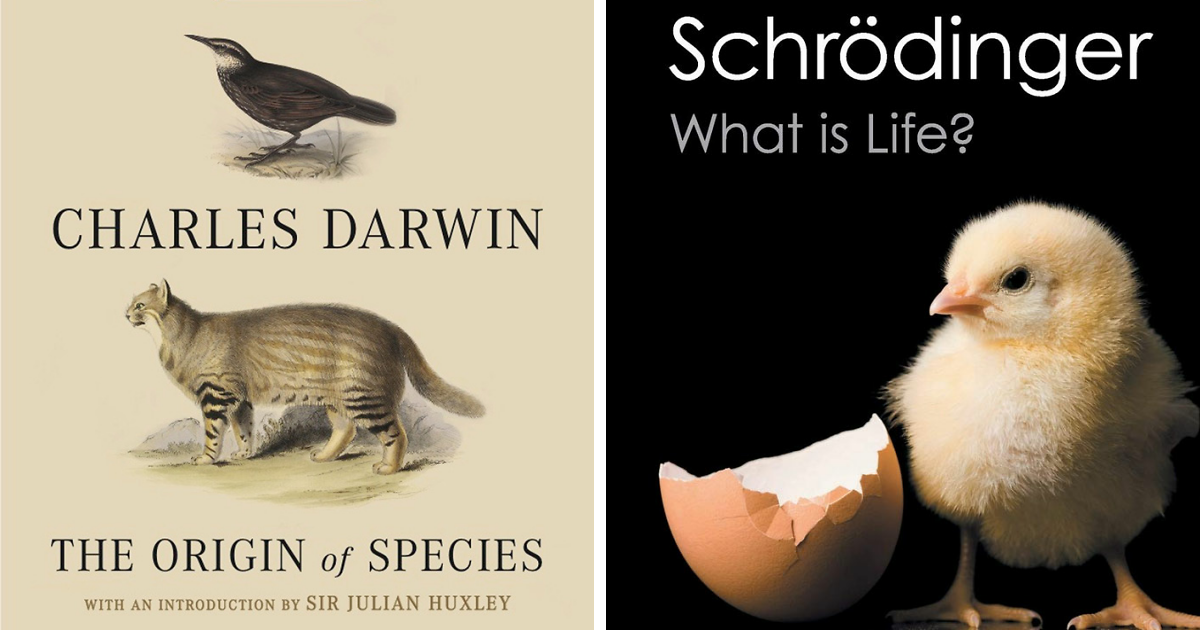
Science books are portable laboratories. The best ones let you watch stars ignite, genes copy themselves, fungi negotiate underground, and mathematicians lose sleep over proofsall without requiring safety goggles or permission from an institutional review board.
This list of 100 must-read science books mixes landmark classics, modern popular science, biographies, medical narratives, natural history, environmental reporting, and a few doorstoppers that could double as emergency furniture. It is designed for curious general readers rather than specialists, so accessibility matters as much as intellectual importance. Some selections explain established ideas; others show science as it actually happens: slowly, competitively, imperfectly, and often with somebody spilling something.
The recommendations were cross-checked against science-book archives, annual editorial lists, library guides, and literary awards from Smithsonian, Scientific American, Science News, Popular Science, Discover, and the Pulitzer Prizes. They were also informed by PEN America, the National Book Foundation, NPR, the New York Public Library, the Library of Congress, the American Museum of Natural History, Kirkus Reviews, Nautilus, and Publishers Weekly.
How to Use This Science Reading List
Do not treat the ranking as a ladder you must climb in order. Start with the subject that already makes you open twelve browser tabs at midnight. Astronomy fans can begin with Cosmos; biology devotees may prefer An Immense World; readers who enjoy medical mysteries should grab The Emperor of All Maladies or The Ghost Map. Alternate a big conceptual book with a narrative one. Your brain deserves both vegetables and dessert.
Older books remain valuable because they shaped scientific culture, but they should not be mistaken for final answers. Science updates itself. Read classics for their arguments and influence, then pair them with newer work that reflects current evidence, broader perspectives, and improved tools.
The Complete List: 100 Must-Read Science Books
Universe, Space, and the Big Questions
- Cosmos Carl Sagan. A lyrical grand tour of cosmic history and humanity’s place in it.
- A Brief History of Time Stephen Hawking. Black holes, time, and cosmology made invitingly compact.
- Astrophysics for People in a Hurry Neil deGrasse Tyson. A fast, friendly launchpad for modern astrophysics.
- The First Three Minutes Steven Weinberg. The early universe reconstructed with elegant physical reasoning.
- Black Holes and Time Warps Kip S. Thorne. A dramatic history of relativity, gravity, and black-hole science.
- The End of Everything (Astrophysically Speaking) Katie Mack. Five possible cosmic endings, explained with wit rather than doom.
- The Planets Dava Sobel. A literary portrait of our solar system’s famously eccentric family.
- Packing for Mars Mary Roach. The messy human biology behind leaving Earth.
- Apollo 8 Jeffrey Kluger. The daring mission that first carried humans around the moon.
- Pale Blue Dot Carl Sagan. A humane argument for exploration, humility, and planetary responsibility.
Physics and the Nature of Reality
- Six Easy Pieces Richard P. Feynman. Foundational physics delivered with legendary clarity and mischief.
- QED Richard P. Feynman. Quantum electrodynamics without requiring a ceremonial sacrifice to algebra.
- The Elegant Universe Brian Greene. String theory and hidden dimensions for adventurous general readers.
- The Fabric of the Cosmos Brian Greene. Space, time, and reality examined from classical to quantum physics.
- Something Deeply Hidden Sean Carroll. A bold tour of quantum mechanics and the many-worlds interpretation.
- The Order of Time Carlo Rovelli. A poetic dismantling of our everyday assumptions about time.
- Helgoland Carlo Rovelli. Quantum theory presented as relationships rather than isolated objects.
- The Black Hole War Leonard Susskind. A lively intellectual battle over information and black holes.
- The Quantum Universe Brian Cox and Jeff Forshaw. Quantum behavior connected to the ordinary world around us.
- The Road to Reality Roger Penrose. A demanding, monumental map of modern mathematical physics.
Mathematics, Computing, and Information
- The Joy of x Steven Strogatz. Mathematics revealed as useful, intuitive, and surprisingly charming.
- Infinite Powers Steven Strogatz. Calculus explained through motion, change, and big human ideas.
- How Not to Be Wrong Jordan Ellenberg. Mathematical thinking as protection against confident nonsense.
- The Drunkard’s Walk Leonard Mlodinow. Chance and randomness exposed in daily decisions.
- Fermat’s Enigma Simon Singh. The centuries-long hunt for a famously stubborn proof.
- Gödel, Escher, Bach Douglas Hofstadter. A dazzling maze of logic, minds, music, and self-reference.
- Chaos James Gleick. The story of a science built around unpredictable systems.
- The Information James Gleick. From drums and telegraphs to genes, bits, and digital overload.
- Code Charles Petzold. How switches and symbols grow into working computers.
- Algorithms to Live By Brian Christian and Tom Griffiths. Computer-science ideas applied to scheduling, choosing, and stopping.
Evolution and Human Origins
- On the Origin of Species Charles Darwin. The revolutionary case for evolution by natural selection.
- The Selfish Gene Richard Dawkins. An influential gene-centered view of evolutionary change.
- The Blind Watchmaker Richard Dawkins. Why complexity does not require a cosmic engineer.
- The Greatest Show on Earth Richard Dawkins. Evidence for evolution assembled as a readable courtroom brief.
- The Vital Question Nick Lane. Why energy may be the key to complex life.
- Wonderful Life Stephen Jay Gould. Burgess Shale fossils and the role of contingency in evolution.
- Your Inner Fish Neil Shubin. Human anatomy traced back through deep evolutionary history.
- The Tangled Tree David Quammen. How gene swapping complicated the tidy tree of life.
- The Ancestor’s Tale Richard Dawkins and Yan Wong. A reverse pilgrimage through humanity’s evolutionary relatives.
- The Story of the Human Body Daniel E. Lieberman. How evolutionary history still shapes modern health.
Animals, Ecosystems, and Hidden Life
- An Immense World Ed Yong. Animal senses reveal realities humans cannot naturally perceive.
- I Contain Multitudes Ed Yong. Microbes recast every animal as a living ecosystem.
- Entangled Life Merlin Sheldrake. Fungi emerge as ecological engineers and champion rule-breakers.
- Other Minds Peter Godfrey-Smith. Octopus intelligence challenges familiar ideas about consciousness.
- The Soul of an Octopus Sy Montgomery. Close encounters with smart, curious, eight-armed personalities.
- The Genius of Birds Jennifer Ackerman. Avian intelligence gets the evidence-packed celebration it deserves.
- The Song of the Dodo David Quammen. Island biogeography becomes an adventure in extinction and survival.
- The Diversity of Life Edward O. Wilson. A sweeping account of biodiversity and its accelerating loss.
- The Hidden Life of Trees Peter Wohlleben. Forest relationships described with contagious wonder.
- Braiding Sweetgrass Robin Wall Kimmerer. Botany, Indigenous knowledge, reciprocity, and ecological care intertwined.
The Human Body, Brain, and Behavior
- The Body Bill Bryson. A witty owner’s manual for the organism you live inside.
- The Man Who Mistook His Wife for a Hat Oliver Sacks. Neurological case stories told with precision and compassion.
- An Anthropologist on Mars Oliver Sacks. Seven lives that illuminate perception, identity, and adaptation.
- Behave Robert M. Sapolsky. Human action examined from neurons to culture and history.
- Why Zebras Don’t Get Ulcers Robert M. Sapolsky. Stress biology explained with jokes, baboons, and practical insight.
- The Tale of the Dueling Neurosurgeons Sam Kean. Brain science built from accidents, rivalries, and strange symptoms.
- Incognito David Eagleman. The unconscious machinery steering much of human behavior.
- The Tell-Tale Brain V. S. Ramachandran. Neurological puzzles used to investigate the self.
- This Is Your Brain on Music Daniel J. Levitin. Neuroscience explains rhythm, melody, memory, and musical pleasure.
- Why We Sleep Matthew Walker. A popular introduction to sleep’s roles, best read alongside newer research.
Medicine, Genetics, and Disease
- The Emperor of All Maladies Siddhartha Mukherjee. Cancer’s scientific and human history told with narrative power.
- The Gene Siddhartha Mukherjee. Heredity, identity, and genetic technology across generations.
- The Song of the Cell Siddhartha Mukherjee. Cell biology becomes a story of medicine’s future.
- The Immortal Life of Henrietta Lacks Rebecca Skloot. Biomedical progress meets consent, race, family, and ethics.
- The Code Breaker Walter Isaacson. CRISPR, Jennifer Doudna, and the age of gene editing.
- Genome Matt Ridley. Twenty-three chromosomes used as doors into human biology.
- She Has Her Mother’s Laugh Carl Zimmer. Heredity extends far beyond a simple genetic handoff.
- Spillover David Quammen. How animal pathogens cross into humans and sometimes spread.
- Being Mortal Atul Gawande. Medicine confronts aging, autonomy, and the limits of intervention.
- The Hot Zone Richard Preston. A terrifying narrative of filoviruses and outbreak response.
Chemistry, Materials, and Everyday Science
- The Disappearing Spoon Sam Kean. The periodic table becomes a cabinet of scientific oddities.
- The Poisoner’s Handbook Deborah Blum. Forensic chemistry battles lethal poisons in Jazz Age New York.
- The Poison Squad Deborah Blum. The fight that helped transform American food safety.
- The Periodic Table Primo Levi. Chemistry becomes memoir, metaphor, work, and survival.
- Stuff Matters Mark Miodownik. The hidden science inside steel, glass, paper, and chocolate.
- Liquid Rules Mark Miodownik. Fluids explain everything from ink to jet fuel.
- Caesar’s Last Breath Sam Kean. The atmosphere becomes a global archive of chemistry and history.
- Napoleon’s Buttons Penny Le Couteur and Jay Burreson. Seventeen molecules linked to turning points in civilization.
- Salt: A World History Mark Kurlansky. One mineral connects chemistry, trade, preservation, and empire.
- What If? Randall Munroe. Absurd questions receive serious physics and stick-figure consequences.
Earth, Climate, and Deep Time
- Silent Spring Rachel Carson. The environmental classic that made pesticide harms impossible to ignore.
- The Sixth Extinction Elizabeth Kolbert. A field report on biodiversity loss in the human age.
- Under a White Sky Elizabeth Kolbert. Human attempts to repair nature become stranger engineering problems.
- The Ends of the World Peter Brannen. Past mass extinctions illuminate planetary risk.
- The Rise and Fall of the Dinosaurs Steve Brusatte. Dinosaurs live, dominate, and vanish in cinematic detail.
- The Rise and Reign of the Mammals Steve Brusatte. Mammalian history finally escapes the dinosaurs’ shadow.
- Annals of the Former World John McPhee. American geology unfolds through road trips and unforgettable experts.
- The Map That Changed the World Simon Winchester. A geological map reshapes science and its maker’s life.
- The Weather Machine Andrew Blum. The global infrastructure behind a modern forecast.
- The Uninhabitable Earth David Wallace-Wells. A forceful survey of climate risks and cascading consequences.
Scientific Thinking, History, and Big-Picture Wonder
- A Short History of Nearly Everything Bill Bryson. A hilarious, ambitious tour through major scientific discoveries.
- The Demon-Haunted World Carl Sagan. A practical defense of evidence, skepticism, and intellectual honesty.
- The Structure of Scientific Revolutions Thomas S. Kuhn. The book that made paradigm shifts part of everyday language.
- The Making of the Atomic Bomb Richard Rhodes. Physics, war, politics, and moral consequence on an epic scale.
- Longitude Dava Sobel. The elegant story of solving navigation’s most dangerous problem.
- The Invention of Nature Andrea Wulf. Alexander von Humboldt and the birth of ecological thinking.
- The Ghost Map Steven Johnson. Cholera, cities, and the detective work behind epidemiology.
- The Discoverers Daniel J. Boorstin. A panoramic history of how humans mapped reality.
- Surely You’re Joking, Mr. Feynman! Richard P. Feynman. Scientific curiosity meets safecracking, drumming, and splendid irreverence.
- Every Living Thing Jason Roberts. A gripping history of the race to classify life on Earth.
How to Build a Science Bookshelf That You Will Actually Read
A strong science bookshelf should contain three kinds of books. First, keep a few panoramic guides that connect disciplines, such as Cosmos or A Short History of Nearly Everything. Second, add focused books that let you dive into one obsession, whether that is fungi, sleep, black holes, climate, or code. Third, include books about the process and culture of science. Discovery is not a parade of flawless geniuses shouting “Eureka!” It is a human system full of rivalry, revision, bias, cooperation, lucky accidents, and coffee of questionable age.
Read with a pencil or notes app nearby. Record surprising claims, unfamiliar terms, and questions you want to verify. When a book makes a sweeping prediction, check its publication date and compare it with newer research. When two respected authors disagree, congratulations: you have reached the interesting part.
Conclusion: Curiosity Is the Real Required Reading
No single list can contain all of science, and that is excellent news for anyone who enjoys having books stacked beside the bed like a structurally unsound monument. These 100 must-read science books offer multiple entrances into the same grand project: understanding nature through observation, evidence, experiment, mathematics, and relentless questioning.
Begin with one title, follow its bibliography into another, and let your interests mutate naturally. A book about octopuses may lead to consciousness; a book about weather may lead to computing; a book about cells may lead to ethics. Science is less a collection of isolated facts than a web of connected questionsand every great science book hands you another thread.
A 500-Word Reading Experience: What Happens When You Live With These Books
The most rewarding way to approach a list this large is not as a challenge to conquer but as a long conversation. At first, you may choose books by spectacle. Black holes sound dramatic. Dinosaurs have excellent branding. Viruses provide the nervous energy of a thriller. Then something changes: the books begin talking to one another.
After reading The First Three Minutes, the universe no longer feels like a painted backdrop. It becomes a physical history with temperatures, transitions, and unanswered questions. Pick up The Disappearing Spoon afterward, and the elements forged in stars suddenly reappear as troublesome laboratory characters. Move to The Body, and those same elements are walking around as you. That connection produces one of the great pleasures of science reading: the moment separate facts snap together and reality becomes slightly more coherent.
The experience is not always comfortable. Silent Spring, The Sixth Extinction, and The Uninhabitable Earth can leave a reader staring suspiciously at ordinary conveniences. Medical books complicate the reassuring story that progress is automatic. The Immortal Life of Henrietta Lacks makes scientific achievement inseparable from questions of consent and justice. Being Mortal asks whether more treatment always means better care. These books do not reduce science to cheerful trivia; they show that knowledge creates responsibility.
There are lighter stretches, thankfully. Mary Roach can turn bodily embarrassment into legitimate aerospace inquiry. Randall Munroe can calculate the consequences of absurd scenarios with a straight face and several doomed stick figures. Feynman’s stories remind readers that curiosity can look suspiciously like mischief. Humor matters because difficult ideas are easier to revisit when the author has not made the page feel like detention.
A practical rhythm is to read twenty or thirty pages a day and keep a “wonder list.” Write down one idea that surprised you and one question the book did not settle. Over time, the list becomes a map of your curiosity. You may notice recurring interests: perception, origins, risk, intelligence, energy, or the ways humans misunderstand probability. Those patterns tell you which section to explore next.
Another useful habit is pairing a book with the world outside it. After reading about animal senses, take a walk and imagine signals you cannot detect. After a climate chapter, examine where your electricity and water come from. After a statistics book, notice how headlines frame percentages. The point is not to turn every afternoon into homework. It is to let reading sharpen observation, so science stops being something sealed inside laboratories and becomes a method for noticing ordinary life.
The final experience is humbling in the best sense. Every answer reveals more unknowns. The smarter the books make you feel, the more clearly they show the borders of your knowledge. That is not failure; it is scientific literacy doing its job. You stop asking only, “What is the answer?” and begin asking, “How do we know, how certain are we, and what evidence could change our minds?” Once that habit takes hold, the bookshelf has done more than entertain you. It has quietly upgraded the way you see the world.













