
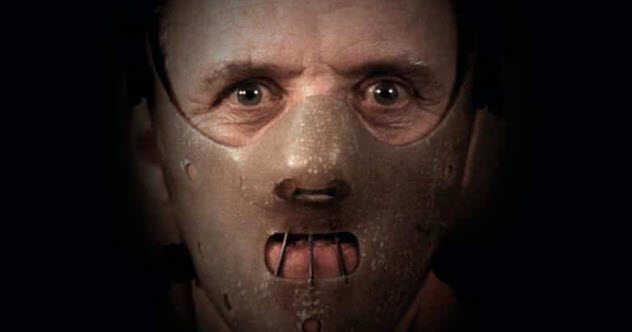
Hannibal Lecter serves dinner with terrifying sophistication. Patrick Bateman discusses business cards as if typography were a blood sport. Dexter Morgan turns homicide into a morally complicated hobby. After decades of movies, television shows, novels, true-crime documentaries, and dramatic podcast narration, many people feel confident that they could recognize a psychopath before the opening credits finish.
Unfortunately, pop culture is a gifted storyteller and a questionable psychology professor.
Psychopathy is a complex personality construct involving combinations of interpersonal, emotional, behavioral, and antisocial traits. It is not simply a synonym for “evil,” “violent,” “insane,” or “person who was rude in the grocery store.” Researchers have found that fictional portrayals often emphasize calculating aggression while overlooking the broader, less cinematic realities of psychopathic traits. Studies also suggest that repeated exposure to fictional psychopaths can influence how ordinary people understand the condition, including romanticizing supposedly glamorous traits.
Let’s examine 10 major ways pop culture has distorted our perceptions about psychopathsand replace the movie mythology with a more accurate, responsible picture.
1. Pop Culture Makes Every Psychopath a Serial Killer
The biggest misconception is also the bloodiest: every psychopath must secretly be planning a murder, storing evidence in a basement, or practicing an ominous monologue in the bathroom mirror.
Psychopathy is associated with an increased risk of aggressive, exploitative, and criminal behavior, particularly in high-risk or forensic populations. That connection should not be minimized. However, increased risk is not the same as guaranteed violence. Psychopathic traits can also appear through chronic dishonesty, manipulation, irresponsibility, intimidation, financial exploitation, reckless behavior, or repeated violations of other people’s rights.
Some people with elevated psychopathic traits never become violent criminals. Research into so-called “successful psychopathy” specifically examines individuals who display certain traits while avoiding serious criminal behavior, possibly because stronger self-control or conscientiousness limits antisocial impulses. The real-world spectrum is therefore much wider than Hollywood’s serial-killer casting department would have us believe.
2. Movies Confuse Psychopathy With Psychosis
The words psychopath, psychotic, and the slang term psycho are frequently tossed into the same fictional blender. The result is a confusing smoothie containing hallucinations, split personalities, homicidal behavior, and dramatic violin music.
Psychosis generally involves a loss of contact with reality, which may include hallucinations, delusions, or severely disorganized thinking. Psychopathy does not inherently involve hallucinations or delusions. A person with psychopathic traits may understand reality, recognize social rules, and know that an action is illegal or harmful while showing limited guilt, empathy, or concern about the consequences for others.
Psychopathy is also not another name for schizophrenia, dissociative identity disorder, bipolar disorder, or “madness.” The American Psychiatric Association’s diagnostic system formally recognizes antisocial personality disorder, but psychopathy remains a related research and forensic construct rather than a standalone DSM-5-TR diagnosis. Antisocial personality disorder and psychopathy overlap, yet they are not perfectly interchangeable concepts.
3. Fiction Portrays Psychopaths as Superhuman Geniuses
Popular villains are rarely average. They are cultured, multilingual, strategically brilliant, inexplicably wealthy, excellent at chess, and apparently able to predict what everyone will do six episodes in advance.
Intelligence is not a defining feature of psychopathy. Someone with psychopathic traits may be highly intelligent, average, or intellectually impaired, just like people without those traits. Adequate intelligence can make manipulation more effective, but psychopathy does not hand out complimentary genius-level IQ scores.
The mastermind stereotype can be dangerous because it makes ordinary manipulation look harmless by comparison. A controlling partner, dishonest coworker, exploitative family member, or repeat scammer does not need to resemble Hannibal Lecter to cause serious damage. In real life, harmful behavior may be clumsy, impulsive, repetitive, and surprisingly easy to recognize once people stop waiting for a cinematic criminal genius to appear. Research describes psychopathy as multidimensional, with interpersonal and emotional features existing alongside lifestyle and behavioral traitsnot as a secret form of intellectual superpower.
4. Characters With Psychopathy Are Shown as Completely Emotionless
Many fictional psychopaths behave like impeccably dressed refrigerators. They never panic, never feel embarrassed, never become emotionally attached, and never seem bothered unless someone scratches their luxury car.
Psychopathy is associated with differences in emotional processing, particularly reduced empathy, shallow affect, limited remorse, and unusual responses to fear or distress. That does not mean a person experiences absolutely no emotion. Individuals with psychopathic traits may feel anger, excitement, frustration, pleasure, boredom, envy, humiliation, or intense irritation when their goals are blocked.
Researchers also distinguish between different forms of empathy. A person may have limited emotional empathythe tendency to share or resonate with another person’s feelingswhile retaining cognitive empathy, meaning the ability to recognize what someone else is feeling. That combination can help a manipulative individual understand another person’s vulnerabilities without emotionally caring about the harm being caused.
Studies of fear, threat processing, and anxiety also show a more complicated picture than the myth of total fearlessness. Different psychopathic traits can relate to fear and anxiety in different ways, and findings are not uniform across all individuals.
5. Hollywood Suggests Psychopaths Are Always Calm and Calculating
The classic movie psychopath speaks softly, stands perfectly still, and carries out a flawless plan while everyone else runs around like frightened squirrels.
Some individuals with psychopathic traits do display calculated, goal-directed aggression. Yet impulsivity, poor behavioral control, stimulation seeking, irresponsibility, and failure to plan ahead are also commonly discussed dimensions of psychopathy. In other words, the real picture can include both cold calculation and reckless decision-making.
A person may manipulate carefully in one situation and explode when frustrated in another. Someone may plan a fraud for weeks yet make an absurdly careless mistake because of overconfidence. Pop culture tends to select whichever features create the most stylish villain, then edits out the contradictions.
This matters because audiences may overlook risk when a harmful person appears disorganized, emotional, or foolish. Real-world personality traits do not follow screenplay rules. People can be deceptive without being smooth, exploitative without being elegant, and dangerous without delivering a memorable final-act speech.
6. Entertainment Teaches Us That Psychopaths Are Easy to Spot
According to thrillers, all you need to detect a psychopath is eye contact, an unsettling smile, and perhaps a soundtrack that suddenly develops a low-frequency hum.
There is no reliable facial expression, gaze pattern, fashion preference, vocal tone, or body-language trick that allows an untrained observer to identify psychopathy. Some people with relevant traits may appear charming, confident, funny, helpful, shy, awkward, professional, or completely unremarkable.
Even trained assessments are not based on a single interview impression. Forensic evaluation typically requires structured methods, detailed history, behavioral evidence, and corroborating records. An online checklist or a tense conversation cannot establish that someone is a psychopath.
The same caution applies to lie detection. Popular culture treats eye movement, fidgeting, or refusing eye contact as obvious proof of deception, but research has not identified one universal behavior that reliably exposes a liar. Labeling someone based on “bad vibes” may feel satisfying, but it is not clinical assessment.
7. Pop Culture Acts as Though Psychopathy Is Exclusively Male
The fictional psychopath is usually a man in an expensive suit, a prison uniform, or a suspiciously clean pair of gloves. Female characters with similar traits are more often labeled seductresses, unstable villains, jealous lovers, or “femme fatales” rather than being examined through the same psychological framework.
Psychopathic traits are measured more frequently and generally at higher rates among men, particularly in prison samples. However, women can also display these traits. Research suggests that their expression may sometimes differ because of behavioral patterns, social expectations, measurement limitations, and the populations historically studied.
For example, physical aggression and overt criminal behavior may receive more attention in men, while relational aggression, manipulation of social networks, fraud, verbal aggression, or other indirect behaviors may be more visible in some women. These are broad research observations, not rules for diagnosing individuals.
When entertainment repeatedly presents psychopathy as a male-only phenomenon, audiences may overlook serious exploitation or aggression that does not match the masculine serial-killer template.
8. Fiction Treats Childhood Warning Signs as a Guaranteed Villain Origin Story
Movies love a creepy-child prologue. A child behaves cruelly, stares into the distance, and the audience immediately understands that a future supervillain has completed orientation.
In reality, clinicians are cautious about labeling children as psychopaths. Researchers may study callous-unemotional traits, conduct problems, aggression, empathy deficits, and related developmental patterns, but childhood behavior does not create a perfectly predictable path into adult psychopathy.
Development involves interactions among temperament, genetics, family relationships, learning, trauma, social environment, peer influence, and access to effective intervention. Some children with severe behavioral problems improve. Others follow different developmental trajectories. Early warning signs should prompt assessment and support, not fatalistic declarations that a child is permanently “evil.”
The monster-child trope can discourage adults from seeking treatment because it suggests the outcome is already written. Science offers a more useful message: early patterns matter, but development remains complex, and targeted interventions can improve behavior and family functioning.
9. Pop Culture Says Psychopaths Cannot Change or Benefit From Treatment
Once a fictional character receives the psychopath label, the narrative usually treats that character as permanently broken. Therapy is depicted as useless, therapists become easy prey, and rehabilitation exists only to set up a shocking escape scene.
Treatment is genuinely challenging. Limited motivation, manipulation, lack of remorse, poor cooperation, and repeated antisocial behavior can make progress difficult. The evidence base is also less developed than it is for many other mental health conditions.
Still, “difficult to treat” does not mean “scientifically proven to be untreatable.” Reviews have found that research on treatment outcomes is limited and more nuanced than popular claims suggest. Interventions may target specific problems such as aggression, impulsivity, substance misuse, emotional regulation, parenting patterns, social skills, or criminal behavior. Programs for children and adolescents with callous-unemotional traits are especially important because earlier intervention may alter harmful developmental patterns.
Responsible treatment does not require pretending risk has disappeared. It requires measurable goals, appropriate boundaries, trained professionals, and realistic expectationsless dramatic than a movie asylum, but far more useful.
10. Stories Turn Psychopathy Into Either Pure Evil or a Cool Superpower
Modern entertainment often swings between two extremes. The psychopath is either an inhuman monster or an irresistible antihero who enjoys freedom from guilt, fear, and ordinary social rules.
Villains such as Hannibal Lecter and Anton Chigurh represent frightening, highly controlled versions of psychopathy. Antiheroes such as Dexter Morgan invite audiences to identify with someone portrayed as emotionally detached but clever, disciplined, and strangely principled. Other characters casually call themselves “high-functioning sociopaths,” transforming a serious psychological label into stylish shorthand for brilliance and social impatience.
Research on media exposure suggests that repeated contact with protagonist psychopaths can increase endorsement of flattering but inaccurate traits. Viewers may begin to associate psychopathy with confidence, exceptional intelligence, fearlessness, independence, leadership, or immunity to emotional pain.
Neither demonization nor glamorization is accurate. Psychopathic traits can be connected to substantial harm, including exploitation and elevated violence risk, while still existing in human beings rather than fictional monsters. Accurate discussion must make room for accountability, public safety, treatment research, and basic human complexity at the same time.
Why These Pop-Culture Myths Matter
Misunderstandings about psychopathy are not harmless trivia. They affect how people respond to abusive relationships, workplace manipulation, criminal defendants, mental health treatment, and children with serious behavioral difficulties.
Someone may remain in a damaging relationship because the manipulative partner does not resemble a cinematic villain. A juror may assume that a defendant labeled a psychopath must be exceptionally intelligent, permanently violent, or incapable of change. Parents may avoid professional help because they fear their child will receive a lifelong monster label. People experiencing psychosis may also be unfairly associated with calculated violence because entertainment repeatedly mixes unrelated psychological concepts.
Better media literacy does not require banning complicated villains. Hannibal Lecter can remain terrifying, Patrick Bateman can keep obsessing over business cards, and Dexter can continue making viewers question their moral compass. The goal is simply to remember that fiction compresses psychological traits into entertaining characters. Reality is messier, less stylish, and usually not accompanied by award-winning cinematography.
Experience Section: What Unlearning Psychopathy Myths Looks Like in Real Life
One common experience begins after watching a crime series. A viewer finishes six episodes about charming killers and suddenly starts evaluating everyone in the office. The confident manager becomes a “corporate psychopath.” The emotionally reserved coworker is declared suspicious. The ex who lied during the relationship is retroactively diagnosed during a group chat. For several days, ordinary social friction begins to resemble forensic evidence.
Then reality interrupts the fantasy. The quiet coworker may simply be introverted. The manager may be arrogant without meeting any clinical threshold. The dishonest ex may have behaved terribly, but a harmful action does not automatically reveal a specific personality structure. The person doing the labeling gradually realizes that psychological terms are not deluxe versions of everyday insults.
Another experience occurs in relationships. Someone may expect an exploitative person to be cold, visibly menacing, and incapable of kindness. Instead, the person can be entertaining, affectionate, generous in public, and attentive when cooperation serves a goal. Moments of warmth may be genuine, strategic, inconsistent, or difficult to interpret. Waiting for a villainous mask to “slip” can distract from a simpler question: What is the repeated pattern of behavior?
That shift is often practical. Rather than asking, “Is this person a psychopath?” someone begins asking, “Do they repeatedly lie, violate boundaries, exploit vulnerabilities, threaten me, avoid responsibility, or make me feel unsafe?” A clinical label is not required before setting limits, documenting misconduct, ending contact, consulting a professional, or seeking help.
Parents and teachers can undergo a similar change in perspective. A child who appears unemotional or aggressive may trigger fear, particularly after exposure to fictional “evil child” stories. Yet professionals focus on behavior, development, family context, emotional skills, safety, and treatment needsnot supernatural predictions about adulthood. The experience becomes less about discovering what the child secretly “is” and more about identifying what support is needed now.
People also discover that empathy is not a simple on-or-off switch. An individual may accurately recognize sadness without sharing it, express concern without behaving compassionately, or show affection while repeatedly causing harm. Conversely, someone who struggles to express emotion may still act with loyalty, responsibility, and care. Behavior over time usually tells us more than whether a person cries during the correct movie scene.
Finally, unlearning pop-culture myths can produce an uncomfortable but healthy conclusion: real people rarely fit clean categories. Psychopathic traits may vary in degree, expression, context, and consequence. Some individuals pose serious risks. Others may function without violence while still creating interpersonal harm. None can be accurately assessed through one facial expression, one anecdote, or a social-media quiz.
The most valuable experience is replacing amateur diagnosis with informed observation. Notice patterns. Take threats seriously. Avoid romanticizing cruelty as confidence. Avoid equating emotional reserve with evil. Consult qualified professionals when assessment is truly necessary. That approach may not be as thrilling as solving a television mystery before the detective does, but it is considerably more responsible.
Conclusion
Pop culture has given us unforgettable psychopaths, but memorable storytelling is not the same as psychological accuracy. Psychopathy does not automatically mean serial murder, psychosis, genius, total emotional emptiness, perfect self-control, or permanent untreatability. It cannot be detected from someone’s eyes, diagnosed through a quiz, or reduced to a fashionable synonym for confidence and cruelty.
The more useful approach is to understand psychopathy as a complex collection of traits associated with varying levels of interpersonal, emotional, behavioral, and antisocial difficulty. That perspective allows society to take genuine risks seriously without turning every person with such traits into a fictional monster.
Hollywood can keep the dramatic lighting. Real life needs better definitions.











