
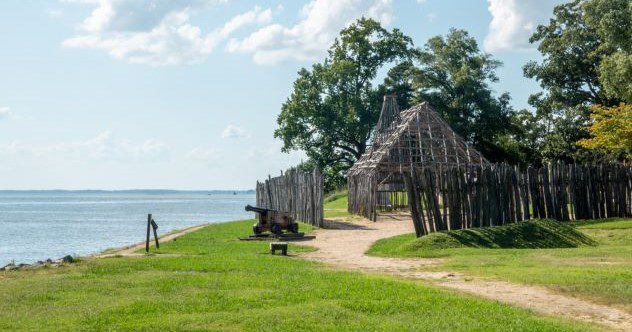
When people hear “Jamestown Colony,” they often picture brave settlers, wooden palisades, and the beginning of English America. That picture is not wrong, but it is also wearing a very polished hat. The real Jamestown was less like a triumphant movie trailer and more like a survival challenge with mosquitoes, muddy water, poor planning, political arguments, food shortages, and absolutely no customer service desk.
Founded in 1607 by the Virginia Company of London, Jamestown became the first permanent English settlement in North America. Permanent, however, did not mean comfortable. The colony survived because of a messy combination of Indigenous diplomacy, desperate labor, harsh discipline, tobacco profits, new arrivals, and repeated rescues from across the Atlantic. It was a place where big dreams met swampy realityand reality usually won the first round.
This article explores 10 tough truths about life in the Jamestown Colony, using real historical context while keeping the tone readable, human, and just a little bit playful. Because if history teaches us anything, it is this: never underestimate the power of bad planning and wet socks.
1. Jamestown Was Built in a Dangerous Location
One of the first tough truths about life in the Jamestown Colony is that the settlers chose a location that looked useful on paper but turned brutal in practice. Jamestown Island offered defensive advantages. It was inland enough to reduce the risk of attack from Spanish ships, and the water nearby allowed ships to anchor. That sounded sensible to English planners who were worried about European rivals.
But the site also had serious problems. The surrounding environment was low, marshy, and full of insects. Fresh water was unreliable, especially when saltwater mixed into nearby supplies. In the summer, heat and humidity made conditions even worse. For English settlers unfamiliar with the Chesapeake climate, the landscape could feel like it had personally declared war on them.
The result was a colony vulnerable to disease, dehydration, and exhaustion. Instead of landing in a ready-made paradise, the settlers found themselves in a demanding environment that required local knowledge they did not yet have. Jamestown’s location may have helped protect it from ships, but it could not protect colonists from contaminated water, seasonal illness, or the hard work of turning a fragile outpost into a functioning town.
2. Many Colonists Arrived Unprepared for Real Work
Jamestown was not settled by a perfectly balanced team of farmers, carpenters, hunters, doctors, and practical problem-solvers. Many early arrivals were gentlemen, soldiers, laborers, and adventurers, not experienced agricultural workers. Some expected quick profit from gold, trade, or other valuable resources. Unfortunately, Virginia did not come with a treasure chest labeled “Open Here.”
Food production required skill, patience, and daily effort. Clearing land, planting crops, repairing shelters, maintaining tools, and building defenses were not glamorous tasks. They were also not optional. When too few people knew howor were willingto do the unromantic work of survival, the entire colony suffered.
This is one of the most important Jamestown Colony facts: survival depended less on heroic speeches and more on who could grow corn, mend a roof, dig a ditch, and keep working when everything smelled like damp wood. The colony’s early struggles show the danger of founding a settlement with big economic expectations but too little practical preparation.
3. Food Shortages Were a Constant Threat
Food was Jamestown’s daily headache. The settlers did not grow enough of their own crops in the early years, and supply ships from England were irregular, delayed, or insufficient. When ships did arrive, they often brought more mouths to feed along with supplies. That is not exactly a winning grocery strategy.
At first, the English relied heavily on trade with the Powhatan peoples for corn and other food. This trade could be helpful, but it was also fragile. The Powhatan communities had their own needs, political goals, and seasonal limits. They were not a colonial catering service. During times of drought, conflict, or distrust, food exchange became far more difficult.
Food insecurity shaped nearly every part of life in Jamestown. Hunger weakened bodies, lowered morale, increased conflict, and made disease more dangerous. It also forced colonists to face the uncomfortable reality that England’s ambitions in Virginia depended on Indigenous food networks that the English did not control.
4. Relations with the Powhatan Were Complicated, Not One-Dimensional
The relationship between the English settlers and the Powhatan peoples was not simply “friendship” or “war.” It was a shifting mix of trade, diplomacy, suspicion, cultural misunderstanding, strategic cooperation, and violence. The English had entered a region already inhabited and governed by Indigenous communities connected through the Powhatan Chiefdom.
Chief Powhatan and other Indigenous leaders were not background characters in the Jamestown story. They were political actors making decisions to protect their people, resources, and authority. At times, trade with the English served Powhatan interests. At other times, English demands, expansion, and disrespect created serious threats.
Pocahontas is often placed at the center of simplified Jamestown stories, but the larger truth is much more complex. Her interactions with the English occurred within a world of diplomacy, pressure, and cultural conflict. The Jamestown Colony survived partly because of Indigenous assistance, but the colony’s growth also brought disruption and violence to Indigenous lands. Any honest account of early Jamestown must include that difficult balance.
5. The Starving Time Nearly Destroyed the Colony
The winter of 1609–1610 became known as the Starving Time, and for good reason. By then, relations with the Powhatan had deteriorated, food supplies were dangerously low, and many colonists were trapped inside the fort. Disease, hunger, fear, and poor leadership combined into a crisis that nearly ended Jamestown altogether.
Most of the colonists did not survive that winter. Historical and archaeological evidence shows just how desperate conditions became. It is important to discuss this carefully: the Starving Time was not a dramatic campfire tale; it was a human catastrophe caused by environmental stress, conflict, dependence on outside supplies, and the colony’s failure to feed itself.
When new leadership and supplies arrived in 1610, the survivors were ready to abandon Jamestown. They began to leave, only to be turned back by the arrival of Lord De La Warr with reinforcements. In other words, Jamestown survived by the thinnest possible margin. If history had a “close call” button, this would be the one flashing red.
6. Disease Was as Dangerous as Conflict
Movies love arrows, muskets, and dramatic battles, but in Jamestown, disease was often the deadlier enemy. The combination of poor water, unfamiliar climate, limited nutrition, and crowded conditions created a perfect storm for illness. A person weakened by hunger or exhaustion had fewer defenses against disease.
Colonists also lacked modern medical knowledge. They did not understand germs, mosquito-borne illness, or the full health risks of their environment. Treatments could be ineffective or even harmful by modern standards. If your medical plan involved guesswork, prayer, and whatever was in a small wooden chest, recovery was never guaranteed.
This truth matters because it reminds us that early colonization was not just a political project. It was a biological struggle. Bodies had to adapt to climate, water, food, labor, and disease. Many did not. The Jamestown settlers were not simply “building America”; they were trying to stay alive long enough to plant another crop.
7. Leadership Problems Made Everything Worse
Jamestown’s early government was often unstable. The colony suffered from disputes among leaders, unclear authority, personal rivalries, and changing instructions from the Virginia Company in London. When a settlement is already short on food, surrounded by uncertainty, and full of exhausted people, leadership drama is not exactly a helpful seasoning.
Captain John Smith is remembered as one of the colony’s most forceful early leaders. His rule emphasized discipline and labor, famously summed up by the idea that those who did not work would not eat. Smith’s leadership did not solve every problem, and his writings must be read critically, but the colony did function better when work and trade were more organized.
After Smith left Virginia in 1609, Jamestown faced even greater instability. The Starving Time followed soon after. Leadership alone did not cause the disaster, but weak coordination, conflict, and poor planning made a dangerous situation worse. Jamestown needed practical management, not just noble titles and confident letters to investors.
8. Tobacco Saved the Economy but Created New Problems
For the Virginia Company, Jamestown needed to make money. Early dreams of gold and easy wealth faded, but tobacco eventually became the colony’s cash crop. John Rolfe helped introduce a tobacco variety that appealed to English markets, and by the 1610s tobacco was transforming Virginia’s economy.
That sounds like a happy endinguntil you look closer. Tobacco required land and labor. As demand grew, settlers expanded plantations, pushed farther into Indigenous territory, and needed more workers. Tobacco brought profit, but it also intensified conflict over land and helped drive systems of exploitation.
At first, much of the labor came from indentured servants, who worked for a set number of years in exchange for passage to Virginia. Over time, enslaved African labor became increasingly central to the tobacco economy. So yes, tobacco helped Jamestown survive financially. But it also tied colonial success to inequality, forced labor, and environmental strain. History rarely hands out clean victories.
9. 1619 Was a Turning Pointbut Not a Simple One
The year 1619 is one of the most important dates in Jamestown history. It saw the meeting of the first representative legislative assembly in English America, an event often connected to the roots of American self-government. The assembly gave some colonists a voice in local lawmaking, though that voice was limited mainly to English men with status and property.
The same year also brought the arrival of the first recorded Africans in Virginia, people taken from West Central Africa and brought into the Atlantic world of forced labor. Their arrival marked the beginning of a long and painful history that would shape Virginia, the colonies, and the future United States.
That is why 1619 cannot be reduced to a single cheerful milestone. It represents both the growth of representative government and the deepening of racialized labor exploitation. Jamestown was a place where ideas of liberty and systems of bondage developed side by side. That contradiction would echo through American history for centuries.
10. Survival Came at a High Human Cost
Jamestown survived, but survival is not the same as success without consequences. The colony’s endurance came at a high cost for English settlers, Indigenous communities, indentured servants, and Africans forced into labor. Many people died. Many more endured hardship, displacement, or loss of freedom.
For the English, Jamestown became a symbol of persistence. For Indigenous peoples, it marked the start of expanding colonial pressure on their lands and societies. For Africans in Virginia, it marked the beginning of a system that would grow into hereditary slavery. The colony’s history is therefore both foundational and deeply troubling.
The toughest truth about Jamestown is that it was not a neat origin story. It was messy, painful, ambitious, improvised, and often unjust. Studying it honestly does not make the past less important. It makes it more human. And frankly, history is much more useful when it stops pretending everyone had clean boots and perfect motives.
What Life in Jamestown Colony Teaches Us Today
Jamestown Colony is often described as the beginning of English America, but it can also be understood as a lesson in consequences. Poor planning has consequences. Environmental ignorance has consequences. Depending on other people’s food while disrespecting their sovereignty has consequences. Building an economy on forced or unequal labor has consequences that last far beyond one generation.
At the same time, Jamestown also shows human adaptability. The colony changed because it had to. Settlers learned new agricultural methods, reorganized labor, experimented with government, and adjusted to a world very different from England. Indigenous communities adapted too, using diplomacy, trade, and resistance to respond to English expansion.
For modern readers, the Jamestown story is valuable because it refuses to be simple. It contains courage and cruelty, survival and suffering, innovation and exploitation. That complexity is exactly why it still matters. A good history lesson should not behave like a decorative plate on a wall. It should make us think.
Experience Section: Imagining Daily Life in the Jamestown Colony
A Morning Inside the Fort
Imagine waking up inside James Fort on a humid Virginia morning. The air is heavy, your clothes are stiff, and the idea of a refreshing shower belongs to a future century that has not RSVP’d yet. Around you are wooden walls, rough shelters, smoke from fires, and people moving with the tired focus of those who know the day will not be easy.
Your first thought might be food. Not breakfast in the cheerful senseno pancakes, no coffee, no “just one more slice of toast.” Food in Jamestown was a calculation. How much corn remained? Could anyone fish today? Would trade be possible? Was another supply ship coming, or was that just wishful thinking wearing a sailor’s hat?
Work would begin quickly. Someone had to repair buildings, tend crops, guard the fort, cut wood, carry water, cook, dig, clean, or care for the sick. The settlement depended on constant labor. A lazy morning was not a lifestyle choice; it was a threat to everyone else’s survival.
The Sound of Uncertainty
Life in the Jamestown Colony would have been filled with uncertainty. A ship on the horizon could mean supplies, letters, new colonists, or disappointing news. A meeting with Powhatan representatives could bring trade or tension. A change in weather could help crops or ruin them. Even leadership changes could alter daily routines overnight.
That uncertainty shaped people’s emotions. Hope and fear probably lived side by side. A colonist might dream of land, profit, or status, then spend the afternoon worrying about illness or hunger. Jamestown was not just physically difficult; it was mentally exhausting. People had to keep going without knowing whether their efforts would lead to success or another disaster.
Food, Work, and the Reality Check
If you had arrived expecting quick riches, Jamestown would have corrected you with the subtlety of a falling tree. The colony demanded practical skills. Could you plant? Build? Repair? Negotiate? Follow orders? Stay calm when supplies ran low? In Jamestown, usefulness mattered more than fantasy.
Daily life also depended on relationships beyond the fort. The English needed knowledge of local foods, seasons, and geography. The Powhatan peoples already understood the region’s resources because they had lived there for generations. English survival often depended on Indigenous food and diplomacy, even when English leaders failed to respect Indigenous power and land rights.
Why the Experience Still Feels Relevant
Thinking about Jamestown can make modern problems feel different. A slow Wi-Fi connection is annoying, but it is not the same as wondering whether a ship will arrive before winter. A crowded schedule is stressful, but it is not the same as building a colony while hungry, sick, and unsure who is in charge. Jamestown reminds us that comfort is historical, not automatic.
It also reminds us to question heroic origin stories. The people of Jamestown were not all villains or saints. They were ambitious, frightened, stubborn, hopeful, flawed, and often unprepared. The colony they built became important, but its importance came with painful costs. Understanding those costs gives us a clearer view of early American historyand a better sense of how survival, power, land, labor, and profit became connected from the very beginning.
So, if you could step into Jamestown for one day, you would probably come back with muddy shoes, a stronger appreciation for clean water, and a deep desire never to hear the phrase “cash crop” again without asking, “At whose expense?” That is the real power of studying the Jamestown Colony: it turns a familiar name in a textbook into a living, complicated place where every choice mattered.
Conclusion
The Jamestown Colony was not a polished beginning. It was a fragile experiment that nearly failed many times. Its story includes disease, hunger, environmental hardship, tense diplomacy, forced labor, political change, tobacco wealth, and the painful beginnings of systems that shaped American history. To understand Jamestown honestly, we must look beyond the simple label of “first permanent English settlement” and see the human struggle underneath.
The 10 tough truths about life in the Jamestown Colony show that survival came through adaptation, outside support, Indigenous knowledge, strict labor systems, and repeated reinvention. They also show that progress for some often came at great cost to others. That is what makes Jamestown both fascinating and uncomfortableand exactly why it deserves to be studied with clear eyes.












