
Mother Nature has terrific branding. The phrase sounds gentle, nurturing, almost like someone who reminds you to wear a sweater. Then she throws a hurricane at a coastline, shakes a city with an earthquake, or turns an ordinary summer afternoon into a heat wave that feels like the planet forgot to exhale.
Natural disasters have always humbled humanity. We build skyscrapers, launch satellites, argue online about productivity hacks, and then one wildfire, one flood, or one violent storm reminds us that the Earth still has the final vote. That does not mean nature is evil. It means nature is powerful, indifferent, and occasionally spectacular in ways that are deeply inconvenient for everybody with a roof, a road, or a weekend plan.
From sudden catastrophes to slow-burn environmental crises, the worst acts of Mother Nature do not just destroy property. They reshape communities, rewrite local history, and expose how fragile modern life can be when the ground moves, the water rises, or the air itself becomes dangerous. Here are 10 of the most terrible acts of Mother Nature, along with why they remain so feared.
1. Earthquakes: When the Ground Stops Pretending to Be Stable
We make a major assumption every day: the ground beneath our feet will stay exactly where it is. Earthquakes are nature’s sharp little correction. They arrive with little warning, strike fast, and can turn familiar places into confusion in seconds.
The terror of an earthquake is not only the shaking. It is the instant loss of trust. Walls that felt permanent start groaning. Roads crack. Power fails. Elevators become terrible life choices. Even after the shaking stops, aftershocks can keep people on edge for days or weeks, as if the planet is still muttering under its breath.
History offers brutal reminders, from the 1906 San Francisco earthquake to more recent disasters around the world. The danger is magnified in dense cities, where collapsing buildings, broken water lines, and damaged infrastructure create a chain reaction of problems. An earthquake is not just one event. It is often the opening act for fires, landslides, or even tsunamis.
2. Tsunamis: The Sea’s Most Violent Mood Swing
A calm shoreline can turn deadly with almost no drama at first. That is what makes tsunamis so sinister. They do not always arrive as the giant curling wall of water from movie posters. Sometimes the ocean pulls back in a strange, eerie retreat, and then comes rushing inland with terrifying force.
Most tsunamis are triggered by undersea earthquakes, though landslides and volcanic activity can also set them off. Once in motion, they can move across entire ocean basins and crash into coastlines with enough power to sweep away homes, roads, ports, and lives.
The horror of a tsunami lies in speed and scale. Water is heavy, relentless, and impossible to argue with. A tsunami does not knock politely. It barrels through communities, carries debris like battering rams, and leaves behind destruction that can stretch for miles. It is a reminder that the ocean, for all its beauty, is not a decorative backdrop.
3. Hurricanes: The Multitasking Monsters
If natural disasters had résumés, hurricanes would look suspiciously overqualified. They bring violent winds, storm surge, flooding rain, tornadoes, coastal erosion, and prolonged power outages, all wrapped in one spinning system with terrible time management.
What makes hurricanes especially destructive is their reach. They can damage coastlines, flatten neighborhoods inland, flood rivers far from landfall, and disrupt daily life over enormous areas. One storm can overwhelm emergency services, displace thousands of people, and leave communities rebuilding for months or years.
Storm surge is often the deadliest part. People tend to focus on wind because wind is loud and dramatic, but rising water is the quiet bully that shoves buildings off foundations and turns familiar streets into channels of debris. Hurricanes such as Katrina, Harvey, and Ian became notorious because they proved the same lesson again and again: when wind and water team up, the bill is always enormous.
4. Tornadoes: Nature’s Spinning Ambush
Tornadoes are horrifying because they feel personal. A hurricane threatens a region. A tornado can obliterate one block and leave the next block looking weirdly untouched, as if chaos used a dartboard.
These violent rotating columns of air can develop rapidly from severe thunderstorms, especially in places where warm, moist air collides with cooler, drier systems. The result is a storm that can shred houses, toss vehicles, uproot trees, and carve a destructive path in minutes.
There is also the psychological factor. The sky darkens. The air feels wrong. Sirens start howling. People check radar with the intensity of sports fans in overtime. And if the tornado strikes at night, the fear increases because visibility disappears just when certainty is most needed. Tornadoes are proof that disaster does not always arrive with a long announcement. Sometimes it just drops in, ruins everything, and leaves.
5. Wildfires: Beautiful, Fast, and Completely Uninterested in Your Plans
Wildfires can begin with lightning, human activity, extreme dryness, or a combination of factors that turns vegetation into fuel. Once established, they can spread with shocking speed, especially when drought, heat, and wind join the party.
What makes wildfires especially terrifying is how quickly the threat changes. A fire that looks distant at breakfast can force evacuation by afternoon. Flames race through forests, grasslands, and neighborhoods, while smoke travels far beyond the burn zone and creates dangerous air quality for people who are nowhere near the fire line.
Modern wildfire disasters have shown that the damage is not limited to the obvious burn scars. Entire communities can be displaced, water systems contaminated, businesses wiped out, and ecosystems altered for years. Fire is one of nature’s oldest tools, but in the wrong conditions it becomes a fast-moving demolition crew with a weather system of its own.
6. Floods: The Disaster That Refuses to Stay in Its Lane
Floods are among the most common and destructive natural disasters, and they are sneaky in the worst possible way. They can build slowly over days, arrive suddenly as flash floods, or follow other disasters like hurricanes and dam failures. However they show up, they have a nasty habit of going everywhere water was politely asked not to go.
Floodwater does more than soak things. It undermines foundations, destroys crops, damages roads and bridges, contaminates drinking water, and leaves behind mold, debris, and long recovery timelines. Even shallow water can stall cars, threaten lives, and create cascading infrastructure failures.
The reason floods remain so feared is simple: water finds weakness. It seeps, pushes, erodes, surrounds, and lingers. One severe flooding event can isolate communities, shut down transportation, and turn ordinary errands into logistical nightmares. Floods may not always look cinematic, but they are brutally efficient at turning normal life upside down.
7. Drought and Dust Storms: The Slow Disaster With a Mean Streak
Some of nature’s worst acts do not explode onto the scene. They creep in quietly. Drought is one of those disasters that unfolds in slow motion, which can make it even more dangerous because people adapt to it right up until the consequences become impossible to ignore.
A severe drought shrinks water supplies, stresses crops, weakens livestock, increases wildfire risk, and strains entire regional economies. It can also transform the landscape itself. The Dust Bowl of the 1930s remains one of the most haunting examples in American history, when prolonged drought and poor land practices helped produce devastating dust storms across the Great Plains.
Dust storms are terrifying in their own right. They darken the sky, choke the air, and strip topsoil from the land that communities depend on. Drought may seem less dramatic than a tornado, but its damage can be vast, expensive, and deeply personal. It attacks food, water, income, and long-term stability all at once.
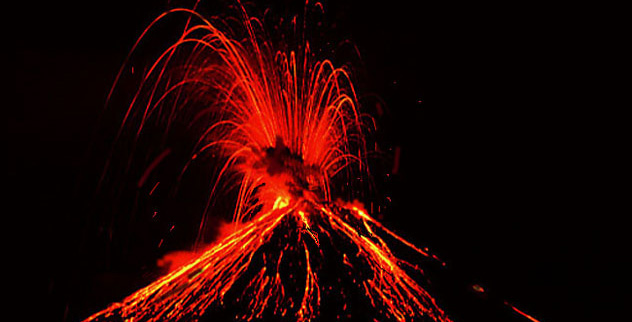
8. Volcanic Eruptions: Earth’s Way of Losing Its Temper
Volcanoes have an almost mythic quality. They look ancient, quiet, and majestic right up until they start throwing ash, lava, gas, and rock into the conversation. Then everyone suddenly remembers that mountains are not always just scenery.
Volcanic eruptions can devastate nearby communities through lava flows, ashfall, toxic gases, fires, and explosive blasts. Even eruptions that do not directly overrun towns can disrupt aviation, agriculture, water supplies, and respiratory health. Ash, in particular, is a troublemaker. It can blanket roads, damage engines, collapse weak roofs, and turn cleanup into a gray, gritty marathon.
The frightening thing about volcanoes is that they combine slowness and violence. There may be warning signs, such as increased seismic activity or gas emissions, but once an eruption intensifies, the hazard picture changes quickly. Volcanoes remind us that the planet is not finished building itself, and occasionally construction gets messy.
9. Heat Waves: The Silent, Stubborn Killer
Heat waves do not always look dramatic on camera. There is no spinning funnel, no towering wall of water, no exploding mountaintop. That visual blandness is exactly why extreme heat is so dangerous. People underestimate it, and it does not care.
Prolonged extreme heat can cause dehydration, heat exhaustion, heat stroke, and increased risk for people with chronic health conditions. It also strains energy grids, worsens drought, intensifies wildfire conditions, and makes cities feel like giant frying pans wrapped in concrete.
The misery of a heat wave is cumulative. Days stay hot. Nights do not cool off enough. Sleep gets worse. Tempers get shorter. Vulnerable people face real danger, especially older adults, young children, outdoor workers, and those without reliable cooling. Heat waves are terrible because they turn something as basic as existing in your own home into a physical challenge.
10. Landslides and Mudslides: When Gravity Becomes the Villain
Landslides and mudslides are what happen when soil, rock, and debris decide the slope arrangement is no longer acceptable. Heavy rainfall, earthquakes, volcanic activity, erosion, and unstable terrain can all trigger sudden downhill movement that destroys roads, homes, and anything else in the way.
These disasters are particularly dangerous in mountainous areas, burn scars left by wildfires, and places already saturated by storms. A hillside may look stable for years and then give way with shocking speed. The result can bury structures, block rivers, isolate towns, and complicate rescue efforts.
Landslides are terrifying because they feel like a betrayal of the landscape itself. People expect a river to flow and a storm to blow. They do not always expect the hill behind the house to come visiting. But when water loosens soil or the earth shakes, gravity takes over, and it is rarely subtle.
Why These Disasters Hit So Hard
The worst acts of Mother Nature are not just about raw force. They are devastating because they collide with human systems. Cities concentrate people and infrastructure. Roads, bridges, power grids, hospitals, farms, and supply chains all depend on stability. Natural hazards exploit instability with rude enthusiasm.
Another reason these events feel so overwhelming is that they often overlap. Drought helps fuel wildfire. Earthquakes can trigger tsunamis and landslides. Hurricanes bring flooding and tornadoes. Heat waves strain health systems and power supplies at the same time. Nature loves a combo package, and humanity rarely enjoys receiving it.
Still, the goal is not to fear the planet nonstop like a squirrel with Wi-Fi. The lesson is respect. Better forecasting, stronger infrastructure, smarter building, emergency planning, and public awareness all reduce risk. We cannot cancel earthquakes or unsubscribe from hurricanes, but we can prepare better, respond faster, and build communities that are harder to break.
Experiences That Capture the Real Horror of Nature’s Fury
Reading about natural disasters is one thing. Living through even a small brush with one is something else entirely. The experience is often less cinematic than people imagine and more unnerving in ordinary ways. It is the weird silence before a tornado warning. It is the sound of your phone buzzing with emergency alerts while the sky turns a shade of green that no sky should ever be. It is the moment the power goes out and the room suddenly feels smaller.
In earthquake country, people often describe a split second of disbelief before instinct kicks in. A cup rattles. A light fixture swings. Then the floor moves in a way that makes your brain object on principle. Afterward, the strangest feeling can be the hesitation. You stand in a doorway or outside in a parking lot and realize you no longer trust stillness. Even when the shaking stops, your body keeps waiting for another roll beneath your feet.
Flood experiences are different but equally unsettling. At first, rising water can look almost manageable, which is exactly how it tricks people. A little water in the street becomes water at the curb, then water in the yard, then suddenly the route out is gone. The emotional punch comes from watching ordinary landmarks disappear under muddy water: the mailbox, the driveway, the first porch step. A neighborhood that felt permanent starts looking temporary in a hurry.
Wildfire stories often include speed and confusion. People talk about packing cars in minutes, trying to decide what matters when the list of things you love is much longer than the trunk space you have. Smoke changes everything. Daylight turns orange. Ash lands on cars and patio furniture like the world has been dusted in bad news. Even people who never see flames directly can feel the stress of breathing dirty air, checking maps obsessively, and wondering whether “be ready” is about to become “leave now.”
Heat waves create a more exhausting kind of misery. The suffering is not loud, but it is relentless. The house stays hot long after sunset. Fans just move warm air around like they are trying their best and failing with dignity. People become irritable, tired, dehydrated, and strangely foggy. There is something uniquely draining about realizing that the simple act of sleeping comfortably has become a luxury item.
Hurricanes and winter storms share an odd emotional rhythm: the long wait. Forecast cones, grocery lines, bottled water, charged batteries, taped windows, nervous group chats. Then comes the noise outside, the uncertainty, and the hours of wondering what the morning will look like. After the storm passes, people step outside into a version of home that feels familiar and foreign at once. Branches are down, signs are twisted, and everyone starts the same awkward ritual of checking on each other and assessing damage with tired eyes.
What makes these experiences unforgettable is not just danger. It is disruption. Natural disasters interrupt the routines that make life feel stable. They turn weather into memory, geography into threat, and small comforts into big deals. A charged phone, clean water, dry socks, breathable air, a cool room, a working road, a text saying “We’re okay” after a disaster, those things no longer feel ordinary. They feel like treasure.
That may be the most lasting lesson in all of this. Mother Nature’s worst acts are terrifying because they expose how much we rely on things going normally. And when normal breaks, people discover both their vulnerability and their resilience. The storm, the fire, the shaking, the heat, the floodwater those are the headlines. But the human experience afterward is the part that stays. It is the story people tell for years, usually starting with a sentence like, “You would not believe how fast it happened.”
Conclusion
Mother Nature is not malicious, but she is undeniably dramatic. Earthquakes, tsunamis, hurricanes, tornadoes, wildfires, floods, droughts, volcanoes, heat waves, and landslides all remind us of the same truth: the natural world is powerful enough to reshape human lives in minutes or over entire decades. The danger is real, the examples are many, and the best response is never denial. It is preparation, respect, and a healthy understanding that the planet is still very much in charge.











