
There are two kinds of travelers: the ones who pack an extra pair of socks, and the ones who pack an extra phone battery
because they plan to photograph the skyline until the skyline begs for mercy. If you’re in group two, you already know
the emotional difference between a crisp city view (chef’s kiss) and a hazy one (sad beige Instagram filter, applied by the atmosphere).
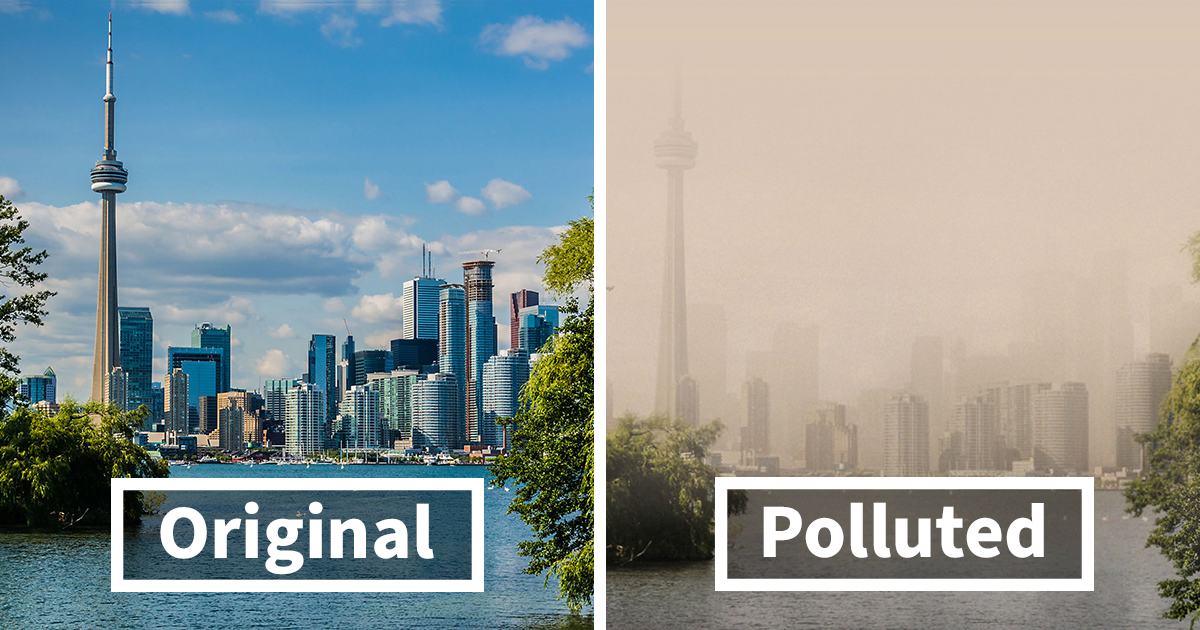
A HouseFresh study took this heartbreak and turned it into a visual “what if” moment: what if iconic city views looked like they were
filmed through a dirty aquariumbecause air pollution kept climbing? The result is a reminder that air pollution doesn’t just mess with
our lungs and hearts. It also messes with our eyes, our memories, and the photos we swear we’re printing “someday.”
Below, we’ll break down the HouseFresh list of 10 famous viewpoints around the world, explain the science of why pollution wipes out
visibility, and share practical tips for travelers and locals who want to keep their city-love story from turning into a haze-filled drama.
Why Air Pollution Ruins “The View” (It’s Not Just Fog Being Moody)
The main villain in visibility loss is often fine particulate matter, especially PM2.5tiny particles small enough
to float around and scatter light like microscopic pranksters. When sunlight hits these particles, it gets scattered and absorbed, which creates
haze. The result: colors fade, contrast drops, and distant buildings look like they’re slowly backing away from you.
Think of it like this: a great skyline needs sharp edges and clean layersforeground, midground, background. Haze bulldozes those layers into one
dull soup. The fancy word is “visibility impairment.” The everyday word is “Wait… is the landmark over there, or am I staring at a cloud with ambition?”
And haze isn’t picky about its sources. It can come from vehicle exhaust, industry, power generation, construction dust, and even wildfire smoke.
Some days it’s local. Other days it travels long distances, arriving in your city like an uninvited guest who also refuses to leave.
What the HouseFresh Study Did (And What It Didn’t)
HouseFresh curated 10 iconic “postcard” views from around the world, then visualized how they might look under much heavier pollutionspecifically,
by emulating the visibility you’d see in an extremely polluted city (using a highly polluted benchmark and air quality data).
Important context: this isn’t a crystal ball that predicts your exact vacation weather. It’s a visual warninga way to make
air pollution feel real by showing what it does to something people love. That’s valuable, because poor air quality can be invisible in day-to-day life
until it suddenly isn’t… and then it’s ruining your lungs and your rooftop reservation.
Translation: treat the images as “Here’s what rising pollution can do,” not “This is what it will look like on your specific Tuesday at 4:13 p.m.”
The 10 Iconic City Views (And How Pollution Messes With Each One)
-
Rockefeller Center (New York City, USA)
The classic Manhattan view is basically an architectural mixtape: Art Deco icons, midtown energy, and a skyline that looks like it’s always
auditioning for a movie poster. But haze turns those sharp building outlines into soft silhouettes, as if the city suddenly got shy.NYC’s pollution story is complicatedtraffic, building emissions, regional pollution transport, and occasional wildfire smoke events that drift in.
Even when the city looks “fine,” PM2.5 can still be elevated enough to irritate lungs and make the horizon look washed out.Travel tip: For skyline photos, aim for the day after a rainstorm (nature’s free rinse cycle) and check air quality before heading up.
-
The Shard (London, UK)
From The Shard, London’s landmarks stack up beautifullyTower Bridge, the Thames, the city’s layered history. But London is also famous for “smog”
as a concept, and while air quality has improved dramatically over decades, pollution still spikes near traffic corridors.Haze here doesn’t just blur the view; it can flatten it. The Thames loses sparkle. The skyline loses depth. Your “wow” turns into a polite nod.
Travel tip: Avoid rush-hour viewing if you can. Pollution peaks often align with commuting patterns.
-
Christ the Redeemer (Rio de Janeiro, Brazil)
This is one of the world’s great panoramas: mountains, ocean, city, and the statue that says, “Yes, you are definitely on vacation.” But haze can
make Rio’s dramatic contrastgreen hills against blue waterlook muted and grayish.Pollution sources can include traffic, industrial activity, and weather patterns that trap pollutants. In a haze scenario, the city’s coastline becomes
less crisp, and distant neighborhoods fade into the background like a watercolor left out in the rain.Travel tip: Early morning can offer better visibility before heat and daytime emissions build.
-
Victoria Peak (Hong Kong)
Victoria Peak is the kind of view that makes you forget you have a phone because your brain is too busy saying “WHAT.” Skyscrapers, harbor, neon energy.
But haze turns the scene into a low-contrast version of itselfstill impressive, but less cinematic.Hong Kong’s air quality is influenced by local traffic, shipping activity, regional industrial emissions, and meteorology. When PM2.5 climbs,
the city can look like it’s behind frosted glass.Travel tip: If your goal is the “clear harbor shot,” build flexibility into your itinerary and pick the cleanest day.
-
Centre Island (Toronto, Canada)
Toronto’s skyline across the water is a crowd-pleaser: CN Tower front and center, with the city rising behind it. Haze steals the crispness that
makes the skyline pop against the sky.Toronto can also get hit by wildfire smoke transported over long distances, which can push PM2.5 up quickly. Smoke-haze can make the skyline look
“dreamy” for about five secondsuntil you remember it’s not a vibe, it’s particulate matter.Travel tip: If wildfire smoke is present, consider indoor viewpoints with filtrationor swap skyline photos for museums and food.
-
Mrs. Macquarie’s Point (Sydney, Australia)
This viewpoint is Sydney’s greatest hits album: Opera House, Harbour Bridge, water shimmering like it’s being paid. But haze can dull the shine and
reduce the contrast that makes the harbor look electric.Sydney’s visibility can be impacted by vehicle emissions and, during severe seasons, bushfire smoke. Smoke doesn’t just blur the skyline; it can tint
the light and make the entire scene look like it’s happening inside a smoky bar… at noon.Travel tip: Keep an eye on smoke advisories in fire season, and don’t plan your “one perfect harbor photo” for a day with poor air.
-
Montparnasse Tower (Paris, France)
Paris views are all about elegance and geometryespecially when the Eiffel Tower is part of the composition. Haze turns that elegant silhouette into a
faint outline, as if Paris is suddenly trying to be mysterious. (Paris, you don’t need help.)Major urban pollution drivers include traffic emissions and regional transport of pollutants. When particulate pollution rises, distant landmarks fade
and the city’s “sparkle” becomes more of a “soft glow.”Travel tip: If you’re chasing clear views, watch for days with higher wind and lower stagnant airstagnation tends to trap pollution.
-
St. Peter’s Basilica (Rome/Vatican City, Italy)
Rome is a living museum, and St. Peter’s is one of its crown jewels. Haze reduces the dramatic “this city has layers” feelingdomes and rooftops can
blend into a pale background instead of standing out.Vehicle emissions, especially in dense traffic, can contribute to particulate pollution. In heavy haze, the basilica can look less like a beacon and
more like a ghostly shape hovering over the city.Travel tip: Choose early hours for viewpoint-heavy sightseeing, then shift to indoor art and long lunches if the air worsens.
-
Kerry Park (Seattle, USA)
Kerry Park is famous for that classic Seattle combo: skyline + Space Needle + (on a great day) Mount Rainier showing off in the background.
Haze doesn’t just blur buildingsit can erase Rainier entirely, turning your epic layered photo into a “Seattle: Mostly Gray” postcard.Seattle’s modern air quality challenges often include wildfire smoke and regional pollution episodes. Smoke-driven PM2.5 can spike fast and linger,
making outdoor viewpoints uncomfortable and, for some people, unsafe.Travel tip: If wildfire smoke is in the forecast, plan backups: indoor markets, coffee crawls, museums, and viewpoints inside tall buildings.
-
Tokyo Skytree (Tokyo, Japan)
Tokyo from above is mesmerizingdense, organized chaos with Mount Fuji occasionally photobombing the horizon on clear days. Haze flattens that massive
cityscape, making it harder to appreciate the scale.Tokyo has made major progress over the decades through regulation and cleaner technology, but PM2.5 can still sit above guideline levels at times.
In a heavy haze scenario, the “endless city” looks more like a soft, uniform carpet.Travel tip: Winter often brings clearer days in many cities; check seasonal air quality patterns when planning.
How to Protect Your Trip (And Yourself) Without Turning Into a Doomsday Prepper
1) Check the AQI like you check the weather
Air quality isn’t just “good” or “bad.” The Air Quality Index (AQI) categorizes pollution levels and offers health guidance.
If the AQI is elevated, adjust plans: pick indoor attractions, avoid intense outdoor exercise, and keep vulnerable travelers (kids, older adults,
people with asthma or heart conditions) in mind.
2) Know the difference between “hazy but fine” and “hazy and risky”
Some haze is mostly aesthetic. Some haze is a sign of high PM2.5tiny particles that can get deep into the lungs and affect health. If you feel throat
irritation, coughing, chest tightness, or shortness of breath, treat it as a real signal, not a dramatic personality trait.
3) Use smart timing
In many cities, pollution rises with traffic and daytime heat. If your whole plan revolves around viewpoints, schedule them early. Then keep flexible
activities (food, museums, shopping, indoor landmarks) for later.
4) Build a “clean-air recovery” routine
If the air is bad outside, make your indoor environment count: keep windows closed, use HVAC filtration when possible, and consider a portable air purifier
if you travel frequently to areas with smoke events. This is especially helpful for longer stays.
What Actually Fixes the Problem (Spoiler: It’s Not Yelling at the Sky)
Better visibility comes from reducing the pollution that creates hazeespecially the fine particles and the gases that form them in the atmosphere.
Policies that cut emissions from vehicles, industry, and power generation can improve both health and views. In the U.S., visibility protection has been a
major goal in treasured natural areas for decades, and similar strategiespaired with modern clean-energy transitionsmatter globally for cities too.
The bigger point of the HouseFresh visualizations is simple: air pollution doesn’t only steal years from public health. It steals daily joy, too.
The view from a rooftop, a park, a tower, a hillsidethese are small moments that make life feel big. They’re worth protecting.
Bonus: of “Been There (Emotionally)” Experiences With Hazy City Views
If you’ve ever planned a city viewpoint like it was a once-in-a-lifetime concert, you know the strange drama of the sky. You show up early, coffee in hand,
feeling responsible and heroic. You pick the perfect spot. You line up the shot. And thensurpriseyour skyline looks like it’s hiding behind a shower curtain.
You blink, as if your eyelashes can squeegee the atmosphere. They cannot.
The first emotion is denial. “Maybe it’s just morning mist.” You say this even at 2 p.m., because hope is free. Then comes bargaining:
“If the wind picks up, I’ll stop making fun of tourists.” Next is anger: not the useful kind that drives policy, but the petty kind that stares at the horizon
like the horizon personally betrayed you. Finally, acceptance arrives: you take the photo anyway, because your camera roll deserves to tell the truth.
In New York, a hazy day can make the skyline feel softer, almost nostalgiclike the city is remembering a version of itself from a different decade.
It’s oddly beautiful for a moment… until you remember that the “soft filter” is made of particles you’d rather not inhale. You find yourself ducking into a café,
choosing indoor warmth and espresso over the rooftop you were determined to conquer.
In Seattle during wildfire smoke season, the mood can flip fast. Locals who usually treat weather as a casual hobby suddenly become air-quality strategists.
You overhear sentences like, “It’s 162 AQI near my apartment but only 140 by the waterfront,” which is the kind of math nobody wanted to learn on vacation.
Kerry Park still has peoplebecause hope springs eternalbut Mount Rainier is gone, like a magician’s trick you didn’t ask for.
Hong Kong’s skyline, when hazy, turns into a study in silhouettes. The harbor becomes less glittery, more subdued, like the city lowered the brightness
to save battery. You can still feel the energyboats moving, buildings pulsing with lifebut the distance collapses. The skyline is there, and also not there.
You take photos, then laugh at yourself later because you spent five minutes editing “clarity” like it’s a moral value.
And then there are those rare “clean air” daysafter rain, after wind, after nature decides to be generouswhen the city suddenly looks brand-new.
Colors snap into place. Far buildings reappear. The horizon stretches. You realize you’ve been living with less detail than you deserve.
That feelingof getting the view backis exactly why these conversations matter. Because the goal isn’t perfect photos. It’s a world where breathing
doesn’t come with a side of haze.
Conclusion
HouseFresh’s visual study is a clever gut-punch: it shows how easily air pollution can erase the drama and detail of the world’s most iconic city views.
The fix is part personal (check AQI, plan smart, protect your lungs) and part collective (cut emissions so “the view” doesn’t become a luxury).
Because cities deserve to be seen clearlyand so do the people living in them.











