
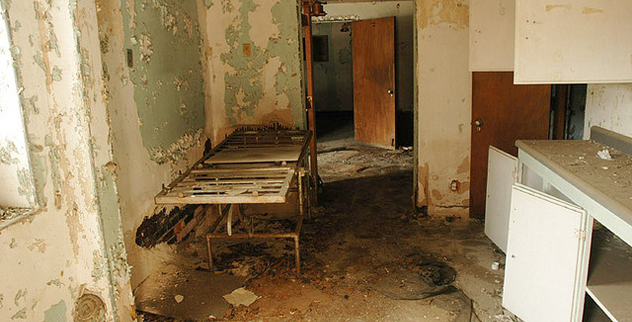
Some hospitals heal. Others linger in the imagination like a hallway light that will not stop flickering. Across the United States, historic hospitals, tuberculosis sanatoriums, psychiatric institutions, and immigrant medical wards have become famous not because they are places anyone should visit for care today, but because their walls hold stories of overcrowding, isolation, disease, forgotten patients, and architecture that seems designed by someone who heard the word “cozy” and chose violence.
This list focuses on former or historic medical institutions, many of which are closed, abandoned, preserved, or used for tours. The goal is not to mock patients or mental illness. In fact, the scariest thing about many of these places is not ghosts; it is how society once treated people who were sick, poor, disabled, contagious, or simply inconvenient. Grab a flashlight, adjust your emotional support cardigan, and let’s walk through ten horrifying hospitals you never want to stay in.
Why Old Hospitals Become Horror Stories
Hospitals are already emotionally intense places. Add isolation wards, locked psychiatric wings, unclaimed remains, long tunnels, abandoned dormitories, and decades of peeling paint, and suddenly the building starts doing its own publicity. Many “haunted hospital” stories grow from a real historical seed: tuberculosis epidemics, underfunded public care, mass institutionalization, or old medical treatments that now sound like they were invented by a committee of haunted dentists.
The most unsettling hospitals are not always the ones with the best ghost stories. They are the places where public health collided with fear, where patients vanished into systems, and where beautiful architecture could not hide overcrowded wards. That is what makes these sites so powerful: they are spooky, yes, but they are also reminders of medical history, social failure, and human resilience.
1. Waverly Hills Sanatorium, Kentucky
The tuberculosis hospital with a tunnel nobody forgets
Waverly Hills Sanatorium in Louisville, Kentucky, is one of America’s most famous former tuberculosis hospitals. Opened in the early 20th century, it was built during a time when tuberculosis was deeply feared and often deadly. Patients were commonly isolated in sanatoriums where fresh air, rest, and strict routines were considered part of treatment.
The building itself looks like it auditioned for a gothic horror film and got the lead role. Long corridors, empty patient rooms, and a reputation for paranormal activity have made Waverly Hills a fixture in ghost-tour culture. The most infamous feature is the so-called “body chute,” a tunnel associated in popular lore with moving deceased patients away from public view. Whether every spooky detail is exaggerated or not, the emotional truth remains grim: tuberculosis tore through communities, and places like Waverly Hills were built to separate the sick from the well.
Why you would not want to stay: isolation, fear of contagion, and a building that seems to whisper, “Your discharge paperwork is in another dimension.”
2. Trans-Allegheny Lunatic Asylum, West Virginia
A massive stone institution with a massive shadow
The Trans-Allegheny Lunatic Asylum in Weston, West Virginia, began as a 19th-century psychiatric hospital designed according to reform ideas of the era. Its grand stone architecture was intended to offer light, air, and order. The problem, as happened in many large institutions, was that noble plans met overcrowding, limited resources, and changing psychiatric practices.
Originally built to house a much smaller population, the facility eventually held far more patients than it was designed for. Overcrowding became part of its legacy. Today, the building is a National Historic Landmark and a popular site for historic and paranormal tours. The horror here is not just the ghost-hunt atmosphere. It is the way good intentions can collapse when systems become too large, too underfunded, and too hidden from public view.
Why you would not want to stay: the place is enormous, echoing, and built like a castle where the castle definitely wins.
3. Pennhurst State School and Hospital, Pennsylvania
A landmark in disability rights history, and a deeply disturbing institution
Pennhurst State School and Hospital in Spring City, Pennsylvania, opened in the early 1900s as an institution for people with intellectual and developmental disabilities. For decades, it became associated with overcrowding, neglect, and controversy. Investigations and public attention helped expose conditions that contributed to broader disability rights reforms.
Pennhurst is horrifying because its history is not merely atmospheric. It represents a real chapter in American institutional care where vulnerable people were often separated from families and communities. The site later became known for haunted attractions, but behind the Halloween branding is a serious history involving civil rights, patient dignity, and the painful consequences of institutional neglect.
Why you would not want to stay: this is not just a creepy campus; it is a reminder of what happens when people are treated as problems to be stored away.
4. Philadelphia State Hospital at Byberry, Pennsylvania
The hospital whose exposed conditions shocked the public
Byberry, officially known as Philadelphia State Hospital, became one of the most notorious psychiatric institutions in the United States. It began as a work farm and expanded into a large hospital complex. Over time, reports and photographs revealed terrifying conditions, including overcrowding, poor sanitation, and inadequate patient care.
During the 1940s, conscientious objectors assigned to work in mental hospitals helped expose abuses at institutions like Byberry. Those revelations played a role in changing public awareness of psychiatric care. Byberry eventually closed, and its abandoned buildings became a magnet for urban explorers, ghost stories, and people with questionable decision-making skills.
Why you would not want to stay: historical accounts of conditions inside Byberry are disturbing enough without adding a single ghost. The ghosts would be overkill.
5. Danvers State Hospital, Massachusetts
The gothic hilltop hospital that helped shape pop-culture nightmares
Danvers State Hospital opened in the late 19th century on Hathorne Hill in Massachusetts. Built in the Kirkbride style, it featured a dramatic central building with wings spreading across the landscape. The design was meant to support humane treatment through light, air, and orderly surroundings. Architecturally, it was impressive. Emotionally, it looked like the headquarters of a vampire insurance company.
Over time, Danvers became associated with overcrowding, changing mental health practices, and pop-culture horror. It is often linked in the public imagination to eerie asylum imagery and has been connected to films, fiction, and urban legends. Much of the original structure was demolished, but the legend remains stubbornly alive.
Why you would not want to stay: even if the staff handed you warm soup and a mint on your pillow, the building’s silhouette would still say, “Sleep lightly.”
6. Ellis Island Immigrant Hospital, New York
A gateway of hope with isolation wards, autopsy rooms, and heartbreak
Ellis Island is best known as a symbol of immigration, but its hospital complex tells a more complicated story. The Ellis Island Immigrant Hospital treated arriving immigrants who were ill or suspected of carrying contagious diseases. The complex included wards for infectious disease, kitchens, staff housing, and a morgue.
For many families, Ellis Island was the threshold of a new life. For others, it became a place of separation, examination, quarantine, and fear. Doctors had to protect public health, but the experience could be terrifying for newcomers who had already endured long ocean voyages. The hospital buildings are partly unrestored today, giving visitors a powerful sense of medical history frozen in place.
Why you would not want to stay: imagine reaching America after a brutal journey, only to be separated from your family and sent to a ward where nobody could promise what came next.
7. Willard Asylum for the Chronic Insane, New York
The suitcases in the attic tell the story
Willard Asylum in upstate New York opened in the 19th century for people considered chronically mentally ill. What makes Willard especially haunting is not a monster in the basement. It is the discovery of hundreds of suitcases belonging to former patients. These personal belongings revealed fragments of real lives: letters, shoes, photographs, brushes, keepsakes, and evidence of people who entered an institution and often never returned home.
The Willard suitcases became the focus of museum exhibits, photography projects, and scholarship because they restore individuality to people who had been reduced to patient numbers. They remind us that institutional history is not abstract. Every bed had a person in it. Every locked trunk had a name.
Why you would not want to stay: the horror is quiet. It is the fear of being admitted with a suitcase and leaving only as a record in someone else’s archive.
8. Oregon State Hospital, Oregon
The hospital of forgotten cremains and cultural memory
Oregon State Hospital in Salem is still an important name in American psychiatric history. It is widely known in popular culture because parts of the film “One Flew Over the Cuckoo’s Nest” were shot there. But the deeper and more sobering story involves thousands of unclaimed cremated remains once stored in copper canisters.
The hospital and state later worked to identify the deceased and help families locate relatives. The resulting memorial turned a deeply unsettling discovery into an act of remembrance. Even so, the image of rows of numbered copper canisters became one of the most powerful symbols of how easily institutionalized people could be forgotten after death.
Why you would not want to stay: because the scariest hospital story is not always about dying there. Sometimes it is about nobody coming to claim you afterward.
9. Eloise Psychiatric Hospital, Michigan
A city-sized institution with a cemetery-sized legacy
Eloise, located in what is now Westland, Michigan, began as a poorhouse and grew into a huge complex that included hospital, asylum, farm, and infirmary functions. At its peak, it was like a city unto itself, with thousands of residents and workers. It had its own services, buildings, and routines, which sounds efficient until you remember this was not a college campus with better snacks.
Eloise is associated with a large cemetery where many people were buried with little public recognition. Its history includes poverty, mental illness, disability, tuberculosis care, and the massive institutional systems that once served as catch-all solutions for social problems. Today, parts of the site are tied to tours, haunted attractions, and local memory.
Why you would not want to stay: being inside a self-contained institution the size of a small town sounds less like care and more like being swallowed by bureaucracy with a boiler room.
10. Glenn Dale Hospital, Maryland
The abandoned tuberculosis hospital in the woods
Glenn Dale Hospital in Maryland was built in the 1930s as a tuberculosis sanatorium and isolation hospital serving the Washington, D.C., area. Its campus included numerous buildings spread across a wooded site. Like many tuberculosis facilities, it reflected a public health strategy based on separation, fresh air, and long-term care.
The hospital closed in the early 1980s and has long been associated with abandonment, decay, and trespassing warnings. Its empty buildings and overgrown grounds have attracted urban legends, but the real story is already eerie: a disease feared by entire cities, a medical campus designed for isolation, and a future complicated by preservation, safety, and redevelopment challenges.
Why you would not want to stay: if a hospital is abandoned, surrounded by trees, and famous for “do not enter” signs, consider that the building has politely written its own review.
What These Horrifying Hospitals Teach Us
These hospitals are frightening because they combine atmosphere with reality. A dark hallway is creepy. A dark hallway inside a building where thousands of vulnerable people once lived, suffered, recovered, or died is something deeper. These sites remind us that medical history is full of progress, but also full of mistakes that should not be politely swept under the rug like a suspicious stain in a horror movie.
Many of these institutions began with reform-minded goals. They were meant to provide care, treatment, fresh air, structure, or public protection. Yet as populations grew and funding failed to keep pace, some became overcrowded warehouses for human beings. That shift is the true horror. It is not the creaking door. It is the moment a society stops seeing patients as people.
Today, former hospitals like Waverly Hills, Pennhurst, Trans-Allegheny, and Ellis Island attract visitors because they are visually dramatic and emotionally charged. Some people arrive for ghost stories. Others come for architecture, photography, or public history. The best visitors leave with something more useful than a blurry orb photo: a better understanding of how health care, disability rights, immigration, poverty, and mental illness have shaped American life.
Visitor Experiences: What It Feels Like to Walk Through a Horrifying Hospital
Visiting a historic hospital site is different from visiting a typical museum. In a normal museum, you admire a painting, read a label, and maybe pretend to understand abstract sculpture. In a former hospital, the building itself is the exhibit. The floors, staircases, rusted beds, barred windows, and empty wards do a lot of talking. You do not need a jump scare. The silence has already clocked in for work.
The first experience many visitors describe is scale. These places are often enormous. A hospital like Trans-Allegheny or Eloise was not merely a building; it was a system. Walking past long corridors and repeated rooms, you begin to sense how easy it would have been for an individual patient to disappear into routine. Breakfast, medication, roll call, ward rules, lights out. Repeat. The horror comes from imagining a life reduced to institutional rhythm.
The second experience is sensory. Old hospitals smell like damp plaster, dust, metal, and time having a bad attitude. Even restored or partially preserved sites can feel cold in a way that has nothing to do with temperature. Tuberculosis hospitals add another layer because they were built around air, sunlight, and separation. Porches, open wards, and long windows once symbolized treatment. Today, they can feel strangely exposed, as if the building is still trying to breathe.
The third experience is moral discomfort. At Pennhurst, Byberry, Willard, and Oregon State Hospital, visitors are not just confronting abandoned architecture. They are confronting the stories of people who were disabled, mentally ill, poor, elderly, or socially marginalized. A responsible visit should feel a little uncomfortable. If the only question is “Did you see a ghost?” the deeper story has been missed. The better question is, “Why did so many people end up here, and who listened to them?”
Another common experience is the strange clash between entertainment and respect. Many former hospitals now host tours, Halloween events, or paranormal investigations. There is nothing wrong with being fascinated by spooky places; humans have been telling ghost stories since the first campfire made shadows look suspicious. But these locations were not movie sets first. They were places where real patients lived. The best tours balance chills with context, letting visitors enjoy the eerie atmosphere while remembering the people behind it.
Safety is also part of the experience. Abandoned hospitals may look cinematic, but they can contain asbestos, unstable floors, broken glass, exposed metal, mold, wildlife, and security patrols. Trespassing is not adventurous; it is a great way to meet a police officer, a raccoon, or both. Legal tours exist at several sites for a reason. The building may be old, but the consequences can be very current.
Ultimately, the most memorable experience is empathy. These hospitals are frightening because they ask visitors to imagine vulnerability: being sick far from home, being quarantined, being institutionalized, being forgotten, or waiting for care in a system too crowded to care properly. That is heavier than any ghost story. And unlike a ghost story, it follows you out into daylight.
Conclusion
The most horrifying hospitals are not scary because of a single legend, shadow, or suspiciously theatrical thunderclap. They are scary because they reveal how fear and medicine have often shared the same hallway. Waverly Hills shows the terror of epidemic disease. Ellis Island shows the anxiety of immigration and quarantine. Pennhurst, Byberry, Willard, and Oregon State Hospital show the consequences of institutional systems that too often forgot the individual. Glenn Dale, Danvers, Eloise, and Trans-Allegheny remind us that even beautiful architecture cannot guarantee humane care.
So yes, these are horrifying hospitals you never want to stay in. But they are also places worth learning about. Behind every abandoned ward is a public health lesson. Behind every legend is a real patient. And behind every creepy corridor is a reminder that modern health care must be measured not only by buildings, treatments, and technology, but by dignity. Also, if the hallway lights start flickering, dignity says you may walk briskly toward the exit.











