
Note: Body-only HTML for direct copy/paste and web publishing.
There is something deeply satisfying about a town that has clearly stopped trying to impress anybody. No neon makeover. No forced charm. No suspiciously upbeat ukulele soundtrack following you from shop to shop. Just weathered wood, empty streets, stubborn brick ruins, and the faint feeling that if you turn the corner fast enough, you might catch history before it slips away again.
That is the magic of deserted towns. They are part time capsule, part road-trip reward, part reminder that America has always been a country of booms, busts, big dreams, and the occasional wildly overconfident mine investor. Some of these places were built on gold, silver, coal, copper, railroads, or river trade. Others were left behind when highways changed, industries collapsed, or the world simply moved on.
But here is the twist: plenty of these nearly abandoned places are still absolutely worth visiting. Not because they are polished, but because they are not. They feel cinematic without trying. They give you history without putting it through a souvenir blender. And in the best cases, they sit in wildly beautiful landscapes that make the silence feel almost luxurious.
Why deserted towns make such unforgettable trips
The best ghost towns and deserted communities are not just piles of old boards and dramatic adjectives. They are stories you can walk through. You can trace where the hotel stood, where the general store probably sold too much optimism, where the train station once mattered, and where people built whole lives around a promise that did not last.
They also make fantastic travel stops because they combine history, scenery, photography, and a little healthy existential reflection. One minute you are admiring a bottle house in the desert. The next you are wondering whether your unread emails really deserve your full emotional energy. That is value.
Here are 10 deserted towns across the United States that are still packed with character, atmosphere, and enough visual drama to make your camera roll feel instantly smarter.
1. Bodie, California
The classic ghost town experience
If you only visit one deserted town in America, make a strong case for Bodie. This place is the overachiever of ghost towns: stark, sprawling, eerie, and preserved in what officials famously describe as a state of “arrested decay.” That phrase alone deserves a slow clap.
Set high in the eastern Sierra, Bodie was once a roaring mining town. Today, only a fraction of it survives, but what remains is enough to stop you in your tracks. Houses still hold old furniture. Businesses look as if the owners stepped out for five minutes and then accidentally skipped a century. The streets feel wide and lonely, and the dry mountain light somehow makes everything look even more haunted in the best possible way.
Visit Bodie for the realism. This is not a theme park version of the Old West. It is the real thing, weathered by fire, time, and hard luck. If you love photography, history, or dramatic landscapes that make you whisper for no reason, Bodie is a must.
2. Rhyolite, Nevada
Desert ruins with serious cinematic flair
Near Death Valley, Rhyolite feels like the set designer for the American West finally got unlimited budget and zero chill. The ruins are beautiful in a skeletal, sun-blasted kind of way, and the whole place delivers maximum mood with minimum clutter.
The standout is the Cook Bank Building, one of the most photographed ghost town structures in the West, and it earns the title. Its remaining walls look almost theatrical against the Nevada sky. Then there is the famous bottle house, built from glass bottles because apparently regular building materials were simply too boring.
Rhyolite is ideal if you want a quick but memorable stop with huge visual payoff. It pairs especially well with a Death Valley trip, when your travel goal is “make the landscape look like it is trying to outdo Mars.” This town is mostly ruins, but the emptiness is the point. It feels open, raw, and gloriously unfinished.
3. Calico, California
A more family-friendly ghost town that still delivers the goods
Some travelers want their deserted town with a little more access and a little less “did I just hear a floorboard move?” Calico is perfect for that. Born from a silver-mining boom in the Mojave Desert, it now balances old-town atmosphere with attractions that make it easier for casual visitors to linger.
You can walk the dusty streets, explore the historic feel of the town, and then add mine tours, a narrow-gauge railroad, camping, hiking, or off-roading to the mix. In other words, Calico understands that some people want ghost-town vibes and a snack break in the same afternoon.
Purists may prefer rougher, less curated places, but Calico earns its spot because it is approachable, memorable, and genuinely scenic. It is a strong choice for travelers who want Western mining history without needing a survival documentary narrator.
4. Terlingua, Texas
The ghost town with desert soul and a social life
Terlingua is what happens when a former mining town refuses to stay fully dead. It still carries its ghost-town bones, but it also has enough personality to feel weirdly alive. Set near Big Bend, this is one of those places where the ruins, the mountains, the desert light, and the laid-back atmosphere all work together like a band that never over-rehearses.
Historically, Terlingua grew around quicksilver mining. Today, visitors come for the crumbling remains, big skies, and strong sense that everyone here has at least one good story and probably a better sunset recommendation. It is also tied to the famous championship chili cook-off, which means the town has managed an impressive career pivot from mining to culinary bragging rights.
If you like your history with desert romance, porch views, and a little offbeat personality, Terlingua is hard to beat. It is less silent than some towns on this list, but that contrast is exactly what makes it memorable.
5. Bannack, Montana
For travelers who want a real Old West main street
Bannack does not need gimmicks. It has the kind of main street that makes you instantly understand why people become obsessed with ghost towns in the first place. This was the site of Montana’s first major gold discovery and the territory’s first capital, and the remains still carry that early frontier swagger.
More than 50 historic buildings line the town, and walking among them feels less like visiting ruins and more like wandering through a paused chapter of Western history. The setting helps, too. Montana does not really do “modest scenery,” and Bannack benefits from that policy.
This is the place to go when you want a strong sense of historical scale. It does not feel like a single abandoned building in the middle of nowhere. It feels like a once-working community that slowly exhaled and never fully inhaled again.
6. Garnet, Montana
Mountain isolation with excellent preservation
Garnet is for people who love the idea of a ghost town tucked into the mountains where the road itself starts to feel like part of the experience. Once home to a sizable gold-mining community, Garnet was largely abandoned within a couple of decades, but it remains remarkably well preserved.
That preservation matters because Garnet does not feel like a random scattering of leftovers. It feels coherent. You can still imagine how the town functioned, how people moved through it, and how difficult daily life must have been in such an isolated place. The setting adds a totally different mood from the desert ghost towns out West. Here, the woods and hills make the town feel hidden, almost shy.
Visit Garnet if you want a quieter, more reflective experience. It feels intimate rather than dramatic, and that subtlety is part of its charm.
7. South Pass City, Wyoming
A gold-rush town where history still feels hands-on
South Pass City is a terrific stop for travelers who want more than a quick photo and a dusty shrug. This former gold-rush town has been restored in a way that helps visitors understand how a frontier settlement actually worked, not just how it looked in a moody postcard.
You can walk through cabins, a hotel, a jail, and other buildings, and the site leans into interactive history in a way that feels fun rather than cheesy. Gold panning, hiking trails, and the nearby Continental Divide Trail give the town a broader adventure appeal, which is a smart reminder that “historic site” does not have to mean “stand politely and read signs until your knees complain.”
South Pass City is especially worth a visit if you like your travel with context. You leave with a sense of how people lived, gambled on opportunity, and built communities in places that were never going to be easy.
8. Thurmond, West Virginia
A nearly empty railroad town with serious atmosphere
Not every deserted town is a dusty mining camp. Thurmond proves that railroad history can be just as haunting. Once a powerhouse along the Chesapeake & Ohio Railway, this West Virginia town boomed with coal money, passenger traffic, and industrial energy before sliding into decline.
Today, Thurmond remains strikingly untouched by modern development. The restored depot works as a visitor center, and the town still feels like a place the twentieth century forgot to finish packing up. That makes it incredibly compelling. The layout, the rail lines, the old commercial buildings, and the surrounding gorge scenery all combine into a moody, layered stop that feels different from the desert ghost towns most people picture first.
If you want a deserted town with Appalachian character and industrial history instead of tumbleweeds, Thurmond is a standout.
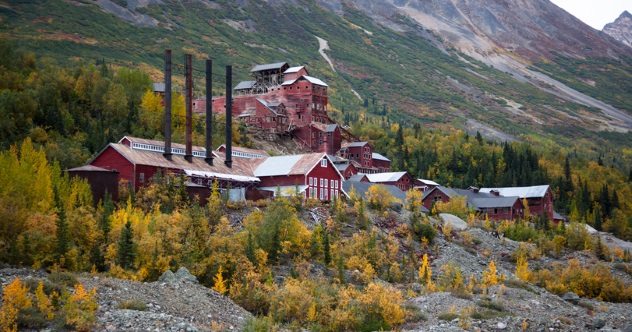
9. Kennecott, Alaska
Remote, rugged, and absurdly photogenic
Kennecott is what happens when a ghost town gets dropped into one of the most spectacular settings in North America and then decides to show off. Deep inside Wrangell-St. Elias, this former copper-mining town is dramatic before you even reach the first building.
The town is considered one of the best remaining examples of early twentieth-century copper mining, and the structures look almost surreal against glaciers, peaks, and wild Alaskan terrain. It is remote, yes. But that remoteness is part of the appeal. Visiting Kennecott feels earned, which gives the whole experience extra weight.
This is not your casual “pull over for ten minutes and keep driving” kind of stop. It is a destination. And for travelers who love industrial history, epic landscapes, and places that feel genuinely far away from everything noisy and modern, it is unforgettable.
10. Old Cahawba, Alabama
A Southern ghost town where ruins and landscape blend together
Old Cahawba brings a totally different energy to the list. Instead of mountain mining grit or desert ruins, you get Alabama’s first capital turned archaeological park, where traces of streets, cemeteries, foundations, and historic remnants sit quietly in a landscape that has been steadily reclaimed by nature.
This is a place for travelers who enjoy subtlety. The power of Cahawba is not in one giant showpiece structure. It is in the feeling of a vanished town still mapped onto the ground. The visitor center, trails, interpretive signs, and preserved ruins help connect the dots, but there is still enough openness to let your imagination do some work.
Old Cahawba is ideal for a slower visit. Walk it, bike it, pay attention, and let the setting tell the story. It is proof that deserted towns do not have to look rugged and dusty to be deeply affecting.
How to visit deserted towns without ruining them
Ghost towns are fragile. They may look tough, but old wood, brick, foundations, mines, and artifacts do not benefit from curious climbing or “just one little souvenir” logic. Stay on marked paths, respect closures, and remember that unstable ruins are not an invitation to audition for a rescue helicopter.
Bring water, layers, and decent shoes. Many of these places are exposed, remote, or uneven underfoot. Also, check conditions before you go. Some sites are easier in certain seasons, and a deserted town is always more fun when you are admiring the scenery instead of negotiating with dehydration.
The experience of visiting deserted towns: why it gets under your skin
What makes a trip to a deserted town so memorable is not just the history you read on signs. It is the weirdly personal feeling that creeps in once you have been there for a while. At first, you notice the obvious things: the warped boards, the broken windows, the faded paint, the way the landscape seems to be slowly taking everything back. Then, after ten or twenty quiet minutes, the place starts doing something else. It starts making you imagine the ordinary parts of life that happened there.
You begin to picture people arguing over prices in a general store, hurrying through bad weather, fixing a fence, waiting for a train, gossiping on a porch, or betting everything on a mine that may or may not have been worth the trouble. That is when the town stops feeling like a historical attraction and starts feeling like a place that once had routines, annoyances, hope, and bills. A lot of ghost towns are beautiful, but what really stays with you is the human scale of them. They were not built as legends. They were built by people who thought they were living in the present.
There is also something refreshing about the pace of these visits. Modern travel often comes with a lot of noise: crowds, screens, reservations, lines, notifications, parking stress, and at least one person loudly describing brunch. Deserted towns ask for the opposite. You walk slower. You look longer. You notice details you would normally ignore, like the shape of a doorway, the angle of sunlight on a ruined wall, or how a single surviving building can completely change the mood of a whole valley.
The best trips usually include a little contrast, and deserted towns are excellent at that. You might spend the morning driving through huge mountain scenery or endless desert, and then suddenly arrive somewhere tiny and silent, where history feels oddly concentrated. It is a reminder that big stories often happened in small places. A railroad stop. A mining camp. A river town. A community that looked permanent until it absolutely was not.
They also make great travel memories because each one feels different. Bodie is stark and dramatic. Terlingua is relaxed and eccentric. Kennecott feels epic and remote. Thurmond carries industrial melancholy. Old Cahawba feels almost dreamlike, as if the town is being slowly translated back into forest and field. Even when two places share the label “ghost town,” the actual experience can be wildly different. That variety keeps the category from becoming a gimmick.
And yes, there is a small thrill involved. Not horror-movie thrill, just enough uncertainty to sharpen your attention. You stand in an empty street and wonder what the place sounded like when it was full. You look at a schoolhouse, a depot, a boarding house, or a collapsed storefront and realize history is not always grand marble and velvet ropes. Sometimes it is a windblown road, a few surviving walls, and the stubborn refusal of a place to be completely forgotten.
That is why deserted towns are worth seeking out. They give you scenery, history, and atmosphere, but they also give you perspective. They remind you that every booming place thinks it is the center of the world right up until it is not. Oddly enough, that makes these nearly abandoned towns feel more honest than many of the destinations still shouting for your attention.
Conclusion
The best deserted towns are not just empty. They are expressive. They tell stories about ambition, bad luck, reinvention, geography, industry, and the stubborn afterlife of place. Whether you want a mountain ghost town, a desert ruin, a rail town, or a former capital reclaimed by trees and quiet, America has no shortage of unforgettable options.
So yes, go to the famous national parks and the big-name cities. But leave room on your itinerary for the places that no longer hum with daily business. Some of the most rewarding travel moments happen in towns that have already had their loudest years and still manage to be absolutely fascinating.











