
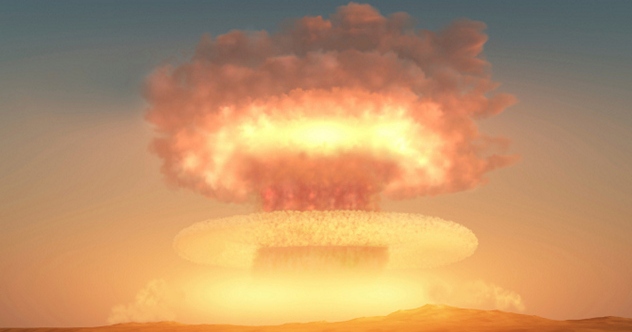
Weapons are built for conflict, which is exactly why it can feel strangealmost wonderfully ironicwhen they end up supporting education, art, conservation, science, or community healing instead. A sword in a museum can teach history. A retired warship can become an underwater neighborhood for fish. A former missile site can become a classroom where visitors think seriously about peace, deterrence, and the cost of fear.
The phrase peaceful uses for weapons does not mean turning dangerous items into weekend craft projects. Nobody needs a “DIY cannon planter” tutorial. It means responsibly transforming inactive weapons, retired military infrastructure, and weapon-derived technology into something that serves people rather than threatening them.
From sports arenas to wildlife refuges, there are surprisingly thoughtful examples of weapons repurposed for peace. Some preserve difficult history. Some build community. Some help scientists look into space. And some prove that even steel with a rough past can eventually do something gentler than its original job description.
1. Museum Education and Historical Preservation
One of the most important peaceful uses for weapons is simply helping people understand history. Museums and national historic sites preserve inert firearms, swords, artillery pieces, uniforms, and military equipment as cultural objects. Their purpose is not to glamorize violence; it is to explain the people, technology, politics, and consequences connected to conflict.
A historic weapon can reveal much more than how it worked. It can show how manufacturing changed, how soldiers lived, how trade networks developed, and how communities were affected by war. A museum display can also challenge easy assumptions. Visitors may see the craftsmanship of an object while still confronting the human suffering that made such objects necessary.
Responsible institutions treat these items with serious safety controls. Historic firearms and munitions in collections are generally secured, documented, and rendered inert when appropriate. The result is a safer kind of encounter: people can learn from the past without treating a dangerous object like a novelty.
Why this matters
History becomes more real when people can see the physical objects behind it. A textbook can explain an era, but a preserved object can make someone pause and ask better questions: Who used this? Why was it made? What did it change? How can we avoid repeating the worst parts of the story?
2. Archaeology and Forensic Research
Weapons and weapon fragments can also support peaceful research. Archaeologists study old firearms, ammunition components, blades, and metal fragments to better understand settlements, trade routes, industrial production, and historical events. In this context, the object is evidencenot a tool of violence.
For example, researchers may examine manufacturing marks, materials, and wear patterns to estimate when an artifact was made or where it came from. That information can help historians reconstruct stories that were never fully written down. A damaged musket part found at an old settlement may reveal trade relationships. A sword fragment may help date a site. A collection of military objects can teach researchers about engineering, supply systems, and daily life during a particular era.
This use is quiet, methodical, and almost the opposite of action-movie drama. No explosions. No dramatic soundtrack. Mostly careful documentation, magnifying equipment, archives, and people who get unusually excited about a corroded metal button.
3. Fencing: Turning Swordplay Into Sport and Discipline
Fencing is one of the clearest examples of a former weapon tradition becoming a modern sport. The foil, épée, and saber have historical roots in swordsmanship, but competitive fencing today is structured around rules, protective gear, scoring systems, trained officials, and athletic discipline.
Modern fencing is less “swashbuckling pirate duel” and more “chess played at sprint speed.” Athletes learn timing, distance, self-control, footwork, strategy, and respect for opponents. The goal is not harm; it is precision, composure, and fair competition.
For many young athletes, fencing also offers a valuable lesson in emotional regulation. You can score a point without shouting. You can lose a bout without flipping a table. You can wear a dramatic white jacket and still be expected to behave like a civilized human being. Frankly, society could use more of that energy.
4. Archery as Recreation, Competition, and Focus Training
Bows and arrows were historically used for hunting and warfare, but modern target archery is a widely practiced recreational and competitive activity. In a structured setting, archery emphasizes patience, posture, consistency, breathing, focus, and safety awareness.
Archery has become a peaceful activity for people who want to slow down and concentrate. The appeal is not just hitting the center of a target. It is the process: standing still, clearing your mind, repeating a practiced movement, and learning that rushing usually makes everything worse. That last lesson applies equally well to archery, parking lots, and replying to emails at 11:48 p.m.
Formal clubs, certified instructors, controlled ranges, and sport-specific safety standards help separate modern recreational archery from the weapon’s historical role. In this peaceful context, the bow becomes a tool for sport, confidence-building, and personal discipline.
5. Peace Art, Memorials, and “Swords Into Plowshares” Symbolism
Perhaps the most powerful peaceful use for weapons is symbolic transformation. Artists and communities have long used the image of turning swords into plowshares to represent a shift from destruction toward renewal. Sculptures, memorials, installations, and public art can use weapon-related imagery to encourage reflection on violence, healing, and reconciliation.
Some projects incorporate reclaimed metal from weapons or weapon-related materials after they have been properly processed. Others use visual representations rather than the objects themselves. Either way, the message is clear: an object once associated with fear can become a reminder that communities have choices.
Peace art does not erase painful history. It gives people a way to face it. A memorial can honor victims. A sculpture can create space for conversation. A public installation can ask viewers to consider what society values more: the power to destroy or the effort to rebuild.
Art can do what arguments cannot
A report can explain the impact of violence. A sculpture can make someone feel it. That emotional connection matters, especially when communities are trying to process loss, remember victims, or create a public commitment to a safer future.
6. Material Recovery and Responsible Recycling
Retired weapons and military equipment contain valuable materials, including steel, aluminum, copper, and other metals. When governments and authorized contractors dismantle obsolete equipment, those materials may be recycled into new products instead of sitting unused forever.
The peaceful value is not in the old weapon itself. It is in recovering resources through controlled industrial processes. Recycled metal can reenter the economy as construction material, machinery components, public infrastructure, or consumer goods. The original object stops being a weapon and becomes raw material again.
That transformation is practical as well as symbolic. Recycling reduces waste, limits demand for newly extracted materials, and gives retired equipment a less destructive final chapter. No magical redemption montage is requiredjust careful handling, legal oversight, and a very large recycling system.
7. Retired Warships as Artificial Reefs
Some retired naval vessels have been intentionally prepared and placed underwater as artificial reefs. This is not a casual “sink a ship and hope for fish” situation. Environmental review, cleaning, planning, and long-term monitoring are essential. When done responsibly, a former warship can provide complex habitat for marine life.
Artificial reefs can create hard surfaces where algae, coral-like organisms, and smaller marine creatures can attach. Fish may use the structures for shelter and feeding opportunities. Divers, marine researchers, and fishing communities may also benefit from well-managed reef projects.
There is a poetic contrast here: a ship once designed for military service can eventually support an underwater ecosystem. Instead of carrying weapons, it becomes a neighborhood. Fish do not care about a vessel’s old mission. They care whether there are places to hide, feed, and avoid becoming someone else’s lunch.
Environmental caution still comes first
Not every retired vessel belongs underwater. Artificial reef projects must be designed to protect marine environments, avoid pollution, and prevent damage to sensitive habitats. The peaceful outcome depends on planning, cleanup, oversight, and sciencenot wishful thinking.
8. Missile Sites as Museums and Public Classrooms
Former missile silos and launch-control facilities can become educational sites that help the public understand the Cold War, nuclear deterrence, military service, and the immense stakes of global conflict. These places are often sobering rather than celebratory.
Visitors can see how isolated personnel worked, how tightly controlled military systems were, and how close the world sometimes came to catastrophic decisions. The peaceful use is education: preserving evidence of a tense period so future generations can think critically about diplomacy, security, and the value of avoiding war.
A former missile facility can be a powerful classroom because it is so ordinary-looking from the outside. A small building on the plains may hide a story about geopolitics, technology, fear, and human responsibility. It is a reminder that history is not always loud. Sometimes it waits behind a locked gate and a patch of grass.
9. Ballistic Missile Technology Reused for Space Exploration
Some early space-launch systems were adapted from ballistic missile technology. The same broad engineering fields that developed powerful rockets for military purposes also helped make satellite launches, scientific missions, and human spaceflight possible.
This does not make the history simple or morally neat. Rocket technology has always had complicated roots. Still, the peaceful applications are enormous. Space programs have used launch systems to support weather observation, communications, Earth science, navigation, astronomy, and exploration beyond our planet.
That shift is one of the most striking examples of weapons repurposed for peace: technology once connected to military competition helping scientists study hurricanes, map forests, monitor drought, communicate across continents, and look at distant worlds.
It is also a reminder that technology itself is not automatically good or bad. The outcome depends on who controls it, what rules govern it, and whether the goal is domination or discovery.
10. Former Military and Weapons Sites Reborn as Wildlife Refuges
Sometimes the peaceful transformation is not about a single weapon. It is about an entire former weapons-related landscape. Across the United States, some military properties have been cleaned up, restored, and reused for conservation, recreation, education, or public benefit.
One remarkable example is the transformation of former military land into wildlife habitat. Areas with wartime or Cold War histories can eventually support birds, prairie animals, wetlands, walking trails, environmental education, and scientific researchafter extensive remediation and safety work.
The point is not to pretend the past never happened. The point is to show that land can have a second life. A place once associated with production, storage, or military readiness can become a place where people watch bald eagles, photograph wildflowers, or teach children why healthy ecosystems matter.
That is a peaceful use with real emotional weight. It says that restoration is possible, but not automatic. It requires investment, accountability, patience, and a willingness to do the unglamorous work of cleanup before anyone gets to enjoy the view.
What Peaceful Repurposing Teaches Us
The best peaceful uses for weapons are not about pretending weapons are harmless. They are about changing the role of objects, places, and technologies after their original purpose has ended. A museum artifact can become a lesson. A retired ship can become habitat. A missile site can become a warning from history. A former arsenal can become a refuge.
There is an important difference between romanticizing weapons and transforming them responsibly. The first one treats danger like decoration. The second one asks what can be learned, preserved, repaired, recycled, or protected.
In other words, peaceful repurposing is not about giving weapons a cute makeover. It is about giving communities a chance to choose a better use for the materials, land, technology, and stories left behind.
Experiences: What These Peaceful Uses Feel Like in Real Life
Peaceful repurposing can sound abstract until you imagine the people who actually encounter it. Consider a student visiting a historic missile site for the first time. Before the trip, the Cold War may feel like a chapter in a textbook: dates, names, speeches, and a few black-and-white photographs. Then the student stands near a preserved control facility and realizes that ordinary people once worked underground, following procedures while carrying the weight of unimaginable consequences. The experience is not exciting in the usual tourist sense. It is reflective. It makes history feel close enough to touch, which is often the moment when history becomes meaningful.
Now picture a young fencer at a local tournament. The athlete is nervous, the mask feels slightly awkward, and the first few movements are probably less elegant than a movie duel. That is normal. Over time, fencing becomes a lesson in patience. A fencer learns to pause before rushing forward, read an opponent’s movement, recover after mistakes, and shake hands whether the score is wonderful or deeply offensive. The weapon-shaped equipment becomes part of a sport built around rules, restraint, and mutual respect.
Archery can create a similar experience. Many beginners arrive expecting instant superhero accuracy. Then the first arrow lands somewhere that is technically still on Earth, which is progress. The calming part comes from repetition. The archer learns to breathe, focus, and avoid fighting the equipment. A good session can feel almost meditative because the mind has less room for daily distractions. You are not thinking about laundry, meetings, or why your phone battery disappears faster than snacks at a road trip. You are thinking about one careful shot at a time.
Visitors to a wildlife refuge built on former military land may experience a different kind of surprise. They may arrive knowing the site’s difficult past, then see birds nesting, prairie grasses moving in the wind, or families walking a trail. That contrast can be emotional. It does not erase the history, but it proves that restoration can turn damaged places into shared public spaces. Nature does not write apology letters, but it does offer evidence that recovery is possible when people commit to the work.
Artists and community members often experience peaceful transformation through symbolism. A sculpture inspired by “swords into plowshares” may not change public policy by itself, but it can change a conversation. Someone may stop, look at the piece, and think about a family member, a community tragedy, or a hope for a safer neighborhood. Art gives people room to sit with complicated feelings without demanding an immediate argument.
Even scientific uses have an emotional side. Engineers and researchers who work with space technology understand that powerful systems can carry complicated histories. Yet when a satellite helps track storms, monitor crops, or study the planet, the story changes. The same human ability to design complex machines can be used to protect communities and expand knowledge. That is not a perfect redemption story. It is a responsibility story.
The common thread is simple: peaceful uses for weapons work best when they are guided by care, oversight, learning, and respect for the past. The object may be old steel, a former military facility, or a technology with complicated origins. But the human experience can be constructive. People can learn from it, compete safely with it, create art from its symbolism, restore land around it, or use related technology to understand the world more clearly.
That may be the most awesome peaceful use of all: taking something associated with fear and making it part of a future built around knowledge, responsibility, and repair.
Conclusion
The peaceful transformation of weapons is not a shortcut around history. It is a thoughtful response to history. Inert museum artifacts, sporting traditions, peace memorials, recycled materials, artificial reefs, historic missile sites, space technology, and restored wildlife landscapes all show that objects and places can gain new meaning.
When handled lawfully and professionally, weapons repurposed for peace can educate, preserve memories, support ecosystems, encourage discipline, and remind us that human creativity is not limited to building things that harm. Sometimes the most meaningful transformation is not changing metal into something else. It is changing what people choose to do with it.












