
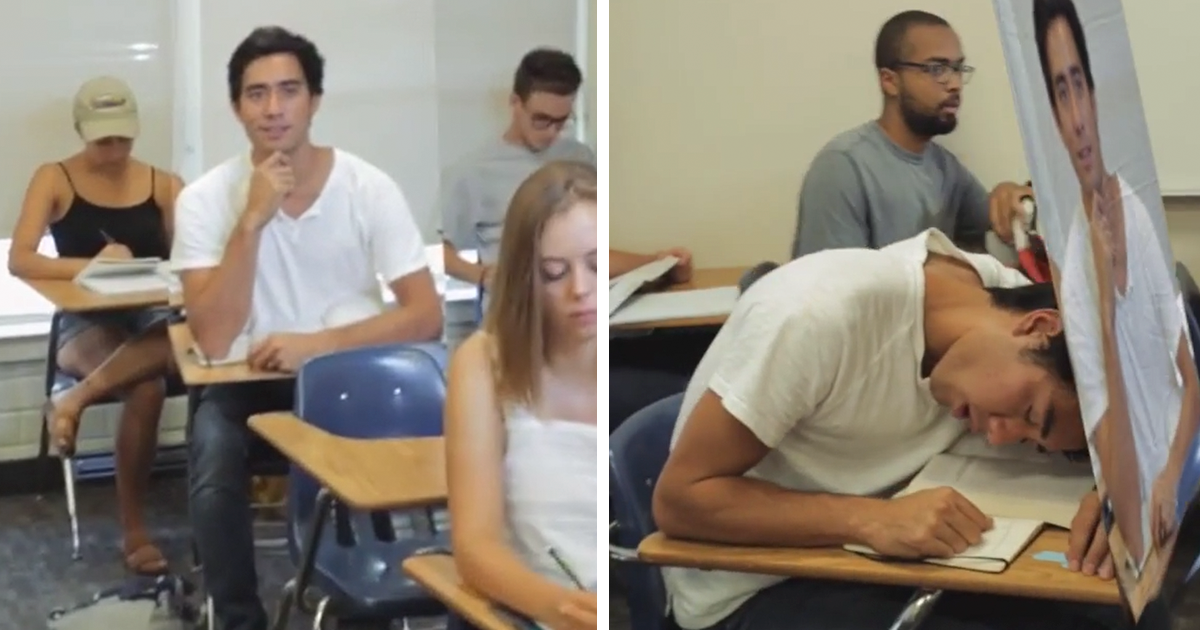
Every generation of students produces one legendary innovator. Not the valedictorian. Not the debate champion. Not the kid who somehow color-codes notes like a tiny office manager. No, we are talking about the exhausted genius who looks at a classroom, a desk, a dangerously comfortable posture, and thinks, What if I could nap and still appear academically present?
That is exactly why stories like “Guy Finds A Clever Way To Avoid Getting Caught Sleeping In Class” spread so fast online. They are funny, ridiculous, and just believable enough to make you think, “Honestly? In sophomore year, I might have tried it.” The humor lands because the problem is real: students are tired, classrooms can be monotonous, and the battle between sleep and responsibility has ended in many dramatic face-plants onto notebooks.
But this story is more than a goofy classroom stunt. It opens the door to a bigger conversation about teen sleep deprivation, classroom fatigue, school schedules, and why so many students feel like their first-period class is an extreme sport. So yes, let’s laugh at the clever trick. Then let’s talk about why it feels so relatable in the first place.
The Clever Classroom Hack That Feels Almost Too Smart
The classic version of this viral joke goes something like this: a guy wants to avoid getting caught sleeping in class, so he creates a visual decoy. Think printed photo, carefully chosen angle, same clothes, same seat, same “I am absolutely listening” facial expression. The idea is simple: if the teacher glances over, the decoy looks alert while the real student grabs a few secret seconds of shut-eye behind the illusion.
It is absurd. It is theatrical. It is also the kind of plan that sounds brilliant at 1:12 a.m. when someone has finished half an energy drink, zero homework, and a full emotional commitment to bad decisions.
What makes the bit memorable is that it combines two ingredients the internet loves: creativity and laziness. That rare fusion is comedy gold. Building a fake version of yourself actually requires effort, which makes the whole thing even funnier. Instead of using that energy to sleep earlier, the student invests it in a cardboard conspiracy. That is like spending six hours inventing a machine that avoids folding laundry. Impressive, but spiritually suspicious.
Still, the joke works because it reflects something students know very well: school can feel like a performance. Sit up straight. Look engaged. Nod occasionally. Try not to let your soul leave your body during a long lecture about chapter seventeen. The prank exaggerates that performance until it becomes satire.
Why Sleeping in Class Happens So Often
Here is the less hilarious truth: students do not usually fall asleep in class because they are rebellious masterminds. Most of the time, they are simply worn out. And for teenagers especially, that fatigue is not always a sign of laziness. It is often the result of biology colliding with modern life like two shopping carts in a parking lot.
Teen bodies run on a later clock
During adolescence, sleep patterns shift. Many teens naturally feel sleepy later at night and want to wake later in the morning. Unfortunately, school bells do not care about circadian rhythms. A teenager may not be fully ready to sleep at a reasonable hour, yet still has to wake up early enough to catch a bus, find matching socks, and pretend to be a functioning human by first period.
That mismatch creates a daily sleep debt. Students are not choosing to be groggy in algebra. Their internal clocks are often fighting the schedule from the moment the alarm goes off. In other words, the student snoozing near the window may not be disrespecting history class. He may just be losing a biological argument before sunrise.
Homework, activities, and life pile up
Then come the practical realities. Homework stretches late. Sports run long. Part-time jobs eat evenings. Group projects mysteriously become solo projects. Add family responsibilities, college pressure, social stress, and the modern tradition of staring at a glowing phone until midnight, and suddenly bedtime becomes more of a rumor than a plan.
Many students are overscheduled, overstimulated, and under-rested. By the time they sit in a warm classroom under fluorescent lights while someone clicks through a slideshow, their brains are basically filing for emergency shutdown.
Screens are tiny sleep thieves
Late-night scrolling deserves its own hall of fame for ruining tomorrow morning. Social media, texting, videos, gaming, and endless notifications keep the brain alert long after the body should be winding down. Even worse, the habit feels harmless in the moment. “Just ten more minutes” is one of the most ambitious works of fiction in the English language.
When students stay up later using screens, the result is predictable: less sleep, rougher mornings, lower attention, and a greater chance of drifting off in class. The sleeping-in-class problem often begins long before the classroom. It starts in the bedroom, with a charger cable, a glowing screen, and a wildly unrealistic belief that one more reel will somehow improve life.
Why This Story Is Funny But Also Weirdly Honest
A story about a guy cleverly avoiding getting caught sleeping in class is funny because it flips the usual student-teacher dynamic. Normally, the teacher is one step ahead. In this joke, the sleepy student becomes a low-budget illusionist. It is part classroom rebellion, part comedy sketch, part evidence that human beings will apply creativity to literally anything except going to bed on time.
But underneath the joke is a genuine truth about school culture: appearance often gets mistaken for engagement. A student can sit upright, make eye contact, and look completely “on task” while mentally planning lunch or wandering through an existential desert. Meanwhile, a tired student may seem checked out when what they really need is rest, support, or a schedule that does not feel designed by someone who hates REM sleep.
That is why the prank has staying power. It is not just about a nap. It is about how often students feel pressure to look okay even when they are tired, stressed, or overloaded. The fake-alert version of yourself becomes a joke because, in a way, a lot of people already do it without cardboard.
What Students Should Actually Do Instead of Building a Decoy
To be clear, creating a fake stand-in to avoid getting caught sleeping in class is hilarious content. It is not a great life strategy. Students who are constantly exhausted need solutions that are less theatrical and more sustainable.
Start with the boring fix that actually works: more sleep
Yes, this advice is painfully uncool. No, there is no magical substitute for it. Better sleep habits can make a dramatic difference in attention, memory, mood, and classroom alertness. Going to bed a little earlier, keeping a more regular schedule, and cutting late-night screen time can do more for academic survival than most desperate in-class nap schemes.
Sleep is not “wasted time.” It is brain maintenance. It helps with learning, emotional regulation, decision-making, and the basic miracle of staying conscious during a lecture on economic policy or cell respiration.
Use strategic breaks, not secret naps
If a student is dragging, small adjustments can help: standing up before class, drinking water, getting morning light, eating a real breakfast, moving during breaks, and sitting where participation is more likely. None of these are as funny as a fake face propped on a desk, but they are much less likely to end with public embarrassment and a trip to the principal’s office.
Say something if exhaustion is constant
Frequent daytime sleepiness should not be ignored. Sometimes the issue is obvious, like staying up too late. Sometimes it points to stress, anxiety, burnout, a packed schedule, or a sleep problem that deserves attention. Students who keep nodding off in class are not always misbehaving. Sometimes they are waving a very sleepy white flag.
What Teachers and Schools Can Learn From the Joke
Teachers usually know the difference between “I am bored” and “I am running on fumes,” but the best responses often combine structure with empathy. A student falling asleep once may need grace. A student falling asleep often may need a conversation.
That does not mean classrooms should become nap lounges with attendance taken by pillow. It means adults in school settings can treat sleepiness as information, not just defiance. Maybe a student is overwhelmed. Maybe their home routine is chaotic. Maybe they are working late. Maybe they are drowning quietly while still turning in assignments on time.
Schools can help by making room for better routines and better awareness. Discussions around later school start times, healthier homework loads, reduced over-scheduling, and realistic expectations are not just policy debates. They are part of whether students arrive awake enough to learn. It is hard to ask teenagers to do their best thinking at an hour when their brains are still trying to load the operating system.
And frankly, if a prank about avoiding getting caught sleeping in class becomes instantly relatable to millions of people, that is a clue. Funny stories often reveal serious patterns. Comedy is sometimes just truth wearing clown shoes.
The Bigger Lesson Behind the Viral Laugh
At first glance, “Guy Finds A Clever Way To Avoid Getting Caught Sleeping In Class” sounds like a throwaway internet moment. And sure, part of its charm is pure silliness. But its staying power comes from the fact that it taps into something deeply familiar: the struggle to stay awake, stay focused, and stay functional in a world that constantly steals sleep.
The student in the story is funny because he is resourceful. He is memorable because he is relatable. Most people have not created a classroom decoy, but plenty have tried to fake alertness with open eyes, a straight posture, and a prayer. The joke lands because school fatigue is common, and because everyone recognizes the wild logic of a tired brain trying to outsmart consequences.
In the end, the clever trick is not the real solution. The real solution is better sleep, better support, and better understanding of why so many students are exhausted in the first place. But as symbols go, the fake-awake classroom hack is perfect: creative, chaotic, and one hundred percent the kind of thing a sleep-deprived student would call genius.
And honestly? That might be the funniest part.
Experiences Related to Getting Caught Sleeping in Class
If you ask enough people about sleeping in class, the stories come pouring out like a group confession nobody needed much encouragement to start. One person remembers the classic slow-head-drop, where they began the period upright and confident, then gradually tilted forward until their forehead tapped the desk like a tiny drum solo. Another swears they were not asleep, just “resting their eyes,” which is student language for “I lost consciousness but would like legal protection.”
A lot of the most memorable classroom sleep moments happen because students underestimate how obvious sleep looks from the outside. They think they are being subtle. They are not. The half-open textbook, the pen still in hand, the heroic attempt to appear reflective while entering a full dream sequence about missing the bus and marrying a waffle? Not subtle. Teachers have seen it all. They can usually spot the difference between deep concentration and a student whose spirit has temporarily left the building.
Some experiences are funny in retrospect because the student went to incredible lengths to avoid embarrassment. One guy sat in the back row wearing a hoodie and tried to support his head with one hand, only to let his elbow slide off the desk and jerk himself awake every thirty seconds like a malfunctioning robot. A girl once volunteered to read aloud, clearly hoping the sound of her own voice would keep her awake, and made it through three lines before losing her place so badly she looked like the paragraph had personally betrayed her.
Then there are the accidental betrayals. The snore that escapes during silent work time. The sudden notebook scribble created while drifting between consciousness and dreamland. The moment a teacher says your name and you answer with something that would only make sense if the discussion were about pirates, lasagna, or outer space. These are not ideal academic outcomes, but they do become excellent stories later.
What stands out in so many of these experiences is that they are rarely about disrespect. More often, they are about overload. Students were up finishing homework, helping at home, working evening shifts, stressing about grades, doom-scrolling, or just failing to realize that midnight becomes 1:00 a.m. with shocking speed. The classroom nap was not a grand statement. It was the final chapter in a long, tired day.
Even teachers sometimes respond with a surprising amount of humanity. Yes, some wake students immediately. Others crack jokes. But many have learned that public humiliation does not solve exhaustion. A quiet check-in after class can reveal a lot more than a sarcastic comment in front of thirty peers. Sometimes the sleepy student is just sleepy. Sometimes they are carrying more than anyone realized.
That is why stories about avoiding getting caught sleeping in class continue to resonate. They are funny because they are awkward, familiar, and painfully human. Almost everyone has either been the sleepy student, known the sleepy student, or watched the sleepy student perform a miraculous last-second wake-up when the teacher started walking their way. It is one of those school experiences that somehow manages to be universal across grades, subjects, and generations.
So while the clever trick in the viral story gets the headline, the real reason people connect with it is simple: exhaustion has a way of making people inventive, ridiculous, and deeply relatable. One student builds a decoy. Another masters the art of fake note-taking while half asleep. Another discovers, too late, that drooling on a worksheet is not academically strategic. Different methods, same mission: survive class, protect dignity, and maybe, just maybe, stay awake long enough to hear what will be on the test.
Final Thoughts
The appeal of this story is not just that a guy found a clever way to avoid getting caught sleeping in class. It is that the story turns a common student struggle into comedy without losing the truth underneath it. Sleepy students are not a mystery, and they are not a punchline by default. They are often the product of packed schedules, late nights, biological realities, and school systems that still expect alertness on command.
So yes, laugh at the decoy. Admire the creativity. Appreciate the sheer chaotic commitment of a student who thought, “You know what this problem needs? Set design.” But also remember the bigger lesson: the best way to stop sleeping in class is not better camouflage. It is better sleep, better routines, and a little more understanding from everyone in the room.












